Why Your Hair Is Falling Out — And How Ayurveda Fixes It: The Complete India Guide
You have tried every shampoo, every supplement, every home remedy. The hair fall continues. The reason most treatments fail is simple: they treat the symptom, not the cause. Here are the 5 proven root causes of hair fall — and how a 5,000-year-old science, backed by modern research, finally addresses all of them.
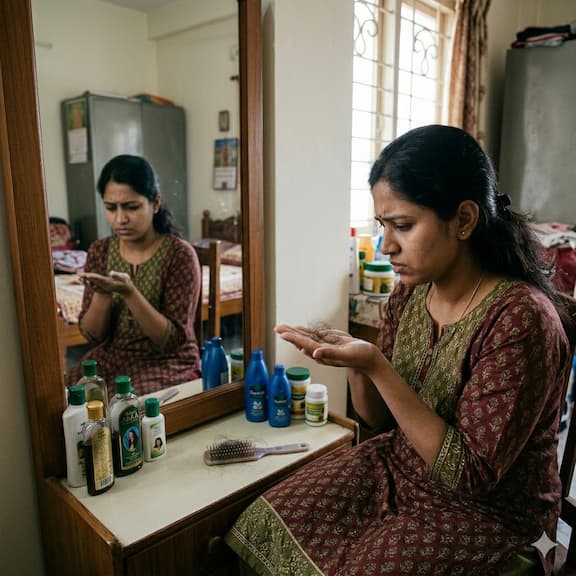
You follow a careful hair care routine. You oil regularly, switch shampoos every few months, take biotin capsules, and avoid heat styling. And yet, every comb stroke brings away more hair than it should. The pillow catches strands. The shower drain fills faster than it empties.
If this sounds familiar — and if you live in Delhi, Bangalore, Mumbai, Hyderabad, or any of India's high-stress, high-pollution, hard-water cities — your hair fall likely has not one cause, but several operating simultaneously.
This is why single-ingredient solutions almost never work. DHT blockers that ignore scalp inflammation. Anti-dandruff shampoos that strip the scalp's protective oils. Protein treatments that ignore oxidative damage. The problem is that most products are designed around one mechanism of hair loss — while your hair is losing the battle on multiple fronts at once.
In this guide, we break down exactly what is happening at a follicular level, what Ayurveda has always known about treating hair fall systemically, and how one precisely formulated product addresses all five root causes in a single application.
What Is Normal Hair Fall — And When Should You Be Concerned?
The average human scalp has between 100,000 and 150,000 hair follicles. Each follicle cycles through three phases: anagen (active growth, 2–6 years), catagen (transition, 2–3 weeks), and telogen (resting and shedding, 2–3 months). Losing 50–100 strands per day is completely normal — these are follicles completing their natural cycle.
The problem begins when the balance tips: either more follicles than usual enter the telogen (shedding) phase simultaneously, or the anagen (growth) phase shortens so dramatically that hair never reaches its full length before falling. Both result in visibly thinner hair, a wider parting, and more strands on the floor.
Here is how the most common forms of hair fall present in India, and which root cause typically drives each:
| Type of Hair Fall | What It Looks Like | Primary Root Cause |
|---|---|---|
| Androgenetic Alopecia | Thinning at the crown/temples; receding hairline (men); widening parting (women) | DHT hormone buildup |
| Telogen Effluvium | Diffuse shedding across the whole scalp; triggered 2–3 months after a stressor | Stress, illness, nutritional deficiency, post-pregnancy |
| Traction / Breakage | Short, jagged broken strands; worst along hairline or part | Scalp dryness, mineral buildup, mechanical damage |
| Dandruff-Driven Shedding | Itchy, flaky scalp; hair fall accompanied by white flakes | Scalp inflammation, fungal overgrowth, pH imbalance |
| Mixed / Multi-cause | Combination of above; most common presentation in Indian adults over 25 | Multiple simultaneous causes — requires multi-action treatment |
Most adults experiencing chronic hair fall in India fall into the "mixed / multi-cause" category — which is precisely why treatments targeting only one mechanism rarely deliver satisfactory results.
The 5 Root Causes of Hair Fall — What Is Actually Happening in Your Follicles
Understanding the biology of hair fall is the first step to treating it intelligently. Here are the five most prevalent and scientifically documented causes of hair fall in Indian adults:
Dihydrotestosterone (DHT) is a potent androgen hormone derived from testosterone by the enzyme 5-alpha reductase. In genetically susceptible individuals — both men and women — DHT binds to androgen receptors in hair follicles and triggers a process called follicular miniaturisation: the follicle progressively shrinks with each hair cycle, producing shorter, finer hair until it eventually stops producing hair altogether.
This is the primary driver of androgenetic alopecia (the most common form of hair loss globally), and it affects an estimated 58% of Indian men over 40 and a growing proportion of women — particularly those with PCOS, thyroid imbalances, or post-menopausal hormonal shifts.
The Ayurvedic connection: Several herbs used in traditional Ayurvedic hair preparations have been found to contain natural 5-alpha reductase inhibitors — meaning they block the enzyme that converts testosterone to DHT. Pumpkin Seed Oil and Kalonji (Black Seed Oil) are among the most studied. A 2014 randomised controlled trial found Pumpkin Seed Oil supplementation produced a 40% increase in hair count in men with androgenetic alopecia — comparable to pharmaceutical interventions, without the side effects.
Hair follicles are among the most metabolically active structures in the human body — each one requires a constant, rich supply of oxygen and nutrients delivered through the dermal papilla, a tiny blood vessel cluster at the follicle base. When scalp circulation is compromised, follicles are effectively starved: they produce weaker, thinner hair and shed prematurely.
Common causes of poor scalp circulation in India include chronic stress (which constricts blood vessels), a sedentary desk-bound lifestyle, tight hairstyles, and scalp buildup from hard water minerals or product residue that physically restricts blood flow in surface capillaries.
The research: A 2023 study in the journal eClinicalMedicine found that scalp massage performed for just 4 minutes daily over 24 weeks significantly increased hair thickness compared to controls — entirely through mechanical stimulation of blood flow. Rosemary oil applied topically has been shown to produce outcomes comparable to 2% minoxidil in improving hair count over 6 months, primarily by stimulating microcirculation.
Chronic inflammation on the scalp — whether from dandruff, seborrheic dermatitis, contact dermatitis, or hard water pH disruption — triggers an immune response that releases pro-inflammatory cytokines (particularly IL-1α and TNF-α) in the scalp tissue. These cytokines directly inhibit hair growth by shortening the anagen phase and inducing premature catagen (follicle regression).
Malassezia globosa, the yeast responsible for dandruff, feeds on scalp sebum and produces oleic acid as a byproduct — a fatty acid that penetrates the scalp's barrier, triggers an immune response, and elevates scalp pH above its healthy 4.5–5.5 range. Studies show that dandruff affects approximately 50% of the global adult population, and its prevalence is higher in humid, urban Indian environments.
The Ayurvedic answer: Traditional formulations for scalp inflammation have always centred around antimicrobial and anti-inflammatory herbs — Tea Tree, Sage, Ginger, Green Tea, and Neem. Modern research confirms these herbs suppress Malassezia growth, reduce scalp cytokine levels, and restore pH balance — addressing the inflammatory cascade at its source rather than simply masking flaking with zinc pyrithione (which has documented long-term side effects including scalp sensitivity).
Every time your scalp is exposed to UV radiation, environmental pollution (Delhi's AQI averages among the world's worst for sustained periods), cigarette smoke, or psychological stress, reactive oxygen species (ROS) — commonly called free radicals — are generated. These unstable molecules attack the lipid membranes of follicle cells, damage mitochondrial DNA, and directly accelerate cell apoptosis (death) in both hair follicle keratinocytes and melanocytes (the pigment-producing cells responsible for hair colour).
Oxidative stress is the single most documented accelerant of premature greying — specifically through the depletion of catalase, the enzyme responsible for neutralising hydrogen peroxide that naturally accumulates in follicles. When catalase activity falls and hydrogen peroxide builds up, it bleaches melanin from within — turning hair grey or white prematurely.
The protection: Antioxidant-rich botanicals and actives applied topically to the scalp can directly neutralise ROS and slow oxidative follicle damage. Amla (Indian Gooseberry) contains the highest natural concentration of Vitamin C of any food — 20x that of oranges — and also contains tannins and ellagic acid that provide broad-spectrum antioxidant protection. Coenzyme Q10 and Vitamin E, when applied in an oil matrix that facilitates dermal absorption, provide pharmaceutical-grade antioxidant activity at the follicle level.
Hair follicles are among the body's fastest-dividing cells — they require a constant supply of micronutrients to sustain this activity. When key nutrients are deficient, follicles are among the first structures the body deprioritises — redirecting available resources to vital organs.
India has among the world's highest rates of nutritional deficiencies linked to hair fall: ICMR data indicates that over 50% of Indian women of reproductive age are anaemic (iron deficiency), with iron-deficiency hair fall being the leading nutritional cause of hair loss in women. Zinc deficiency affects an estimated 17–25% of the Indian population. Vitamin D insufficiency affects over 70% of urban Indians due to indoor lifestyles and high-SPF sunscreen use.
- Iron — Required for DNA synthesis in follicle cells; deficiency shortens the anagen phase and causes diffuse shedding
- Zinc — Critical for the enzyme systems that regulate hair follicle cycling; deficiency causes telogen effluvium
- Biotin — A B-vitamin that supports keratin production; deficiency (often from raw egg consumption) causes brittle, thinning hair
- Vitamin D — Has recently been shown to play a role in creating new hair follicles; deficiency is associated with both alopecia areata and telogen effluvium
Note: Topical treatments cannot replace internal nutritional deficiencies — this is where Botani Bestie's complimentary doctor consultation offers particular value for chronic hair fall sufferers.
What Ayurveda Has Always Known — And Why Modern Science Is Catching Up
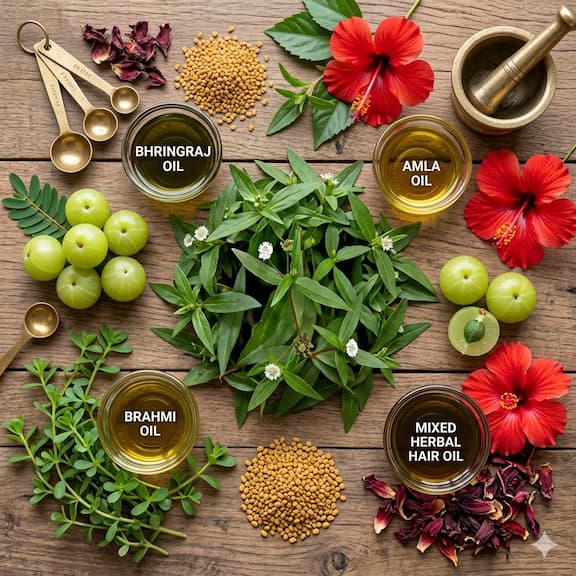
Ayurvedic texts — the Charaka Samhita, Sushruta Samhita, and Ashtanga Hridayam — documented hair fall treatments over 5,000 years ago. The ancients understood that Kesha (hair) is a byproduct of Asthi Dhatu (bone tissue) and a reflection of the entire body's systemic health. They did not treat the hair — they treated the body through the scalp.
The medicated oils prescribed in these texts — called Taila — were complex, multi-herb formulations designed to simultaneously address all the factors Ayurveda identified as causing hair loss: excess Pitta (heat/inflammation), Vata imbalance (dryness and poor circulation), and Kapha excess (scalp congestion and follicle blockage).
This holistic, multi-pathway approach is precisely what modern trichology has arrived at independently. Contemporary hair fall research now confirms that the most effective interventions address DHT, circulation, inflammation, and oxidative stress simultaneously — which is exactly what Ayurvedic Taila formulations were designed to do, centuries before any of these mechanisms were identified in a laboratory.
The difference today is that we can verify which ingredients work, why they work, and at what concentration — and then formulate without the harmful fillers (mineral oils, synthetic preservatives, artificial fragrances) that undermine the efficacy of traditional preparations.
Product Spotlight: Botani Bestie Total Restore Hair Oil
Every ingredient in Total Restore Hair Oil was selected to address one or more of the five root causes described above — creating a synergistic, multi-mechanism formula that works where single-ingredient products fail. Here is a complete breakdown of what is in the bottle and what each component does:
The Herb Matrix: 13 Ayurvedic Herbal Extracts
These are not token inclusions — each herb addresses a specific, documented mechanism of hair fall:
- Bhringraj (Eclipta alba) — "The King of Hair" in Ayurveda. Stimulates follicular activity, extends the anagen growth phase, and has outperformed 2% minoxidil in several hair growth studies. Active compounds: wedelolactone, ecliptine.
- Brahmi (Bacopa monnieri) — Reduces cortisol-driven hair loss, strengthens roots at a cellular level, improves scalp microcirculation.
- Rosemary Leaf Extract — Inhibits DHT binding to follicle receptors, stimulates microcirculation. A 2023 clinical study found it equivalent to 2% minoxidil for hair count over 6 months.
- Hibiscus Extract — Revitalises dormant follicles, rich in amino acids and Vitamin C. Traditionally used across South India to promote thick, long hair.
- Onion Extract (Allium cepa) — Rich in quercetin and sulphur. A randomised controlled trial showed onion juice significantly reduced hair fall and improved density in 4–8 weeks. Natural DHT inhibitor.
- Green Tea Extract — EGCG (epigallocatechin gallate) directly inhibits 5-alpha reductase (DHT enzyme) and reduces scalp inflammation.
- Sage Leaf Extract — Antimicrobial and astringent; balances scalp sebum and prevents Malassezia overgrowth. Rich in ursolic acid, a natural follicle stimulant.
- Methi (Fenugreek) Extract — Loaded with lecithin and nicotinic acid. Strengthens hair shafts, moisturises the scalp, and significantly reduces dandruff and breakage.
- Amla (Phyllanthus emblica) — Nature's richest source of Vitamin C. Protects melanocytes from oxidative stress. Inhibits hydrogen peroxide accumulation in follicles — the primary biochemical driver of premature greying.
- Jatamansi (Nardostachys jatamansi) — Calming nervine herb that reduces stress-driven hair fall and is traditionally revered for preserving natural hair pigment. Contains antioxidants that directly protect melanin-producing cells.
- Mulethi (Liquorice Root) — Anti-inflammatory; nourishes scalp tissue and helps maintain the healthy pH that melanocyte function depends on.
- Shisham Leaf Extract — Traditional Ayurvedic inclusion for scalp nourishment and hair darkening properties. Rich in flavonoids.
- Fenugreek Mucilage Extract — A concentrated gel-like extract from Methi seeds. Forms a protective film on the hair shaft that reduces mineral penetration, friction, and moisture loss — particularly valuable in hard water conditions. Also delivers diosgenin, a steroidal compound that mimics oestrogen's hair-protective effects.
The Oil Matrix: 16 Cold-Pressed Carrier and Essential Oils
Most Ayurvedic oils rely on one or two heavy base oils. Total Restore Hair Oil uses a sophisticated 16-oil matrix — each selected for a specific function that complements the herb blend:
| Oil | Primary Function | Root Cause Addressed |
|---|---|---|
| Kalonji (Black Seed Oil) | Natural DHT blocker via thymoquinone; rich in omega-3 fatty acids | DHT / Hormonal hair fall |
| Pumpkin Seed Oil | 5-alpha reductase inhibitor; rich in zinc for follicle health | DHT / Hormonal hair fall |
| Black Sesame Oil | Rich in linoleic acid (melanin precursor); sesamol is a powerful antioxidant | Premature greying / Oxidative stress |
| Argan Oil | Vitamin E + oleic acid; deep conditioning that seals the cuticle and adds brilliant shine | Dryness / Breakage |
| Jojoba Oil | Molecular structure mimics scalp sebum; balances oil production, prevents follicle clogging | Scalp balance / Circulation |
| Grapeseed Oil | "Dry" oil — fast-absorbing, non-comedogenic; delivers actives without greasiness | Lightweight carrier / Daily use |
| Rice Bran Oil | Ferulic acid and gamma-oryzanol — both antioxidants that protect follicle cells | Oxidative stress / Breakage |
| Hemp Seed Oil | Perfect 3:1 omega-6 to omega-3 ratio; feeds follicle cells and strengthens strand cortex | Structural repair / Strength |
| Castor Oil | Ricinoleic acid improves scalp blood circulation; antimicrobial against dandruff-causing fungi | Circulation / Dandruff |
| Avocado Oil | Penetrates the hair shaft cortex; reduces protein loss and improves elasticity | Breakage / Repair |
| Almond, Wheat Germ, Flaxseed & Sunflower Oils | Complete the omega fatty acid and vitamin E profile; nourish scalp tissue and improve strand flexibility | Overall nourishment |
| Coconut Oil | Lauric acid penetrates hair shaft more deeply than any other oil; prevents protein loss during washing | Protection / Protein retention |
The Science-Backed Actives: Where Ayurveda Meets Modern Dermatology
Coenzyme Q10
A cellular energy compound that fuels the mitochondria of follicle cells, repairs oxidative damage to the hair shaft, and significantly improves strand elasticity and resistance to breakage. Concentration in hair follicles naturally declines with age — topical supplementation directly counteracts this.
Vitamin E (Tocopherol)
The gold-standard topical antioxidant. A clinical study found 8 months of Vitamin E supplementation produced a 34.5% increase in hair count compared to placebo — through reduction of oxidative stress in the scalp. As a lipid-soluble vitamin, it integrates directly into follicle cell membranes, providing structural protection.
Bisabolol
Derived from chamomile. A clinically studied anti-inflammatory and skin-soothing active that reduces scalp redness, sensitivity, and irritation — addressing the inflammatory environment that drives follicle-level shedding. Also enhances skin penetration of other actives, improving the overall delivery efficiency of the formula.
The Aromatherapy Layer: 8 Essential Oils for Stress, Circulation, and Scalp Health
Most hair oils are either heavily synthetic-scented or carry the pungent medicinal smell of Ayurvedic preparations. Total Restore Hair Oil features a curated blend of Lavender, Frankincense, Rose Geranium, Cedarwood, Rosemary, Ylang Ylang, Sweet Orange, and Vetiver — not just for fragrance, but for documented scalp and systemic benefits:
What Makes Total Restore Hair Oil Different From Everything Else on the Market
- 13 clinically studied Ayurvedic herbal extracts
- 16 cold-pressed carrier oils — including DHT-blocking Kalonji and Pumpkin Seed
- 8 therapeutic essential oils for circulation and stress relief
- Coenzyme Q10, Vitamin E, and Bisabolol — pharmaceutical-grade actives
- Non-sticky, fast-absorbing formula suitable for daily use
- GMP-certified manufacturing in India
- Free doctor consultation included with every purchase
- No sulfates (react with hard water to form residue)
- No parabens (endocrine disruptors linked to hormonal hair fall)
- No silicones (mask damage without treating it; cause buildup)
- No mineral oil (petroleum-derived; clogs follicles)
- No synthetic fragrance (common allergen; triggers scalp inflammation)
- No synthetic colour (zero benefit; potential irritant)
- No alcohol (drying; counteracts every moisturising ingredient)
How to Use Total Restore Hair Oil — For Maximum Results
The application method matters as much as the formula. Here is the optimal protocol, based on Ayurvedic tradition and modern dermatological guidance on scalp penetration:
Step 1 — Warm the Oil (Optional but Recommended)
Gentle warming increases the kinetic energy of oil molecules, improving their penetration through the scalp's stratum corneum. Place the bottle in warm water for 2–3 minutes, or warm a small amount in your palms by rubbing them together vigorously. Do not microwave or overheat.
Step 2 — Section and Apply Directly to the Scalp
Part your hair into sections and apply the oil directly to the scalp — not just the hair. The active ingredients target the follicle, which is in the skin. Use a dropper or your fingertips to distribute evenly across the scalp, paying particular attention to areas of thinning or known concern.
Step 3 — Massage in Circular Motions for 5–10 Minutes
This is not optional — it is as important as the oil itself. Circular scalp massage has been demonstrated in clinical studies to increase hair thickness through improved blood circulation to follicles. Use the pads (not nails) of your fingertips, work in small circles across the entire scalp, and apply moderate pressure. The warmth you generate further aids oil penetration.
Step 4 — Leave On for Minimum 2 Hours (Overnight Ideal)
Active ingredients need time to penetrate the scalp barrier and reach the follicle. Leaving the oil on overnight allows maximum absorption — particularly for the lipid-soluble actives like Coenzyme Q10, Vitamin E, and Bisabolol, which require extended contact time to fully penetrate the dermal layer. Protect your pillow with a soft cotton towel.
Step 5 — Wash Off with a Sulfate-Free Shampoo
Sulfate shampoos strip the scalp too aggressively after an oil treatment, removing both the oil and the scalp's natural sebum. Use Botani Bestie's Total Rebalance Shampoo for best compatibility — its ACV and Fermented Rice Water base gently removes oil residue while continuing to nourish the scalp.
What Real Customers Are Saying
Total Restore Hair Oil holds a 4.8 / 5 rating across 113+ verified reviews. Here is a representative selection across different hair concerns:
"The blend of Bhringraj, Methi and Kalonji reduced my hair fall drastically. Truly herbal and effective."
— Aditi Rawal, Delhi"Total Restore Hair Oil is now my go-to for scalp care, hair regrowth, and keeping premature greying at bay."
— Meenakshi Pillai, Thiruvananthapuram"Used it after delivery — Methi, Amla and Bhringraj really helped reduce hair fall. My hair feels so much stronger."
— Monika Dutta, Delhi"After years of dandruff, Tea Tree and Brahmi in this oil finally fixed it. My scalp feels completely balanced."
— Karan Mehta, Delhi"Regular use with Bhringraj, Amla and Brahmi has made my hair visibly thicker and stronger in just 6 weeks."
— Smita Thakur, Pune"From dull to vibrant — this oil truly restores hair health inside out. The fragrance alone is worth it."
— Anjali Verma, LucknowThe Hair Oil Built to Beat Every Cause of Hair Fall
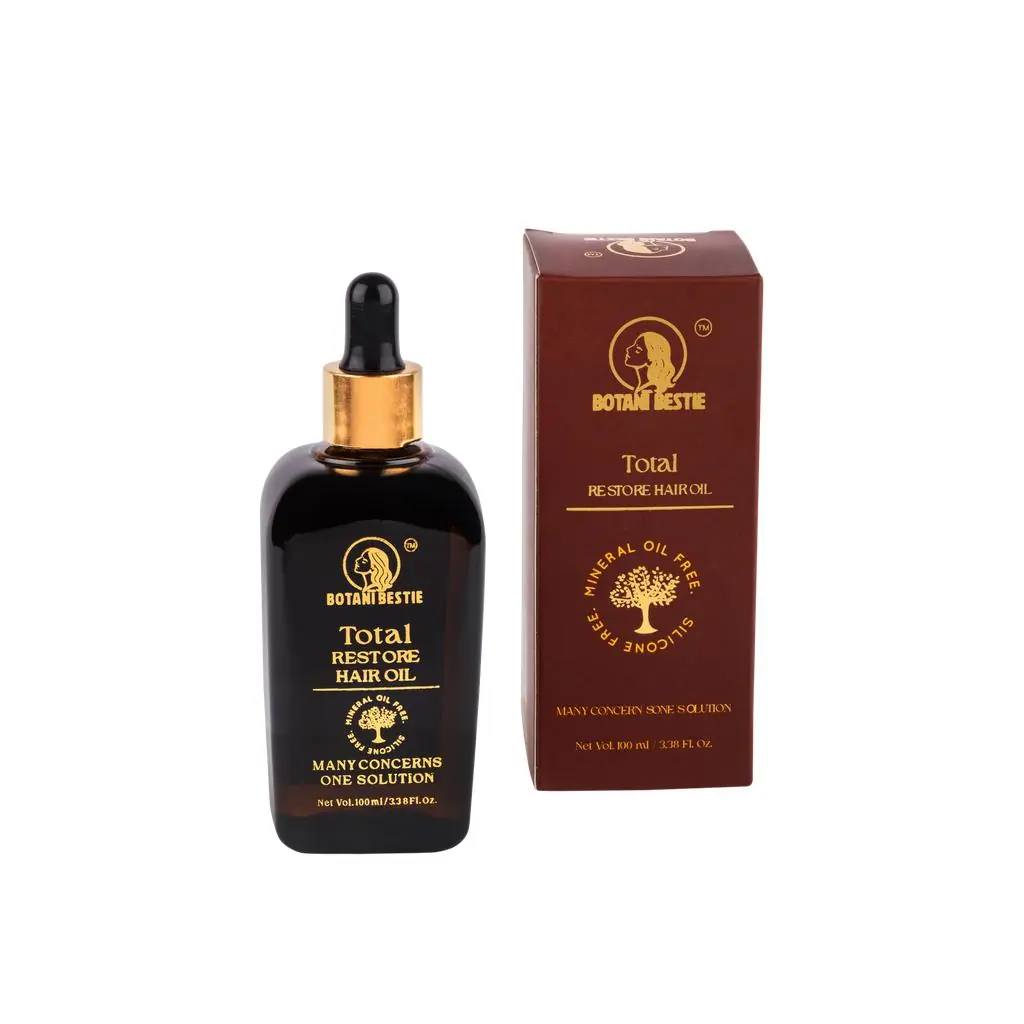
Total Restore Hair Oil
by Botani Bestie — ₹699 ₹950 26% Off
Every ingredient in Total Restore Hair Oil was selected to address a specific, documented cause of hair fall — creating a formula that works across all five mechanisms simultaneously:
- Kalonji + Pumpkin Seed + Onion + Green Tea — Block DHT and address hormonal hair fall
- Bhringraj + Rosemary + Castor + Brahmi — Stimulate scalp circulation and reactivate dormant follicles
- Bisabolol + Sage + Methi + Hemp Seed — Calm scalp inflammation and eliminate dandruff-driven shedding
- CoQ10 + Vitamin E + Amla + Rice Bran — Neutralise oxidative stress and protect against premature greying
- Argan + Avocado + Coconut + Flaxseed — Repair structural damage and eliminate breakage
Sulfate-free · Paraben-free · Silicone-free · Mineral oil-free · Cruelty-free · Made in India
Quick Reference — Total Restore Hair Oil at a Glance
| Hair Concern | Key Ingredients That Address It | Expected Timeline |
|---|---|---|
| Excess hair fall / shedding | Bhringraj, Onion Extract, Brahmi, Rosemary, Kalonji | 4–6 weeks |
| Thinning / low density | Pumpkin Seed Oil, Bhringraj, Castor Oil, Hibiscus, CoQ10 | 8–12 weeks |
| Dandruff & itchy scalp | Sage, Green Tea, Methi, Hemp Seed Oil, Bisabolol | 2–3 weeks |
| Dryness & frizz | Argan, Jojoba, Avocado, Coconut, Fenugreek Mucilage | 1–2 weeks |
| Breakage & split ends | Wheat Germ, Flaxseed, Hemp Seed, Vitamin E, Avocado | 3–4 weeks |
| Premature greying | Amla, Jatamansi, Black Sesame Oil, CoQ10, Mulethi | 12+ weeks (preventive) |
| Overall scalp health & shine | Full 40+ ingredient synergy | Immediate improvement |
Frequently Asked Questions
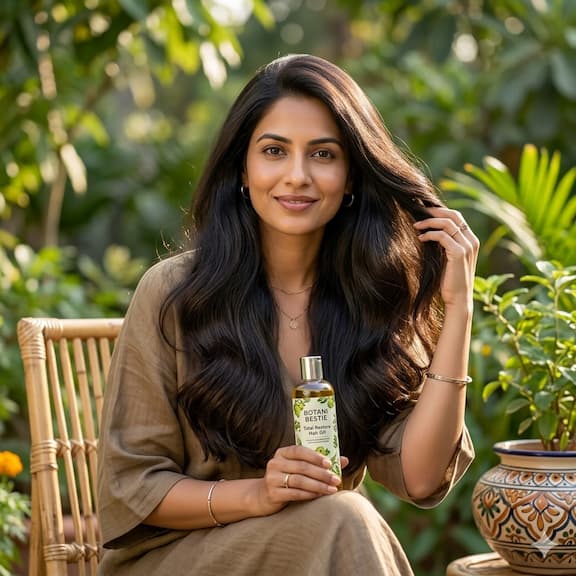
The Good News: Hair Fall Is Reversible When You Treat the Root Causes
Hair fall is not inevitable. The follicles causing your hair loss are, in most cases, still alive — simply miniaturised, inflamed, DHT-suppressed, or oxygen-starved. The right combination of botanical actives can reverse all of these conditions.
The key insight is this: you cannot out-treat hair fall with a single-ingredient solution when multiple mechanisms are operating simultaneously. The solution must work across all five root causes — and it must do so without introducing new toxins that create new problems.
That is what Ayurveda has always understood. And what Total Restore Hair Oil was formulated to deliver.
Shop Total Restore Hair Oil → Free Hair Consultation"Treat the cause, not the strand — and the hair takes care of itself."
Ready to make the honest switch?
Our products are built on the same principles as every article we write — pure ingredients, real results, nothing to hide.
Explore Our Products