Best Face Wash for Oily Skin in India (2025) — The Dermatologist-Backed, Science-First Guide
By 11am, the shine is back. By 2pm, the T-zone is slick. By evening, the makeup has slid off. If this is your daily reality in India's heat and humidity — your face wash is probably part of the problem. Here's how to find one that actually fixes it.
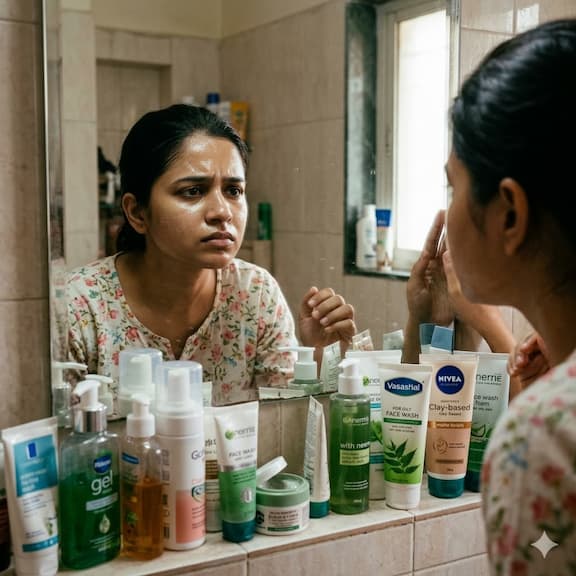
Oily skin affects a disproportionately high percentage of people in India compared to Western populations — and the reasons are not random. A combination of genetic predisposition toward larger sebaceous glands, year-round high humidity and heat, UV radiation that overstimulates oil production, and hormonal patterns common in Indian demographics creates a perfect storm for excess sebum.
The result: clogged pores, blackheads, breakouts, enlarged-looking pores, and the relentless midday shine that no amount of blotting fully fixes. And ironically, many of the face washes marketed specifically for oily skin make the problem significantly worse — by over-stripping the skin and triggering a compensatory surge in sebum production.
This guide cuts through the marketing noise. We explain exactly why your skin is oily, which ingredients actually regulate sebum at a biological level, which ingredients make it worse, and what to look for in a face wash that genuinely works for Indian skin conditions — not just in clinical trials conducted in European climates.
💡 What Type of Oily Skin Do You Have?
Most face washes treat all oily skin the same. Yours needs a solution matched to your specific pattern. Identify yours below — each has its own section in this guide:
👉 Scroll to your type for the exact ingredients and formula recommendation.
Why Oily Skin is So Much More Common in India — The Science
Oily skin (clinically called seborrhoea) occurs when the sebaceous glands — microscopic oil-producing structures attached to hair follicles across the face — overproduce sebum beyond what the skin needs for protection and moisture. A 2022 PubMed overview of sebaceous gland physiology identified several key risk factors — and India scores highly on most of them:
🌡️ Hot, humid climate
Multiple peer-reviewed studies confirm a direct correlation between ambient humidity and sebum production. Sebaceous glands produce significantly more oil in humid conditions — a biological response originally designed to maintain the skin's moisture barrier in dry environments but becomes problematic in India's tropical climate. India's average annual humidity ranges from 60–90% in most major cities, placing residents in near-permanent high-sebum territory.
☀️ UV radiation and pollution
India's UV index averages 8–11 year-round — among the highest globally. UV radiation triggers sebum production through inflammation signalling — the skin's wound-healing response to UV damage stimulates the sebaceous glands as part of its repair mechanism. Urban air pollution (PM2.5 particles, nitrogen oxides) further deposits oxidative stressors on the skin surface, triggering additional inflammatory oil production.
🧬 Genetic sebaceous gland size
Research confirms that sebaceous gland size — which directly determines sebum output — has a strong genetic component. South Asian populations have a higher genetic predisposition toward larger sebaceous glands than Northern European populations, which is why oily skin is considerably more prevalent in India than in, for example, Scandinavia. Understanding this genetic baseline matters: the goal of treatment is regulation, not elimination of sebum.
⚗️ Hormonal patterns
Androgens — particularly testosterone and DHT — are the primary hormonal drivers of sebaceous gland activity. Higher androgen levels (common in both men and women with PCOS, a condition with a high prevalence in India — estimated at 22.5% of Indian women of reproductive age) directly increase sebum production. Puberty, the menstrual cycle, pregnancy, and stress-induced cortisol spikes all create hormonal fluctuations that worsen oiliness in Indian skin.
5 Face Washing Mistakes That Are Making Your Oily Skin Worse
Before choosing the right face wash, it is worth understanding the common mistakes that actively worsen oily skin — most of which are extremely prevalent in Indian skincare routines:
| # | Mistake | What Happens to Your Skin | The Fix |
|---|---|---|---|
| 1 | Washing more than twice a day | Over-stripping triggers compensatory sebum surge — skin gets oilier within 2–3 hours | Wash exactly twice daily: morning and evening. Blot with paper mid-day if needed. |
| 2 | Using sulfate-heavy face washes (SLS/SLES) | Disrupts skin barrier, removes protective sebum entirely, pH spike — triggers massive rebound oil production | Switch to sulfate-free cleansers using mild surfactants (Sodium Cocoyl Isethionate, Decyl Glucoside) |
| 3 | Skipping moisturiser | Skin detects dehydration, sebaceous glands overproduce oil to compensate — worsens shine | Use an oil-free, gel-based moisturiser with Niacinamide or Hyaluronic Acid after every wash |
| 4 | Using hot water | Hot water strips oils aggressively — triggers rebound production; also dilates pores making skin look worse | Lukewarm water to cleanse, cool water rinse to finish — always |
| 5 | Using alcohol-based toners after cleansing | Alcohol strips remaining oils, disrupts acid mantle, and triggers the same rebound cycle as over-washing | Replace with alcohol-free BHA toner or Niacinamide toner if toning is part of your routine |
Myth vs. Truth — What Most People Get Wrong About Oily Skin
| Common Myth | The Scientific Truth |
|---|---|
| Oily skin doesn't need moisturiser | Skipping moisturiser dehydrates the skin — triggering even more sebum to compensate. Always moisturise with an oil-free formula. |
| Washing more = less oil | Washing more than twice a day strips the skin's acid mantle and causes rebound oil overproduction within hours. |
| Alcohol-based toners remove shine | Alcohol temporarily mattifies — then triggers the worst rebound oiliness possible as the barrier collapses. |
| A face wash that "squeaks" clean is working | That squeaky feeling means your skin barrier has been stripped — it is the sound of damage, not cleanliness. |
| Oily skin doesn't get sun-damaged | UV is a primary driver of sebum production — and India's UV index (8–11 year-round) makes SPF essential for oily skin, not optional. |
💡 If you are making even 2 of these mistakes, your current face wash is likely the problem — not your skin.
See the right formula →Ingredients That Actually Regulate Oily Skin — Backed by Clinical Evidence
Here are the ingredients with the strongest clinical evidence for oily, acne-prone Indian skin — ranked by their mechanism and depth of research:
1. Salicylic Acid (BHA) — The Gold Standard Pore Cleanser
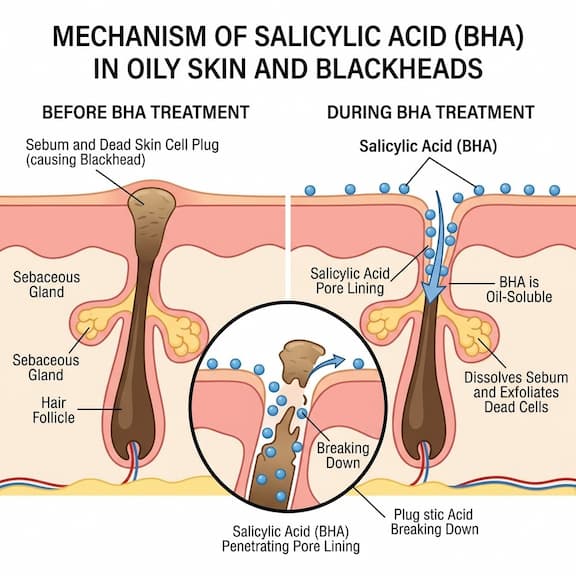
Salicylic acid is a beta-hydroxy acid (BHA) — meaning it is oil-soluble, unlike AHAs which are water-soluble. This single property makes it uniquely suited to oily skin: it dissolves in the sebum and penetrates deep inside the pore lining, where it exfoliates the dead skin cells and excess oil that form blackheads, whiteheads, and acne. No other over-the-counter ingredient reaches this depth.
Clinical evidence is compelling: clinical trials on Salicylic Acid showed a 52% improvement in skin texture after 3 weeks. It reduced surface roughness by exfoliating dead cells and unclogged pores by 45%, resulting in visibly smoother, clearer skin. A separate study confirmed that 90% of subjects agreed on a significant reduction in skin oiliness after just 6 washes with a salicylic acid-based cleanser.
Salicylic acid also has mild anti-inflammatory properties — it is actually derived from willow bark, the same plant compound behind aspirin. This makes it effective against the red, inflamed papules of active acne, not just the comedonal (blackhead/whitehead) type.
2. Niacinamide — The Sebum Regulator That Also Fades Dark Spots
Niacinamide (Vitamin B3) is one of the most versatile actives in oily skin care — and critically, one of the very few ingredients that addresses both oiliness and its most common consequence in Indian skin: post-acne dark marks and PIH.
For sebum control, niacinamide works by reducing the excretion rate of sebum from sebaceous glands — essentially regulating the gland's activity rather than stripping its output. A dermatologist review confirms that niacinamide helps minimize excess sebum for oily or acne-prone skin while simultaneously calming and reinforcing the skin barrier for dry and sensitive skin — making it one of the rare ingredients that works well across all oily skin subtypes.
Beyond sebum: niacinamide also blocks melanin transfer (reducing PIH from acne scars), suppresses inflammatory cytokines (calming active breakouts), strengthens the skin barrier (reducing future reactivity), and minimises pore appearance. For Indian oily skin — which typically presents with the full constellation of excess oil, breakouts, dark marks, and enlarged pores — niacinamide addresses every dimension simultaneously.
3. Green Tea Extract (EGCG) — The Antioxidant Sebum Suppressant
Green tea's active compound, epigallocatechin gallate (EGCG), has demonstrated sebum-suppressing effects in controlled studies. A 2012 Journal of Investigative Dermatology study found that EGCG reduced lipid synthesis in sebocytes (oil-producing cells) and inhibited DHT-driven sebaceous gland stimulation — addressing one of the hormonal drivers of excess sebum that is particularly common in Indian skin. EGCG also provides strong antioxidant protection against UV and pollution-induced inflammation — two of the primary environmental triggers for oily skin in Indian cities.
4. Aloe Vera — The Moisture-Without-Oil Hydrator
The most common mistake people with oily skin make in hot Indian weather is avoiding all hydration — which then triggers the very sebum overproduction they are trying to prevent. Aloe vera is the solution: it provides significant hydration through its high polysaccharide and glycoprotein content, without any oil, without comedogenicity, and with strong anti-inflammatory properties that calm the redness and irritation that accompany oily, acne-prone skin. Its pH (approximately 4.5) also supports the skin's natural acid mantle — reducing the alkalinity that allows acne-causing bacteria to thrive.
5. Sandalwood (Chandan) — India's Ayurvedic Sebum Controller
Sandalwood's primary bioactive compound, alpha-santalol, has been shown in multiple studies to inhibit sebaceous gland activity and reduce inflammatory cytokine production at the skin surface. Modern dermatological research has validated what Ayurvedic practitioners have known for centuries: santalol's interaction with olfactory receptors in the skin triggers a keratinocyte migration response that promotes skin regeneration and reduces sebum-driven breakouts. For a face wash specifically formulated for Indian skin, sandalwood provides culturally relevant and scientifically supported oil-control activity that most Western formulations omit entirely.
💡 Want all five of these ingredients — Salicylic Acid, Niacinamide, Sandalwood, Aloe Vera, and Green Tea — in one clean, pH-balanced formula?
See Total Radiance Face Wash →💬 Niacinamide does more than control oil — it also fades the dark marks that oily, acne-prone skin leaves behind. Read our full niacinamide guide →
What to Avoid in a Face Wash for Oily Skin — The Ingredient Blacklist
The most common surfactant in low-cost Indian face washes — and the single biggest contributor to rebound oiliness. SLS strips the skin's entire lipid layer, raises pH well above the skin's optimal 5.5, and triggers a massive compensatory sebum surge. It also damages the skin barrier, increasing sensitivity to pollution and UV — both major oily skin triggers in India. Avoid entirely.
Alcohol-based face washes feel temporarily mattifying — then trigger the worst rebound oiliness possible as the skin panics to restore its stripped moisture barrier. Alcohol also disrupts the acid mantle, enabling bacterial colonisation and worsening acne. A face wash "for oily skin" containing alcohol is one of the most counterproductive products on the market.
Fragrance is the leading cause of contact dermatitis in skincare products — and oily, acne-prone skin is particularly vulnerable to inflammation-driven breakouts. The hidden phthalate compounds in synthetic fragrance also have mild hormonal activity, potentially stimulating sebaceous glands. There is no functional benefit to synthetic fragrance in a face wash. Avoid unless from natural botanical sources.
Parabens (Methylparaben, Propylparaben) mimic oestrogen and can potentially disrupt hormonal balance — the same hormonal pathways that drive excess sebum production. For those with PCOS-related oily skin (a condition that affects an estimated 1 in 5 Indian women of reproductive age), paraben exposure is particularly worth minimising. Choose paraben-free formulas.
Finding Your Oily Skin Subtype — And the Right Formula for Each
Oily skin is not a monolithic condition — it presents in meaningfully different patterns that benefit from slightly different formulas. Identifying your subtype helps you choose the right face wash instead of defaulting to the most aggressive oil-stripping option available:
💧 Oily All Over
Profile: Shine across the entire face — forehead, nose, chin, AND cheeks — by mid-morning. Large visible pores. Frequent blackheads and whiteheads across multiple zones.
Best formula: Gel-based face wash with 2% Salicylic Acid + 4–5% Niacinamide. Twice daily, always followed by oil-free moisturiser.
Key ingredient priority: Salicylic Acid (pore depth cleaning) + Niacinamide (sebum regulation) + Green Tea (antioxidant oil suppression).
🌀 Oily and Acne-Prone
Profile: Excess sebum combined with regular active breakouts — papules, pustules, or cystic spots. Post-acne dark marks (PIH) are common and persistent.
Best formula: 2% Salicylic Acid + Niacinamide + Aloe Vera combination. The Salicylic Acid clears the comedones, Niacinamide prevents PIH and calms inflammation, Aloe Vera soothes redness.
Key ingredient priority: Salicylic Acid + Niacinamide + Aloe Vera. Sandalwood adds Ayurvedic anti-inflammatory support.
⚖️ Combination (Oily T-Zone, Normal/Dry Cheeks)
Profile: Forehead, nose, and chin (T-zone) oily with clogged pores; cheeks normal to slightly dry. The most common skin type in India — the T-zone receives the most sebaceous gland activity.
Best formula: Gentler concentration (0.5–1% Salicylic Acid) or Niacinamide-forward formula. Avoid highly aggressive BHA formulas that may over-dry the already normal cheek area.
Key ingredient priority: Niacinamide (sebum regulation without over-stripping) + Aloe Vera (balanced hydration) + mild Salicylic Acid.
🔴 Oily and Sensitive
Profile: Excess sebum combined with reactive, easily irritated skin — redness, stinging, or rosacea-like flushing. Often caused or worsened by previous use of harsh SLS-based face washes.
Best formula: Niacinamide-first formula with calming botanicals (Aloe Vera, Green Tea, Sandalwood). Start at 0.5% Salicylic Acid or avoid it initially. pH balance at 5.0 is critical.
Key ingredient priority: Niacinamide + Aloe Vera + pH 5.0 balance. Rebuild barrier first, then introduce Salicylic Acid gradually.
How to Use Your Face Wash Correctly for Oily Skin
The technique matters as much as the formula. Here is the dermatologist-recommended method for oily skin in India's climate:
- Wet your face with lukewarm water — not hot. Hot water strips the skin barrier and dilates pores, making skin more vulnerable to pollution and bacteria. Lukewarm water opens pores just enough for effective cleansing without triggering the sebum surge hot water causes.
- Use a pea-to-coin-sized amount of face wash. More product does not mean cleaner skin — it means more surfactant contact, more stripping, more rebound. A small amount massaged well is more effective and gentler than a large amount applied carelessly.
- Massage gently for 60 seconds in circular motions. This is long enough for Salicylic Acid to begin dissolving sebum inside pores, and for Niacinamide to make meaningful contact with the skin surface. Most people spend under 10 seconds — significantly reducing the active ingredient contact time.
- Focus on the T-zone and hairline — not just the cheeks. The hairline and jaw are frequent clogging zones that get neglected during cleansing. The T-zone (forehead, nose, chin) has the highest sebaceous gland density and requires the most thorough cleansing attention.
- Rinse with cool water. A cool final rinse closes the pores, seals the cuticle of any skin surface protein, and removes all surfactant residue. Residual surfactant left on skin disrupts the acid mantle and causes irritation.
- Pat — do not rub — dry with a clean, soft towel. Rubbing mechanical friction on freshly cleansed, slightly open-pored oily skin can cause micro-tears and trigger inflammation. Pat gently until 80% dry.
- Apply oil-free moisturiser immediately on damp skin. The window between cleansing and moisturising is critical — damp skin absorbs actives better, and immediate moisturisation prevents the transepidermal water loss that triggers the compensatory sebum response. Do not skip this step.
📅 What to Expect — A Realistic Week-by-Week Timeline
Oily skin in India's climate does not change overnight. Here is an honest timeline of what consistent use of the right face wash delivers — based on the clinical evidence for Salicylic Acid and Niacinamide:
| Week | What You'll Notice | What's Happening Biologically |
|---|---|---|
| Week 1 | Skin feels cleaner, less heavy after washing. Slightly less greasy feel by midday. | Salicylic Acid begins dissolving existing pore plugs. Niacinamide starts initial sebum regulation. |
| Week 2 | Fewer new blackheads forming. Active breakouts appear smaller and less inflamed. | Pore clearing accelerates. Anti-inflammatory action from Salicylic Acid and Niacinamide reduces pustule size. |
| Week 4 | Noticeably more balanced skin throughout the day. Midday shine reduced. Existing dark marks beginning to fade. | Niacinamide's melanin-blocking effect becomes measurable. Sebaceous gland activity starts to stabilise. |
| Week 6–8 | Skin texture smoother. Pores appear smaller. Oiliness significantly more manageable. Post-acne marks visibly lighter. | Full cell turnover cycle completed (4–6 weeks). Clinical studies on Salicylic Acid show 52% skin texture improvement and 45% pore congestion reduction at this stage. |
Still Struggling with Oily Skin by Afternoon? This is Exactly Why We Built This.
Most face washes for oily skin in India do one of two things: strip the skin aggressively (causing rebound oiliness by noon) or deliver such low concentrations of actives that nothing meaningful happens at all. Neither is acceptable for Indian skin dealing with 60–90% humidity, a UV index of 8–11, and the hormonal patterns that make sebum overproduction so prevalent here.
The Total Radiance Face Wash was formulated to do something different — regulate oil at the gland level, clear pores from the inside, and simultaneously address the dark marks that breakouts leave behind. All in a clean formula that does not sacrifice long-term skin health for short-term mattifying effects.
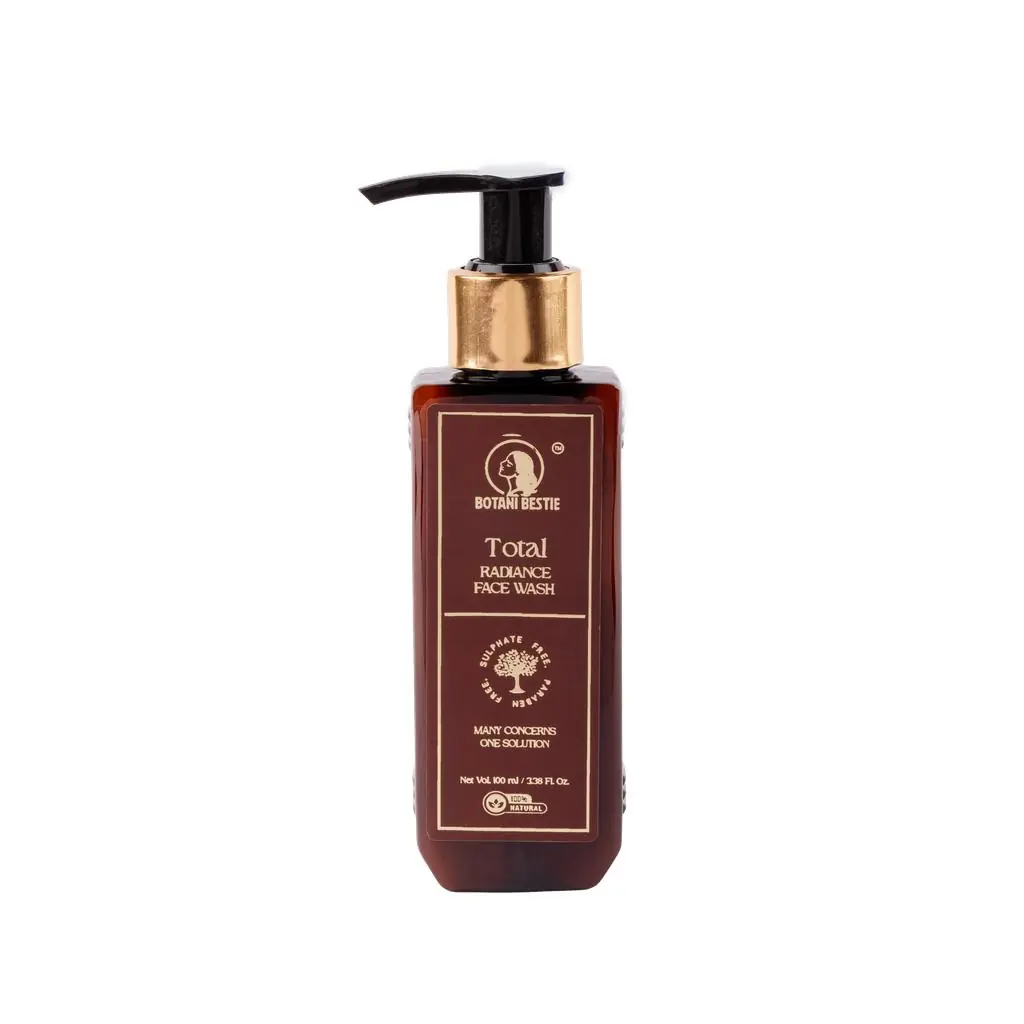
Total Radiance Face Wash
by Botani Bestie — ₹499 (MRP ₹650)
What the clinically studied actives inside deliver:
- ✔ Salicylic Acid unclogs pores by 45% and improves skin texture by 52% — clinically measured at 3 weeks of consistent use
- ✔ Niacinamide regulates sebaceous gland activity to reduce midday shine — without the rebound surge that harsh face washes cause
- ✔ Visible reduction in acne breakouts and post-acne dark marks within 4–6 weeks
- ✔ Sandalwood and Green Tea protect against India's UV and pollution-driven oil overproduction every wash
- ✔ pH 5.0 balanced — matching your skin's natural acid mantle so the cleanse strengthens rather than disrupts
100% free from sulfates, parabens, silicones, synthetic fragrance, and alcohol — the five ingredients most likely to make oily skin worse.
How it compares to a typical Indian face wash:
| Feature | Generic SLS Face Wash | Total Radiance Face Wash |
|---|---|---|
| Sulfate-Free | ❌ | ✅ |
| Salicylic Acid (pore-clearing BHA) | ❌ | ✅ |
| Niacinamide (sebum regulation) | ❌ | ✅ |
| Dark spot reduction | ❌ | ✅ |
| pH balanced at 5.0 | ❌ (typically 7–9) | ✅ |
| Paraben & fragrance free | ❌ | ✅ |
| Free dermatologist consultation | ❌ | ✅ Included |
Join the growing community of customers in India who have made the switch to clean oily skin care.
The Complete Oily Skin Routine for India — What to Use After Your Face Wash
A great face wash is the foundation, but oily skin in India's climate requires a full supporting routine to maintain oil control throughout the day:
| Step | Product Type | Key Ingredients to Look For | Why It Matters |
|---|---|---|---|
| 1 — Cleanse | Face wash (gel or light foam) | Salicylic Acid + Niacinamide + Aloe Vera | Removes excess sebum, unclogs pores, regulates oil at the gland level |
| 2 — Treat (optional AM) | Niacinamide serum or toner | 5% Niacinamide, Zinc PCA | Extended sebum regulation and dark spot treatment on clean skin |
| 3 — Moisturise | Oil-free gel moisturiser | Hyaluronic Acid, Aloe Vera, Glycerin (no mineral oil) | Prevents dehydration-driven rebound oiliness — non-negotiable step |
| 4 — Protect (AM only) | Oil-free SPF 30–50 | Matte-finish, non-comedogenic, gel or fluid texture | UV exposure directly stimulates sebum production — SPF is an oil control tool as much as sun protection |
| 5 — Treat (PM only) | BHA serum or retinol | 2% BHA, 0.025–0.1% Retinol | Overnight deep pore exfoliation and sebocyte regulation for long-term oil control |
🎁 Not Sure Which Routine is Right for Your Skin?
Get a free personalised skin consultation with our in-house dermatologist — no purchase required. WhatsApp us or book online, and receive a routine built for your specific skin type, climate zone, and concerns.
Book Free Skin Consultation → WhatsApp UsFrequently Asked Questions
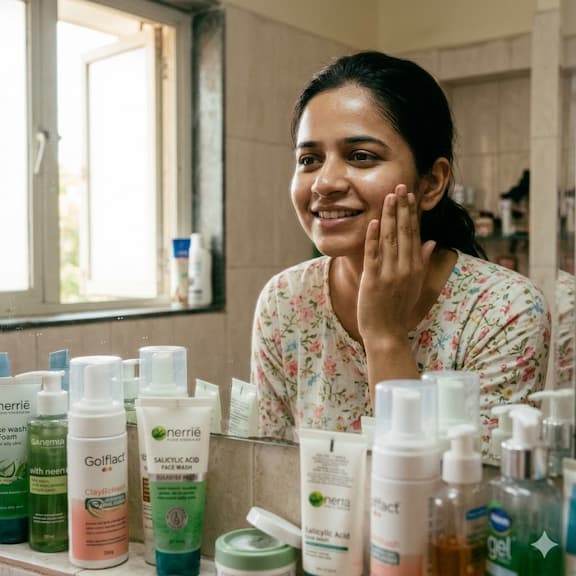
The Verdict: Stop Fighting Your Skin — Start Regulating It
The instinct with oily skin is to fight it — to strip, scrub, and blast away every trace of sebum. It is completely understandable, and completely counterproductive. The sebaceous glands are not malfunctioning — they are responding to signals: heat, UV, dehydration, hormones, and the harsh products that strip them clean each day.
The right face wash does not attack oily skin. It regulates it — gently removing excess sebum with Salicylic Acid, stabilising the gland's activity with Niacinamide, protecting against the UV and pollution triggers with Green Tea and Sandalwood, and maintaining the skin's pH at the level that keeps everything in balance.
Switch to the right formula. Give it 4–6 weeks. The midday shine will not disappear overnight — but it will reduce week by week as your skin learns that it no longer needs to compensate.
Get Clear, Oil-Free Skin — Try Now → Free Skin Consultation"Don't fight your skin. Understand it. Then give it what it actually needs."
Ready to make the honest switch?
Our products are built on the same principles as every article we write — pure ingredients, real results, nothing to hide.
Explore Our Products