Skin Barrier Repair — What It Is, Why It Breaks Down, and How to Rebuild It (2025 Guide for Indian Skin)
The skin barrier is responsible for keeping water in and aggressors out. When it breaks down — from harsh cleansers, over-exfoliation, UV exposure, or pollution — every other skin concern becomes worse: acne worsens, dark spots multiply, sensitivity escalates, and moisturisers stop working. This is the complete science guide to understanding, recognising, and systematically repairing the skin barrier, tailored to the specific challenges of Indian skin.
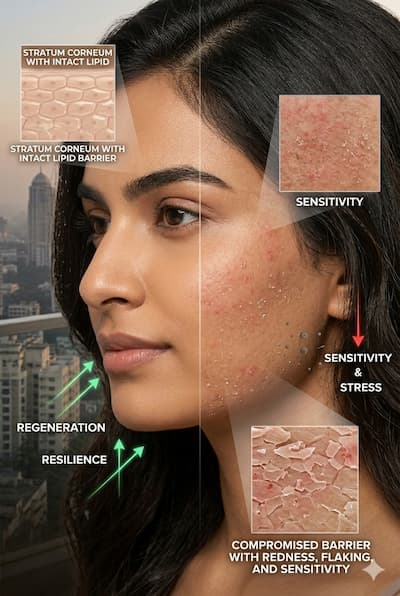
Most skin problems in India are not caused by a lack of active ingredients — they are caused, or significantly worsened, by a compromised skin barrier. When the barrier is damaged, every active ingredient you apply stings rather than works; every bit of pollution and UV radiation penetrates more deeply; your skin produces more oil to compensate for water loss; and every minor inflammatory event leaves a darker mark because the melanocytes are chronically on high alert.
The irony is that the skincare routines most aggressively marketed in India — multiple active ingredients, strong exfoliants, twice-daily foaming cleansers — are often the very things that keep the barrier in a state of chronic disruption. A 2023 survey of urban Indian women found that 68% reported new skin sensitivity after starting a multi-step active skincare routine.
Understanding what the barrier actually is, what breaks it, and what rebuilds it changes the entire approach to skincare — from adding more actives to first establishing the foundation that makes any active work safely and effectively.
⚡ Skin Barrier — Quick Reference
| What the barrier is | The stratum corneum — outermost skin layer of dead corneocytes (bricks) embedded in a ceramide-rich lipid matrix (mortar) |
| Two functions | Prevents transepidermal water loss (TEWL); shields against microbes, allergens, pollutants, and UV |
| Normal skin pH | 4.5–5.5 (mildly acidic) — barrier function degrades at higher pH |
| Key lipids (the mortar) | Ceramides (~50%), cholesterol (~25%), free fatty acids (~15%) — must be in correct ratio for full barrier function |
| Top causes of damage | Sulphate-based cleansers, over-exfoliation, high-concentration actives, high-pH products, UV exposure, pollution, hot water |
| Signs of damage | Tightness, stinging, burning from products, excess oiliness, recurring breakouts, redness, sensitivity to heat |
| Key repair ingredients | Ceramides, niacinamide, cholesterol, free fatty acids, hyaluronic acid, Centella Asiatica (madecassoside), Aloe vera |
| Repair timeline | Mild: 2–4 weeks; Moderate: 4–8 weeks; Severe: 3–6 months — with appropriate care and cessation of damaging products |
The Skin Barrier — Brick and Mortar Biology
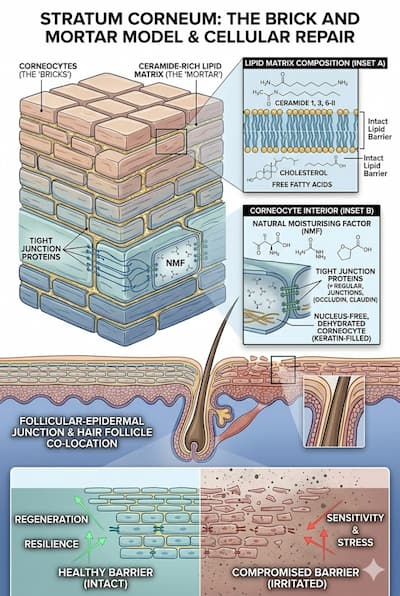
The 'skin barrier' refers specifically to the stratum corneum — the outermost layer of the epidermis, consisting of approximately 15–20 layers of flattened, cornified (dead) keratinocytes called corneocytes, embedded in a continuous lipid matrix. This structure has been described as 'bricks and mortar' — the corneocytes are the bricks, and the surrounding lipid matrix is the mortar that creates a waterproof, cohesive seal.
The Lipid Matrix — The Most Important Component
The lipid matrix filling the spaces between corneocytes is composed of three key lipid classes in a precise molar ratio:
| Lipid | Proportion | Function |
|---|---|---|
| Ceramides | ~50% | Form the backbone of the lamellar bilayer structure; 12 subtypes with different chain lengths and heads; primary water retention and barrier lipid |
| Cholesterol | ~25% | Regulates fluidity and permeability of the lipid matrix; essential for barrier homeostasis and repair signalling |
| Free Fatty Acids | ~15% | Maintain acidic pH of the stratum corneum; essential for serine protease activity and desquamation regulation |
Research by Elias et al. (the principal author of modern barrier biology) demonstrated that replacing any of these three lipid classes with a two-component mixture does not restore barrier function — all three must be present in the correct ratio (approximately 3:1:1 ceramide:cholesterol:fatty acid on a molar basis) for complete barrier repair. This is why skincare products using only ceramides — without cholesterol and fatty acids — produce incomplete barrier restoration.
Natural Moisturising Factor (NMF) — Inside the Bricks
Inside each corneocyte is a mixture of highly hygroscopic (water-attracting) compounds collectively called Natural Moisturising Factor (NMF). NMF includes amino acids (40%), pyrrolidone carboxylic acid (12%), lactate, urea, and various other molecules derived from the breakdown of the structural protein filaggrin. NMF draws and holds water within the corneocyte, keeping it plump and functional. When the barrier is compromised, filaggrin degradation is impaired and NMF content falls — contributing to the 'dehydrated even after moisturising' pattern that characterises barrier dysfunction.
Why the Skin Barrier Breaks Down — The 6 Causes Most Relevant in India
Sodium lauryl sulphate (SLS) and sodium laureth sulphate (SLES) are anionic surfactants used as the primary cleansing agents in the vast majority of Indian face washes, body washes, and shampoos. They are efficient at removing sebum, makeup, and dirt — but they also dissolve and remove ceramides and free fatty acids from the stratum corneum with every wash.
A 2016 study in the International Journal of Dermatology measured TEWL (transepidermal water loss — the primary measurement of barrier integrity) before and after a single SLS cleansing event, finding a 40–60% increase in TEWL lasting 4–8 hours. With twice-daily use — the standard face washing frequency — the barrier never has time to restore the stripped lipids before the next cleansing event. The result is a chronically disrupted barrier maintained in a state of permanent partial damage.
The pH problem: Standard Indian face washes are typically formulated at pH 7–9, significantly above the skin's natural acidic pH of 4.5–5.5. High-pH products disrupt serine protease activity, impair lipid processing in the stratum corneum, and favour colonisation by pathogenic bacteria (S. aureus) over the naturally acidic-tolerant beneficial microbiome. Switching to a sulphate-free cleanser at pH 4.5–5.5 is often the single most impactful change for barrier recovery.
AHAs (glycolic acid, lactic acid) and BHAs (salicylic acid) accelerate the natural desquamation (shedding) of corneocytes by dissolving the corneodesmosomes — the protein bridges holding corneocytes together at the surface. Used appropriately, this produces the cellular turnover that results in brighter, smoother skin. Used too frequently or at too high a concentration, exfoliants remove corneocytes faster than the epidermis can replace them, literally thinning the stratum corneum and exposing younger, immature cells to the environment before they have completed the ceramide-loading process required for barrier function.
The counter-intuitive clinical pattern: many people experiencing barrier-compromised skin are those using the most actives. Skin that suddenly becomes sensitive to products that were previously tolerated, or that breaks out in a new way after starting a new active routine, is frequently a case of over-exfoliation-driven barrier disruption. The fix is counterintuitive: stop the actives, return to basics for 4–6 weeks, then reintroduce one at a time at appropriate frequency.
UV radiation — both UVA and UVB — directly damages the stratum corneum lipid matrix. UV generates reactive oxygen species (ROS) that oxidise ceramides and free fatty acids in the lipid matrix, converting functional barrier lipids into oxidised byproducts that cannot perform their water-retention and barrier roles. Additionally, UV radiation impairs filaggrin processing in the epidermis, reducing NMF production and compromising corneocyte hydration from within.
In India's UV environment — UV Index regularly above 8–10 in most cities year-round — unprotected skin undergoes chronic, cumulative UV-driven barrier lipid oxidation. Daily SPF 50 is therefore not merely an anti-ageing measure: it is a barrier preservation strategy. Skin without daily sun protection develops progressively impaired barrier function that no amount of ceramide moisturiser can fully compensate for while UV exposure continues unprotected.
Urban air pollution — particulate matter (PM2.5 and PM10), nitrogen dioxide, ozone, and polycyclic aromatic hydrocarbons — directly assaults the skin barrier in multiple ways. Particulate matter is small enough to deposit on and between corneocytes, where it generates ROS that oxidise barrier lipids. Ozone directly reacts with vitamin E and squalene in the skin surface, generating lipid peroxides that degrade barrier integrity. A 2020 study in Journal of Investigative Dermatology found that urban Indian women in high-pollution environments had measurably higher TEWL and lower ceramide content per unit skin area than rural age-matched controls.
Antioxidants applied topically (Vitamin C, Vitamin E, EGCG from green tea) provide a layer of free radical quenching protection against pollution-generated ROS — reducing the rate of barrier lipid oxidation. Gentle evening cleansing to remove particulate deposits, followed by immediate application of barrier repair moisturiser, is the correct urban Indian skin protocol.
Hot water accelerates the dissolution of ceramides and cholesterol from the stratum corneum — both because heat increases lipid fluidity and because hot water alone has significant surfactant-like activity on skin lipids. A 60-second hot shower increases TEWL by approximately 20–30% in the 30 minutes following exposure. Extended cleansing rituals — using a face wash for more than 60 seconds before rinsing — amplify the surfactant exposure time proportionally. The practical recommendation: cleanse with cool or lukewarm water, for no more than 30–45 seconds of surfactant contact time on the face, then rinse thoroughly and apply moisturiser within 3 minutes of pat-drying while the skin is still slightly damp (when barrier repair lipid application is most effective).
Genetic mutations in the filaggrin gene (FLG loss-of-function mutations) produce inherently compromised barrier function — affecting approximately 10% of the global population and strongly associated with atopic dermatitis (eczema), allergic rhinitis, and asthma. FLG mutations reduce NMF production, impair corneocyte hydration, and produce a baseline TEWL that is elevated from birth. Eczema, rosacea, and psoriasis all involve primary barrier dysfunction as a central pathophysiological feature — not a secondary consequence of inflammation. For these patients, daily barrier repair moisturisation with a ceramide-dominant formula is a medical requirement, not an optional luxury. Dermatologist-prescribed topical corticosteroids, while essential for acute flares, themselves impair barrier function with prolonged use and should be accompanied by intensive barrier repair moisturisation.
How to Know Your Skin Barrier Is Compromised
- Tightness and stinging immediately after cleansing, lasting 30+ minutes
- Burning sensation when applying moisturiser, serums, or actives that were previously tolerated
- Rough, flaky texture that persists despite regular moisturising
- Visible redness and surface capillary visibility that is new or worsening
- Skin looks dull and lacks luminosity even when hydrated
- Patchy dry areas interspersed with oily areas (reactive oiliness from barrier disruption)
- Moisturiser doesn't seem to work — skin feels hydrated immediately after application but dry again within hours
- New sensitivity to previously tolerated products or environmental triggers (heat, cold, wind)
- Increased breakouts in people who previously had clear skin, or worsening of existing acne
- More dark marks (PIH) from minor skin events — scratches, mild pressure — that would not previously have pigmented
- Skin 'reacts' to water alone — a sign of extremely elevated TEWL and near-complete barrier compromise
- Recurrent skin infections — Staphylococcal or fungal — due to loss of the antimicrobial acid mantle
The Indian Skin Barrier and PIH — A Special Concern
For Indian skin tones (Fitzpatrick III–VI), a compromised barrier creates a particularly severe post-inflammatory hyperpigmentation (PIH) problem. Every inflammatory event — including the mild irritation of a sensitised barrier responding to a cleanser or a hot day — triggers the melanocytes that are chronically primed by UV exposure. The result: barrier-compromised Indian skin produces dark marks from minor stimuli that would not cause visible pigmentation in an intact barrier. This is why the most important skincare step for Indian skin dealing with dark spots is often not a brightening active — it is barrier repair, which prevents the constant micro-inflammatory events that are generating new dark marks faster than any active can fade old ones. Repair the barrier first; then address the pigmentation.
How to Repair the Skin Barrier — The Evidence-Based Protocol
Phase 1: Stop the Damage (Week 1–2)
No amount of barrier repair ingredients will work while the barrier-disrupting habits continue. The first priority is identifying and eliminating all sources of ongoing barrier damage:
| Step | Action | Why |
|---|---|---|
| Cleanser audit | Switch to a sulphate-free, pH-balanced (4.5–5.5) face wash immediately | The single most impactful change — stops the twice-daily ceramide stripping that keeps the barrier disrupted |
| Active pause | Stop all AHAs, BHAs, retinoids, and high-concentration Vitamin C serums for 4–6 weeks | Actives in a compromised barrier cause more damage than benefit; the barrier must be intact for actives to work safely |
| Water temperature | Cool or lukewarm water only; no hot water on the face | Hot water accelerates ceramide removal and TEWL |
| SPF immediately | Begin daily SPF 50 if not already using — without exception | UV is the ongoing driver of barrier lipid oxidation; protection cannot wait until the barrier is repaired |
| Ingredient check | Avoid products containing alcohol denat., menthol, camphor, fragrance, and essential oils in the repair phase | These ingredients are known barrier disruptors; many 'natural' skincare products contain high concentrations of essential oils that impair barrier function |
Phase 2: Active Barrier Repair (Week 2–6)
With damaging factors eliminated, introduce evidence-supported barrier repair ingredients:
Ceramides — Replace What Was Lost
Topical ceramide application has been validated in multiple RCTs to restore barrier function and reduce TEWL. Look for ceramide-containing moisturisers that specify the ceramide subtype (ceramide NP, ceramide AP, ceramide EOS are the most studied). The ceramide:cholesterol:fatty acid ratio should be approximately 3:1:1 for optimal barrier restoration — a product containing only ceramides without co-formulated cholesterol and fatty acids will produce partial, slower repair. Apply immediately after cleansing on damp skin for maximum absorption into the stratum corneum interstices.
Niacinamide (2–5%) — The Barrier Builder
Niacinamide is the most clinically studied ingredient for stimulating the skin's own ceramide, cholesterol, and fatty acid synthesis in keratinocytes. A 2000 study in the British Journal of Dermatology found that 2% niacinamide applied twice daily for 4 weeks significantly reduced TEWL and increased ceramide content in the stratum corneum. At 2–5%, niacinamide also inhibits melanosome transfer (reducing PIH while the barrier repairs), reduces sebum secretion (reducing the cycle of over-cleansing that perpetuates barrier damage), and has anti-inflammatory activity that reduces the barrier-disrupting inflammatory mediators. It is the ideal barrier-phase ingredient for Indian skin.
Centella Asiatica (Gotu Kola / Madecassoside)
Madecassoside and asiaticoside — the active compounds of Centella asiatica — stimulate filaggrin and loricrin gene expression in keratinocytes. Filaggrin is the structural protein that forms the corneocyte envelope and is processed into NMF; increased filaggrin expression improves both the physical barrier structure and the hydration of the corneocyte from within. Centella also has potent anti-inflammatory activity that calms the barrier-disruption-induced inflammation cycle. It is the leading Asian skincare ingredient for barrier repair — validated in clinical studies for atopic dermatitis, post-procedure skin healing, and general barrier impairment.
Hyaluronic Acid + Humectants
Hyaluronic acid (HA) is not a barrier lipid and does not directly repair the stratum corneum lipid matrix — but it plays a critical supporting role by maintaining corneocyte hydration. A properly hydrated corneocyte maintains the structural integrity of the brick-and-mortar arrangement; dehydrated corneocytes shrink and create gaps in the barrier architecture. Apply HA on damp skin (it draws from atmospheric moisture and skin surface water) and immediately seal with a ceramide moisturiser — HA without an occlusive layer over it can pull water from the skin in dry environments (common in North Indian winters), worsening TEWL. Glycerin and urea are similarly effective humectants and urea (at 5–10%) additionally has documented barrier-strengthening activity.
💡 Sensitive, reactive skin that burns at almost everything? Our dermatologist can identify your barrier status and build a personalised repair protocol.
Book Free Skin Consultation →Phase 3: Maintenance and Safe Reintroduction of Actives (Week 6+)
Once the barrier has recovered — stinging and sensitivity have resolved, moisturiser hydration lasts, and skin feels comfortable after cleansing — actives can be carefully reintroduced:
- Reintroduce one active at a time, with at least 2 weeks between additions to identify any intolerance.
- Start at the lowest frequency (once weekly) and lowest available concentration before building up.
- Maintain the barrier-first routine — cleanse with sulphate-free wash, apply niacinamide and/or ceramide moisturiser every morning and evening regardless of what other actives are added.
- Never exfoliate more than 2–3x per week — the corneocyte renewal cycle is 14 days; more frequent exfoliation removes cells that haven't had time to load barrier lipids.
- SPF 50 every morning without exception — the repaired barrier cannot be maintained without UV protection in India's UV environment.
Barrier Repair for Indian Skin — Starting With the Cleanser
The cleanser is the most impactful single product for skin barrier health — because it is the product applied most frequently, at closest skin contact, and with the greatest capacity for damage. A barrier-safe cleanser eliminates the chronic twice-daily ceramide stripping that keeps most Indian skin in a state of perpetual barrier compromise.
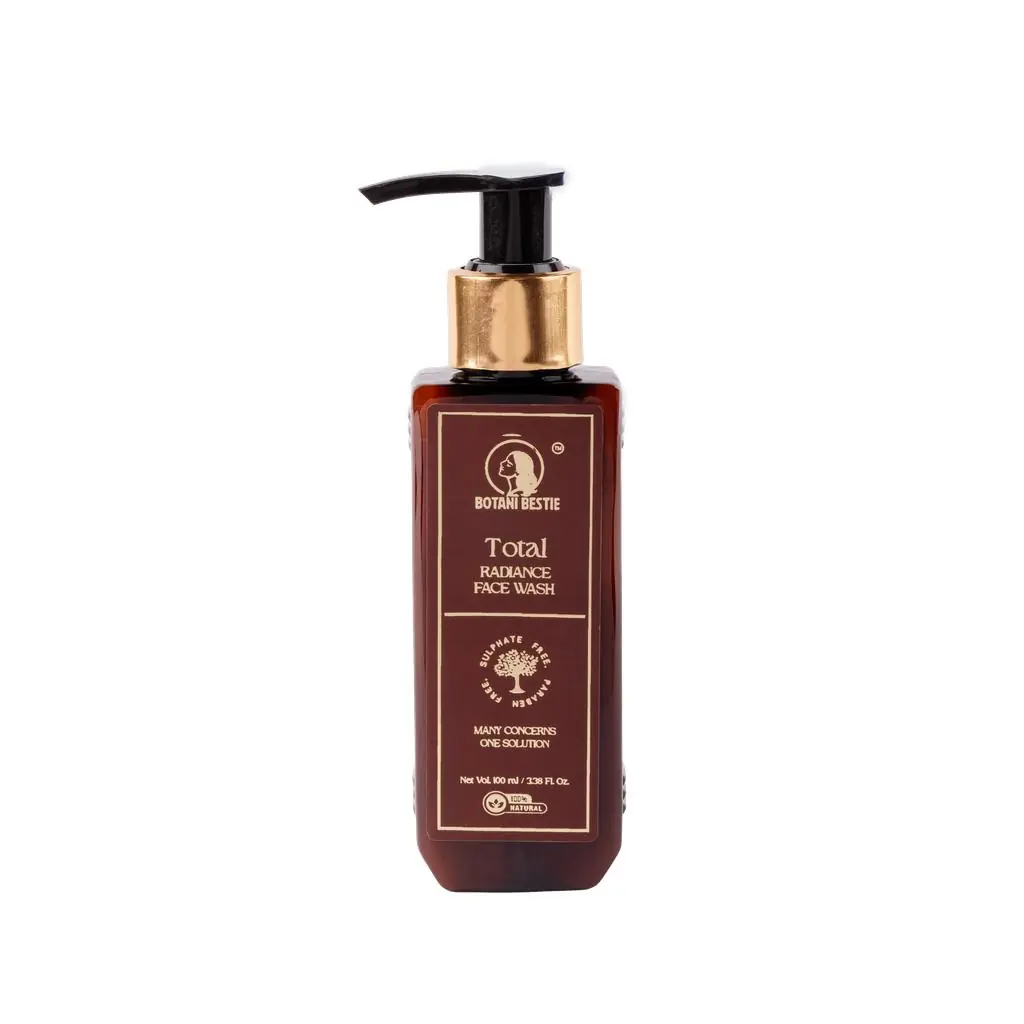
Total Radiance Face Wash
Sulphate-Free Daily Cleanser
Formulated to address the two primary causes of barrier disruption in Indian skin simultaneously: the surfactant is sulphate-free (no SLS/SLES — no barrier lipid stripping at every wash); the pH is balanced to the skin's natural acidic range (4.5–5.5) — preserving serine protease activity, lipid processing, and the beneficial skin microbiome. Niacinamide at 2% actively stimulates ceramide synthesis during the cleansing step itself — beginning barrier repair with every wash rather than merely not making it worse. Amla provides antioxidant protection against the pollution-generated ROS that oxidise barrier lipids during the day. Salicylic acid at a barrier-safe concentration manages acne without over-exfoliation. Designed specifically for the twice-daily routine that Indian skin actually follows.
Shop Total Radiance Face Wash →Sensitive, Reactive Skin? Get a Barrier Assessment
Our in-house dermatologist can assess your barrier status from your symptom pattern and current routine — identifying which products are causing damage and building a targeted repair protocol. Barrier repair is the foundation that makes every other skincare step actually work. No purchase required.
Book Free Consultation → WhatsApp UsFrequently Asked Questions
The Bottom Line: Fix the Foundation Before Adding Actives
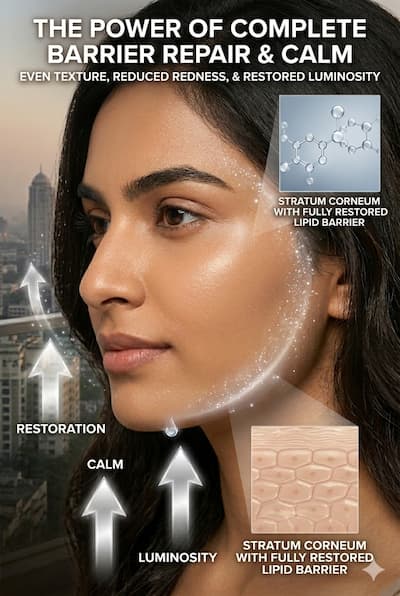
The most important insight in modern dermatology for Indian skin is this: most skin problems are made worse by barrier compromise, and most barrier compromise is caused by the routine itself — the wrong cleanser, too many actives, too frequently applied.
You cannot fade dark spots in a skin that is constantly generating new ones from barrier-disruption micro-inflammation. You cannot control acne in a skin that is over-producing oil to compensate for barrier-mediated water loss. You cannot get bright, even-toned skin in a skin that stings when you try to apply the actives that would make it bright.
The sequence that works: stop the damage first (swap the cleanser, pause the actives, add SPF), repair the barrier (ceramides, niacinamide, minimal routine), then reintroduce actives one at a time into a functioning barrier that can both tolerate and benefit from them. This is less exciting than a 10-step routine — and it is the approach that actually produces lasting results.
Shop Total Radiance Face Wash → Free Skin Consultation"You cannot treat the skin while simultaneously breaking it. Fix the barrier first — everything else works better when the foundation is sound."
Ready to make the honest switch?
Our products are built on the same principles as every article we write — pure ingredients, real results, nothing to hide.
Explore Our Products