Seborrheic Dermatitis vs Dandruff — The Difference That Changes Your Treatment
Both produce flakes. Both itch. Both involve Malassezia yeast. But they are not the same condition — and the treatment approach differs meaningfully. Using dandruff shampoo for seborrheic dermatitis, or heavy oils on a Malassezia-driven scalp, can make things significantly worse. This guide draws the clinical line clearly.
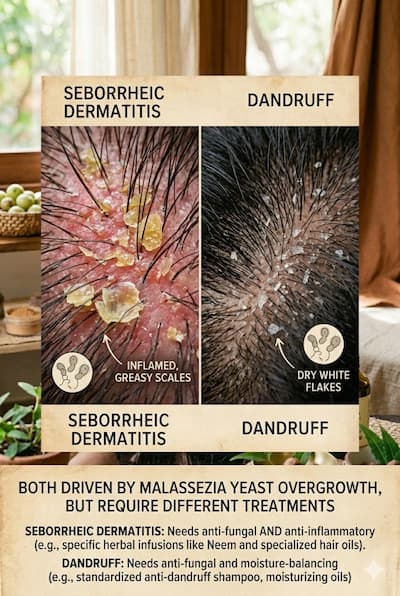
Almost everyone has experienced it at some point — white flakes on a dark shirt, an itchy scalp that keeps coming back no matter what shampoo you switch to. The standard response is to reach for an anti-dandruff shampoo. Sometimes it works. Often it doesn't — or it works briefly and stops. The reason is usually a misdiagnosis.
Dandruff and seborrheic dermatitis are related conditions — both involve Malassezia yeast — but they exist on a clinical spectrum. Dandruff is the mild, scalp-only version. Seborrheic dermatitis is the inflammatory version — involving a stronger immune response, greasier and more adherent flakes, visible redness, and often spreading beyond the scalp to the face, ears, and chest.
The distinction matters because the correct treatment approach differs. Dandruff can often be managed with the right antifungal hair care routine. Seborrheic dermatitis frequently requires medical-grade antifungal ingredients, barrier support, trigger management, and sometimes dermatologist oversight — especially for moderate-to-severe presentations.
Crucially, both conditions drive hair fall through the same mechanism: chronic scalp inflammation that disrupts the hair growth cycle. Treating the root of the inflammation — not just managing the visible flakes — is the only way to break the cycle.
⚡ Dandruff vs Seborrheic Dermatitis — Quick Reference
| Feature | Dandruff (Pityriasis Capitis) | Seborrheic Dermatitis |
|---|---|---|
| Flake appearance | White to grey, dry, fine, falls freely from hair | Yellowish, greasy, larger, sticks to scalp/hair |
| Scalp condition | Dry to normal; mild itching | Oily with redness; moderate-to-severe itch and inflammation |
| Affected areas | Scalp only | Scalp + face (nasolabial folds, eyebrows, ears), sometimes chest and back |
| Root cause | Mild Malassezia overgrowth, disrupted skin turnover | Malassezia + immune-mediated inflammatory response |
| Severity | Mild — cosmetic and social impact | Moderate to severe — medical skin condition |
| Hair fall association | Indirect (inflammation-driven); typically mild | Significant — chronic follicular inflammation causes premature telogen |
| Management approach | Antifungal hair care routine; lifestyle triggers | Medical-grade antifungals + barrier support + dermatologist oversight for severe cases |
| Curable? | Managed, not cured — recurs without maintenance | Chronic, relapsing condition — long-term management required |
What Is Dandruff? The Biology Behind the Flakes
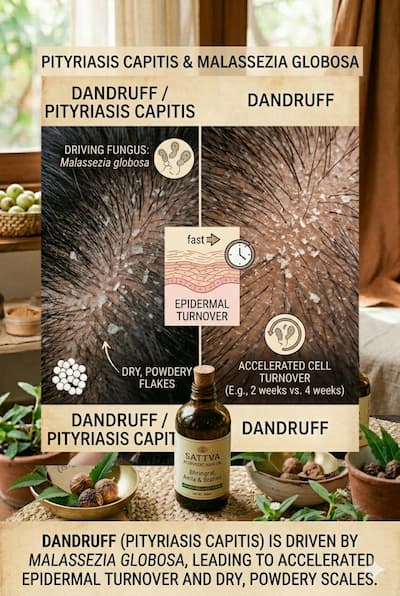
Dandruff — clinically known as pityriasis capitis — affects an estimated 50% of the global adult population, making it one of the most common scalp conditions worldwide. In India, hot and humid climates combined with high sebum production rates create conditions particularly favourable for Malassezia overgrowth, making dandruff prevalence higher than in temperate regions.
The mechanism is now well understood. The scalp, like all skin, continuously sheds old epidermal cells — a process called desquamation — and replaces them with new ones. Normally, this cycle takes about 28–30 days and occurs invisibly at the microscopic level. In dandruff, this turnover rate doubles or triples — individual cells clump together before they fully separate, producing the visible clusters of shed skin we recognise as flakes.
The driver of this accelerated turnover is Malassezia yeast — specifically M. globosa and M. restricta, two lipid-dependent fungi that naturally inhabit the scalp. When Malassezia overgrows — due to excess sebum, humid conditions, immunological tolerance shifts, or barrier disruption — it metabolises scalp lipids and releases irritant oleic acid derivatives onto the scalp surface. These derivatives penetrate the stratum corneum, triggering an inflammatory response that accelerates keratinocyte turnover and produces the characteristic flake cycle.
| Clinical name | Pityriasis capitis |
| Primary causative organisms | Malassezia globosa, M. restricta |
| Prevalence | ~50% of adults globally; higher in tropical climates |
| Flake composition | Clusters of desquamated corneocytes (dead skin cells) |
| Associated sebum rate | Higher sebum production correlates with increased Malassezia colonisation |
| Age pattern | Peak onset puberty–40s; driven by androgenic sebum stimulation |
What Is Seborrheic Dermatitis? When Dandruff Becomes an Inflammatory Condition
Seborrheic dermatitis is best understood as dandruff with a stronger immune response. The same Malassezia organisms are involved — but the host's inflammatory reaction to their metabolic products is significantly more intense, producing a clinical picture that goes well beyond cosmetic flaking.
🔴 The Inflammatory Cascade in Seborrheic Dermatitis
When Malassezia metabolises scalp lipids, it produces irritant fatty acids (particularly oleic acid and arachidonic acid derivatives) that breach the epidermal barrier and activate Langerhans cells — the immune sentinels of the skin. In individuals with seborrheic dermatitis, this immune activation is disproportionately strong: T-helper cells flood the dermis, pro-inflammatory cytokines (IL-1β, IL-6, TNF-α) accumulate around the hair follicles and sebaceous glands, and the resulting inflammation disrupts the skin's normal desquamation and barrier function simultaneously. The characteristic greasy yellow flakes of seborrheic dermatitis are scale mixed with inflammatory exudate — physically distinct from the dry cellular clusters of dandruff.
📍 Where Seborrheic Dermatitis Spreads
Seborrheic dermatitis preferentially affects sebum-rich (seborrhoeic) areas of the skin — not just the scalp. Classic affected sites include the nasolabial folds (the creases beside the nose), the eyebrows and glabella (between the eyebrows), the outer ear canals and behind the ears, the central chest and upper back, and the beard area in men. This multi-site involvement is a key diagnostic differentiator from dandruff, which remains confined to the scalp. Scalp-only flaking without facial or ear involvement is typically dandruff; the moment involvement spreads to the face or ears, seborrheic dermatitis is the more accurate diagnosis.
🧬 The Role of Individual Immune Response
The reason some people develop seborrheic dermatitis while others with equal Malassezia colonisation experience only mild dandruff — or nothing at all — lies in individual immune reactivity. Genetic predisposition to heightened cutaneous immune responses, barrier gene variants (particularly SPINK5 and filaggrin mutations), and conditions that affect immune regulation (HIV/AIDS, Parkinson's disease, organ transplant immunosuppression) are all strongly associated with seborrheic dermatitis severity. This is why the condition clusters in families and why it is not simply a hygiene issue — a person with seborrheic dermatitis may have a perfectly clean scalp and still experience flares because the problem is immune reactivity, not dirt or poor hygiene.
🔄 The Seborrheic Dermatitis–Hair Fall Link
Seborrheic dermatitis is one of the most underrecognised drivers of hair fall in India. The chronic perifollicluar inflammation it produces — with elevated TNF-α, IL-1β, and IL-6 around the hair follicle root — disrupts the anagen (growth) phase signalling pathways. Follicles in an inflammatory microenvironment exit anagen prematurely and enter the telogen (resting) phase, resulting in increased shedding 2–3 months after each flare. Unlike androgenetic alopecia (where follicles miniaturise permanently), seborrheic dermatitis-driven hair fall is largely reversible — resolving the inflammation allows follicles to re-enter anagen. This is why treating the scalp condition is directly relevant to hair fall, not just cosmetic flaking.
How to Tell Them Apart — 7 Clinical Signs to Look For
Because both conditions share the same root organism and often co-exist on a spectrum, telling them apart requires looking beyond "flakes on the scalp." Here are the seven most reliable differentiating signs:
Dandruff: White to light grey, dry, fine, powdery. Flakes fall easily — you'll see them on your shoulders and collar. They do not stick to the scalp or hair shaft and can be dislodged with a finger without resistance.
Seborrheic dermatitis: Yellowish-white, greasy, larger, adherent. Flakes are mixed with sebum and inflammatory exudate, making them stick to the scalp and hair shaft. They require deliberate removal and leave a slightly shiny residue behind.
Quick test: If your flakes are yellow-tinged, greasy, or stick to your scalp — seborrheic dermatitis is the more likely diagnosis.
Dandruff rarely produces visible scalp redness. The scalp may feel sensitive or mildly irritated, but the skin surface appears relatively normal in colour.
Seborrheic dermatitis characteristically shows erythema (redness) — particularly at the hairline, parting, and in the most sebum-dense areas. When you part the hair and look at the scalp closely, you should see pink to red patches beneath or around the scale deposits. This redness is not from scratching — it is the primary inflammatory component of the condition.
Dandruff produces a background scalp itch — often manageable, worse when the scalp is warm or sweaty, relieved temporarily by washing or scratching.
Seborrheic dermatitis itch is more intense, more persistent, and often described as a burning sensation alongside the itching — a characteristic of the deeper inflammatory response. The itch may disturb sleep and does not respond reliably to scratching or simply washing. It is frequently worse during stress, cold weather, and illness — all of which are immunological triggers for the inflammatory cascade.
This is the most reliable single differentiator. Dandruff is confined to the scalp. If you have flaking, redness, or irritation at any of the following sites, it is seborrheic dermatitis — not dandruff: the eyebrows (particularly the inner corners near the nose), the nasolabial folds (the creases running from nose to mouth), the outer ear canal or behind the ear, the beard or moustache area, the centre of the chest, or the upper back. If you notice these in combination with scalp flaking, a dermatologist assessment is appropriate — particularly if over-the-counter anti-dandruff shampoos have not produced sustained relief.
Standard anti-dandruff shampoos (zinc pyrithione, coal tar, salicylic acid) typically produce clear improvement in true dandruff within 2–4 weeks of consistent use.
In seborrheic dermatitis, these same shampoos may produce temporary or partial improvement — but the condition recurs quickly and aggressively. Patients with seborrheic dermatitis often go through a cycle of shampoos, each working briefly before the condition returns. This treatment resistance is a diagnostic signal — if your "dandruff" does not stay controlled with standard anti-dandruff products, seborrheic dermatitis is likely the correct diagnosis and a more targeted approach (ketoconazole 2%, ciclopirox) with a dermatologist-managed treatment plan is warranted.
Dandruff more commonly affects people with moderately oily scalps — but the scalp itself does not necessarily appear visibly greasy between washes.
Seborrheic dermatitis is strongly associated with visibly oily scalp skin, particularly at the hairline and temples. The scalp may look shiny or feel heavy between washes even at 24–36 hours post-wash. This is because seborrheic dermatitis involves sebaceous gland hyperactivity alongside the Malassezia component — the excess sebum directly feeds Malassezia and sustains the cycle. People with seborrheic dermatitis often feel compelled to wash their hair daily, which paradoxically can worsen the barrier disruption component of the condition.
Dandruff may be seasonally variable — often worse in dry, cold weather when scalp barrier function decreases — but does not typically have pronounced stress-related or illness-related flares.
Seborrheic dermatitis is strongly stress-reactive. Patients consistently report flares during exam periods, work deadlines, personal crises, illness, and post-travel fatigue. This stress-flare relationship is mediated by cortisol — which alters sebum composition, reduces immune tolerance of Malassezia, and disrupts the skin barrier. Recognising that stress management is an active part of seborrheic dermatitis treatment — not a soft lifestyle suggestion — is often missing from typical patient education.
What About Dry Scalp? A Third Condition Frequently Confused
Dry scalp is distinct from both dandruff and seborrheic dermatitis — and requires an opposite treatment approach. Dry scalp is a barrier and hydration issue: the scalp lacks sufficient moisture and lipids, producing small, dry, fine white flakes that fall easily. There is no Malassezia involvement. The scalp feels tight and sensitive rather than oily or itchy. Treating dry scalp with anti-fungal shampoos dries it further. Treating it with heavy antifungal oils is unnecessary. The correct approach is moisturising, barrier-supporting oils (jojoba, sesame, aloe vera) and gentle sulfate-free cleansers. A helpful distinguishing rule: if your scalp feels dry and tight — it is dry scalp. If your scalp feels itchy and oily with visible scale — it is dandruff or seborrheic dermatitis.
Using heavy oils (castor oil, coconut oil in large amounts) on a Malassezia-driven scalp can worsen dandruff by increasing the lipid substrate the yeast feeds on. This is one of the most common self-treatment errors — applying the right ingredient for the wrong condition.
💡 Not sure if your hair fall is dandruff-driven, hormonal, or stress-related? Get a personalised scalp assessment from our in-house dermatologist.
Book Free Consultation →Malassezia — The Organism at the Centre of Both Conditions
Understanding Malassezia is essential for understanding why both dandruff and seborrheic dermatitis behave the way they do — and why some treatments work while others fail.
🦠 What Malassezia Is
Malassezia is a genus of lipid-dependent yeasts that are a normal constituent of the human skin microbiome — present on virtually every adult's scalp, face, and upper body in varying amounts. Of the 14 currently identified species, M. globosa and M. restricta are the two primarily associated with dandruff and seborrheic dermatitis. Being a normal resident is key: the goal of treatment is not to eliminate Malassezia (impossible without destroying the normal skin flora entirely) but to restore it to a balanced population that does not trigger excessive inflammatory responses. Malassezia cannot synthesise its own fatty acids — it is an obligate lipid parasite, entirely dependent on the host's sebum for its essential lipids.
⚗️ How Malassezia Causes Flaking
Malassezia secretes lipases — enzymes that cleave fatty acids from triglycerides in scalp sebum, leaving free fatty acids on the scalp surface. The specific fatty acid that causes the most damage is oleic acid released in this way — when it penetrates the stratum corneum, it triggers corneocyte aggregation and accelerated desquamation, producing the visible flake clusters. Arachidonic acid derivatives from this metabolic process also directly stimulate pro-inflammatory cytokine production. The severity of the scalp's response depends on how much Malassezia is present, how active its lipase secretion is, and how reactive the individual's immune system is — which is why two people with the same Malassezia load can have very different clinical presentations.
🔄 Why Malassezia Keeps Coming Back
Malassezia cannot be permanently eliminated from the scalp — it is resident microbiota. Every antifungal treatment (ketoconazole, zinc pyrithione, selenium sulfide, neem, ricinoleic acid) reduces Malassezia numbers and activity during the treatment period. When treatment stops, the organism re-populates from the remaining baseline population, and — if triggers remain in place — overgrowth and flare recur. This is the fundamental reason dandruff and seborrheic dermatitis require maintenance treatment, not one-time cure. The most effective long-term strategy is rotating antifungal approaches (reducing the risk of adaptation), trigger management (stress, diet, barrier support), and consistent maintenance washing schedules.
⚠️ Why Some Oils Worsen Malassezia Conditions
Because Malassezia is an obligate lipid feeder, applying oils that are rich in the fatty acids it metabolises — particularly oleic acid (dominant in coconut oil and olive oil) and linoleic acid — can directly worsen Malassezia overgrowth by providing an increased substrate. Research has shown that coconut oil (high oleic acid) applied to a Malassezia-active scalp can increase colonisation rather than reduce it. Castor oil (ricinoleic acid dominant) is the exception — ricinoleic acid's hydroxyl group gives it antifungal properties against Malassezia specifically, making it an appropriate oil for dandruff-prone scalps when used correctly. Sesame oil (with its sesamol content) has similarly protective properties. Heavy coconut oil applications are a common traditional self-treatment that can inadvertently feed the cycle.
Triggers — What Makes Both Conditions Worse
| Trigger | Mechanism | More Relevant For |
|---|---|---|
| Psychological stress | Cortisol elevates sebum production (androgens stimulate sebaceous glands); cortisol also suppresses cutaneous immune tolerance of Malassezia | Seborrheic dermatitis (strong flare association) |
| Cold, dry weather | Reduces scalp barrier lipid content; increases TEWL (transepidermal water loss); creates permissive environment for Malassezia penetration of stratum corneum | Both dandruff and seborrheic dermatitis |
| Hormone fluctuations | Androgens (testosterone, DHT) directly stimulate sebaceous gland activity, increasing the lipid substrate available for Malassezia | Both — peaks at puberty, pregnancy, perimenopause |
| Infrequent hair washing | Sebum accumulation increases Malassezia substrate; also allows scale to accumulate, increasing scalp irritation and itch | Both — particularly dandruff |
| Washing too frequently | Over-stripping natural scalp lipids disrupts the barrier, increasing skin permeability to Malassezia metabolites; increases reactive sebum secretion (rebound oiliness) | Seborrheic dermatitis (barrier disruption is a core component) |
| High glycaemic diet / alcohol | Elevated blood glucose and insulin drive androgen activity and sebum production; alcohol may alter gut microbiome and cutaneous immune tolerance | Seborrheic dermatitis (diet-flare association is stronger) |
| Oleic-acid-rich oils on scalp | Provides direct lipid substrate for Malassezia lipase activity; coconut oil and olive oil particularly associated with increased Malassezia colonisation | Both — frequently misunderstood as beneficial for dandruff |
| Immunosuppression / illness | Reduced immune surveillance allows Malassezia to overgrow past the threshold that triggers clinical symptoms | Seborrheic dermatitis (severe flares common post-illness) |
Treatment Approach — What Works for Each Condition
Treatment effectiveness depends on correctly identifying which condition you are managing. Here is the evidence-based approach for each:
Shampoo Ingredients That Work:
- Zinc pyrithione — antifungal; disrupts Malassezia enzyme function; first-line OTC treatment
- Ketoconazole 1% — azole antifungal; directly inhibits Malassezia ergosterol synthesis
- Selenium sulfide — antifungal + anti-desquamation (slows keratinocyte turnover)
- Salicylic acid — keratolytic; helps remove existing scale so antifungals can reach the scalp
- Coal tar — anti-inflammatory and antifungal; effective but cosmetically unpleasant
- Tea tree oil (terpenoids) — natural antifungal; 5% concentration shown effective in clinical studies
Natural / Ayurvedic Approach:
- Pre-wash neem oil scalp treatment (azadirachtin — antifungal)
- Castor oil pre-wash (ricinoleic acid — antifungal against M. restricta and M. globosa)
- Total Rebalance Shampoo — formulated for scalp microbiome balance
- Avoid oleic-acid-heavy oils (coconut, olive) directly on scalp during active dandruff
Medical-Grade First-Line Treatments:
- Ketoconazole 2% shampoo — prescription-strength antifungal; first-line for moderate-to-severe
- Ciclopirox 1% — broad-spectrum antifungal with anti-inflammatory properties
- Topical corticosteroids — for acute flares only (short-term); reduce inflammation rapidly but do not address Malassezia
- Calcineurin inhibitors (tacrolimus, pimecrolimus) — for facial seborrheic dermatitis; non-steroidal anti-inflammatory
Complementary / Maintenance Approach:
- Stress management — documented to reduce flare frequency significantly
- Low glycaemic diet; reduce alcohol intake during active flares
- Gentle sulfate-free cleansing — maintains barrier while removing scale
- Castor oil + neem pre-wash for Malassezia maintenance between medical treatment cycles
- Barrier-supporting routine between washes (jojoba, aloe) — do not over-wash
- Dermatologist assessment for moderate-to-severe cases — do not manage severe presentations independently
Ayurvedic Herbs with Documented Activity Against Malassezia
Several Ayurvedic herbs have published antifungal and anti-inflammatory evidence specifically relevant to Malassezia-driven scalp conditions. These can complement medical treatment in maintenance phases and for mild-to-moderate dandruff management:
| Herb / Ingredient | Active Compound(s) | Mechanism Against Malassezia | Evidence Strength |
|---|---|---|---|
| Neem (Azadirachta indica) | Azadirachtin, nimbin, gedunin | Disrupts Malassezia cell membrane integrity; inhibits ergosterol synthesis (different pathway than azoles — complementary, not redundant) | Moderate — in vitro + traditional use |
| Castor Oil (Ricinus communis) | Ricinoleic acid | Membrane disruption via hydroxyl fatty acid structure; documented activity against M. restricta and M. globosa at scalp-achievable concentrations | Moderate — in vitro; J. Am. Oil Chemists' Society |
| Tea Tree Oil | Terpinen-4-ol | Disrupts yeast cell membrane; 5% concentration RCT showed significant reduction in dandruff severity vs. placebo | High — human RCT published |
| Bhringraj (Eclipta prostrata) | Wedelolactone, ecliptine | Anti-inflammatory activity reduces perifollicluar cytokine load; reduces scalp inflammation secondary to Malassezia rather than directly targeting the yeast | Moderate — anti-inflammatory; antifungal indirect |
| Amla (Phyllanthus emblica) | Emblicanin A & B; Vitamin C; tannins | Antioxidant protection reduces oxidative stress amplification of inflammatory cascade; tannins have mild antifungal activity | Moderate — antioxidant well evidenced; antifungal mild |
| Sesame Oil (Sesamum indicum) | Sesamol, sesamin, sesamolin | Broad antifungal and antibacterial activity; lignans reduce scalp inflammation; UV protection reduces photo-oxidative scalp stress | Moderate — antimicrobial studies; traditional use in Ayurveda |
💡 Struggling with persistent scalp issues and hair fall that anti-dandruff shampoos haven't resolved? Our dermatologist offers personalised scalp assessments.
Book Free Consultation →The Right Products for a Malassezia-Prone Scalp
For a scalp dealing with dandruff or seborrheic dermatitis, the combination of an antifungal-oriented pre-wash oil treatment and a scalp-balancing shampoo covers both the microbial and inflammatory dimensions of the condition.
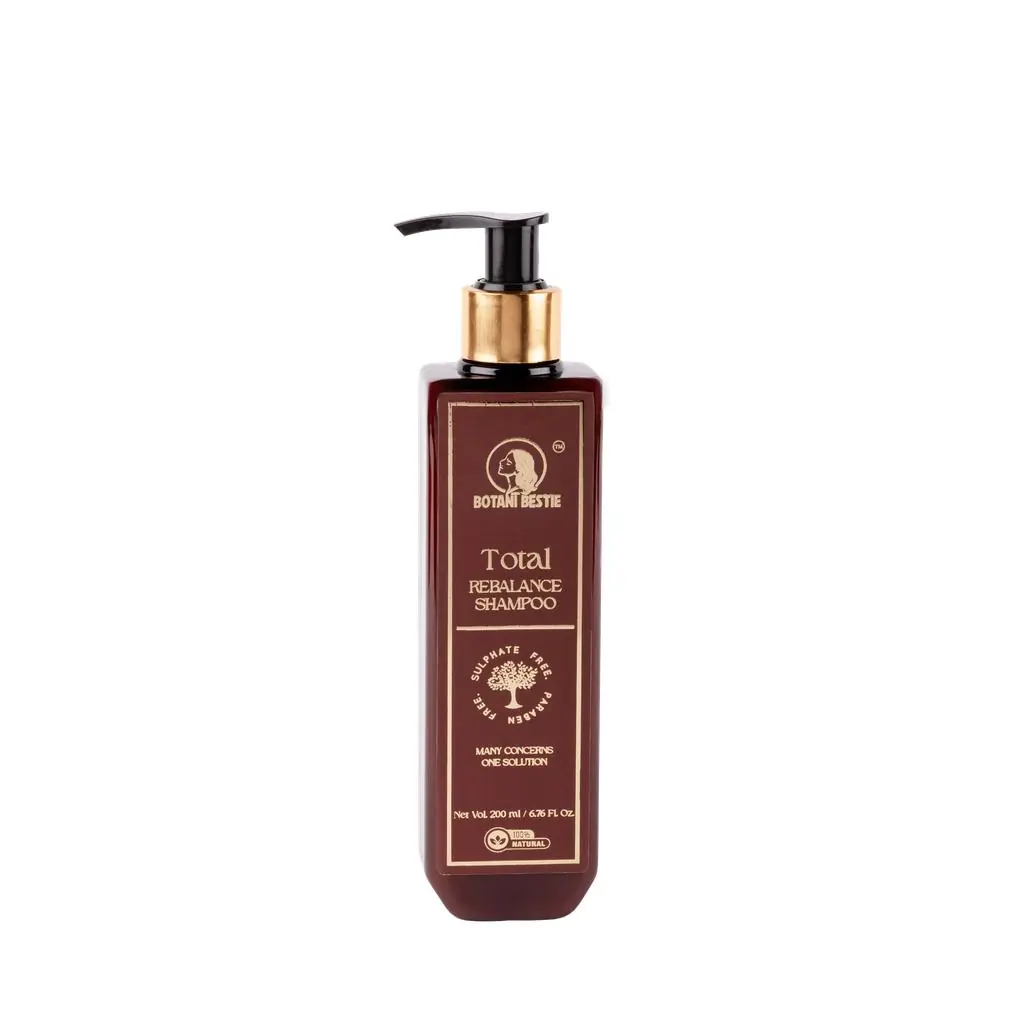
Total Rebalance Shampoo
Scalp-Balancing Cleanse — 2–3× per week
Formulated to support a healthy scalp microbiome — cleansing thoroughly without stripping the natural lipid barrier that Malassezia exploits when disrupted. Contains anti-inflammatory and antifungal herbal actives alongside sulfate-free surfactants gentle enough for regular use on sensitive, inflamed scalps.
Shop Total Rebalance Shampoo →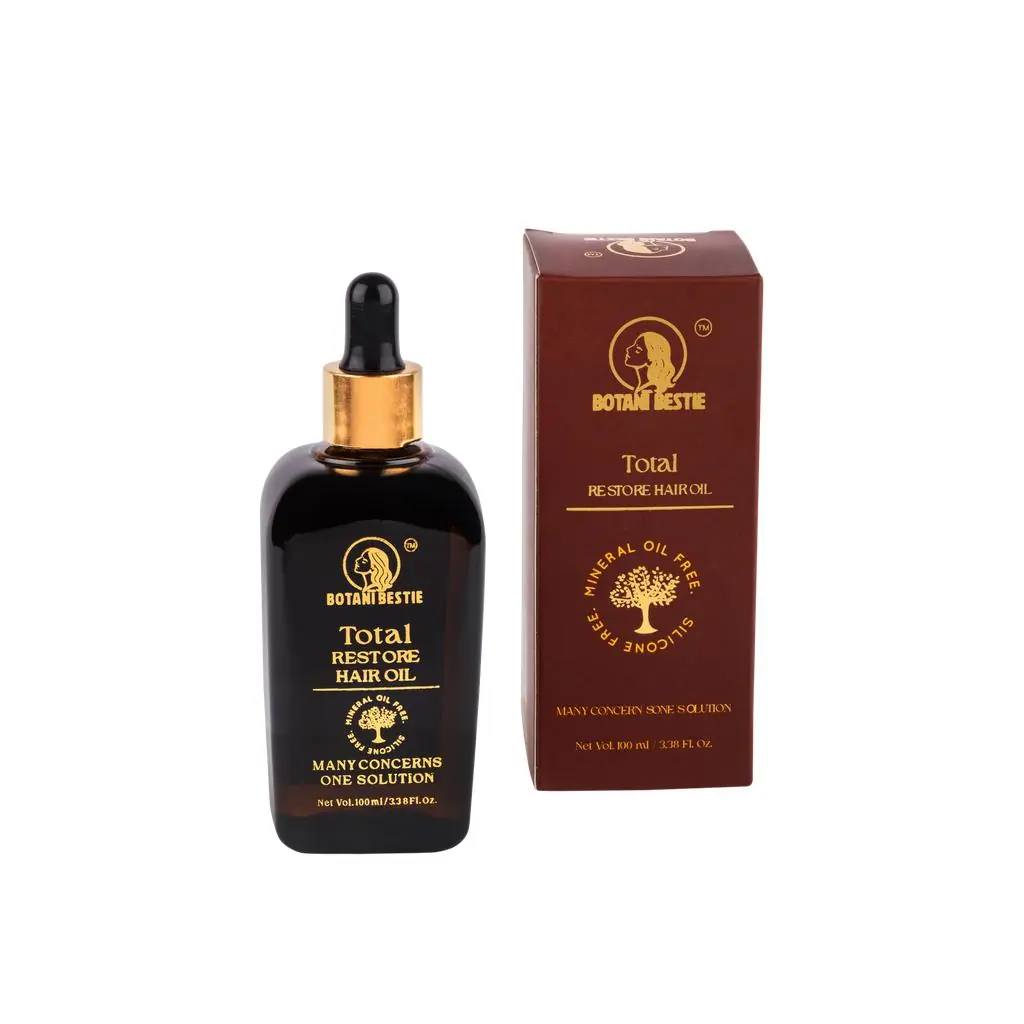
Total Restore Hair Oil
Pre-Wash Scalp Treatment — 2× per week
Contains castor oil (ricinoleic acid — antifungal against Malassezia) and neem (azadirachtin — dual-pathway antifungal) alongside Bhringraj and Amla for anti-inflammatory scalp support. Addresses both the microbial and inflammatory drivers of dandruff-related hair fall in a single pre-wash treatment.
Shop Total Restore Hair Oil →Not Sure Whether You Have Dandruff or Seborrheic Dermatitis?
Book a free personalised scalp consultation with our in-house dermatologist. Share your symptoms, scalp condition, and hair fall pattern — and receive a targeted diagnosis and treatment plan built for your specific presentation. No purchase required.
Book Free Scalp Consultation → WhatsApp UsFrequently Asked Questions
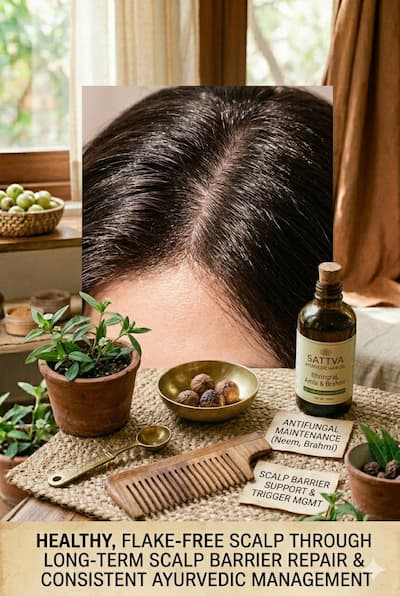
The Bottom Line: Same Yeast, Different Conditions, Different Treatments
Dandruff and seborrheic dermatitis share a root organism — Malassezia — but they differ in the severity of the immune response, the clinical appearance, the affected areas, and the required treatment intensity. Treating them as the same condition, or using the wrong oils on a Malassezia-active scalp, keeps the cycle going.
The honest approach: identify which condition you have (flake character, redness, facial involvement, response to OTC treatment), address both the Malassezia population and the scalp inflammation it drives, choose oils that are antifungal rather than substrates the yeast feeds on, and manage the triggers — particularly stress — that cause both conditions to relapse.
For scalp-driven hair fall, treating the root of the inflammation is the only way to meaningfully reduce shedding. The hair follows the scalp — get the scalp right, and hair fall from this source resolves.
Shop Total Restore Hair Oil → Free Scalp Consultation"Treating the scalp, not just the flakes, is how dandruff-driven hair fall ends."
Ready to make the honest switch?
Our products are built on the same principles as every article we write — pure ingredients, real results, nothing to hide.
Explore Our Products