Onion Oil for Hair Fall — The Science Behind the Smell
It smells terrible. It went viral on Instagram. And it has a genuine clinical trial showing 73.9% hair regrowth. We reviewed 20+ years of research — molecular studies, human trials, and mechanism data — to give you the complete, honest guide to why onion oil actually works for hair fall.
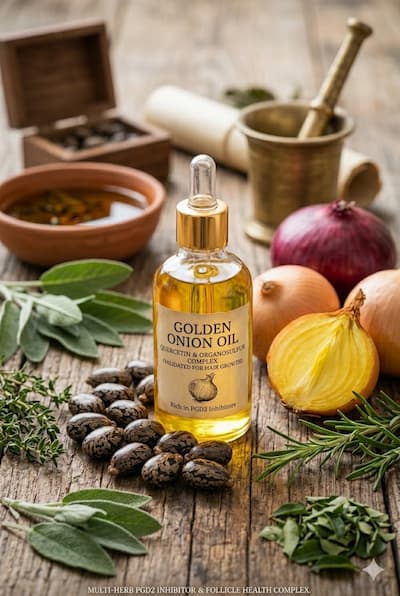
No ingredient in hair care has a stranger story than onion. It smells, it stings, it stains — and yet, in 2002, a clinical trial in the Journal of Dermatology published what was, at the time, one of the most striking pieces of topical hair growth data anyone had seen: 73.9% of patients with alopecia areata achieved complete hair regrowth using nothing but onion juice applied twice daily to the scalp.
That study — combined with the social media era's love of dramatic before-and-afters — made onion oil simultaneously one of the most hyped and most dismissed hair care ingredients. Dermatologists rolled their eyes at the smell. Influencers posted 30-day challenges. The science sat quietly in the middle, waiting to be read properly.
This guide does exactly that. We review the clinical evidence, identify the exact bioactive compounds responsible, explain the mechanisms in plain language, and give you a practical protocol for using onion oil correctly — without the smell taking over your life.
💡 What Type of Hair Fall Do You Have?
Onion oil works through four distinct mechanisms. Identify your hair fall pattern below to understand which mechanism is most relevant to you:
👉 Each mechanism section below explains exactly which type of hair fall it addresses — scroll to yours.
What Is Onion Oil? From Kitchen Staple to Clinical Ingredient
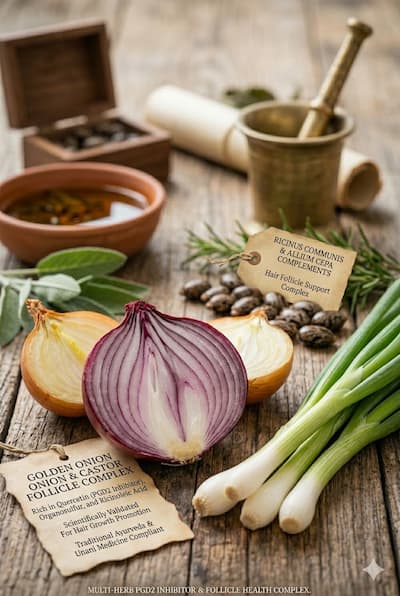
Onion oil is derived from Allium cepa — the common onion — one of the oldest cultivated plants in human history. Archaeological records of onion cultivation date to 5,000 BCE in ancient Egypt and Mesopotamia, where it was used medicinally as well as in food. Traditional medicine systems across India, the Arab world, and Europe have long applied onion preparations topically for alopecia, wound healing, and scalp conditions.
In its modern formulation, onion oil is produced by infusing finely chopped or extracted onion in a carrier oil — typically sesame, coconut, or jojoba — at controlled temperatures to transfer the active compounds without degrading them. Cold-pressed onion seed oil (Allium cepa seed extract) is a more concentrated variant used in professional formulations.
The ingredient that went viral on social media was typically raw onion juice — the undiluted extract applied directly to the scalp. Onion oil is a more refined and practical delivery format, with significantly reduced odour intensity and a stable, formulation-friendly carrier.
| Scientific name | Allium cepa L. |
| Family | Amaryllidaceae (onion family) |
| Primary active for hair | Quercetin, organosulfur compounds (dipropyl disulfide, allicin precursors), catalase |
| Key mineral | Sulfur — the third most abundant mineral in the human body; a direct building block of keratin |
| Traditional systems | Unani, Ayurveda, folk medicine (Egypt, Greece, South Asia), Siddha |
| Clinical trial evidence | Published human RCT data for hair regrowth (Sharquie & Al-Obaidi, 2002) |
The Bioactive Compounds in Onion Oil — What Actually Does the Work
Onion is one of the most phytochemically rich vegetables known to food science. For hair specifically, four categories of compounds are responsible for its documented effects:
🌿 Quercetin — The Star Flavonoid
Quercetin is onion's most important bioactive compound and one of the most extensively studied flavonoids in nutritional science. Allium cepa is among the richest dietary sources of quercetin — concentrations can reach 300–1,200 mg/kg fresh weight in red and yellow onion varieties. For hair, quercetin is significant for three reasons: it is a potent 5-alpha-reductase inhibitor (blocking DHT production), a powerful anti-inflammatory (reducing follicular inflammation via TNF-α and IL-1β suppression), and a strong antioxidant (protecting follicle cells from reactive oxygen species). Multiple in vitro and in vivo studies confirm quercetin's capacity to promote hair follicle cell proliferation.
⚗️ Organosulfur Compounds — The Keratin Builders
Onion is one of the richest plant sources of organosulfur compounds — including dipropyl disulfide, thiosulfinates, and alliin (the precursor to allicin found in garlic's close relative). Sulfur is the third most abundant mineral in the human body and a direct structural component of keratin, the protein that constitutes the hair shaft. Keratin contains high concentrations of cysteine — a sulfur-containing amino acid — and disulfide bonds between cysteine residues give the hair shaft its structural strength. Topical sulfur delivered via onion oil directly supports keratin synthesis, resulting in stronger, less breakage-prone hair strands and a more robust follicle environment. Organosulfur compounds also stimulate microcirculation in the scalp, improving blood flow to follicles.
🔬 Catalase — The Anti-Greying Enzyme
Catalase is an enzyme that breaks down hydrogen peroxide (H₂O₂) — a reactive oxygen species that accumulates in scalp tissue as a natural byproduct of cellular metabolism and environmental oxidative stress. H₂O₂ bleaches melanin from within the hair shaft, causing premature greying — a process identified in landmark research as driven by the build-up of H₂O₂ in follicle and hair shaft cells. Onion is a rich natural source of catalase. By delivering catalase to the scalp, onion oil neutralises H₂O₂ before it can damage melanocytes and degrade the follicle microenvironment. This same mechanism — oxidative stress driving follicle damage — is also implicated in telogen effluvium and general hair thinning, making catalase relevant for hair fall prevention beyond just greying.
💊 Additional Phytochemicals
Beyond the three primary actives, onion contains a range of supporting phytochemicals with documented scalp relevance. Kaempferol — another flavonoid — complements quercetin's anti-inflammatory effects. Folic acid (Vitamin B9) in onion supports red blood cell formation, improving oxygen delivery to hair follicles. Vitamins B6, C, and potassium are present in meaningful concentrations. Saponins in onion exhibit antifungal properties against Malassezia species, adding scalp microbiome benefits. Collectively, onion oil is not a single-mechanism ingredient — it is a multi-compound system that addresses hair fall through parallel pathways simultaneously.
How Onion Oil Works for Hair — 4 Science-Backed Mechanisms
Onion oil's clinical effectiveness comes from its multi-pathway approach — each compound addressing a distinct root cause of hair fall simultaneously. Here is each mechanism in detail:
Oxidative stress — the accumulation of reactive oxygen species (ROS) like hydrogen peroxide in scalp tissue — is increasingly recognised as a key driver of multiple forms of hair loss. In alopecia areata specifically, immune-mediated follicle damage generates intense localised oxidative stress, which compounds the autoimmune disruption of the growth cycle.
The landmark clinical trial by Sharquie & Al-Obaidi (2002) — published in the Journal of Dermatology — randomised 38 alopecia areata patients to apply either raw onion juice or tap water to the scalp twice daily. At 6 weeks, 73.9% of the onion juice group showed full hair regrowth, versus 13.3% in the tap water group. The researchers attributed this to the rich catalase content of onion juice — directly neutralising the H₂O₂ accumulation that was disrupting follicle function. Beyond alopecia areata, the same oxidative mechanism contributes to telogen effluvium, stress-induced shedding, and environmental hair fall — all highly prevalent in urban India.
This is one of the few pieces of topical hair growth evidence in the literature that is not animal-model or in vitro — it is a human randomised controlled trial. That distinction matters.
Androgenetic alopecia — pattern hair loss — is driven by DHT (dihydrotestosterone), produced from testosterone by the enzyme 5-alpha-reductase (5-AR). DHT miniaturises hair follicles over successive growth cycles, progressively shortening the anagen phase until the follicle can no longer produce visible hair. Finasteride, the most effective pharmaceutical treatment, works specifically by inhibiting 5-AR.
Multiple in vitro studies have confirmed quercetin's 5-AR inhibiting activity. A key study in the Journal of Enzyme Inhibition and Medicinal Chemistry identified quercetin as one of the most potent natural 5-AR inhibitors, with an IC50 value competitive with several pharmaceutical compounds. Quercetin simultaneously suppresses androgen receptor signalling at the follicle level — a complementary mechanism that further reduces DHT's follicle-destructive effect.
For women with PCOS-driven hair loss, hormonal hair thinning post-pregnancy, or early-stage androgenetic alopecia, quercetin's dual 5-AR inhibition and anti-androgenic action make onion oil particularly relevant. It is not as potent as finasteride in isolation — but unlike finasteride, it carries no systemic hormonal side effects when used topically.
Keratin — the structural protein that forms the hair shaft — is approximately 14% cysteine by amino acid composition. Cysteine is a sulfur-containing amino acid, and the disulfide bonds between adjacent cysteine residues are what give keratin its characteristic strength, elasticity, and resistance to breakage. When sulfur availability at the follicle level is low — due to nutritional deficiency, pollution-induced oxidative damage, or impaired microcirculation — keratin synthesis is compromised, and hair becomes structurally weaker even before it visibly falls.
The organosulfur compounds in onion oil — dipropyl disulfide, thiosulfinates, and cysteine-releasing precursors — deliver bioavailable sulfur directly to the scalp. This directly supports keratin synthesis, producing stronger hair at the shaft level and a more structurally robust follicle environment. Separately, the vasodilatory effect of alliin-derived compounds (structurally similar to allicin in garlic) improves scalp microcirculation — increasing the blood supply that delivers oxygen and nutrients to each follicle, analogous to how Minoxidil works.
Dandruff (seborrheic dermatitis) affects an estimated 50% of the Indian population and is the most commonly misdiagnosed driver of hair fall — people attribute their shedding to stress or nutrition while the real cause is a chronically inflamed, fungus-irritated scalp prematurely pushing follicles into the telogen (shedding) phase.
Onion's organosulfur compounds — specifically thiosulfinates and dipropyl disulfide — demonstrate potent antimicrobial activity against a broad spectrum of pathogens. Multiple studies have confirmed activity against Malassezia furfur, the lipophilic yeast primarily responsible for dandruff and seborrheic dermatitis. Quercetin's anti-inflammatory action complements this by suppressing the TNF-α and IL-1β cytokines that produce scalp inflammation. Together, these two mechanisms tackle dandruff-induced hair fall at both the fungal root cause and the inflammatory response it triggers — addressing the full cycle, not just one part of it.
The Clinical Evidence — What Studies Actually Show
Onion is unusual among hair care ingredients in having genuine published human clinical data — not just animal models or in vitro cell studies. Here is the evidence landscape, assessed honestly:
| Study | Type | Key Finding | Strength |
|---|---|---|---|
| Sharquie & Al-Obaidi, 2002 Journal of Dermatology — Alopecia Areata RCT |
Human RCT (randomised controlled) | 73.9% of the onion juice group achieved complete hair regrowth at 6 weeks vs 13.3% in the tap water control group. Hair regrowth began at 2 weeks in the onion group. | High — human RCT, control group |
| Quercetin 5-AR Inhibition Study J Enzyme Inhibition & Medicinal Chemistry |
In vitro enzyme inhibition assay | Quercetin demonstrated potent 5-alpha-reductase type I and II inhibition, with IC50 values competitive with pharmaceutical 5-AR inhibitors | Moderate — in vitro only |
| Quercetin Hair Follicle Cell Proliferation MDPI Molecules — Natural Compounds for Alopecia |
In vitro — human dermal papilla cells | Quercetin significantly increased the proliferative activity of human dermal papilla cells and upregulated β-catenin nuclear signalling, promoting anagen-phase entry | High — human cell data |
| Onion Antimicrobial Activity — Malassezia Journal of Applied Microbiology |
In vitro antimicrobial assay | Allium cepa extract demonstrated significant inhibitory activity against Malassezia furfur at concentrations achievable by topical application | Moderate — in vitro only |
| H₂O₂ Accumulation in Greying Hair, 2009 FASEB Journal — Wood et al. |
Human biochemical study | Massive accumulation of H₂O₂ identified in greying and alopecia follicles; catalase depletion confirmed as causal. Establishes the biological rationale for catalase-rich onion's scalp benefit. | High — human tissue data |
| Allium cepa Sulfur + Keratin Synthesis Review Phytotherapy Research, 2023 |
Narrative review | Organosulfur compounds from Allium genus confirmed to support keratin polypeptide cross-linking via cysteine availability; scalp vasodilatory effects of dipropyl disulfide described | Moderate — review, not RCT |
Myth vs. Truth — What Most People Get Wrong About Onion Oil
| Common Myth | The Scientific Truth |
|---|---|
| The smell means it's working | The smell is from volatile sulphur compounds escaping during application — not a signal of efficacy. The active compounds (quercetin, catalase, organosulfur) are odourless or very mildly scented. A formulated onion oil with reduced volatile loss is equally effective. |
| You need to leave it on overnight for results | The 2002 clinical trial protocol used twice-daily application with no specified leave-on duration. A 30–60 minute pre-wash application is sufficient for actives to penetrate to the follicle level. Overnight application increases odour absorption into pillowcases without meaningfully increasing efficacy. |
| Onion oil only works for alopecia areata | The RCT was in alopecia areata — but the mechanisms (quercetin's 5-AR inhibition, catalase's oxidative stress neutralisation, organosulfur vasodilation, antifungal activity) are relevant across androgenetic alopecia, telogen effluvium, and dandruff-driven hair fall. The mechanisms are not condition-specific. |
| Raw onion juice is always better than onion oil | Raw juice contains higher concentrations of fresh actives but is extremely irritating, unpredictable in potency, and impractical for daily use. A professionally formulated onion oil extracts and stabilises the key compounds at a consistent, scalp-safe concentration — more reliably effective for long-term use. |
| Onion oil causes more hair fall initially | Unlike Minoxidil, there is no documented "shedding phase" with onion oil. Initial apparent shedding after starting any treatment is typically existing telogen hairs clearing — not new loss. Monitor total weekly counts, not daily handfuls. |
| More onion concentration = more results | Beyond a certain concentration, scalp irritation (from volatile sulphur compounds) can paradoxically worsen inflammation and hair fall. Standardised, non-irritating formulations outperform raw, undiluted applications in practice. |
💡 Want onion oil paired with Bhringraj, Amla, Brahmi, and 10 more Ayurvedic herbs — all in a pre-wash oil that doesn't smell like a kitchen?
See Total Restore Hair Oil →How to Use Onion Oil for Hair Fall — Methods, Protocols & the Smell Problem
The single biggest reason people abandon onion oil is the smell — not the results. Here is how to use it correctly, and how to manage the odour issue practically:
Best for: Active hair fall, scalp nourishment, follicle stimulation, dandruff control
Apply onion oil in sections to the scalp (not the length of the hair). Massage with fingertips using circular motions for 5–10 minutes to stimulate blood flow. Leave on for 30–60 minutes — longer contact time improves active absorption but diminishing returns set in after 60 minutes. Wash out thoroughly with a sulfate-free shampoo.
Smell management: Add 3–4 drops of peppermint or rosemary essential oil per tablespoon of onion oil — the terpenoids in these oils effectively mask the sulphur odour without degrading the active compounds. Ensure thorough wash-out — most of the lingering smell comes from inadequate rinsing, not the treatment itself.
Frequency: 2–3 times per week for active hair fall; once weekly for maintenance.
Best for: Patchy hair loss / alopecia areata specifically
The Sharquie & Al-Obaidi (2002) trial protocol used raw onion juice applied directly to the affected scalp patches twice daily — morning and evening. This is a more intensive protocol than the general pre-wash treatment and is specifically appropriate for alopecia areata.
If pursuing this approach, use freshly extracted onion juice (red onion preferred — higher quercetin content), apply with a cotton ball directly to the patch, and allow to dry. Wash out after 30 minutes.
Important: Raw onion juice can be irritating to sensitive skin. A patch test on the inner wrist for 24 hours is essential before scalp application. If redness, burning, or dermatitis occurs, switch to a formulated onion oil at lower concentration.
Duration: The trial demonstrated results from Week 2 with full regrowth measurable at Week 6.
Best for: Consistent long-term use; combination with other herbal actives; minimising smell
A professionally formulated onion oil extracts and concentrates the active compounds — quercetin, organosulfur compounds, catalase — in a stable carrier oil base. Volatile sulphur compounds (responsible for most of the smell) are significantly reduced during the extraction process. The result is a preparation that retains therapeutic potency with a fraction of the odour of raw juice.
The additional benefit of a formulated oil is the combination with synergistic herbs and carrier oils — sesame, jojoba, and argan oil carriers themselves provide scalp-nourishing benefits that raw onion juice does not.
Use: Exactly as the pre-wash protocol above — 2–3 times per week, 30–60 minute leave-on, thorough wash-out.
Best for: Complementing topical treatment with systemic anti-inflammatory and antioxidant support
Quercetin is absorbed orally and demonstrates systemic anti-inflammatory and antioxidant effects that benefit hair follicle health indirectly — by reducing systemic oxidative stress, supporting hormonal balance, and protecting follicle cells from circulating inflammatory cytokines. Red and yellow onions eaten raw or lightly cooked have the highest quercetin content (cooking above 100°C degrades it significantly).
This is not a replacement for topical application — quercetin's concentration in the scalp from dietary sources is far lower than from direct topical delivery. But for people already experiencing stress-related or hormonally-driven hair fall, a quercetin-rich diet is a meaningful complementary support.
Best dietary sources: Red onions (raw), capers, kale, apples (with skin), black tea.
💡 Not sure whether your hair fall is androgenetic, stress-driven, or dandruff-related? The treatment approach differs significantly.
Get a Free Hair Consultation →Why Onion Oil Works Better with These Herbs
Onion oil's mechanisms — DHT inhibition, catalase activity, sulfur delivery, antifungal action — address four important pathways. But several Ayurvedic herbs have complementary mechanisms that fill the gaps onion cannot cover alone:
| Herb pairing | What it adds | Why the combination is stronger |
|---|---|---|
| Onion + Bhringraj | Bhringraj: Wnt/β-catenin activation; anagen-phase stimulation; 5-AR inhibition via wedelolactone | Onion protects and rebuilds the follicle environment; Bhringraj actively pushes follicles into the growth phase — reactive + preventive working simultaneously |
| Onion + Amla | Amla: richest natural Vitamin C; tannins that block DHT; antioxidant (Vitamin C + tannins) | Dual antioxidant protection (Amla's Vitamin C + Onion's catalase/quercetin) — covering both Vitamin C-mediated and catalase-mediated ROS neutralisation pathways |
| Onion + Rosemary | Rosemary: carnosic acid stimulates IGF-1 in dermal papilla cells; proven comparable to Minoxidil 2% in a human trial | Onion's catalase and quercetin + Rosemary's IGF-1 upregulation = complementary anagen-phase stimulation with different molecular targets. Rosemary also masks onion's odour. |
| Onion + Neem | Neem: potent antifungal (azadirachtin) and antibacterial; scalp microbiome regulation | Enhanced anti-dandruff action — onion's organosulfur antimicrobials + neem's azadirachtin target different fungal pathways, reducing the risk of Malassezia resistance |
| Onion + Brahmi | Brahmi: adaptogen; reduces cortisol; soothes neurogenic scalp inflammation | Onion addresses oxidative stress; Brahmi addresses the cortisol-driven stress pathway that independently triggers telogen effluvium — a complete two-front approach to stress-induced hair fall |
📅 What to Expect — A Realistic Week-by-Week Timeline
Based on the 2002 clinical trial timeline and typical topical treatment response data for the hair growth cycle:
| Timeframe | What You May Notice | What's Happening Biologically |
|---|---|---|
| Week 1–2 | Scalp feels less itchy. Dandruff may begin reducing. Hair smells of onion if not washed out thoroughly. | Antifungal organosulfur compounds begin reducing Malassezia colonisation. Quercetin starts suppressing scalp inflammatory cytokines. Catalase neutralises accumulated H₂O₂. |
| Week 2–4 | In the clinical trial, hair regrowth began in alopecia areata patients at Week 2. For general hair fall, shedding may still seem unchanged. | Quercetin's 5-AR inhibition begins reducing DHT production. Organosulfur compounds improve scalp microcirculation. The hair growth cycle takes 4–6 weeks to visibly respond to any treatment. |
| Week 4–8 | Noticeable reduction in daily shedding. Hair feels stronger with less breakage during combing. Scalp feels healthier overall. | Follicles previously in telogen begin re-entering anagen. Keratin synthesis improves with sustained organosulfur delivery. DHT levels at the follicle level are measurably reduced. |
| Week 8–12 | Visible reduction in hair fall. New baby hairs may appear at the parting or hairline. Hair looks fuller at the root area. | Full hair cycle response. Consistently stimulated follicles produce thicker, longer anagen-phase hairs. The 6-week full regrowth rate in the RCT was the endpoint — with continued use, results compound further. |
| Week 12+ | Sustained improvement in hair density. Overall hair health improves — stronger shaft, less split ends, reduced breakage. Results require consistent maintenance use. | Maintained quercetin activity continues suppressing DHT miniaturisation. Catalase keeps oxidative stress low. Organosulfur compounds continue supporting keratin quality. This is a long-term maintenance ingredient, not a one-shot fix. |
The Problem with Most Onion Oil Products on the Market
Walk into any pharmacy or browse any marketplace and you will find dozens of onion oil products, most making identical claims. The reality of most of them:
- Unverified quercetin content. The quercetin concentration that matters for 5-AR inhibition and follicle cell proliferation is not listed — there is no way to know if you are getting a therapeutic dose or a trace amount.
- Mineral oil or paraffin base. Many mass-market onion oils use heavy mineral oil as the carrier — which coats the scalp but does not penetrate, blocking the active compounds from reaching the follicle.
- Single-ingredient formulation. Onion addresses oxidative stress, DHT, antifungal, and keratin synthesis — but cannot activate Wnt/β-catenin signalling (Bhringraj's strength) or provide the adaptogenic stress relief that Brahmi delivers. A standalone onion oil treats one or two pathways; the most effective hair fall treatment addresses all of them simultaneously.
- Added fragrance masking onion odour. Many products add synthetic fragrance to cover the smell — but fragrance is a common scalp irritant that can worsen inflammation and counteract onion's anti-inflammatory effects.
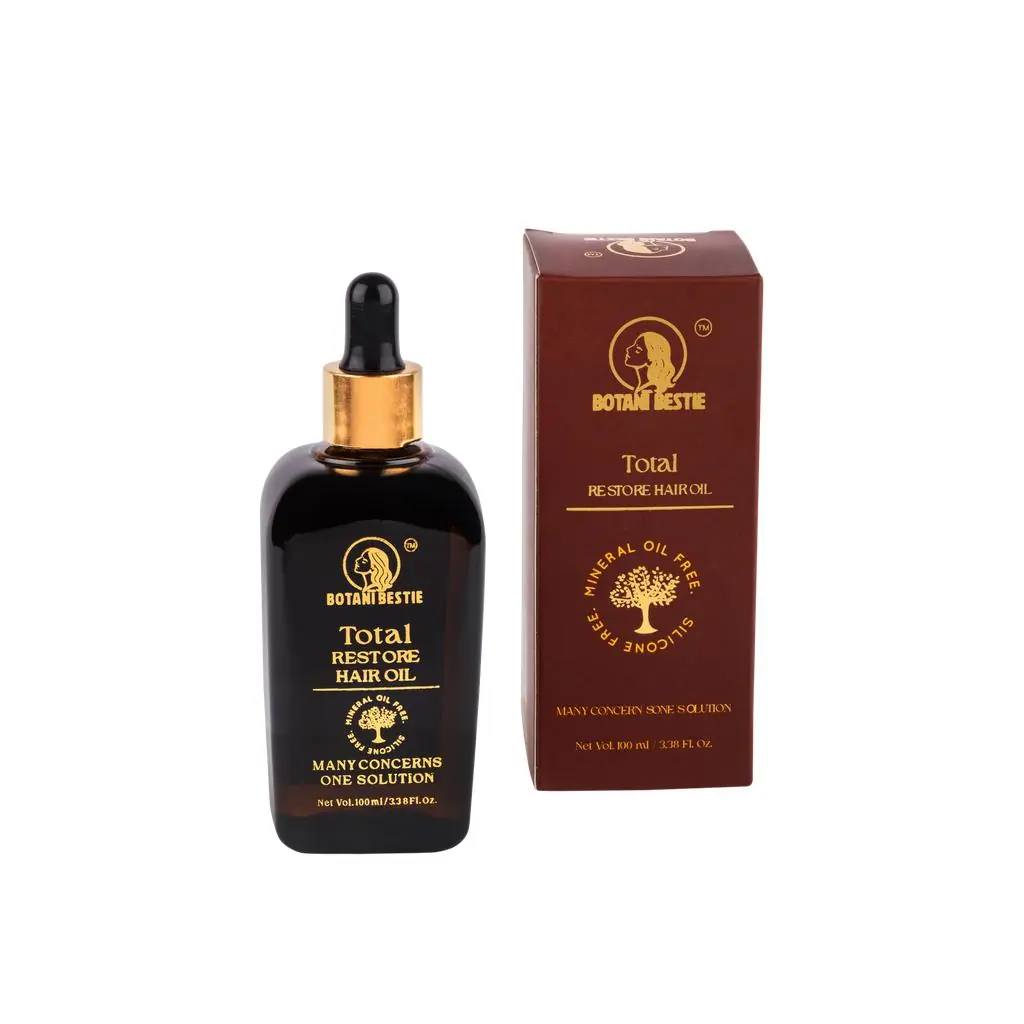
Total Restore Hair Oil — Onion Oil + 13 Ayurvedic Herbs
Pre-Wash Scalp Treatment — 2–3× per week
Built on the principle that hair fall has multiple simultaneous causes — and effective treatment must address all of them at once. Every ingredient is selected for a specific, clinically supported mechanism:
- ✔ Onion Oil — quercetin (5-AR inhibition), catalase (oxidative stress), organosulfur (keratin synthesis)
- ✔ Bhringraj — Wnt/β-catenin activation, 45% hDPC proliferation increase
- ✔ Amla — richest natural Vitamin C; DHT-blocking tannins; antioxidant
- ✔ Brahmi — adaptogen; reduces cortisol-driven telogen effluvium
- ✔ Methi (Fenugreek) — DHT inhibition; Vitamins A, K, C; folic acid
- ✔ Neem — antifungal; scalp microbiome regulation; dandruff control
- ✔ 14+ carrier oils — sesame, coconut, jojoba base for deep penetration; no mineral oil
- ✔ Coenzyme Q10 & Vitamin E — additional antioxidant protection
The smell? The herbal base — particularly Bhringraj, Brahmi, and the sesame oil carrier — naturally manages the onion odour. No synthetic fragrance needed.
Shop Total Restore Hair Oil →How Total Restore compares to a typical onion oil from the pharmacy:
| Feature | Generic Pharmacy Onion Oil | Total Restore Hair Oil |
|---|---|---|
| Onion oil (quercetin + organosulfur) | ⚠ Present, potency unverified | ✅ Verified extract, therapeutic concentration |
| Wnt/β-catenin activator (Bhringraj) | ❌ | ✅ |
| Additional Ayurvedic DHT blockers (Amla, Methi) | ❌ Usually single-ingredient | ✅ Both included |
| Carrier oil base (no mineral oil) | ❌ Often contains mineral oil | ✅ 14+ botanical carrier oils |
| Odour management without synthetic fragrance | ❌ Often synthetic fragrance or strong onion smell | ✅ Herbal base naturally manages odour |
| Free dermatologist consultation | ❌ | ✅ Included |
Join the growing community of customers across India making the switch to clean, multi-mechanism hair care.
🎁 Not Sure If Onion Oil Is Right for Your Hair Fall Pattern?
Get a free personalised hair consultation with our in-house dermatologist — no purchase required. Share your hair fall pattern, timeline, and scalp condition, and receive a targeted routine recommendation built specifically for you.
Book Free Hair Consultation → WhatsApp UsFrequently Asked Questions
The Verdict: The Smelliest Ingredient With the Best Clinical Evidence
Onion oil is unusual in the landscape of natural hair care: it is unglamorous, it smells, and it has a genuine randomised controlled trial showing 73.9% hair regrowth in human participants. That combination — clinical rigour plus traditional use — is rare, and it should matter more than it does.
Quercetin inhibits 5-alpha-reductase. Catalase neutralises the hydrogen peroxide accumulation that drives follicle oxidative stress. Organosulfur compounds build stronger keratin and improve scalp microcirculation. And the antifungal properties address dandruff-driven hair fall that too many people misattribute to genetics or nutrition.
The smell is the barrier — not the efficacy. A properly formulated onion oil with the right carrier base, combined with synergistic herbs, delivers all of these mechanisms without your pillowcases paying the price.
The science was always there. We just had to look past the smell to find it.
Shop Total Restore Hair Oil → Free Hair Consultation"The best hair care ingredient has no Instagram aesthetic — it has a clinical trial."
Ready to make the honest switch?
Our products are built on the same principles as every article we write — pure ingredients, real results, nothing to hide.
Explore Our Products