Hair Care for Men — The Ayurvedic Protocol for Male Hair Fall, DHT, and Scalp Health
Most hair care content is written for women and adapted awkwardly for men. This guide is built from the ground up for Indian men's hair — where androgenetic alopecia (DHT-driven thinning), stress-triggered shedding, and scalp neglect are the three dominant patterns, and where the Ayurvedic tradition offers genuinely effective tools when used correctly.
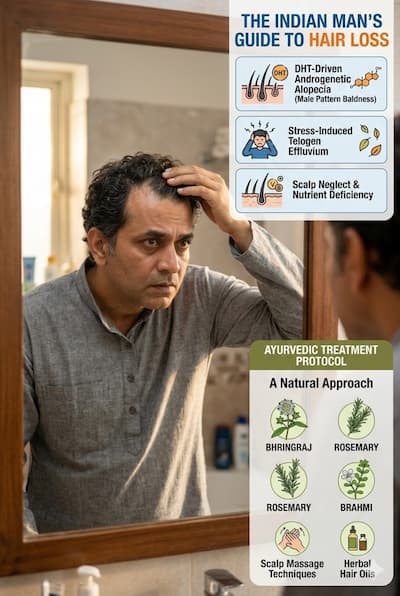
Indian men experience hair fall at higher rates and earlier onset than almost any other demographic globally. Studies suggest that up to 58% of Indian men show signs of androgenetic hair loss by age 40 — compared to a global average of approximately 50%. The causes are multiple: genetic predisposition to androgen sensitivity, high average DHT levels, chronic stress from academic and professional pressure, hard water across most Indian cities, and widespread use of harsh SLS shampoos that damage the scalp microbiome.
Ayurveda has a specific pharmacopeia for male hair loss — herbs targeting DHT, follicle inflammation, stress, and scalp circulation. Modern hair science has validated most of these mechanisms. This guide maps them both together for a protocol that works.
One important clarification upfront: this guide is for men in the early stages of hair fall (noticing increased shedding, early recession, or thinning). For advanced androgenetic alopecia (significant crown thinning, Norwood Stage 4+), medical consultation with a trichologist is the appropriate starting point — Ayurvedic treatment is a complementary approach, not a replacement for clinical intervention in severe cases.
The 3 Main Causes of Hair Fall in Indian Men
Cause 1
Most CommonDHT-Driven Androgenetic Alopecia
Dihydrotestosterone (DHT) — converted from testosterone by the enzyme 5α-reductase in the scalp — binds to androgen receptors in genetically sensitive follicles. This binding progressively miniaturises the follicle: hair shaft diameter decreases, anagen phase shortens, and eventually the follicle produces only fine vellus hair before going dormant.
The pattern: hairline recession at the temples and crown thinning — the classic M-shape recession followed by crown merge that characterises androgenetic alopecia. Genetics determines which follicles are androgen-sensitive; DHT determines how fast they miniaturise.
What works: 5α-reductase inhibitors (blocking DHT production) — pharmaceutical (Finasteride, Dutasteride) or herbal (Bhringraj, Rosemary, Saw Palmetto, Amla). All reduce DHT availability at the follicle, slowing miniaturisation.
Cause 2
Very CommonStress-Triggered Telogen Effluvium
Chronic stress elevates cortisol, which activates Substance P — a neuropeptide that inhibits hair follicle stem cell activity and pushes follicles into premature telogen (resting/shedding) phase. The result: increased diffuse shedding across the scalp, 2–3 months after a significant stress event (exam period, job loss, health scare, major life change).
Men are often less likely to attribute their shedding to stress — making this the most underdiagnosed hair fall cause in men. The 2–3 month lag between the stressor and the shedding makes the connection non-obvious.
What works: Stress management (direct intervention at the cortisol-Substance P axis), adaptogenic herbs (Brahmi, Ashwagandha), and time — telogen effluvium typically reverses within 3–6 months once the stressor is addressed.
Cause 3
Common but OverlookedScalp Neglect — Dandruff, Inflammation, Hard Water
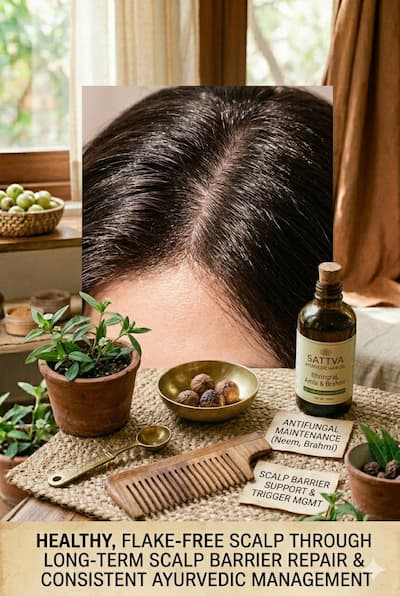
Men's hair care routines are, on average, far simpler than women's — which means scalp health issues (dandruff, seborrheic dermatitis, hard water mineral buildup) go unaddressed longer. Malassezia overgrowth on the scalp causes chronic low-level inflammation around follicles that, over time, accelerates DHT-driven miniaturisation and independently causes hair fall through the inflammatory telogen-shift mechanism.
Hard water (calcium and magnesium mineral deposits) is particularly problematic in Indian cities — it deposits on the scalp and hair shaft, clogging follicle openings and creating alkaline conditions that favour Malassezia and disrupt the acid mantle.
What works: Antifungal scalp treatment (Neem, Tea Tree, ACV), chelating shampoo or ACV rinse for hard water, and a consistent herbal oil routine that addresses scalp inflammation.
The Ayurvedic Hair Care Protocol for Men
Unlike the general Ayurvedic hair care framework, the men's protocol is specifically weighted toward DHT-targeting herbs and scalp health — the two dominant male hair fall causes.
Apply a Bhringraj-based herbal oil to the scalp — specifically the hairline, crown, and vertex (the areas most affected by DHT-sensitive follicles). Massage in with fingertip circular motions for 5–10 minutes. The massage is not just for absorption — it mechanically stimulates blood flow to the dermal papilla, improving oxygen and nutrient delivery to the follicle independent of the herbs.
Key herbs to look for:
- Bhringraj: Wnt pathway activation + 5α-reductase inhibition (DHT blocking)
- Rosemary: Clinically shown equal to Minoxidil 2% for scalp circulation; 5α-reductase inhibitor
- Amla: Additional 5α-reductase inhibition + antioxidant protection of follicles
- Brahmi: Reduces scalp inflammation + cortisol modulation (stress-shedding component)
- Jatamansi: Follicle protection + anti-inflammatory at the scalp level
Most men use strong SLS shampoos — marketed as "for men" with coal tar or menthol — without considering their pH. SLS shampoos at pH 6–8 disrupt the scalp's acid mantle, kill beneficial microbiota, and create the alkaline conditions that allow Malassezia to expand. For men with dandruff and concurrent hair fall (an extremely common combination), fixing the shampoo is often the single most impactful change.
What to look for in a men's shampoo:
- Sulfate-free (no SLS, SLES) — or at minimum, a mild alternative surfactant system
- pH 4.5–5.5 if possible (acid mantle preservation)
- Antifungal actives if dandruff is present: Neem, ACV, Ketoconazole, or Tea Tree
- No coal tar (effective for dandruff but significant photosensitisation risk and emerging carcinogen concerns)
- No synthetic fragrance in a scalp-applied product — fragrance sensitises inflamed scalp tissue
This is the step most men skip — and the one that provides the most direct follicle-level stimulation between oil treatments. A lightweight scalp serum with biotech actives (Redensyl, Procapil, Anagain, Copper Peptides GHK-Cu) is applied to the scalp every morning on non-wash days and works through daily cumulative exposure at the follicle.
Why biotech actives? Herbal oils are essential for scalp health and DHT reduction — but their active compounds are fat-soluble and primarily work when directly applied in an oil vehicle to the scalp. Biotech actives like Redensyl (ORSyl + DHQG complex targeting ORSCs — outer root sheath cells) work through water-soluble pathways and are optimally delivered in a lightweight leave-in serum format that allows them to reach the follicle without the occlusive barrier that oil creates.
For men with significant thinning, combining herbal DHT-blocking oils with daily biotech serum provides complementary mechanisms — herbs slow the DHT miniaturisation, biotechs stimulate new anagen entry and extend growth phase duration.
The Top Herbs for Male Hair Fall — Ranked by Evidence
| Herb / Active | Primary Mechanism | Evidence Level | Best For |
|---|---|---|---|
| Bhringraj (Eclipta alba) | Wnt pathway activation + 5α-reductase inhibition | Strong — outperformed Minoxidil 2% in published study; multiple in vitro and in vivo studies | All male hair fall; androgenetic hair loss early stages |
| Rosemary (Rosmarinus officinalis) | 5α-reductase inhibition + scalp vasodilation (improved circulation) | Strong — RCT showing equal efficacy to Minoxidil 2% for hair density at 6 months | DHT-driven hair loss; androgenetic alopecia; scalp circulation improvement |
| Amla (Phyllanthus emblica) | 5α-reductase inhibition + antioxidant protection of follicles | Moderate — in vitro 5α-reductase inhibition well-documented; limited human trials | Supporting DHT blocking; follicle protection from pollution and UV oxidative stress |
| Saw Palmetto (Serenoa repens) | 5α-reductase inhibition (Type I + II) — similar to Finasteride mechanism | Moderate — multiple clinical trials showing improvement in hair count; less potent than Finasteride | Androgenetic hair loss; complement to Bhringraj in DHT-blocking stack |
| Brahmi (Bacopa monnieri) | Cortisol modulation (adaptogenic) + scalp anti-inflammatory | Moderate — human trials on stress/anxiety published; hair fall trials limited | Stress-triggered hair fall; telogen effluvium from chronic work or academic stress |
| Redensyl (biotech active) | ORSC (outer root sheath cell) stem cell activation via ORSyl + DHQG complex | Strong — 84% reduction in hair loss in 85-person study; 114% increase in growth phase | Early thinning; increasing hair density; active phase extension alongside DHT-blocking herbs |
| Neem (Azadirachta indica) | Antifungal (anti-Malassezia) + anti-inflammatory at scalp | Strong antifungal evidence; scalp inflammation reduction data strong | Dandruff-associated hair fall; seborrheic dermatitis; scalp folliculitis |
5 Mistakes Indian Men Make with Hair Care
Mistake 1: Waiting Too Long to Start Treatment
The most damaging pattern in male hair loss is the "it's just normal shedding" rationalisation that delays intervention by 3–5 years. Once a follicle has fully miniaturised and its dermal papilla has regressed, it cannot be reactivated by herbal or even most pharmaceutical treatments. Starting Bhringraj, Rosemary, and a herbal scalp serum at the first sign of recession is exponentially more effective than starting at Norwood Stage 4.
Mistake 2: Using 2-in-1 Shampoo + Conditioner
2-in-1 formulations use silicone conditioning agents (Dimethicone, Cyclomethicone) that coat the scalp as well as the hair shaft. On the scalp, these create an occlusive silicone film over follicle openings — reducing oxygen availability, trapping sebum, and creating ideal conditions for Malassezia. For men concerned about hair fall, using a 2-in-1 actively worsens the scalp environment they are trying to improve.
Mistake 3: Applying Oil Once a Month When Hair "Looks Dry"
Herbal oils require cumulative scalp exposure for their actives to produce follicle-level effects. A once-a-month application delivers insufficient herb exposure to meaningfully inhibit 5α-reductase or produce measurable follicle stimulation. 2–3 times per week for 30–60 minutes pre-wash is the minimum effective protocol. The difference in outcome between weekly and biweekly herbal oiling is significant over a 3-month period.
Mistake 4: Hot Shower Directly on the Scalp
Hot water (above 40°C) raises the scalp's temperature significantly, temporarily disrupting the acid mantle, forcing the cuticle open, and increasing sebum stripping during washing. Most Indian men shower at temperatures that are too hot for the scalp — not because of preference, but because no one told them it matters. Switch the final scalp rinse to cool or lukewarm water. Hot water on the rest of the body is fine; the scalp rinse specifically should be cool.
Mistake 5: Relying on Anti-Hairfall Shampoo as the Primary Treatment
Anti-hairfall shampoos are rinse-off products — they contact the scalp for 1–3 minutes before being washed away. Even if their active ingredients are present at meaningful concentrations (rarely guaranteed in marketing-led "anti-hairfall" formulations), the contact time is insufficient for scalp absorption of most herbal actives. Shampoo is a cleanser — its job is to maintain scalp pH and microbiome health by cleansing gently. The treatment work (DHT blocking, follicle stimulation, anti-inflammatory) belongs in leave-on products: herbal oils and serums.
The Complete Ayurvedic Hair Care Stack for Men

Total Restore Hair Oil
Step 1 — Pre-Wash DHT-Blocking Oil
Bhringraj, Amla, Brahmi, Jatamansi, Rosemary, and 5 more Ayurvedic actives in a lightweight oil base. Addresses the DHT-blocking, follicle stimulation, and scalp inflammation components of male hair fall simultaneously.
Shop Hair Oil →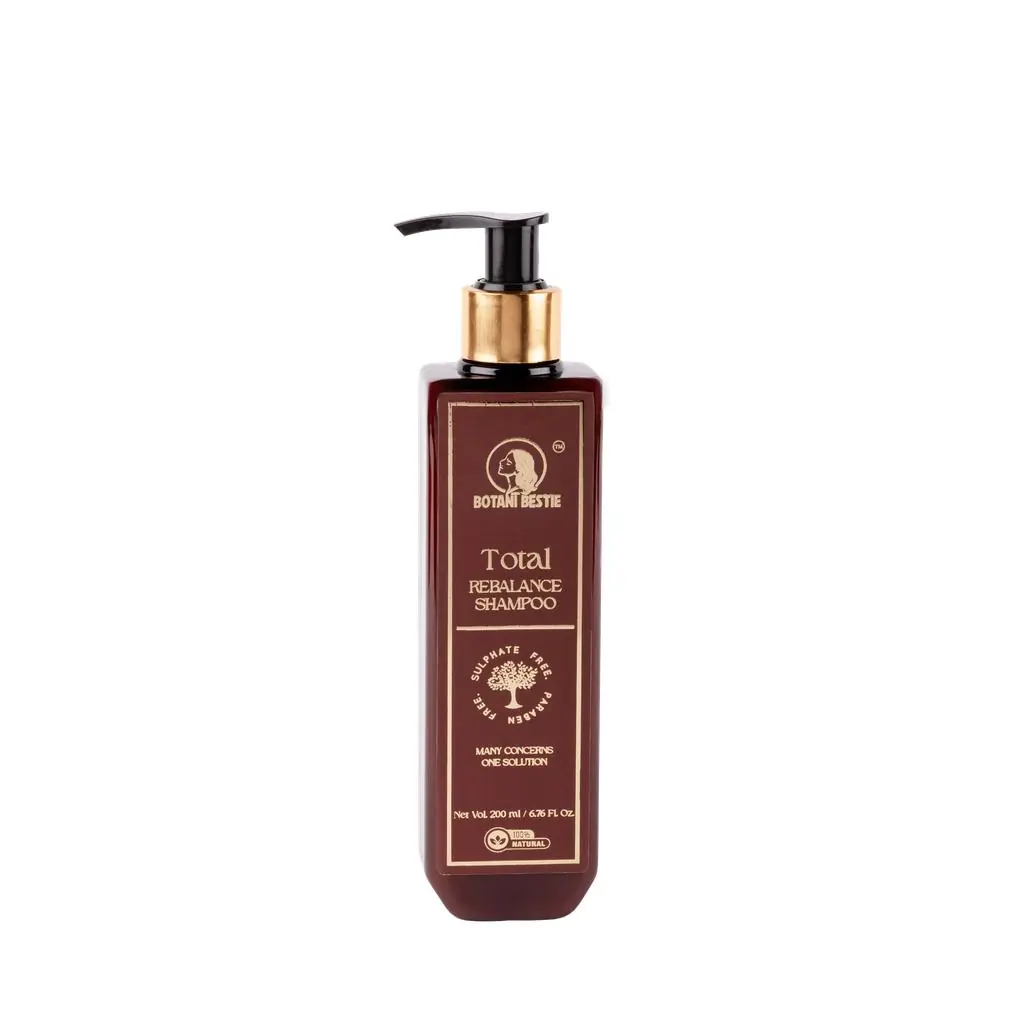
Total Rebalance Shampoo
Step 2 — Sulfate-Free Antifungal Scalp Cleanser
pH-balanced (5.0), sulfate-free, with Neem, ACV, Shikakai, and Fermented Rice Water. Replaces harsh SLS shampoos with a formula that cleanses without disrupting the acid mantle or worsening dandruff.
Shop Shampoo →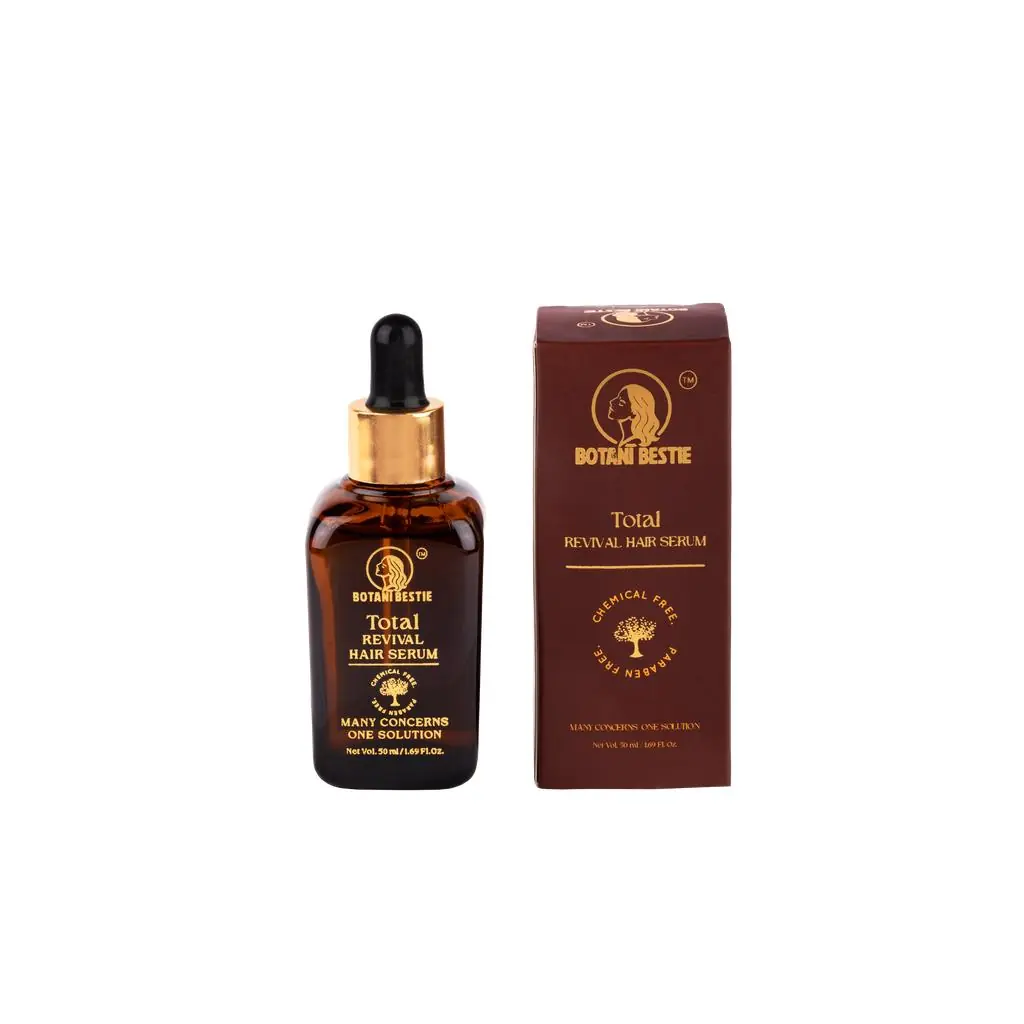
Total Revival Hair Serum
Step 3 — Daily Biotech Scalp Serum
Redensyl (3%), Procapil, Anagain, Copper Peptides GHK-Cu — biotech actives for direct follicle stimulation, daily leave-in application. Lightweight, non-greasy, no white cast.
Shop Serum →Is your hair fall androgenetic, stress-driven, or scalp-related?
The treatment protocol differs significantly between causes. Our certified Ayurvedic doctors provide free consultations — they will identify your root cause and recommend the most targeted approach for your specific pattern of hair fall.
Frequently Asked Questions
The Honest Bottom Line for Men
Male hair fall is dominated by DHT — and DHT-driven miniaturisation is progressive and cumulative. The single most important decision Indian men can make about their hair is to start addressing it early, not after significant density loss has already occurred.
Ayurvedic treatment — Bhringraj, Rosemary, Amla, Brahmi — addresses both the DHT mechanism and the inflammatory progression that accelerates it. It is not as fast or potent as pharmaceutical intervention for advanced cases, but for early-stage hair fall it is a genuinely effective, side-effect-free approach with a 3,000-year track record and growing modern clinical evidence.
Three steps, done consistently, starting early: DHT-blocking herbal oil, pH-balanced cleanser, daily biotech serum. That is the protocol. Consistency over 3–6 months produces results that no occasional, half-committed routine can match.
Shop Total Restore Hair Oil → Free Hair Consultation"Every DHT-sensitive follicle you protect today is one that does not need to be replaced tomorrow."
Ready to make the honest switch?
Our products are built on the same principles as every article we write — pure ingredients, real results, nothing to hide.
Explore Our Products