Vitamin C for Skin — Brightening, Dark Spots, and Glow: What the Science Actually Says
Vitamin C is the most researched skin-brightening ingredient in dermatology — with clinical evidence for melanin inhibition, collagen stimulation, and free radical defence. But its effectiveness depends entirely on using a stable, bioavailable form at the right concentration. This guide covers the biology, the best forms, how to pair it, and why Amla is the most potent natural source available.

Of all the active ingredients in skincare, Vitamin C has the most consistent clinical backing for skin brightening. It inhibits melanin synthesis at a molecular level, reverses existing oxidised pigment, stimulates collagen production in the dermis, and neutralises the UV-generated free radicals that drive premature ageing and uneven skin tone.
In India — where UV exposure is high year-round, post-inflammatory hyperpigmentation (PIH) from acne is endemic, and uneven skin tone is one of the most common skin concerns — Vitamin C should theoretically be a cornerstone of most skincare routines. Yet most people either use the wrong form (unstable L-ascorbic acid that has already oxidised in the bottle), the wrong concentration (too low to have biological effect), or skip the daily SPF that makes Vitamin C's tyrosinase inhibition actually meaningful.
This guide explains exactly how Vitamin C works on skin, the practical differences between its forms, how to use it correctly, how it compares and combines with niacinamide, and why Amla — far from being merely a hair ingredient — is one of the most potent natural sources of bioavailable Vitamin C for skin.
⚡ Vitamin C for Skin — Quick Reference
| Primary skin benefits | Melanin inhibition (dark spots, uneven tone), collagen synthesis, antioxidant/UV protection, skin glow |
| Key mechanism | Tyrosinase inhibition (blocks melanin production) + direct reducing action on existing pigment + free radical scavenging |
| Most bioactive form | L-ascorbic acid (LAA) — most effective but unstable; oxidises rapidly |
| Most stable form for daily use | Sodium Ascorbyl Phosphate (SAP) — stable, non-irritating, converts to LAA in skin |
| Best natural source | Amla (Phyllanthus emblica) — 445–921 mg Vitamin C per 100g; stabilised by co-occurring emblicanins |
| Effective concentration | L-ascorbic acid: 10–20%; SAP: 1–5%; Amla extract: as standardised in formulation |
| Time to see results | 8–12 weeks for measurable brightening; 16–24 weeks for deeper pigmentation |
| Essential pairing | Daily SPF — without it, UV continuously restimulates melanin production and counteracts the brightening effect |
How Vitamin C Works on Skin — The 3 Core Mechanisms
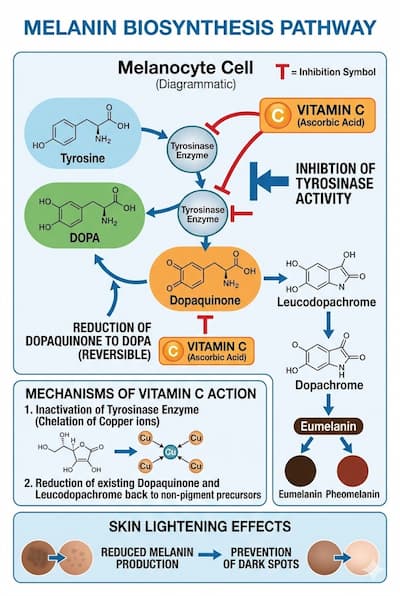
Vitamin C (ascorbic acid) achieves its skin benefits through three distinct mechanisms, each operating at a different level of skin biology. Understanding these helps explain why consistent use matters, why SPF is non-negotiable alongside it, and why the collagen benefit develops slowly over months rather than weeks.
| Mechanism | What It Does | Visible Result |
|---|---|---|
| Tyrosinase Inhibition | Chelates copper ions required by tyrosinase to catalyse melanin production; inhibits the conversion of tyrosine → DOPA → melanin | Prevents new dark spots; reduces ongoing hyperpigmentation |
| Melanin Reduction | Directly reduces oxidised melanin precursors (dopaquinone → DOPA) — converting darker pigment back to a lighter form | Lightens existing spots and uneven patches |
| Collagen Synthesis | Essential cofactor for prolyl and lysyl hydroxylase enzymes that stabilise collagen triple helix; also stimulates collagen gene expression in fibroblasts | Firmer skin, reduced fine lines, improved skin density over 3–6 months |
| Antioxidant / Free Radical Scavenging | Neutralises reactive oxygen species (ROS) generated by UV exposure; protects melanocytes from UV-triggered melanin upregulation; regenerates Vitamin E | Reduces UV-induced pigmentation, dullness, and oxidative ageing |
The Forms of Vitamin C in Skincare — Which Actually Works
Not all Vitamin C in skincare delivers the same benefit. The key distinction is between the biologically active form (L-ascorbic acid) and the stabilised derivatives that convert to it in the skin. Each has meaningful trade-offs.
⚗️ L-Ascorbic Acid (LAA) — The Gold Standard
What it is: The biologically active form of Vitamin C — the actual molecule that inhibits tyrosinase, stimulates collagen synthesis, and neutralises free radicals.
Effective concentration: 10–20% (below 10% shows limited clinical effect; above 20% increases irritation without proportional benefit).
pH requirement: Below 3.5 for adequate skin penetration — which makes it inherently acidic and potentially irritating for sensitive, acne-prone, or compromised skin barriers.
The problem: LAA is extremely unstable. It oxidises rapidly on exposure to air, light, and heat — turning yellow, then orange, then brown as it degrades. An oxidised Vitamin C serum is not just ineffective; the oxidised form (dehydroascorbic acid and diketogulonic acid) can theoretically pro-oxidise rather than antioxidise. A discoloured Vitamin C product should be discarded.
Best for: Normal to oily skin; resilient skin barriers; fresh products stored properly.
✅ Sodium Ascorbyl Phosphate (SAP) — Most Practical
What it is: A phosphate ester of Vitamin C — stable, water-soluble, and converted to L-ascorbic acid by phosphatase enzymes naturally present in the skin.
Effective concentration: 1–5% (the enzymatic conversion step means lower concentrations deliver effective L-ascorbic acid levels in situ).
pH: Formulated at a neutral-to-slightly-acidic pH — significantly less irritating than LAA; appropriate for sensitive and acne-prone skin.
Bonus: SAP has documented independent anti-acne activity — clinical studies show it reduces C. acnes colonisation and inflammatory acne lesion count at 1–2% concentration.
Stability: Significantly more stable than LAA; resists oxidation in formulations and does not require low pH or opaque/airless packaging.
Best for: All skin types; particularly well-suited to sensitive, acne-prone, and darker Indian skin tones where irritation-driven PIH is a risk.
💧 Ascorbyl Glucoside — Gentlest Option
What it is: A glucose-bound form of Vitamin C, converted to L-ascorbic acid by glucosidase enzymes in the skin.
Effective concentration: 1–2%.
Stability: One of the most stable Vitamin C derivatives — long shelf life, resistant to oxidation.
Absorption: Slower conversion rate than SAP, making the brightening timeline somewhat longer.
Best for: Very sensitive or reactive skin; users new to actives; inclusion in gentle brightening formulations where irritation risk must be minimised.
🌿 Amla Extract — The Natural Advantage
What it is: Standardised extract of Phyllanthus emblica (Indian Gooseberry) — the richest plant-based source of bioavailable Vitamin C, at 445–921 mg per 100g fresh fruit (vs. orange: ~50 mg, lemon: ~77 mg).
Why it outperforms isolated Vitamin C: Amla's Vitamin C activity is naturally stabilised by co-occurring emblicanin A and B (unique ellagitannins with among the highest antioxidant capacity measured in any plant), tannins, and gallic acid. These compounds prevent rapid oxidation, contribute independent tyrosinase inhibitory activity, and add anti-inflammatory action that isolated LAA lacks.
Additional benefits: Gallic acid in Amla inhibits melanin production through a separate pathway from Vitamin C itself; ellagic acid (from tannin hydrolysis) provides additional UV protection and collagen stabilisation.
Best for: All skin types; particularly appropriate for Ayurvedic formulations targeting Indian skin — where the combination of UV exposure and post-inflammatory pigmentation requires both antioxidant and anti-inflammatory coverage.
Vitamin C vs Niacinamide for Dark Spots — How They Compare and Work Together
These are the two most discussed brightening ingredients in skincare — and they work at different points in the same pigmentation pathway, making them genuinely complementary rather than competitive.
| Feature | Vitamin C | Niacinamide (Vitamin B3) |
|---|---|---|
| Primary brightening mechanism | Tyrosinase inhibition — blocks melanin production upstream; also directly reduces existing pigment | Inhibits melanosome transfer from melanocytes to keratinocytes — blocks pigment dispersal to skin cells |
| Stage in pigmentation pathway | Upstream — prevents melanin from being made | Midstream — prevents made melanin from being distributed to the surface skin cells |
| Antioxidant / UV protection | Strong — direct free radical scavenging; enhances SPF efficacy | Moderate — reduces UV-induced immunosuppression; some anti-inflammatory UV effect |
| Collagen stimulation | Significant — cofactor for collagen cross-linking enzymes; fibroblast stimulation | Indirect — reduces keratinocyte cell turnover disruption; does not directly stimulate collagen |
| Skin barrier support | Moderate — antioxidant protection supports barrier integrity | Strong — stimulates ceramide, fatty acid, and cholesterol synthesis; direct barrier strengthening |
| Pore size / sebum regulation | Minimal direct effect on pores | Documented — reduces sebum production and pore appearance at 2–4% concentration |
| Irritation potential | Moderate-to-high (L-ascorbic acid); low (SAP, Amla) | Very low — well-tolerated by all skin types including sensitive |
| Can they be used together? | Yes — they address two different steps in the same pathway. Together they are more effective for hyperpigmentation than either alone. Apply Vitamin C first, allow to absorb, then apply niacinamide. | |
The Old "Vitamin C + Niacinamide = Yellow Complex" Myth
For years, Vitamin C and niacinamide were said to be incompatible — the concern being that they react to form nicotinic acid (niacin), causing flushing and reducing each other's efficacy. This reaction does occur in vitro, but only at sustained temperatures above 50°C — well above the temperatures reached during normal skincare use or storage. Multiple peer-reviewed analyses have confirmed that under real-world conditions, the reaction is negligible. The combination is safe and clinically more effective than either ingredient alone for pigmentation reduction. If you are using a high-concentration L-ascorbic acid product (15–20%) alongside niacinamide, allow a few minutes between application steps to minimise any theoretical interaction — but there is no reason to avoid the combination.
See our dedicated guide: Niacinamide for Dark Spots — The Complete Guide
💡 Dealing with persistent dark spots or uneven skin tone? Our dermatologist can identify your specific pigmentation type and the right treatment approach.
Book Free Skin Consultation →Amla — The Most Potent Natural Vitamin C for Indian Skin
Amla (Phyllanthus emblica) is one of the most important plants in Ayurvedic medicine — and modern skin science confirms that its reputation for skin brightening is backed by a robust phytochemistry that goes well beyond Vitamin C alone.

The key to Amla's superiority over isolated Vitamin C in skincare is its phytochemical complexity. Amla is not simply a Vitamin C delivery vehicle — it is a multi-active skin ingredient that addresses pigmentation, oxidative stress, and inflammation simultaneously.
| Compound | Concentration | Skin Activity |
|---|---|---|
| Vitamin C (Ascorbic Acid) | 445–921 mg/100g | Tyrosinase inhibition, collagen synthesis, free radical scavenging |
| Emblicanin A & B | Unique to Amla | Among the highest antioxidant values measured in any plant; stabilise Vitamin C; independent antioxidant activity |
| Gallic Acid | High | Independent tyrosinase inhibitor via a different binding site than Vitamin C — additive melanin suppression |
| Ellagic Acid (from tannin hydrolysis) | Moderate | UV photoprotection; collagen cross-link stabilisation; documented skin-lightening activity |
| Quercetin, Kaempferol | Low-moderate | Anti-inflammatory; UV filter; reduces prostaglandin-driven post-UV pigmentation |
Research published in the Journal of Ethnopharmacology and multiple phytochemistry journals confirms significant tyrosinase inhibitory activity in Amla extract comparable to arbutin (a widely used pharmaceutical depigmenting agent). The emblicanins — found nowhere else in nature — protect the endogenous Vitamin C from the rapid oxidation that limits isolated L-ascorbic acid in formulations, giving Amla extract inherently superior stability.
For Indian skin in particular — where high UV exposure year-round continuously drives melanin upregulation, and post-inflammatory hyperpigmentation from acne affects a large proportion of the population — Amla's combination of tyrosinase inhibition, anti-inflammatory activity, and antioxidant UV defence addresses the full spectrum of pigmentation drivers simultaneously.
How to Use Vitamin C in Your Skincare Routine
Vitamin C penetrates best on clean skin with an intact but unblocked barrier. Heavy residual oils, sunscreen from the previous day, and makeup buildup create a physical barrier that reduces active ingredient absorption. A gentle face wash that effectively removes surface impurities without stripping the barrier lipids is the right starting point. Avoid harsh, high-pH cleansers that disrupt the skin's natural acidic mantle — a disrupted barrier reduces Vitamin C penetration and increases the risk of irritation with LAA-based products.
For acne-prone skin with post-inflammatory hyperpigmentation — the most common dark spot pattern in India — a cleanser with targeted actives (salicylic acid for pore clearing, niacinamide for inflammation control) alongside Amla Vitamin C creates a synergistic starting step for the brightening routine.
Apply Vitamin C to clean, dry skin. Pat — do not rub — a few drops across the face, focusing on hyperpigmented areas. Allow 60–90 seconds for absorption before layering other products. For L-ascorbic acid specifically, this absorption wait time matters because the acidic pH needs time to interact with the slightly acidic skin surface before a higher-pH moisturiser raises the pH and reduces its penetration efficiency.
Morning vs evening: Morning is preferred — Vitamin C's antioxidant activity provides protection against UV-generated free radicals during the day. Evening application is an option for very sensitive skin that cannot tolerate LAA's low pH in the morning, but the photoprotective benefit is lost. Never apply Vitamin C over or under freshly-applied SPF — apply Vitamin C first, allow full absorption, then moisturiser, then SPF.
Apply moisturiser after Vitamin C absorption. For dark skin tones prone to PIH, choose a moisturiser that includes barrier-supportive ingredients (ceramides, niacinamide, hyaluronic acid) — a strong barrier reduces the risk of irritation-driven post-inflammatory hyperpigmentation that could worsen the very dark spots the Vitamin C is trying to fade. Niacinamide in the moisturiser works synergistically with Vitamin C by blocking melanosome transfer — covering the second step of the pigmentation pathway.
This is the step most people skip — and it is the reason most brightening routines produce disappointing results. Vitamin C inhibits tyrosinase and reduces melanin production. UV radiation — even through clouds, even through glass — continuously upregulates melanin synthesis as a photoprotective response. Without daily SPF, UV is restimulating the same melanin production that Vitamin C is working to suppress. The net result is minimal or no improvement because the two processes cancel each other out.
SPF 30 minimum; SPF 50 is appropriate for Indian skin tones and high UV environments. Apply as the final step after all actives and moisturiser have absorbed. Reapply every 2 hours during direct sun exposure. Vitamin C and SPF are not competing products — they are complementary: Vitamin C addresses UV-generated free radicals that penetrate past the SPF filter; SPF reduces the UV dose reaching the skin in the first place.
Benzoyl peroxide: Oxidises and degrades Vitamin C — use in the evening if Vitamin C is in your morning routine.
AHAs/BHAs at the same step: Both are acidic actives; layering directly can cause over-exfoliation and irritation, particularly for sensitive or PIH-prone skin. Use on separate occasions or allow 20+ minutes between application steps.
Retinol in the same step: Not chemically incompatible, but the combination of Vitamin C (acidic) and retinol in one step can be irritating. Vitamin C in the morning; retinol in the evening is the conventional approach.
Oxidised Vitamin C (already discoloured): Do not continue using a Vitamin C product that has turned orange/brown — it has degraded and may pro-oxidise.
Safe and beneficial pairings: Niacinamide (complementary — different pigmentation pathway), hyaluronic acid (no interaction; supports hydration), ceramides (barrier support; no interaction), Vitamin E (synergistic antioxidant — regenerates Vitamin C after it has scavenged a free radical).
Types of Dark Spots — Which Respond Best to Vitamin C
| Type | Cause | Vitamin C Efficacy | Additional Support Needed |
|---|---|---|---|
| Post-Inflammatory Hyperpigmentation (PIH) | Melanin overproduction following skin inflammation (acne, eczema, injury) | High — tyrosinase inhibition + anti-inflammatory effect; fresh PIH responds in 8–12 weeks | Niacinamide; avoid picking; address underlying acne |
| Sun Spots / Solar Lentigines | Chronic UV-stimulated melanin accumulation in discrete areas | Moderate-to-High — works on surface pigment; deeper or older spots may need longer treatment | Daily SPF essential; consider AHAs for surface cell turnover |
| Melasma | Hormonal + UV combination trigger; deeper dermal pigmentation component | Moderate — addresses epidermal component; dermal melasma is significantly harder to treat topically | Strict sun protection; dermatologist assessment; prescription agents may be needed for dermal melasma |
| Freckles (Ephelides) | Genetic; concentrated melanocytes in focal areas; UV-responsive | Moderate — can fade with consistent use and strict SPF; naturally reappear with UV exposure | SPF is the primary management; fading is cosmetic preference, not medical concern |
| Dark Underarms / Body Hyperpigmentation | Friction, shaving irritation, hormonal causes, deodorant ingredients | Moderate — Vitamin C can lighten gradually; friction/irritation must be addressed concurrently | Remove the friction trigger; Vitamin C + niacinamide body products |
💡 Persistent dark spots after 12+ weeks of Vitamin C? A personalised skin assessment helps identify whether the cause is hormonal, inflammatory, or UV-driven.
Book Free Skin Consultation →Vitamin C for Indian Skin — The Right Place to Start
For the Indian skin context — high UV, PIH-prone, often acne-affected — the most effective starting point for a Vitamin C brightening routine is a cleanser that delivers actives at the first step, preparing the skin while simultaneously addressing the triggers of new dark spots.
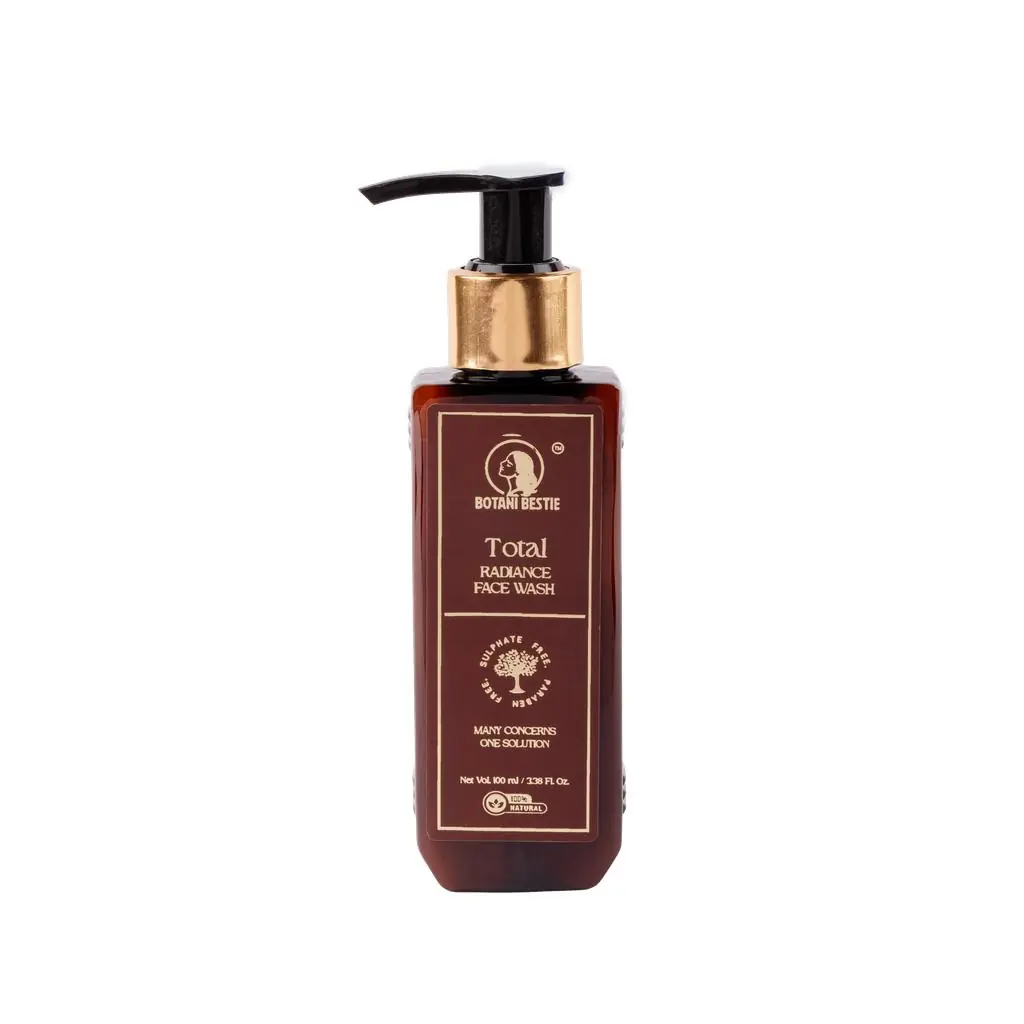
Total Radiance Face Wash
Brightening Cleanser — Twice Daily
Formulated with Amla (natural Vitamin C — tyrosinase inhibition + emblicanin antioxidants), alongside niacinamide (melanosome transfer inhibition — the second step in the pigmentation pathway) and salicylic acid (pore-clearing, anti-acne — addresses the source of PIH). Designed specifically for Indian skin dealing with post-inflammatory dark spots, uneven tone, and active acne — delivering brightening actives at the cleanse step, twice daily, without the irritation risk of high-concentration LAA serums.
Shop Total Radiance Face Wash →Persistent Dark Spots? Get a Personalised Skin Assessment
Our in-house dermatologist identifies your specific pigmentation pattern — PIH, melasma, sun damage, or hormonal — and builds a targeted treatment approach. Vitamin C is powerful; directed at the right pigmentation type, it is transformative. No purchase required.
Book Free Consultation → WhatsApp UsFrequently Asked Questions

The Bottom Line: Vitamin C Works — But Only With the Right Form, SPF, and Time
Vitamin C has more clinical evidence for skin brightening than almost any other topical ingredient. But the form matters — an oxidised LAA serum does nothing, and high-concentration LAA on PIH-prone Indian skin can trigger the very dark spots it is meant to treat. Stable forms (SAP, Amla extract) deliver equivalent brightening without the irritation risk.
The other half of the equation is SPF. Vitamin C without daily sun protection is a holding action at best — UV stimulates melanin faster than tyrosinase inhibition can suppress it. With SPF, Vitamin C's effect compounds: each day, less new pigment is being produced while existing deposits continue to fade.
And Amla — dismissed as merely a hair ingredient — is one of the most sophisticated skin brightening complexes in nature, delivering Vitamin C alongside unique stabilising antioxidants and independent tyrosinase inhibitors that isolated ascorbic acid cannot match.
Shop Total Radiance Face Wash → Free Skin Consultation"Vitamin C fades what UV has written — but only if you stop letting UV write it every day."
Ready to make the honest switch?
Our products are built on the same principles as every article we write — pure ingredients, real results, nothing to hide.
Explore Our Products