Post-COVID Hair Fall — Why It Happens, How Long It Lasts, and Natural Recovery
You recovered from COVID months ago. Now your hair is falling out in alarming quantities. This is not your imagination, and it is not unrelated. COVID-19 causes hair fall through a distinct biological mechanism — and understanding it is the first step to recovering your density.
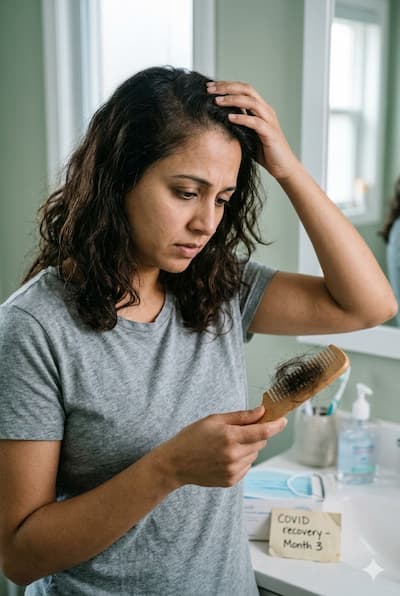
Studies estimate that 22–59% of COVID-19 survivors experience significant hair fall in the months following recovery. In India, with hundreds of millions of COVID infections across multiple waves, this translates to tens of millions of people experiencing what is clinically called post-COVID telogen effluvium.
What makes it particularly distressing is the timing. Hair fall begins not during the illness but 2–4 months after recovery — long enough that many people do not connect it to COVID at all and assume a separate problem has developed.
This guide explains the exact mechanism, why it is more severe than ordinary stress hair fall, what the realistic recovery timeline looks like, and the Ayurvedic and nutritional interventions that accelerate follicle re-activation.
The Exact Mechanism: Why COVID Shuts Down Your Follicles
Step-by-Step: How COVID Causes Hair Fall
- The Cytokine Storm (Day 1–14 of infection): COVID-19 triggers an exaggerated immune response — the "cytokine storm." Inflammatory cytokines (IL-6, TNF-α, IL-1β) flood the bloodstream. These are the same cytokines that, at elevated levels, directly signal hair follicles to exit anagen prematurely and enter the resting (telogen) phase. The body is essentially redirecting all biological resources to fighting the infection — hair growth is suspended.
- Mass Telogen Entry (Days 7–21): A large proportion of follicles — far more than the usual 10–15% — simultaneously enter telogen. The exact proportion varies with infection severity. Hospitalised patients lose a larger proportion of follicles than mild cases; fever above 39°C is an independent trigger for telogen shift even without COVID specifically.
- The 2–4 Month Delay (Weeks 8–16 post-infection): Follicles in telogen stay in that phase for 2–4 months normally — this is the standard telogen duration regardless of the trigger. The hair club (the old, telogen hair) is retained in the follicle until a new anagen hair pushes it out. So the mass telogen entry that happened during acute COVID illness results in mass shedding 2–4 months later — often appearing as alarming handfuls of hair in the drain.
- Nutritional Depletion (Ongoing): COVID depletes iron, zinc, Vitamin D, and B vitamins during the acute illness — all of which are independently required for follicle re-activation. This means even after the inflammatory trigger resolves, the follicles may struggle to re-enter anagen due to nutritional insufficiency. This is what distinguishes post-COVID hair fall from ordinary stress-induced telogen effluvium: the triple mechanism of inflammation + fever + nutritional depletion.
Why Post-COVID Hair Fall Is Different from Ordinary Stress Hair Fall
| Factor | Ordinary Stress Telogen Effluvium | Post-COVID Telogen Effluvium |
|---|---|---|
| Trigger intensity | Moderate — psychological or physical stress | Severe — systemic cytokine storm + fever |
| Proportion of follicles affected | 10–30% enter telogen prematurely | 30–60% in severe/hospitalised cases |
| Nutritional impact | Usually no direct nutritional depletion | Active depletion of iron, zinc, Vitamin D, B12 |
| Inflammatory persistence | Resolves with trigger removal | Long-COVID: inflammation may persist 6–12+ months |
| Duration of shedding | Typically 3–6 months | 6–9 months; can be longer if nutritional deficits persist |
| DHT interaction | Usually isolated to telogen effluvium | Can unmask underlying androgenetic alopecia if DHT-sensitive |
| Recovery without treatment | Usually self-resolving | Often requires active nutritional + topical intervention |
The Realistic Recovery Timeline
Understanding the timeline helps you distinguish normal recovery from a case that needs additional evaluation. The shedding phase and the re-growth phase are sequential — you cannot re-grow hair while the mass shedding is still ongoing, and the two periods are distinct.
Month 1–2
After infection
Hair appears normal. The follicles are in telogen but hair is still in the follicle. No visible shedding yet.
Month 2–4
Peak shedding
Mass shedding begins. Handfuls of hair in the drain, on pillows, in combs. Most alarming phase but expected.
Month 4–7
Gradual reduction
Shedding slows as follicles begin re-entering anagen. New short baby hairs visible at hairline and parting.
Month 6–18
Re-growth
Density progressively recovers. Full baseline density typically returns at 12–18 months from shedding onset with good nutrition and scalp care.
What Actually Helps: The Post-COVID Recovery Protocol
Before any topical intervention, nutritional deficits must be addressed — a follicle cannot re-enter anagen without adequate raw materials:
- Iron: Test serum ferritin specifically (not just haemoglobin). Target ferritin above 70 ng/mL for hair re-growth. COVID frequently drops ferritin below 30 in women. Supplement under doctor guidance — do not self-supplement iron without testing.
- Zinc: 50mg/day for 3 months (with a copper supplement to prevent zinc-induced copper deficiency). Zinc is directly lost during febrile illness.
- Vitamin D: 60,000 IU/week for 8 weeks (loading dose), then 2,000 IU/day maintenance. Most Indians are Vitamin D deficient even before COVID.
- Vitamin B12: Essential for anyone who had prolonged hospital stay, took metformin, or follows a vegetarian diet. 500–1000 mcg/day.
- Protein: Ensure 1.2–1.5g per kg body weight daily. Keratin is a protein — follicles cannot build new hair shaft without adequate amino acids.
Post-COVID scalp inflammation is often subclinical — not visibly red or itchy, but biochemically elevated. Ayurvedic oils with documented anti-inflammatory and follicle-stimulating properties work through two complementary mechanisms:
- Bhringraj (Eclipta alba): Wnt/β-catenin activation re-initiates anagen in resting follicles. Anti-inflammatory at the scalp. The most important single herb for post-COVID recovery.
- Brahmi (Bacopa monnieri): Reduces cortisol (which remains chronically elevated in long-COVID), protects follicle stem cells from stress-induced arrest, and has documented anti-inflammatory properties for scalp tissue.
- Amla (Phyllanthus emblica): Richest natural Vitamin C source. Essential for scalp collagen synthesis and reducing residual oxidative stress from COVID inflammation. A 2024 RCT confirmed Amla extract improved anagen-to-telogen ratio in women with androgenetic alopecia.
- Jatamansi: Nardostachys jatamansi protects follicle cells from oxidative stress. Used in Ayurveda specifically for hair loss triggered by illness or physical stress.
Application: 2–3 times per week, pre-wash. 4–5 minute scalp massage while applying (improves follicle microcirculation). Leave 30–60 min. Wash with sulfate-free shampoo. Consistent 12-week minimum before evaluating results.
A daily leave-on scalp serum accelerates follicle re-activation between oiling sessions. The most relevant actives for post-COVID recovery are:
- Redensyl: Activates hair follicle stem cells via the ORF pathway. Particularly effective for telogen effluvium recovery because it specifically targets the telogen-to-anagen transition.
- Procapil: Improves follicle anchorage and extends anagen — directly counters the premature catagen entry caused by the COVID cytokine cascade.
- Caffeine: Stimulates VEGF expression, improving scalp microcirculation. Critical for follicle nutrient delivery during the recovery phase.
- Copper Peptides (GHK-Cu): Activate follicle stem cells and support scalp healing from inflammatory damage.
- Biotin supplements (without confirmed deficiency): Biotin deficiency causing hair fall is extremely rare. Supplementing without deficiency does nothing for post-COVID telogen effluvium — the mechanism is inflammatory, not biotin-related.
- Avoiding oil massage: Many people stop oiling during shedding fearing it is "causing" hair fall. The opposite is true — gentle massage during oiling improves microcirculation and is one of the most evidence-backed interventions for accelerating anagen re-entry.
- Aggressive shampooing to remove fallen hair: Harsher shampooing does not reduce shedding — it increases mechanical breakage of weak re-growing hair. Switch to a gentle, sulfate-free shampoo and handle hair as little as possible while wet.
- Waiting without any intervention: Post-COVID hair fall can resolve on its own, but nutritional deficits will extend the shedding phase significantly. Active correction shortens recovery by 2–4 months on average.
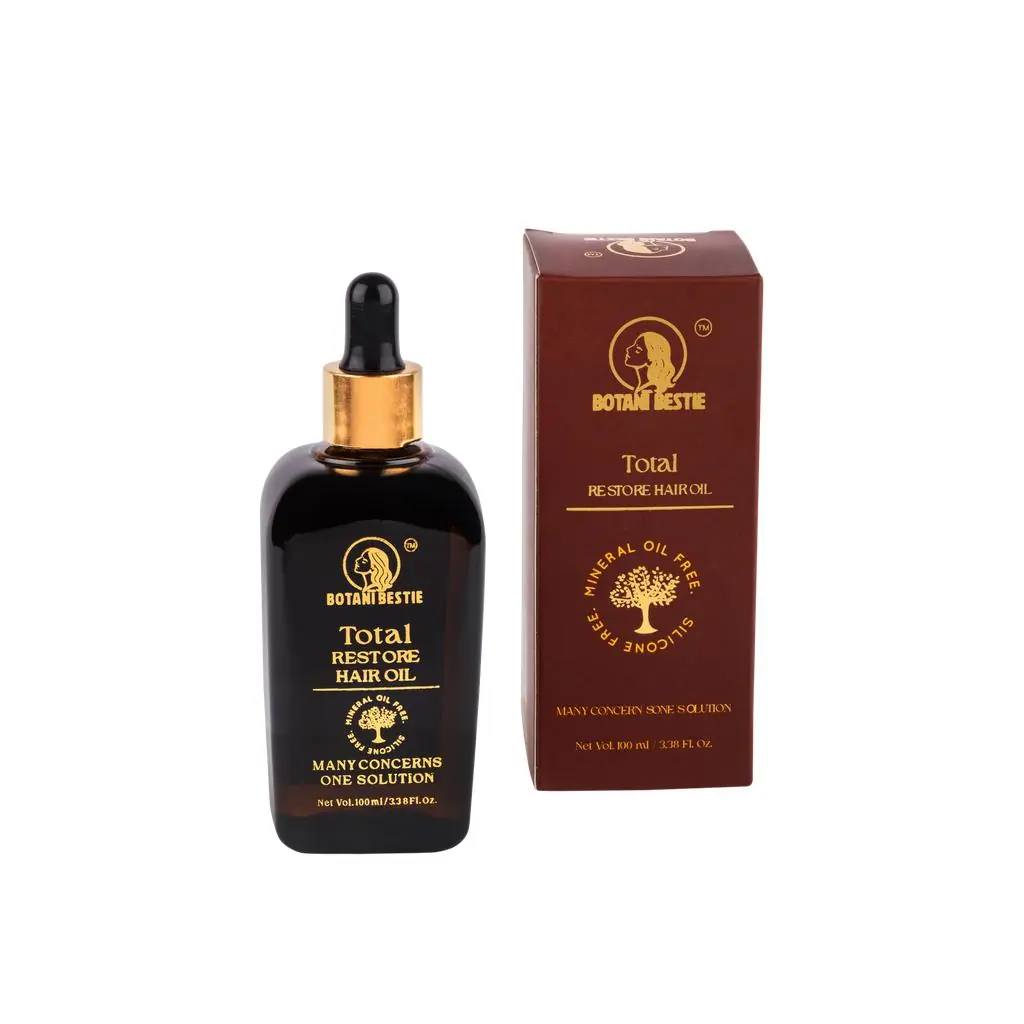
Total Restore Hair Oil
Ayurvedic post-COVID recovery formula
Contains Bhringraj (anagen re-activation), Brahmi (cortisol reduction + anti-inflammatory), Amla (Vitamin C + antioxidant for residual COVID inflammation), Jatamansi (follicle protection from oxidative stress), and Rosemary (5α-reductase inhibition + microcirculation) in a bioavailable lightweight base. Designed for scalp application with massage — the delivery mechanism that matters most for post-COVID recovery.
Shop Hair Oil → Shop Sulfate-Free Shampoo →Frequently Asked Questions
"Post-COVID hair fall is reversible — but waiting passively extends the recovery by months. Active nutrition and scalp care make the difference."
Ready to make the honest switch?
Our products are built on the same principles as every article we write — pure ingredients, real results, nothing to hide.
Explore Our Products