Niacinamide for Dark Spots — Does It Really Work? The Science-Backed Answer
Dark spots are one of the most common skin concerns in India — and niacinamide is one of the most hyped solutions on the market. But is the hype justified? We went through the clinical research so you don't have to. The short answer is yes — but the details matter enormously.
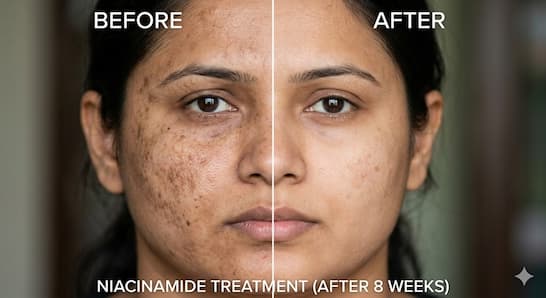
Whether they are caused by acne scars, sun damage, melasma, hormonal changes, or post-inflammatory marks — dark spots affect a disproportionately high percentage of people with Indian and South Asian skin tones. The higher melanin content in darker skin, while protective against UV damage, also makes the skin more reactive to inflammation and more prone to hyperpigmentation in response to even minor triggers.
Into this landscape, niacinamide — Vitamin B3 — has emerged as one of the most widely recommended skincare ingredients of the past decade. It appears in face washes, serums, moisturisers, and even sunscreens. Dermatologists recommend it. Beauty editors praise it. Social media amplifies it.
But skincare trends have a long history of overpromising. So here is the honest, peer-reviewed answer to the question everyone is actually asking: does niacinamide genuinely fade dark spots — and if so, how, at what concentration, and how quickly?
Understanding Dark Spots — Why Indian Skin is Especially Vulnerable
Before understanding how niacinamide works, it helps to understand what a dark spot actually is at a biological level. Hyperpigmentation — the umbrella term for dark spots — occurs when melanocytes (the pigment-producing cells in the skin) are overstimulated and produce excess melanin, which then gets transferred to surrounding skin cells (keratinocytes) and visibly darkens a patch of skin.
This overstimulation can be triggered by several factors, all of which are particularly relevant in India:
☀️ UV radiation
Sun exposure is the single largest trigger for melanin production. In India's climate — high UV index year-round — even short, cumulative daily exposure drives significant pigmentation over time.
🔴 Post-inflammatory hyperpigmentation (PIH)
Any inflammation — acne, eczema, a minor cut, even an aggressive facial — can trigger melanocytes to overproduce melanin. PIH is far more pronounced and longer-lasting in Fitzpatrick skin types III–VI (most Indian skin types) than in lighter skin.
🌀 Melasma
A chronic, hormonally driven pigmentation condition characterised by symmetrical brown patches, most commonly on the cheeks, forehead, and upper lip. It is significantly more prevalent in South Asian women, particularly during pregnancy or while using hormonal contraceptives.
🕰️ Age spots (solar lentigines)
Flat, darkened patches that accumulate over years of UV exposure. They begin appearing in the late 20s for many people in India — earlier than in Western populations — due to higher ambient UV levels.
What is Niacinamide? And Why is it Different from Other Brightening Ingredients?
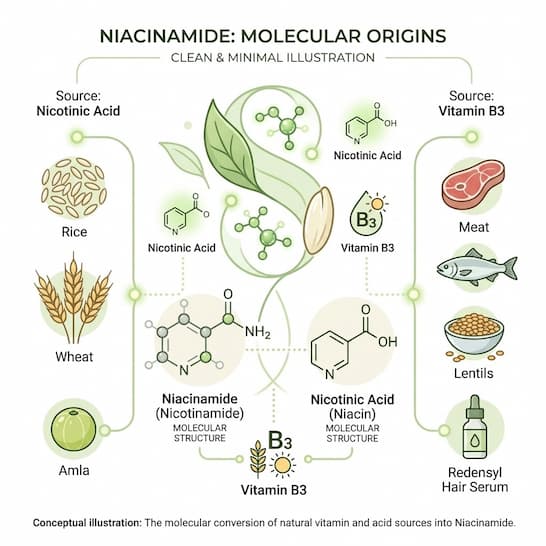
Niacinamide (also called nicotinamide) is a water-soluble form of Vitamin B3 — an essential nutrient that plays a critical role in cellular energy metabolism. While the body can synthesise it from dietary tryptophan, it also needs to be obtained from food (peanuts, poultry, legumes) and can be applied directly to the skin via topical formulations.
What makes niacinamide unusual in the landscape of brightening ingredients is the breadth of its biological activity. Unlike most depigmenting agents that work through a single mechanism, niacinamide addresses hyperpigmentation through at least four distinct pathways simultaneously — which is why it outperforms many single-mechanism ingredients in clinical studies, particularly for complex conditions like melasma.
It is also one of the most comprehensively studied cosmeceutical ingredients in existence, with over 30 years of peer-reviewed clinical data supporting its use for pigmentation, barrier repair, acne, and ageing.
How Does Niacinamide Actually Fade Dark Spots? The Four Mechanisms
This is the section that most skincare content skips — and it is the most important part. Niacinamide does not bleach the skin. It does not strip pigment that already exists. It works by interrupting the biological chain of events that creates and deposits dark spots in the first place. Here is each pathway explained:
This is niacinamide's most important and best-documented action for pigmentation. Melanin is produced inside melanocytes in small packages called melanosomes. These melanosomes are then physically transferred from the melanocyte to surrounding keratinocyte (skin) cells — and it is this transfer that creates the visible dark spot.
Niacinamide blocks this transfer step. A landmark study by Hakozaki et al. (2002, British Journal of Dermatology) found that niacinamide achieved 35–68% inhibition of melanosome transfer in a melanocyte-keratinocyte co-culture model — significantly reducing the amount of pigment deposited in the skin. Critically, niacinamide does this without affecting melanin production itself, which means it reduces pigmentation without the risk of paradoxical depigmentation (white patches) that some other brightening agents carry.
The same study confirmed this effect in clinical trials: niacinamide significantly decreased hyperpigmentation and increased skin lightness compared with vehicle alone after just 4 weeks of use.
Post-inflammatory hyperpigmentation begins with inflammation — the skin's response to injury, acne, or irritation. When keratinocytes are activated by inflammation, they release signalling molecules (prostaglandins and cytokines) that stimulate melanocytes to overproduce melanin. This is the biological mechanism behind the dark marks that linger long after a pimple has healed.
Niacinamide has demonstrated consistent anti-inflammatory properties — it suppresses the release of inflammatory prostaglandins and cytokines from keratinocytes, thereby reducing the inflammatory stimulus to melanocytes. This makes it particularly relevant for acne-related PIH, which is one of the most common forms of dark spots in Indian skin. By calming the inflammatory response that triggers pigmentation, niacinamide addresses PIH both preventively and therapeutically.
A compromised skin barrier is more reactive to environmental triggers — UV, pollution, heat, friction — each of which can activate melanocytes and create new dark spots. Niacinamide is one of the most well-evidenced ingredients for barrier repair: it stimulates the production of ceramides, free fatty acids, and cholesterol in the stratum corneum — the three lipid categories that form the skin's protective waterproof layer.
A stronger barrier means the skin is less reactive to the daily triggers that cause dark spots in the first place. This is why niacinamide users often find that they develop fewer new spots over time — not just that their existing ones fade. It works at both the curative and preventive level simultaneously.
UV radiation generates reactive oxygen species (ROS) — unstable molecules that damage skin cells and trigger melanin overproduction as a protective response. Niacinamide is a precursor to NAD+ and NADPH, two of the body's most important endogenous antioxidants, which neutralise ROS before they can trigger this pigmentation cascade.
Additionally, niacinamide inhibits protein glycation — a process where sugar molecules bind to collagen and other proteins, creating yellow-brown compounds that contribute to skin sallowness and uneven tone. A 12-week double-blind clinical study (Bissett et al., 2005) confirmed that 5% niacinamide provided significant improvement in hyperpigmented spots, fine lines, redness, and skin yellowing — demonstrating how this antioxidant mechanism delivers visible brightening benefits beyond melanin reduction alone.
What the Clinical Research Actually Shows
Niacinamide is one of the most thoroughly clinically tested cosmeceutical ingredients in existence. Here is a summary of the key studies:
| Study | Design | Key Finding |
|---|---|---|
| Hakozaki et al., 2002 British Journal of Dermatology |
RCT, split-face, 138 subjects | 5% niacinamide achieved 35–68% melanosome transfer inhibition; significantly reduced hyperpigmentation vs. vehicle at 4 weeks |
| Bissett et al., 2005 Journal of AAAD; 12-week RCT |
Double-blind, split-face, 50 women | 5% niacinamide significantly reduced hyperpigmented spots, fine lines, redness, and skin yellowing vs. control |
| Navarrete-Solís et al., 2011 PMC — Dermatol Res Pract |
RCT, split-face, 27 melasma patients | 4% niacinamide showed equivalent pigment improvement to 4% hydroquinone at 8 weeks; significantly fewer side effects (18% vs 29%) |
| Bissett et al., 2005 JAAD — dose-response, 79 Japanese women |
Split-face RCT, 8 weeks | Both 2% and 5% niacinamide reduced facial dark spots; effects were dose-dependent and reversible upon discontinuation |
| Niacinamide Serum B3 vs HQ4%, 2025 Journal of Cosmetic Dermatology (PMC) |
Investigator-blind RCT, 60 women, 5 months | Niacinamide-based serum achieved similar melanin density reduction to hydroquinone 4% over 5 months; better skin hydration, barrier function, and tolerability |
| Swetha et al., 2024 Int J Research in Dermatology — Indian study |
HCP survey + patient study, India | Over 90% of Indian dermatologists rated niacinamide as effective for dark spots; confirmed safety and efficacy for Fitzpatrick III–V skin types |
Niacinamide vs. Hydroquinone — Which Should You Choose?
Hydroquinone has long been considered the gold standard for hyperpigmentation treatment. But for Indian and darker skin types, the comparison is not as clear-cut as it once seemed.
| Factor | Niacinamide (5%) | Hydroquinone (4%) |
|---|---|---|
| Efficacy (dark spots) | Clinically proven; comparable to HQ at 5 months | Faster initial results; gold standard for melasma |
| Side effects | Minimal — well tolerated across all skin types | Erythema, burning, dryness common; risk of ochronosis with prolonged use |
| Risk of rebound darkening | No — gradual reversal on discontinuation only | Yes — paradoxical darkening possible with overuse, especially in darker skin |
| Suitability for Indian skin | Excellent — specifically studied in Fitzpatrick III–V | Use with caution — higher rebound and irritation risk in darker skin |
| Long-term safety | Excellent for long-term continuous use | Not recommended beyond 3 months without supervision |
| Additional skin benefits | Barrier repair, anti-acne, anti-ageing, sebum regulation | Pigmentation only |
| Prescription required in India | No — available OTC in cosmeceutical formulas | 4% HQ requires prescription; 2% OTC but largely discontinued in EU |
The 2025 PMC study put this debate to rest for most practical purposes: niacinamide delivers equivalent melanin reduction to hydroquinone over a 5-month period, while providing superior skin hydration, barrier function, and tolerability. For the overwhelming majority of people with dark spots — particularly those with Indian skin tones — niacinamide is the safer, more sustainable first-line choice.
What Concentration of Niacinamide Do You Actually Need?
Niacinamide products range from 2% all the way to 20%. Here is how to choose based on your skin type and concern:
2–3%
Gentle maintenance
Best for: sensitive skin, first-time users, light pigmentation, daily maintenance. Clinical studies confirm measurable improvement even at 2%. Lower risk of initial redness.
4–5%
Clinical sweet spot
Best for: moderate dark spots, PIH from acne, melasma, sun damage. This is the concentration used in the majority of clinical trials. Fastest visible results without meaningfully increased side-effect risk.
10%+
Use with caution
Best for: very resistant hyperpigmentation, under professional guidance only. Studies show minimal additional benefit over 5% for dark spots. Higher concentrations may cause flushing or irritation in sensitive skin.
Niacinamide for Different Dark Spot Types — What to Expect
🔴 Post-Acne Dark Marks (PIH)
Excellent response. This is where niacinamide shines most brightly. Its dual anti-inflammatory and melanosome-blocking mechanisms directly address PIH from two directions — calming the inflammation that triggers excess melanin and preventing that melanin from being deposited in the skin. Visible improvement typically within 4–6 weeks.
Best pairing: Salicylic acid (to exfoliate and clear pores) + niacinamide (to calm and brighten).
🌀 Melasma
Good response — requires patience. Melasma is driven by hormonal factors and deep UV sensitisation, which makes it one of the more challenging forms of hyperpigmentation. Niacinamide is clinically proven effective at 4%, but melasma typically requires 3–6 months of consistent use to show significant improvement. Daily SPF use is non-negotiable for melasma management.
Best pairing: Tranexamic acid + niacinamide + SPF 50.
☀️ Sun Spots / Age Spots
Moderate to good response. Sun-induced dark spots vary in depth — superficial epidermal spots respond well to niacinamide within 8–12 weeks. Deeper, longer-standing solar lentigines may need 3–6 months or a combination approach. Niacinamide's antioxidant action helps prevent new sun-induced spots while fading existing ones.
Best pairing: Vitamin C (antioxidant protection) + niacinamide + daily SPF.
🌑 Deep or Long-Standing Pigmentation
Slower response — realistic expectations needed. Dermal pigmentation (spots where melanin has migrated below the epidermis) is significantly harder to treat with topical agents. Niacinamide will still help by preventing new pigment transfer, but very deep spots may require professional intervention (chemical peels, laser). Niacinamide remains an excellent maintenance tool in these cases.
Best pairing: Consult a dermatologist for a combination treatment plan.
How to Use Niacinamide Correctly for Dark Spots
Application method matters as much as the ingredient itself. Here is the dermatologist-recommended approach for maximum results:
- Cleanse first — properly: Niacinamide absorbs best into a clean, freshly washed face. Use a gentle, pH-balanced face wash that does not strip the skin barrier. Applying niacinamide over makeup residue, sunscreen, or sebum buildup significantly reduces its efficacy.
- Apply to damp skin: Slightly damp skin (not soaking wet) enhances the absorption of water-soluble actives like niacinamide. Pat your face gently with a towel leaving it about 70% dry, then apply.
- Use twice daily: All key clinical trials used twice-daily application — morning and evening. Once daily will produce results, but more slowly. Niacinamide is stable in both daylight and UV, making it suitable for morning use unlike some other actives (e.g., retinol).
- Apply before heavier products: As a water-based active, niacinamide should be applied before oils, creams, and moisturisers. In a serum format, apply it immediately after cleansing. In a face wash format, it gets delivered during the cleansing step itself — a more convenient but lower-contact-time application.
- Always follow with SPF in the morning: This cannot be overstated. Every brightening ingredient — niacinamide included — will have its results partially or fully reversed by unprotected UV exposure. SPF 30 minimum; SPF 50 is strongly recommended for Indian skin and outdoor exposure. Without SPF, you are fighting a losing battle against hyperpigmentation.
- Be consistent for at least 8 weeks before evaluating: The cell turnover cycle takes 4–6 weeks. The clinical studies show results at 4–12 weeks. Impatience is the most common reason niacinamide "doesn't work" — it is working; it just takes longer than Instagram suggests.
Our Pick: Botani Bestie Total Radiance Face Wash
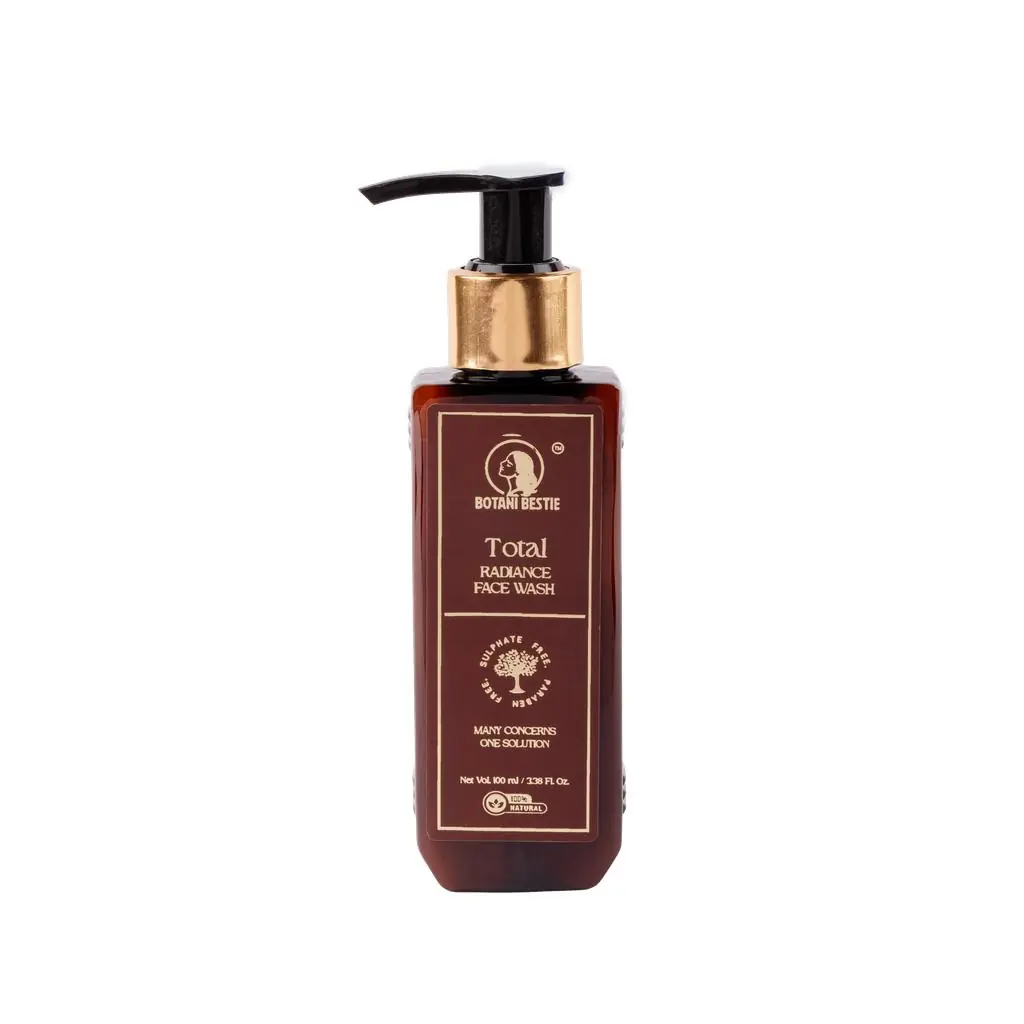
Total Radiance Face Wash
by Botani Bestie — ₹499 (MRP ₹650)
Designed specifically for the hyperpigmentation challenges common in Indian skin — acne, PIH, sun damage, and uneven tone — the Total Radiance Face Wash pairs niacinamide with a carefully chosen supporting cast of actives, all in a clean, pH-balanced formula:
- Niacinamide — blocks melanosome transfer, calms PIH-triggering inflammation, repairs the skin barrier
- Salicylic Acid — BHA exfoliant that penetrates pores to clear blackheads, acne, and the inflammation that triggers PIH in the first place
- Sandalwood — traditional Ayurvedic brightening agent with modern evidence for reducing UV-induced pigmentation and soothing irritated skin
- Aloe Vera — hydrates and soothes, counteracting the dryness that some exfoliating actives can cause; reduces post-inflammatory redness
- Green Tea Extract — potent antioxidant that neutralises the free radicals from UV and pollution that trigger melanin overproduction
pH balanced at 5.0 — matching the skin's natural pH for optimal active absorption. Free from sulfates, parabens, silicones, synthetic fragrance, and alcohol.
Frequently Asked Questions

The Verdict — Should You Use Niacinamide for Dark Spots?
The answer is an evidence-backed yes. Niacinamide is not just a trend — it is one of the most rigorously tested, dermatologist-approved, and broadly safe cosmeceutical ingredients available today. Its four-mechanism approach to pigmentation makes it uniquely effective, and its safety profile makes it particularly well-suited to Indian and darker skin tones that are disproportionately affected by dark spots.
The key is using it correctly: at the right concentration (4–5%), consistently (twice daily), for long enough (minimum 8–12 weeks), and always paired with daily SPF — without which any brightening effort is undermined every time you step outside.
Start with your cleanser, build up to a serum, and protect everything with sunscreen. It is not complicated. But it does require consistency.
Shop Total Radiance Face Wash → Free Skin Consultation"Great skin is not luck — it is science applied consistently."
💚 Related Reads for Your Clean Beauty Journey
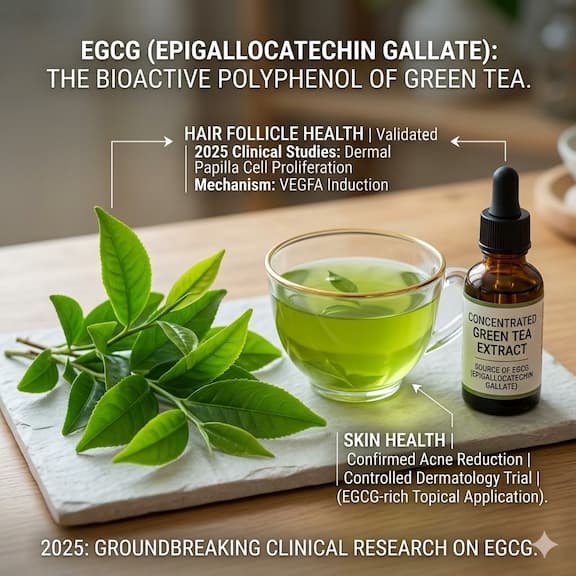
Green Tea (EGCG) for Hair and Skin: The Complete Science-Backed Guide (2025)
Green tea's EGCG is in every Botani Bestie product — and for good reason. A 2025 ScienceDirect study found EGCG promotes dermal papilla cell proliferation via VEGFA. For skin, a 2009 JDD RCT confirmed 2% green tea lotion effective for acne, and EGCG reactivates dying keratinocytes. The honest, complete 2025 guide.
Read Article
Know Your Dosha: Vata, Pitta & Kapha for Hair and Skin
Why does generic advice keep failing you? Because your hair and skin have a constitution. The beginner-friendly guide to the three Ayurvedic doshas — and choosing the ingredients and routines that actually suit you.
Read Article
How to Grow Hair Faster Naturally: The Complete Ayurvedic & Science-Backed Guide (2025)
The 5 biology-backed pillars that determine how fast your hair grows — scalp circulation, DHT management, nutrition, hair cycle optimisation, and active ingredients — with an Ayurvedic protocol for each. The honest, complete guide to growing more hair, faster.
Read Article
Hibiscus for Hair Growth: Does It Really Work? The Complete Science-Backed Guide (2025)
A peer-reviewed study found hibiscus leaf extract promoted hair growth comparable to Minoxidil 2% in controlled animal trials — and the 2025 science on its amino acid and flavonoid profile is even more compelling. The complete honest guide to hibiscus (gudhal) for hair growth in 2025.
Read Article
Retinol for Indian Skin: Beginner's Guide, Side Effects & What to Watch Out For (2025)
Retinol is the most evidence-backed anti-ageing skincare ingredient — but Indian skin's melanin-rich Fitzpatrick IV–VI profile means any irritation triggers post-inflammatory hyperpigmentation that lasts months. This guide covers the retinoid family, the sandwich method, purging vs breakout, and why your morning cleanser is part of the retinol equation.
Read Article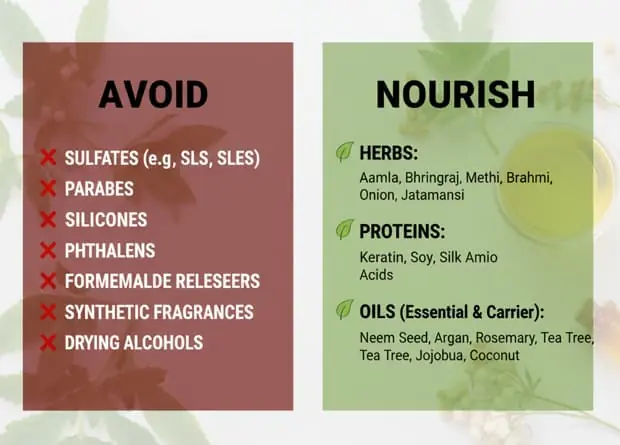
How to Choose Hair Products: 2 Things to Check Before You Buy (2025 Guide)
Most hair products hide behind 'sulfate-free' labels while still offering zero nourishment. Learn the 2-step ingredient check every Indian should do before buying any shampoo, oil, or serum — and what to look for instead.
Read ArticleReady to make the honest switch?
Our products are built on the same principles as every article we write — pure ingredients, real results, nothing to hide.
Explore Our Products