How to Use Rice Water for Hair Growth — The Complete Science-Backed Guide
The Yao women of Huangluo, China, have used rice water for centuries to maintain floor-length hair. Today, science is finally catching up. But is the trending DIY rinse actually doing what you think — or is there a smarter way to get rice water's real benefits into your routine?
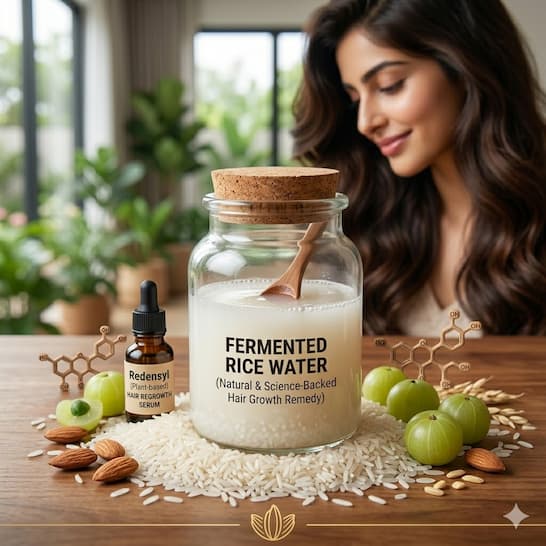
Few hair care trends have the staying power of rice water. Unlike most viral beauty fads, this one has an unusually compelling backstory — a 1,200-year-old tradition from the Imperial Japanese court, an entire village of women in Guangxi, China, famous for their extraordinarily long hair, and now, an increasingly robust body of scientific research explaining why it works.
But here is what most rice water content online gets wrong: the benefits of rice water don't come from the water itself. They come from specific bioactive compounds — primarily inositol, amino acids, B vitamins, and phytic acid — that are released into the liquid during soaking or fermentation.
Understanding this distinction is the difference between a rinse that genuinely transforms your hair and one that does very little. In this guide, we explain the real science, the right preparation methods, and exactly how to use rice water for maximum hair growth benefit.
The Science Behind Rice Water and Hair Growth
Rice water is the starchy liquid left after soaking or rinsing raw rice. Its beneficial properties for hair are attributed to several key compounds:
🌾 Inositol (Vitamin B8) — The Star Ingredient
Inositol is a naturally occurring carbohydrate that is uniquely able to penetrate the damaged hair shaft and repair it from within. Unlike most topical ingredients that sit on the surface, inositol works at the structural level — improving elasticity, reducing surface friction between strands (which prevents tangling and breakage), and sealing the hair cuticle to retain moisture.
What makes inositol remarkable is that it remains inside the hair shaft even after rinsing — providing ongoing protection between washes.
🔬 Phytic Acid — The Growth Activator
Phytic acid (IP6) is a phosphorus-rich compound found in rice bran. A landmark 2024 clinical study (Yamauchi et al., Biomedical Journal of Scientific & Technical Research) found that an inositol and phytic acid combination, derived from rice, significantly increased VEGF (vascular endothelial growth factor) expression in human follicle dermal papilla cells — the same growth factor mechanism that Minoxidil uses. In a human trial, applying a scalp lotion containing this combination led to a significant increase in hair density at 18 weeks compared to placebo.
💪 Amino Acids — The Structural Builders
Rice water contains several amino acids including glutamic acid, leucine, and arginine — the building blocks of keratin, which makes up approximately 95% of hair by composition. Regular amino acid delivery to the scalp and hair shaft supports keratin synthesis, strengthening the hair from root to tip and reducing the brittleness that leads to everyday breakage.
✨ B Vitamins & Antioxidants — Scalp Nourishers
Rice water contains traces of Vitamins B1, B2, B3, and E, along with antioxidant compounds that neutralise free radical damage at the scalp level. A 2022 systematic review (PubMed) found that rice bran extracts stimulate the expression of β-catenin — a growth-related protein — and demonstrate DHT-suppressing activity, making them relevant for hormonal hair fall as well.
Plain Rice Water vs. Fermented Rice Water — Which is Better?
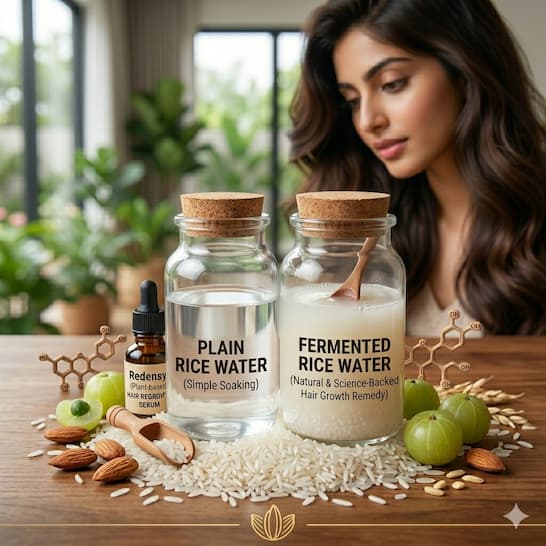
This is one of the most searched questions about rice water, and the answer is clear: fermented rice water is significantly more effective than plain soaked rice water, for several well-documented reasons.
| Factor | Plain Rice Water | Fermented Rice Water |
|---|---|---|
| Inositol concentration | Moderate | Higher (enzymatic breakdown releases more) |
| pH level | Higher (less ideal for scalp) | Lower (closer to scalp's ideal 4.5–5.5) |
| Amino acid content | Basic | Enhanced through fermentation process |
| Antioxidant activity | Present | Amplified |
| Scalp-soothing effect | Mild | Stronger (organic acids calm inflammation) |
| Shelf life | 1–2 days | Up to 7 days (refrigerated) |
The fermentation process works by allowing beneficial lactobacillus bacteria to break down the rice's starch and protein chains, releasing compounds in more bioavailable forms. The resulting organic acids (primarily lactic acid) also lower the pH of the liquid — making it a closer match to the scalp's natural acid mantle and helping the hair cuticle lie flat.
How to Make Fermented Rice Water at Home — Step by Step
Here is the method that consistently produces the most potent, balanced fermented rice water for hair use:
What you need:
- ½ cup raw rice (white, brown, or basmati — avoid instant or pre-cooked)
- 2–3 cups of clean water
- A clean glass jar with a loose-fitting lid
- A fine mesh strainer
- A spray bottle (optional, for easy application)
Method:
- Step 1 — Rinse: Rinse the rice briefly under clean water and discard this first rinse. This removes surface dust without losing the beneficial compounds.
- Step 2 — Soak: Place the rinsed rice in 2–3 cups of clean water in your glass jar. Stir gently for 30 seconds to encourage the starch to release into the water.
- Step 3 — Soak for 30 minutes: Leave the rice soaking for at least 30 minutes. The water will turn milky white as inositol, starch, vitamins, and amino acids dissolve into it.
- Step 4 — Strain: Strain the liquid into a clean glass jar, removing all the rice grains. This is your base rice water.
- Step 5 — Ferment: Leave the strained rice water at room temperature, loosely covered, for 24–48 hours. In India's warm climate, 24 hours is usually sufficient. The water will develop a slightly sour, tangy smell — this is the sign that fermentation is working. Do not let it ferment beyond 48 hours or it becomes too acidic.
- Step 6 — Refrigerate: Once fermented, seal the jar and store in the refrigerator. It stays effective for up to 7 days.
- Step 7 — Dilute before use: This is critical and widely skipped. Always dilute fermented rice water with equal parts clean water before applying to your hair. Undiluted fermented rice water is too protein-rich and can cause protein overload — especially for fine or low-porosity hair.
How to Use Rice Water on Hair — 3 Proven Methods
There are three main ways to incorporate rice water into your routine, each suited to different hair concerns and time commitments:
Method 1: Post-Shampoo Rinse (Most Popular)
Best for: All hair types, especially those looking for shine, reduced frizz, and scalp pH balance
- Shampoo and rinse your hair as normal.
- Squeeze out excess water from your hair so it is damp, not dripping.
- Pour or spray diluted fermented rice water generously over the scalp and hair, working it through every section.
- Massage gently into the scalp with your fingertips for 3–5 minutes.
- Leave on for 10–20 minutes. Use this time to complete the rest of your shower routine.
- Rinse thoroughly with cool water. The cool rinse seals the cuticle and amplifies the shine effect.
- Follow with a light conditioner on the mid-lengths and ends if your hair is dry or colour-treated.
⏱ Frequency: 1–2 times per week maximum. More frequent use risks protein buildup, particularly for fine or low-porosity hair.
Method 2: Pre-Shampoo Scalp Mask
Best for: Dandruff, itchy scalp, scalp inflammation, and hair fall driven by scalp health issues
- Apply diluted fermented rice water directly to dry or lightly damp hair, focusing on the scalp.
- Section your hair and use a dropper or spray bottle to ensure even coverage across the scalp.
- Massage in circular motions for 5 minutes to increase blood flow and absorption.
- Cover with a shower cap and leave on for 20–30 minutes.
- Shampoo and condition as normal. The shampoo removes any residual rice water protein, preventing buildup.
⏱ Frequency: Once a week. Do not leave on for more than 30 minutes — longer does not mean better with rice water.
Method 3: Formulated Shampoo with Rice Water (The Easiest and Most Consistent)
Best for: Everyone — no preparation, no mess, standardised concentration
The simplest and most reliable way to get rice water's benefits is through a professionally formulated shampoo that contains standardised fermented rice water as a core ingredient. Here is why this beats the DIY approach for most people:
- Consistent concentration: DIY rice water varies batch to batch. A formulated product delivers a measured, clinically relevant amount of inositol and amino acids every wash.
- Correct pH: Formulated products are pH-balanced to exactly 4.5–5.5, matching the scalp's ideal environment. DIY fermented rice water can be too acidic if left too long.
- Combined actives: Formulated shampoos pair rice water with complementary ingredients — Bhringraj, Keratin, ACV, Coconut Milk — for a synergistic effect that DIY cannot replicate.
- No preparation or storage required: Particularly valuable in India's warm climate, where DIY rice water can over-ferment or spoil quickly.
Rice Water for Different Hair Types — What to Expect
🌊 Fine or Low-Porosity Hair
Use with caution. Fine hair is most prone to protein overload from rice water — which can make it feel stiff, straw-like, and more prone to breakage rather than less. Always dilute heavily (1 part rice water to 2 parts water), limit use to once per week, and follow with a moisturising conditioner. If hair feels brittle after use, reduce frequency further.
💧 Thick, Coarse, or High-Porosity Hair
Excellent candidate. High-porosity hair — which loses moisture quickly and has gaps in its cuticle structure — responds exceptionally well to rice water. The inositol seals the cuticle, the proteins fill structural gaps, and the result is noticeably smoother, stronger, and more manageable hair. Can tolerate 1–2 times per week comfortably.
🔥 Damaged or Chemically Treated Hair
Highly beneficial. Colour-treated, bleached, or heat-damaged hair has compromised cuticle integrity. Inositol's ability to penetrate and repair from within makes fermented rice water one of the most effective natural treatments for this hair type. Use the post-shampoo rinse method and follow with a protein-friendly conditioner.
🌀 Curly or Wavy Hair
Proceed mindfully. Curly hair tends to be drier and more porous, which means it loves the moisture-sealing properties of rice water. However, the protein content can reduce curl definition if overused. Incorporate rice water into a balanced routine — protein treatment (rice water), followed by deep moisture treatment (conditioner or mask) — to maintain curl pattern and health.
5 Common Rice Water Mistakes That Sabotage Your Results
| # | Mistake | What Happens | The Fix |
|---|---|---|---|
| 1 | Using it undiluted | Protein overload — hair feels stiff, dry, brittle | Always dilute 1:1 with water (or more for fine hair) |
| 2 | Using it every day | Protein buildup blocks moisture absorption | Maximum 1–2 times per week |
| 3 | Leaving it on overnight | Excessive protein deposit, scalp pH imbalance | 10–20 minutes is the sweet spot, never overnight |
| 4 | Over-fermenting (beyond 48 hrs) | Too acidic — causes scalp irritation and dryness | Ferment 24–48 hrs max; refrigerate immediately after |
| 5 | Skipping the moisture step | Hair feels dry and rough after rice water treatment | Always follow with a hydrating conditioner or serum |
The Easier Way: Get Rice Water's Benefits in Every Wash
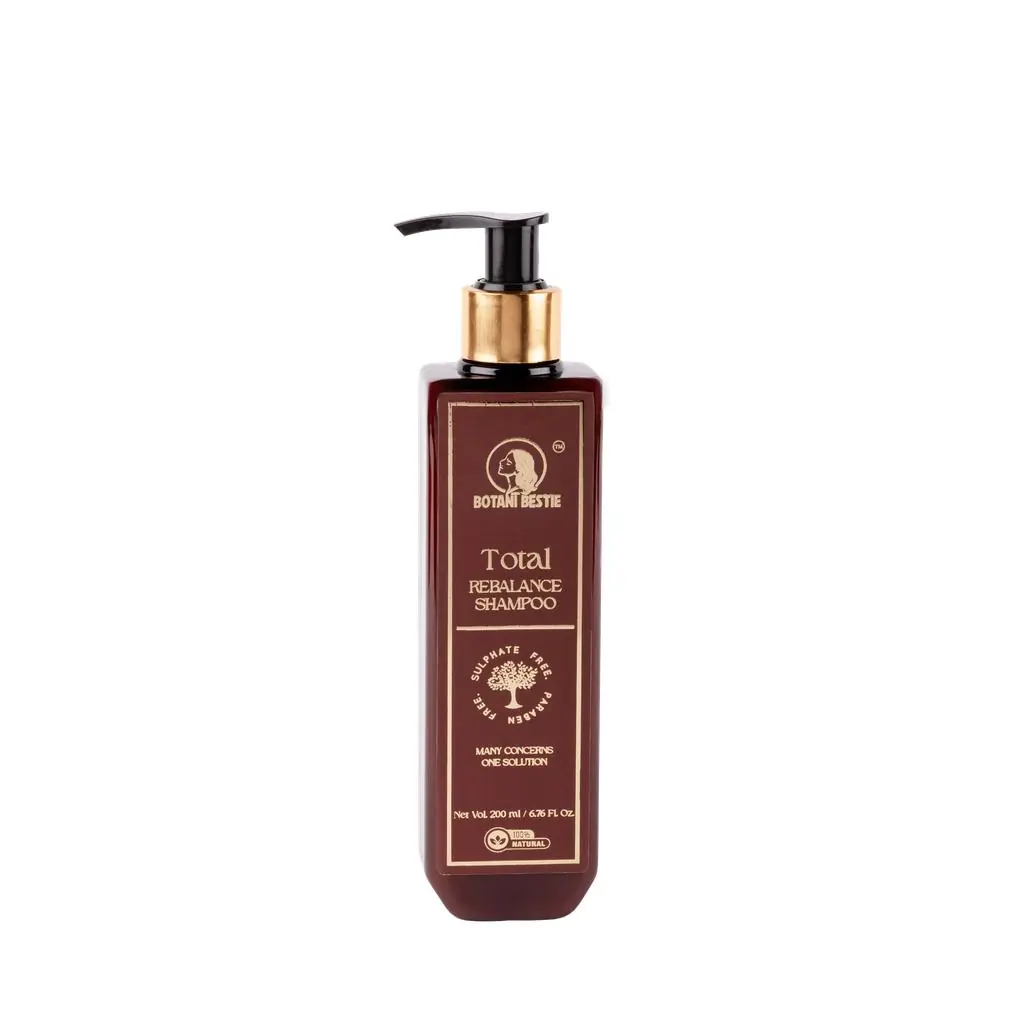
Total Rebalance Shampoo — with Fermented Rice Water
by Botani Bestie — ₹599 (MRP ₹799)
Rather than preparing and storing batches of DIY rice water every week, get a clinically relevant, standardised dose of fermented rice water's active compounds — inositol, amino acids, and B vitamins — in every single wash. The Total Rebalance Shampoo builds on rice water's benefits with a full supporting cast of actives:
- Fermented Rice Water — standardised inositol and amino acid delivery; improves elasticity, reduces breakage, adds shine
- Apple Cider Vinegar — scalp pH optimisation and mineral deposit removal (essential for hard water areas in India)
- Coconut Milk — deep hydration and frizz control that prevents the dryness DIY rice water can cause
- 13+ Ayurvedic herbs — Bhringraj, Amla, Brahmi, Methi for root-level strengthening and reduced hair fall
- Plant-Based Keratin + Soy & Silk Proteins — cuticle repair and strand fortification
100% free from sulfates, parabens, silicones, synthetic alcohol, and fragrance.
Shop Total Rebalance Shampoo → Free Hair ConsultationFrequently Asked Questions

The Bottom Line on Rice Water
Rice water is not a miracle — and it is not a myth either. It sits in a compelling middle ground: a traditional remedy with a growing body of science behind its core active ingredient (inositol), genuine and measurable benefits for hair strength, elasticity, and scalp health, and a clear upgrade path from DIY rinse to professionally formulated product.
Use it correctly — fermented, diluted, 1–2 times per week, with a hydrating follow-up — and it becomes one of the most effective, affordable, and low-risk additions to an Indian hair care routine.
Or simply switch to a shampoo that does the work for you — every single wash, without any preparation, at exactly the right concentration.
Shop Total Rebalance Shampoo → Free Hair Consultation"Ancient wisdom becomes power when paired with modern science."
Ready to make the honest switch?
Our products are built on the same principles as every article we write — pure ingredients, real results, nothing to hide.
Explore Our Products