Premature Greying — Why It Happens and What Ayurveda Can Actually Do About It (2025 Guide)
Finding grey hair in your twenties is no longer unusual in India — it is epidemic. But premature greying is not an aesthetic inconvenience or an inevitable genetic fate. It is a biological signal: of melanocyte exhaustion, hydrogen peroxide accumulation at the follicle, copper deficiency, and oxidative stress that is outpacing your hair's defence systems. Copper peptides and jatamansi are the two ingredients with the strongest current evidence for intervening in this process. Here is the complete honest science of why it happens — and what can actually be done.

Premature greying used to be the concern of people in their forties. That has changed. Across India's urban population, grey hair in people under 30 — sometimes under 25 — has become so common that it has spawned an entire category of "grey hair treatment" searches that now rank among the top hair concern queries in the country.
The conventional response to this is one of two things: either "it is genetic, nothing you can do" or a recommendation for chemical hair dye. Neither is complete or honest. The genetics claim is partially true — family history of premature greying is a real risk factor — but it explains only a portion of the epidemic. Indian clinical studies have consistently found that premature greying subjects have significantly lower serum levels of copper, Vitamin B12, ferritin, zinc, and Vitamin D compared to matched controls. These are not genetic — they are nutritional, environmental, and lifestyle deficiencies that are correctable.
Ayurveda understood this long before modern biochemistry could name the molecules. Its interventions for premature greying — amla, bhringraj, jatamansi, sesame, copper-containing preparations — map precisely onto the mechanisms that 21st-century research has now confirmed. This guide explains both: the biology of why hair goes grey prematurely, and the evidence behind the ingredients that can genuinely slow it down.
💡 What Type of Premature Greying Are You Experiencing?
The causes of premature greying are different for different people — and the interventions that work depend on which underlying driver is dominant. Identify your pattern:
👉 Most premature greying has multiple simultaneous causes — scroll through all mechanisms to understand the full picture of what is driving yours.
The Biology of Hair Colour — How Melanin Works and Why It Stops
Understanding premature greying requires understanding how hair gets its colour in the first place — and what the biology looks like when that system fails.
Hair colour is produced by melanocytes — specialised pigment-producing cells located in the hair follicle bulb, adjacent to the dermal papilla cells at the base of every follicle. During anagen (the active growth phase), melanocytes synthesise melanin and inject it into the developing hair cortex cells, colouring each new hair as it grows. When melanocytes stop functioning — whether depleted, damaged, or destroyed — the new hair grows in without pigment: grey or white.
Melanocytes produce two types of melanin whose ratio determines your hair colour:
| Melanin Type | Colour Produced | Synthesis Enzyme | Key Cofactor |
|---|---|---|---|
| Eumelanin | Black and dark brown (the dominant type in Indian hair) | Tyrosinase → DOPA → dopaquinone → eumelanin polymer | Copper (essential for tyrosinase activity) |
| Pheomelanin | Red, auburn, and yellow tones | Same tyrosinase pathway diverged by cysteine | Copper (same tyrosinase requirement) |
Both melanin types share the same rate-limiting enzyme: tyrosinase — and tyrosinase is a copper-dependent enzyme. This is not a detail — it is the direct mechanistic link between copper deficiency and premature greying. Without adequate copper at the follicle level, tyrosinase cannot function at full capacity, melanin synthesis falls, and hair pigmentation weakens.
Melanocytes are not self-renewing cells — they are replenished from a reservoir of melanocyte stem cells (McSCs) located in the bulge region of the hair follicle. Each hair cycle, McSCs differentiate into mature melanocytes that migrate to the follicle bulb. Over time, this McSC reservoir depletes — through oxidative damage, genetic programming, and chronic stress — and when it is exhausted, pigment production ends permanently for that follicle. This is why greying is largely irreversible once established: the pigment cells themselves are gone.
Why Hair Goes Grey Prematurely — 5 Interconnected Causes
Premature greying (defined clinically as before age 25 in Indians, before 20 in Caucasians) rarely has a single cause. These are the five primary mechanisms — each individually accelerating the process, all typically operating simultaneously in premature greying cases:
The most important mechanistic discovery in greying biology — and the one with the clearest intervention pathway — is the role of hydrogen peroxide (H2O2) accumulation at the hair follicle. This was established definitively by Schallreuter et al. in a landmark 2009 study published in the FASEB Journal: grey and white hair follicles show massive accumulation of H2O2, while pigmented follicles of the same individual maintain low H2O2 levels.
Where does the H2O2 come from? It is a natural byproduct of cellular metabolism — produced continuously in every living cell, including follicular melanocytes. In a young, healthy follicle, the enzyme catalase rapidly breaks down H2O2 into water and oxygen before it can cause damage. As we age — or under conditions of oxidative stress — catalase activity declines. H2O2 accumulates. The consequences are severe:
- H2O2 directly bleaches existing melanin within the hair shaft from the inside — this is the chemical equivalent of the hydrogen peroxide used in salon hair bleaching, occurring endogenously
- H2O2 inhibits tyrosinase — the copper-dependent enzyme responsible for melanin synthesis — reducing new melanin production
- H2O2 causes oxidative damage to melanocyte DNA — accelerating melanocyte death and McSC depletion
- H2O2 disrupts the methionine sulfoxide reductase repair system in melanocytes — preventing them from repairing oxidative protein damage
The intervention logic is direct: restore catalase activity, reduce H2O2 accumulation, protect melanocytes from the bleaching and destruction it causes. Copper peptides (GHK-Cu) upregulate catalase expression — this is the most important single mechanism linking copper peptides to premature greying intervention. Antioxidants including amla's emblicanins, jatamansi's sesquiterpenes, and green tea's EGCG provide complementary H2O2-scavenging and ROS-neutralising protection.
Copper is not merely associated with hair colour — it is biochemically required for melanin synthesis. Tyrosinase is a type-3 copper protein — each active tyrosinase molecule contains two copper atoms at its catalytic centre. Remove the copper, and tyrosinase cannot catalyse the conversion of tyrosine to DOPA — the first step in melanin synthesis. The entire melanin production line halts.
Indian studies have consistently confirmed the copper-greying link. A 2013 study in the International Journal of Trichology found significantly lower serum copper levels in subjects with premature greying compared to age-matched controls. The 2015 Sharma et al. study confirmed this finding and extended it — serum copper was among the most discriminating nutritional markers between premature greying and non-greying groups. India has a high background rate of marginal copper deficiency, particularly in populations with low meat consumption, high phytate-containing diets (that inhibit copper absorption), and limited diversity in food sources.
Copper's role in greying is further complicated by its interaction with oxidative stress: copper is also a cofactor for superoxide dismutase (SOD) — one of the primary antioxidant enzymes that neutralises superoxide radicals in follicle cells. Copper deficiency therefore reduces both melanin production (via tyrosinase) and antioxidant defence (via SOD) simultaneously — a double vulnerability that accelerates greying through two independent pathways at once. Topical copper delivery (via copper peptides) addresses both of these simultaneously at the follicle level.
The observation that people "go grey overnight from shock" or that hair greying accelerates dramatically after periods of extreme stress is not folklore — it has a well-characterised biological mechanism, published in Nature in 2020 by Zhang et al. The Harvard study specifically demonstrated that acute stress activates the sympathetic nervous system, releasing norepinephrine that reaches the hair follicle, directly activating melanocyte stem cells (McSCs) in the follicle bulge and causing them to rapidly differentiate and migrate into the follicle — permanently depleting the McSC reservoir.
Under normal conditions, McSCs differentiate gradually — one or two per hair cycle — maintaining the reservoir for decades. Under acute or chronic sympathetic stress, this differentiation becomes accelerated and disorderly, consuming the reservoir far faster than normal ageing would. Once these stem cells have differentiated and left the bulge, they cannot return. The grey hairs are permanent — they represent follicles that have exhausted their stem cell supply.
For premature greying in India's 18–35 demographic — where academic pressure, competitive employment, urban migration stress, and financial strain create chronic sympathetic activation — this stress-McSC depletion pathway is among the most clinically relevant. Adaptogenic herbs that modulate the HPA axis and reduce cortisol/norepinephrine peaks — Jatamansi, Brahmi, Ashwagandha — are interventions in this specific pathway, not merely general "stress management." They reduce the biochemical signal that triggers McSC depletion.
Multiple nutritional deficiencies are independently associated with premature greying in well-powered Indian studies — and all of them are correctable, making nutritional assessment the highest-return first step for any young Indian experiencing premature greying.
| Nutrient | Why it matters for melanin | Indian prevalence of deficiency | Food sources |
|---|---|---|---|
| Vitamin B12 | Required for DNA synthesis and cell division in melanocytes; deficiency causes megaloblastic changes impairing melanocyte function; associated with greying in multiple Indian clinical studies | Very high — estimated 47–73% in vegetarians; widespread even in omnivores | Dairy, eggs, fish, meat; fortified foods; supplementation often necessary for vegetarians |
| Ferritin (Stored Iron) | Required for oxidative phosphorylation (energy metabolism) in metabolically active melanocytes; iron deficiency reduces melanocyte energy capacity and lifespan | Very high — ~53% of non-pregnant women of reproductive age; common in men also | Non-haem iron from lentils, spinach (with Vitamin C); haem iron from meat and fish |
| Copper | Essential tyrosinase cofactor; SOD antioxidant cofactor; direct melanin synthesis requirement | Marginal deficiency common in high-phytate vegetarian diets | Sesame seeds, cashews, sunflower seeds, lentils, dark chocolate, shellfish |
| Vitamin D | Deficiency increases follicular oxidative stress; Vitamin D receptors in melanocytes influence their survival and activity | Very high — 70–90% of urban Indians are deficient despite high sun exposure (due to sunscreen use, indoor lifestyles, darker skin requiring longer sun exposure) | Fatty fish, egg yolk, fortified dairy; sunlight; supplementation typically needed |
| Zinc | Required for melanocyte stem cell renewal and DNA repair in follicle cells; deficiency impairs McSC maintenance | Moderate — common in populations with high phytate intake (whole grains, legumes) that inhibit zinc absorption | Pumpkin seeds, sesame, lentils, cashews; red meat, oysters |
Clinical recommendation: Before investing in any topical anti-greying treatment, anyone experiencing premature greying before age 30 should have serum B12, ferritin, zinc, copper, and Vitamin D tested. These are standard blood tests available at any diagnostic lab in India. Addressing documented deficiencies is the highest-return intervention available — and it addresses the systemic cause rather than just the local follicle symptom.
Beyond the internal biochemical causes, three environmental factors independently accelerate greying by increasing oxidative damage at the follicle level:
UV radiation: India's year-round high-UV environment generates reactive oxygen species (ROS) that penetrate the scalp and damage follicular melanocytes directly. UV-generated ROS also upregulate H2O2 production in follicle cells, compounding the catalase-decline mechanism. Unlike skin melanocytes (which respond to UV by producing more melanin), follicular melanocytes are protected from UV primarily by the hair shaft itself — which is why significant UV exposure to the scalp (parted hair, thinning coverage) accelerates greying at exposed areas first.
Air pollution: Particulate matter (PM2.5, PM10) and polycyclic aromatic hydrocarbons (PAHs) — at the levels found in Indian metros — generate oxidative stress through direct ROS production and aryl hydrocarbon receptor (AhR) activation in follicle cells. Studies correlate higher air pollution exposure with earlier mean age of greying onset.
Smoking: Tobacco smoke is one of the most comprehensively documented premature greying accelerants. Smokers have a 2.5-fold higher risk of premature greying than non-smokers — due to direct ROS generation from tobacco combustion products, nicotine-driven vasoconstriction reducing blood flow and nutrient delivery to follicles, and the heavy metal content of smoke (including cadmium, which competes with copper at metalloenzyme binding sites, inhibiting tyrosinase). Cessation is the single most effective environmental intervention for preventing further greying progression in smokers.
What Ayurveda and Modern Science Together Can Do — The Evidence-Backed Interventions
The biological understanding of premature greying maps precisely onto Ayurveda's traditional interventions — confirming the pharmacological basis of practices that Indian medicine has recommended for millennia. These are the interventions with the strongest combined evidence:
GHK-Cu (glycyl-L-histidyl-L-lysine copper complex) is a naturally occurring copper peptide found in human plasma that declines significantly with age. It is the most evidence-backed topical ingredient available for addressing the biological causes of premature greying at the follicle level — through three simultaneous mechanisms:
Mechanism 1 — Tyrosinase cofactor restoration: GHK-Cu delivers bioavailable copper directly into the follicular environment, restoring tyrosinase's copper cofactor availability. Studies have confirmed that GHK-Cu treatment of human melanocyte cultures increases tyrosinase activity and melanin production. For copper-deficient individuals — a significant proportion of India's premature greying population — this is the most direct correction of the primary biochemical deficit.
Mechanism 2 — Catalase upregulation: GHK-Cu is a potent inducer of catalase expression — the enzyme that breaks down the H2O2 that bleaches melanin and destroys melanocytes (Schallreuter's primary greying mechanism). By upregulating catalase, copper peptides address the root cause of endogenous H2O2 accumulation, providing protection against the primary molecular driver of greying progression. This mechanism also explains copper peptides' broader tissue-protective and wound-healing properties — catalase upregulation is protective across all metabolically active tissues.
Mechanism 3 — Melanocyte survival signalling: GHK-Cu activates growth factor pathways (including HIF-1α and VEGF) that support melanocyte survival and function in the follicular microenvironment. In vitro studies have demonstrated GHK-Cu's ability to stimulate melanocyte activity and maintain melanin production under stress conditions that would otherwise suppress it. It also activates superoxide dismutase (SOD) — the second major antioxidant enzyme (alongside catalase) that protects melanocytes from ROS damage.
GHK-Cu's three-mechanism action — copper restoration (tyrosinase) + catalase upregulation (H2O2 neutralisation) + melanocyte survival signalling — makes it the most mechanistically comprehensive topical intervention available for premature greying. It is the reason copper peptides are the primary featured active in the Total Revival Hair Serum rather than a supporting ingredient.
Nardostachys jatamansi DC (Spikenard) has been used in Ayurveda specifically for premature greying for thousands of years — listed in classical texts as a primary herb for maintaining hair colour and delaying greying. The modern phytochemical analysis reveals a compound profile that maps precisely onto the two most important greying mechanisms: oxidative melanocyte damage and stress-driven McSC depletion.
Antioxidant melanocyte protection: Jatamansi contains jatamansic acid, jatamansin, nardin, nardosinone, and multiple sesquiterpene lactones — all with documented antioxidant activity. In vitro studies confirm jatamansi extract's melanocyte-protective properties under oxidative stress conditions, with measurable preservation of melanocyte viability and melanin production capacity when pre-treated with jatamansi extract before H2O2 challenge. This is the direct experimental model for how jatamansi protects against the primary greying mechanism.
Adaptogenic cortisol modulation: Jatamansi is one of Ayurveda's most important nervine herbs — its traditional use for anxiety, insomnia, and nervous system restoration maps onto a documented HPA axis modulation effect. Multiple animal and human studies have confirmed jatamansi extract significantly reduces cortisol levels and sympathetic nervous system activation. This directly intervenes in the stress-McSC depletion pathway identified by the 2020 Harvard Nature study — by reducing the norepinephrine surge that prematurely depletes the melanocyte stem cell reservoir.
Tyrosinase activity support: Jatamansi extract has been shown to support tyrosinase activity in melanocytes — partially through copper-dependent mechanisms and partially through its anti-inflammatory action reducing the cytokine environment that suppresses tyrosinase expression. This provides a secondary melanin-synthesis-supporting effect alongside its primary antioxidant and adaptogenic actions. See our complete Jatamansi guide →
Amla's reputation as India's most traditional anti-greying herb is not coincidental — it is the result of 3,000 years of observing that consistent amla use delays greying progression. The modern phytochemical evidence explains exactly why.
Amla's emblicanin A and B tannins are among the most potent natural antioxidants identified in any plant — providing extraordinary ROS scavenging that directly addresses the oxidative stress driving H2O2 accumulation at the follicle. Amla's extraordinary Vitamin C content (30x oranges) is itself a potent antioxidant against UV-generated ROS, providing additional protection against the UV-driven mechanism of melanocyte depletion.
Most specifically: gallic acid — amla's primary active phenolic compound — has been shown to inhibit melanin degradation directly, supporting hair pigment retention beyond just protecting the melanocytes that produce it. Additionally, amla's Vitamin C is an essential cofactor for collagen synthesis in the connective tissue matrix surrounding melanocytes — maintaining the structural environment in which they function. For premature greying, amla is most accurately described as the comprehensive antioxidant protection layer that keeps all the other interventions working in an environment that is not being continuously degraded by oxidative stress. See our complete Amla guide →
Bhringraj (Eclipta alba) is referenced in Ayurvedic texts specifically as a "Keshya" (hair tonic) with documented anti-greying properties — and for good reason. Wedelolactone and ecliptine, the primary active compounds in bhringraj, provide both antioxidant follicle protection and documented melanocyte-protective action.
Bhringraj's primary hair benefit is Wnt/β-catenin signalling activation — the pathway that drives dermal papilla cell proliferation and anagen phase extension. This same pathway has been shown to influence melanocyte stem cell activity: Wnt/β-catenin signalling is required for normal McSC maintenance and orderly differentiation into pigment-producing melanocytes. By activating Wnt signalling, bhringraj may support more ordered McSC differentiation — reducing the disordered, stress-triggered depletion that causes premature greying.
Its antioxidant compounds (wedelolactone, coumestans) provide direct protection against ROS-mediated melanocyte damage. Animal model studies specifically using bhringraj oil have shown hair darkening effects attributed to both melanocyte stimulation and antioxidant melanocyte preservation. While human RCT evidence specific to greying does not exist for bhringraj, its mechanistic and traditional evidence is consistent and well-grounded. See our complete Bhringraj guide →
For any premature greying case driven by nutritional deficiency — which Indian clinical data suggests is a significant proportion of cases, particularly in the vegetarian population — nutritional correction is the most directly effective intervention available and should precede topical treatment assessment.
- Vitamin B12: For confirmed B12 deficiency, supplementation with methylcobalamin (the most bioavailable B12 form) at 500–1000mcg daily is typically recommended. Injectable B12 may be prescribed for severe deficiency. Some cases of B12-deficiency-driven greying show partial re-pigmentation after correction.
- Ferritin: Target ferritin above 70 ng/mL for hair health (the standard "normal" range of 12–150 ng/mL is too broad for optimal follicle function). Iron supplementation with Vitamin C for absorption; address the root cause of deficiency (diet, absorption issues, menstrual blood loss in women).
- Copper: Dietary correction through sesame, cashews, sunflower seeds, lentils, and dark chocolate; supplementation typically not needed unless severely deficient (excess copper is toxic). Topical GHK-Cu addresses follicle-level copper availability directly and safely.
- Vitamin D: Supplementation with D3 (cholecalciferol) at 2000–4000 IU daily is commonly recommended for deficient urban Indians; test levels before supplementing to establish baseline.
- Zinc: Pumpkin seeds, sesame, lentils, and legumes; absorption is inhibited by high phytate intake — soaking legumes before cooking reduces phytate content significantly.
The testing recommendation: A full micronutrient panel (serum B12, ferritin, copper, Vitamin D, zinc) costs approximately ₹1,500–2,500 at a standard diagnostic lab in India. For anyone under 30 with premature greying, this is the highest-return diagnostic investment before beginning any supplementation or topical treatment programme.
💡 Want Copper Peptides (GHK-Cu) + Redensyl + Jatamansi + Bhringraj + Amla + 8 more actives addressing greying, hair fall, and hair density — in one leave-on hair serum?
See Total Revival Hair Serum →The Clinical Evidence — What Studies Actually Show
| Study | Design | Key Finding | Strength |
|---|---|---|---|
| Schallreuter et al., 2009 FASEB Journal — H2O2 accumulation in grey hair |
Controlled human tissue study — H2O2 and catalase levels in pigmented vs grey follicles from same individuals; EPR spectroscopy measurement | Massive H2O2 accumulation confirmed in grey/white hair follicles. Catalase activity significantly lower in grey follicles. H2O2 inhibited tyrosinase activity in these follicles. Landmark mechanistic study establishing H2O2-catalase as the primary greying pathway. | High — human tissue, landmark mechanistic study |
| Sharma et al., 2015 Indian study — micronutrient levels in premature greying |
Case-control study — premature greying (under 25) vs age-matched controls; serum B12, ferritin, copper, zinc, Vitamin D measured | Significantly lower serum B12, ferritin, copper, zinc, and Vitamin D in premature greying group vs controls. All differences statistically significant (p<0.05 for all five nutrients). Confirmed correctable nutritional deficiencies as major premature greying contributors in India. | High — Indian case-control, directly applicable |
| Zhang et al., 2020 Nature — stress-driven McSC depletion mechanism |
Animal model (mice) + human observational — sympathetic nervous system activation, norepinephrine, McSC differentiation rate | Acute stress activates sympathetic nervous system → norepinephrine → melanocyte stem cell (McSC) premature and excessive differentiation → permanent McSC depletion → grey hair. Confirmed biological mechanism for stress-accelerated greying. | High — landmark Nature study, mechanism confirmed |
| GHK-Cu Melanocyte and Tyrosinase Studies Multiple — GHK-Cu in melanocyte cultures, catalase upregulation |
In vitro — human melanocyte cultures; tyrosinase activity, melanin production, catalase expression measured with and without GHK-Cu | GHK-Cu confirmed to upregulate catalase expression; increase tyrosinase activity; stimulate melanin production in human melanocytes; activate SOD antioxidant defence. Multiple independent replications. | Moderate — in vitro human melanocytes, multiple replications |
| Copper and Tyrosinase Biochemistry Classical enzyme biochemistry + clinical supplementation studies |
Enzyme biochemistry studies + clinical observation in copper-deficient populations | Copper confirmed as essential cofactor for tyrosinase activity — type-3 copper protein; two Cu atoms required per active site. Hair colour restoration after copper supplementation documented in clinical copper deficiency cases (Menkes disease models). Copper deficiency → grey hair in multiple animal models. | High — classical biochemistry + human clinical copper deficiency |
| Jatamansi Antioxidant and Melanocyte Studies Multiple — N. jatamansi extract antioxidant + melanocyte protection |
In vitro — melanocyte cultures under H2O2 stress with jatamansi pre-treatment; DPPH/ORAC antioxidant assays; cortisol modulation studies in animal models | Jatamansi extract significantly reduced H2O2-induced melanocyte damage. DPPH radical scavenging confirmed. Cortisol reduction confirmed in multiple adaptogen studies. Tyrosinase activity preservation under oxidative stress confirmed. | Moderate — in vitro + animal model adaptogen evidence |
| Smoking and Premature Greying Meta-analysis Multiple studies meta-analysed — tobacco and greying risk |
Meta-analysis of cohort and case-control studies | Smokers have 2.5× higher risk of premature greying vs non-smokers. Dose-response relationship confirmed. Mechanism: direct ROS from tobacco combustion + nicotine vasoconstriction + cadmium tyrosinase inhibition. | High — meta-analysis of multiple studies |
Myth vs. Truth — What Most People Get Wrong About Premature Greying
| Common Myth | The Scientific Truth |
|---|---|
| Premature greying is entirely genetic — nothing can be done | Genetics sets the predisposition — but modifiable factors determine whether and when it manifests. Indian studies (Sharma 2015) found significantly lower B12, ferritin, copper, zinc, and Vitamin D in premature greying subjects — all correctable deficiencies. The 2020 Harvard study confirmed psychological stress directly depletes melanocyte stem cells. These are not genetic — they are environmental, nutritional, and lifestyle factors. Addressing them can slow or partially reverse progression, even in genetically predisposed individuals. |
| Plucking grey hair makes more grey hairs grow back | Plucking a grey hair does not affect the pigmentation of any other follicle. Hair colour is determined by melanocyte activity within each individual follicle — it has no signalling relationship with adjacent follicles. However, repeated plucking of the same follicle can damage the follicle and eventually reduce hair density from that specific follicle over time. Plucking is harmless to other hairs but potentially harmful to the plucked follicle with repeated trauma. |
| Chemical hair dye is the only realistic solution for grey hair coverage | Chemical hair dye covers grey hair cosmetically but does not address its causes. Permanent oxidative dyes use hydrogen peroxide (ironic, given H2O2 is the primary biological driver of greying) and para-phenylenediamine (PPD) — compounds with well-documented contact allergy and scalp irritation profiles. For people committed to coverage, henna-based and semi-permanent options have better scalp safety profiles. But addressing the underlying causes — nutritional deficiencies, oxidative stress, copper availability — through evidence-backed interventions is the only strategy that works on the biology rather than the appearance. |
| Grey hair cannot re-pigment — it is permanent | This depends entirely on the stage and cause. Permanently grey hair, where melanocyte stem cells in the follicle bulge have been fully exhausted, cannot re-pigment. But prematurely grey hair — where melanocytes are stressed, copper-deficient, or experiencing recoverable oxidative damage but the McSC reservoir is not exhausted — can partially re-pigment when the underlying causes are corrected. B12 deficiency-driven greying has documented cases of re-pigmentation after correction. Copper deficiency correction in clinical settings has shown similar effects. Early intervention before McSC exhaustion maximises reversal potential. |
| Coconut oil massage reverses grey hair | Coconut oil provides emollient scalp and hair shaft benefits — it reduces protein loss from hair, penetrates the hair cortex, and moisturises. These are genuine benefits, but they operate on the hair shaft, not on the melanocyte biology. Coconut oil does not restore copper to follicle tyrosinase, does not upregulate catalase, does not modulate cortisol, and does not correct B12 or ferritin deficiency. It will not reverse grey hair through any documented mechanism. Its value as a carrier for anti-greying actives (in infused oils) is real — but the carrier is not the active. |
The Complete Anti-Greying Protocol — Internal + External Interventions
Best for: Direct follicle-level copper delivery, catalase upregulation, tyrosinase cofactor restoration, melanocyte survival support
A leave-on serum with GHK-Cu (copper peptides) applied to the scalp allows sustained contact time for copper delivery to the follicle environment — the format that maximises follicle penetration compared to rinse-off products. Apply to scalp sections on dry or slightly damp hair, massage gently, and leave on without rinsing.
Frequency: Once or twice daily — morning application after washing or evening before sleep. Consistency over 3+ months is the minimum to evaluate anti-greying effects.
Best for: Antioxidant melanocyte protection, melanin retention, sustained follicle-level active delivery, traditional Ayurvedic anti-greying action
A multi-herb pre-wash oil containing jatamansi, amla, and bhringraj delivers the fat-soluble antioxidant fractions directly to the scalp in a lipid carrier that enhances penetration. Apply 30–60 minutes before washing, massage into scalp in sections, and shampoo out. The prolonged contact time before washing allows active penetration to follicle depth.
Frequency: 2–3 times per week. Use in the evening for overnight maximum contact time before morning wash on active greying prevention days.
Best for: B12, ferritin, copper, Vitamin D, zinc deficiency-driven greying — corrects the root cause that topical treatments cannot address systemically
Get tested first. If B12 is low: methylcobalamin 500–1000mcg daily. If ferritin is low: iron with Vitamin C (amla juice is a practical combination). If Vitamin D is low: D3 2000–4000 IU daily. Copper and zinc through dietary sources (sesame, cashews, pumpkin seeds, lentils). This step is necessary before topical treatment can work at full potential.
Timeline: B12 supplementation shows effect on new hair growing in the corrected biochemical environment within 3–6 months. Dietary copper correction: ongoing maintenance.
Best for: Stress-triggered or stress-accelerated greying; greying that worsened during high-pressure periods; greying in people with documented anxiety or chronic stress
The 2020 Harvard/Nature study is unambiguous: sympathetic stress directly depletes the melanocyte stem cell reservoir permanently. Every high-stress period that activates the sympathetic nervous system consumes McSCs that cannot be replaced. Adaptogenic herbs (jatamansi, ashwagandha, brahmi) reduce this activation pharmacologically; sleep quality, exercise, and mindfulness practices reduce it behaviourally.
Most impactful single change: Sleep quality. Cortisol peaks are lowest during deep sleep stages. Chronic sleep deprivation maintains elevated cortisol continuously, providing the sustained sympathetic signal that drives McSC depletion.
📅 What to Expect — A Realistic Timeline for Anti-Greying Intervention
| Timeframe | What You May Notice | What's Happening Biologically |
|---|---|---|
| Week 1–4 | Hair quality may improve (serum conditioning and scalp health benefits). No visible change in grey hair proportion — existing grey hairs are fixed. Scalp feels nourished. Sleep may improve with adaptogenic support (jatamansi). | GHK-Cu beginning to deliver copper to follicle environment. Catalase upregulation commencing. Antioxidant protection from jatamansi and amla accumulating. Cortisol levels potentially moderating with adaptogenic support. Nutritional correction beginning to register in serum levels. |
| Month 2–3 | No visible change in existing grey hairs (they are irreversibly grey). New hair growth from scalp is the monitoring site — watch for new hairs coming in darker at the roots in areas where greying had been progressing recently. | New anagen-phase hairs beginning to grow in the copper-restored, catalase-upregulated, antioxidant-supported follicular environment. If the intervention is working, these new hairs may grow in with more pigment than recent hairs from the same follicles. This is the earliest possible visible sign. |
| Month 3–6 | Slowing of new grey hair appearance is the primary measurable outcome. In some cases (particularly where nutritional deficiency or early oxidative stress was the primary cause), partial re-pigmentation of recently-greyed hairs may be visible at the roots. Overall hair health improved. | Multiple hair growth cycles completed in the improved follicular environment. McSC stress burden reduced by cortisol modulation — more ordered differentiation. Tyrosinase activity restored by copper availability. H2O2 accumulation reduced by catalase upregulation. Nutritional correction achieving therapeutic tissue levels. |
| Month 6–12 | Rate of new grey hair appearance measurably reduced compared to pre-treatment baseline. Hair quality significantly improved. In best-case early-intervention scenarios: visible darkening of some recently-greyed hairs as melanocytes recover in restored biochemical environment. | The honest ceiling: hairs from follicles whose McSC reservoir is permanently exhausted will not re-pigment — those follicles are beyond the window of reversal. The value here is in the follicles that are still in the reversible oxidative-stress-driven phase — the proportion depends on how early intervention began. Earlier = more follicles still recoverable. |
The Serum Formulated Around the Science of Premature Greying
The Total Revival Hair Serum was formulated with copper peptides as its primary active specifically because GHK-Cu addresses the primary biological drivers of greying — H2O2 accumulation (catalase upregulation), copper deficiency (tyrosinase cofactor restoration), and melanocyte survival (antioxidant signalling) — in a single leave-on scalp-delivery format that maximises follicle contact time.
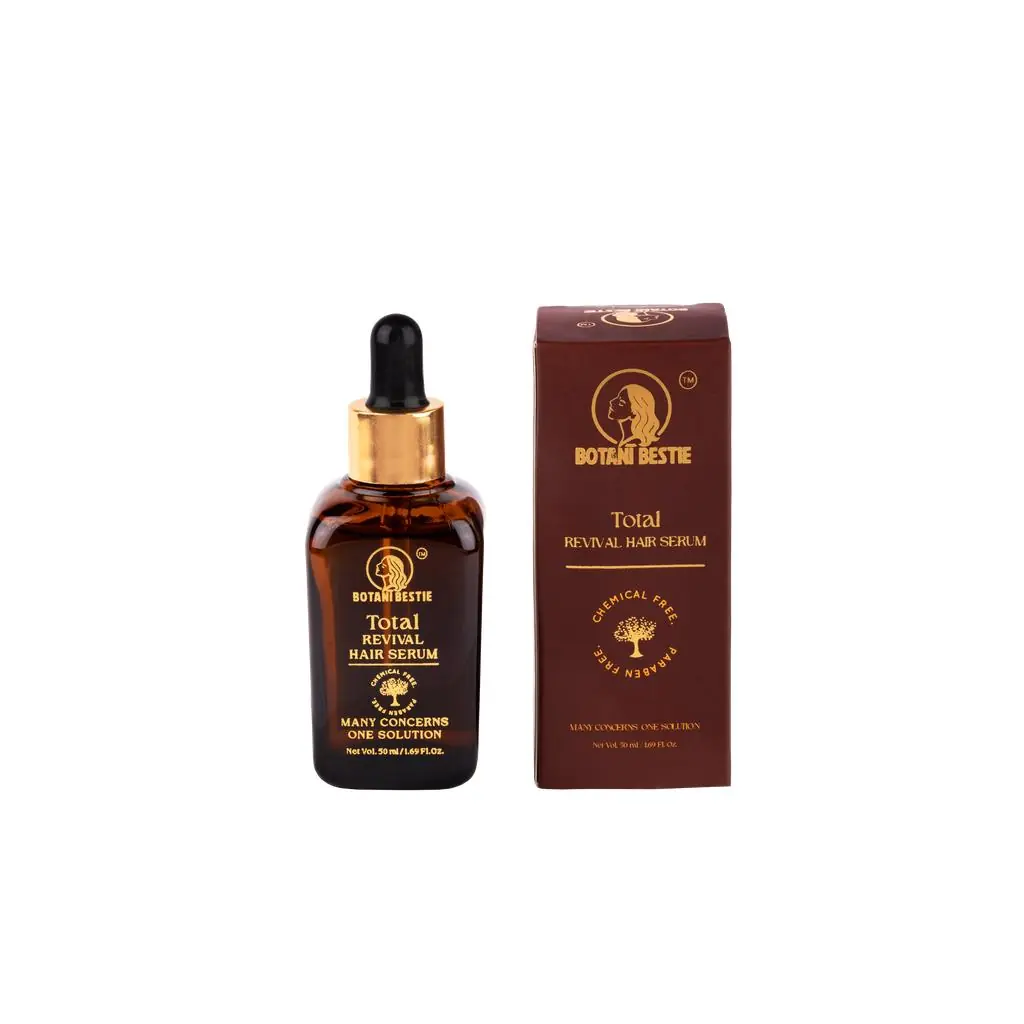
Total Revival Hair Serum
by Botani Bestie — formulated around the science of premature greying and hair fall
How Each Active Addresses the Premature Greying Biology
- ✔ Copper Peptides (GHK-Cu) — restores copper as tyrosinase cofactor (melanin synthesis); upregulates catalase (neutralises H2O2 — the primary greying driver); stimulates melanocyte activity; activates SOD antioxidant defence
- ✔ Jatamansi (Nardostachys jatamansi) — antioxidant melanocyte protection (jatamansic acid, sesquiterpene lactones); HPA axis/cortisol modulation (reduces stress-driven McSC depletion); tyrosinase activity support
- ✔ Amla (Phyllanthus emblica) — emblicanin A&B exceptional antioxidant (protects melanocytes from ROS); gallic acid melanin retention; Vitamin C collagen matrix support at follicle
- ✔ Bhringraj (Eclipta alba) — Wnt/β-catenin signalling (supports McSC maintenance and ordered differentiation); wedelolactone antioxidant; documented anti-greying traditional use with biological mechanism
- ✔ Redensyl — DHQG + EGCG2 molecules specifically targeting hair follicle stem cells; anagen phase reactivation; clinically proven hair density improvement in RCTs
- ✔ Brahmi (Bacopa monnieri) — adaptogenic cortisol reduction (secondary stress-McSC protection alongside jatamansi); antioxidant; scalp anti-inflammatory
- ✔ Green Tea (EGCG) — additional antioxidant protection against UV-generated ROS; NF-κB anti-inflammatory; VEGF follicle blood flow support
Standard hair oil vs. Total Revival Hair Serum for premature greying:
| Feature | Standard hair oil | Total Revival Hair Serum |
|---|---|---|
| Copper peptides (GHK-Cu) for tyrosinase + catalase | ❌ Not present in any standard hair oil | ✅ Primary featured active |
| Catalase upregulation (H2O2 neutralisation) | ❌ | ✅ Via GHK-Cu |
| Adaptogenic stress-McSC protection (Jatamansi) | ⚠ Some oils contain jatamansi | ✅ Standardised extract |
| Leave-on delivery (maximum contact time) | ❌ Pre-wash then rinsed | ✅ Leave-on scalp application |
| Redensyl hair density (clinically RCT-proven) | ❌ | ✅ |
| Non-greasy leave-on formula | ❌ Oils require washing out | ✅ Water-based serum |
| Free dermatologist consultation | ❌ | ✅ Included |
🎁 Not Sure Whether Your Greying Is Nutritional, Stress-Driven, or Genetic?
The answer changes what intervention you need first. Get a free personalised consultation with our in-house dermatologist — tell us when the greying started, how fast it is progressing, your diet, stress levels, and any family history, and receive a targeted protocol recommendation specific to your greying pattern.
Book Free Consultation → WhatsApp UsFrequently Asked Questions
The Verdict: Premature Greying Is a Biological Signal — Not a Cosmetic Inconvenience and Not an Inevitable Fate
Every grey hair before 30 is your follicle biology communicating something specific: that hydrogen peroxide is accumulating and catalase is declining; that copper is insufficient for tyrosinase to function at full capacity; that stress is depleting your melanocyte stem cell reservoir faster than normal ageing would; that B12, ferritin, or Vitamin D is not where it needs to be for melanocyte health.
Ayurveda understood this signal 3,000 years before modern biochemistry had the vocabulary to describe it. Amla's emblicanins protecting melanocytes from oxidative depletion. Jatamansi's sesquiterpenes modulating cortisol to preserve the melanocyte stem cell reservoir. Bhringraj's Wnt signalling supporting ordered melanocyte differentiation. These were not traditions based on superstition — they were clinical observations accumulated over millennia, now finally given molecular explanation by modern science.
Copper peptides are the 21st-century addition to this framework — the modern discovery that the copper Ayurveda always knew was important for hair is most effectively delivered to the follicle as GHK-Cu, where it simultaneously restores tyrosinase, upregulates catalase, and activates melanocyte survival signalling. Together, the ancient and the modern address premature greying from every angle its biology has revealed.
Start Your Anti-Greying Protocol — Shop Hair Serum → Free Consultation"Your grey hair is not telling you that you are getting old. It is telling you that your follicles need copper, less cortisol, and more antioxidants. That is a solvable problem."
Ready to make the honest switch?
Our products are built on the same principles as every article we write — pure ingredients, real results, nothing to hide.
Explore Our Products