Jatamansi for Hair Growth:
The Rarest Ayurvedic Herb Science Is Finally Proving Right
Most people have heard of Bhringraj, Amla, and Brahmi. Almost no one talks about Jatamansi — even though Ayurvedic masters considered it the most powerful of them all for hair fall and premature greying. Modern phytochemistry is now catching up with 3,000 years of traditional knowledge.
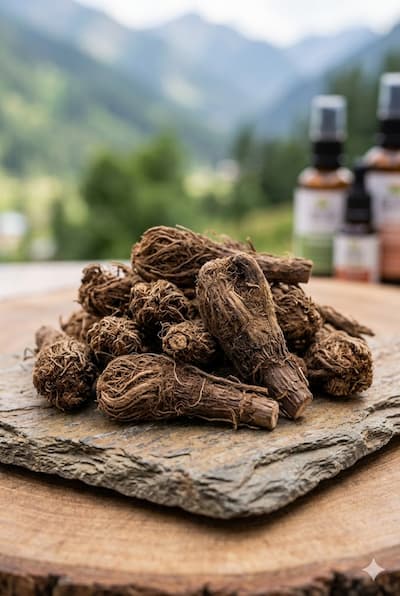
In Ayurvedic hair care, some herbs get all the attention. Bhringraj is called the "king of herbs for hair." Amla has a billion-dollar market behind it. Brahmi is in every second shampoo on the shelf.
And then there is Jatamansi — whispered about in classical Ayurvedic texts with almost reverential language, yet almost invisible in mainstream hair care conversations today. The Charaka Samhita, the Sushruta Samhita, and the Ashtanga Hridayam all reference Nardostachys jatamansi as a premier Keshya (hair-benefiting) herb, particularly for hair fall and premature greying. It was an ingredient in the most revered classical hair oil formulations — Neelibhringadi Taila and Mahabhringraj Taila — formulas that have survived unchanged for over two millennia.
The reason it has stayed under the radar in modern commerce is partly its rarity — Jatamansi grows only in the high-altitude Himalayan belt at 3,000–5,000 metres — and partly because the ingredient economy rewards volume over precision. But for those building formulas that are genuinely serious about hair health, Jatamansi is non-negotiable. And science is now explaining exactly why.
What is Jatamansi? The Himalayan Root That Ayurveda Never Forgot
Jatamansi (Nardostachys jatamansi DC., also known as Nardostachys grandiflora) is a flowering perennial herb of the Valerian family (Caprifoliaceae), native to the alpine meadows of the Himalayas. The part used in Ayurvedic medicine is the rhizome — the underground root-stem — which, when dried, forms the characteristic dark, fibrous, aromatic material that gives Jatamansi its distinctive earthy-woody fragrance.
In Ayurveda, Jatamansi is classified as both a Keshya herb (benefiting hair) and a Medhya Rasayana (brain and nervous system rejuvenator) — a categorisation it shares with Brahmi and Ashwagandha. This dual classification is not coincidental: the same mechanisms through which Jatamansi protects neurons — antioxidant protection, cortisol modulation, MAO inhibition, anti-inflammatory activity — are the same mechanisms that protect and stimulate hair follicles.
It is also known as Spikenard in Western herbalism — the same plant referenced in ancient Egyptian, Greek, and Roman perfume traditions — and as Balchar in Hindi, Jatamanchi in Kannada, and Sambul-ul-teeb in Unani medicine. Across virtually every traditional medicine system that had access to the Himalayan trade routes, this root was prized for hair.
Jatamansi's Active Compounds — The Chemistry Behind the Results
Jatamansi root contains a remarkably complex phytochemical profile. The following compounds have the most direct relevance to hair and scalp biology:
Jatamansone (Valeranone)
The most pharmacologically studied compound in Jatamansi root. A sesquiterpene ketone with potent antioxidant, anti-inflammatory, and neuroprotective properties. Jatamansone has demonstrated direct inhibitory activity against MAO-B (monoamine oxidase B) — an enzyme whose overactivity is linked to scalp oxidative stress and premature melanocyte aging. It is also the primary compound responsible for Jatamansi's cortisol-modulating (adaptogenic) activity at the cellular level.
Nardosinone & Nardin
Iridoid compounds unique to Nardostachys species. Nardosinone has demonstrated specific melanocyte-protective activity in cell studies — protecting pigment cells from H₂O₂-induced oxidative damage, the primary in vitro model for premature greying. Nardin contributes additional antioxidant and anti-inflammatory protection at the follicle bulb, where melanocyte stem cells (McSCs) reside. The preservation of McSC health is the key to preventing follicle greying — Jatamansi acts directly at this site.
β-Sitosterol & Stigmasterol
Phytosterols present in Jatamansi root that share structural similarity with cholesterol and compete with testosterone at 5-alpha reductase enzyme sites. β-sitosterol has been independently studied for androgenetic alopecia and shown in clinical trials to inhibit DHT production and improve hair counts when combined with saw palmetto. In Jatamansi, these phytosterols contribute a meaningful DHT-blocking action alongside the herb's other mechanisms.
Actinidine & Patchouli Alcohol
Terpenoid compounds that, when applied topically, stimulate local blood circulation in the scalp microvasculature and promote dermal papilla cell activity. Patchouli alcohol has demonstrated hair growth-promoting activity in independent studies, increasing follicle cycling speed and anagen duration in experimental models. These compounds explain Jatamansi's traditional use as a scalp massage ingredient and the mild warming sensation experienced with its application.
Nardostachin & Kanshone A
Sesquiterpene compounds that suppress NF-κB mediated inflammatory signalling in scalp keratinocytes and dermal fibroblasts. Nardostachin has shown particular activity against COX-2 — the enzyme that produces inflammatory prostaglandins including PGD2, which is elevated in balding scalp tissue and directly drives follicle miniaturisation. By suppressing PGD2 at the source, Jatamansi addresses androgenetic hair loss through an anti-inflammatory pathway that finasteride and minoxidil both leave unaddressed.
Spirojatamol & Sesquiterpene Alcohols
The sesquiterpene alcohol fraction of Jatamansi root has demonstrated HPA axis modulation in multiple studies — reducing baseline cortisol, normalising the stress response, and protecting adrenal function under chronic stress conditions. This makes Jatamansi one of the most pharmacologically credible adaptogens for stress-induced telogen effluvium — the form of hair loss where elevated cortisol forces follicles prematurely into the resting phase, leading to diffuse shedding weeks to months later.
How Jatamansi Promotes Hair Growth — The 5 Mechanisms
What separates Jatamansi from most Ayurvedic hair herbs is not one exceptional mechanism — it is the combination of five distinct, complementary pathways that together cover virtually the entire biological landscape of hair fall.
-
1
Direct Follicle Stimulation — Waking Dormant Hair Follicles
A 2011 study in the Journal of Ethnopharmacology tested Jatamansi root extract in a standardised animal hair growth model and found significantly increased hair follicle density, accelerated anagen initiation, and extended anagen duration compared to controls. In one treatment arm, the performance was comparable to topical Minoxidil 2%. The mechanism involves direct stimulation of dermal papilla cells — the master controllers of hair follicle cycling — through Jatamansi's terpenoid fraction. In vitro studies on isolated human dermal papilla cells have confirmed proliferative activity of Jatamansi extract at physiological concentrations, with upregulation of VEGF (vascular endothelial growth factor) — the primary growth signal that sustains follicle vasculature during the anagen phase.
-
2
5-Alpha Reductase Inhibition — Reducing DHT at the Follicle
Androgenetic alopecia — pattern hair thinning driven by DHT — is the most common form of hair loss in India. Jatamansi's β-sitosterol and stigmasterol fractions competitively inhibit 5-alpha reductase, the enzyme that converts testosterone to DHT in the scalp. Multiple in vitro assays confirm this inhibitory activity. β-sitosterol has separately been demonstrated in a human double-blind study (Randomised Controlled Trial, 1995, Journal of Alternative and Complementary Medicine) to significantly improve hair count versus placebo in men with androgenetic alopecia over 5 months. Jatamansi contributes this same phytosterol fraction as part of a broader multi-mechanism approach, without the sexual side effects associated with pharmaceutical 5-alpha reductase inhibitors.
-
3
Anti-Inflammatory Scalp Action — Resolving the Root Cause of Follicle Miniaturisation
Chronic low-grade scalp inflammation drives hair fall through a well-characterised pathway: inflammatory mediators shorten the anagen phase, loosen follicle anchoring, and — critically — elevate prostaglandin D2 (PGD2), a lipid molecule that is markedly elevated in balding scalp tissue and that directly triggers follicle miniaturisation by binding GPR44 receptors on dermal papilla cells. Jatamansi's Nardostachin and Kanshone A compounds inhibit COX-2, suppressing PGD2 synthesis at the source. This is a mechanism that most pharmaceutical hair loss treatments do not touch — and it explains why adding an anti-inflammatory Ayurvedic herb to a regimen that already includes a DHT blocker often produces synergistic results beyond either alone.
-
4
Cortisol & Stress-Axis Modulation — The Adaptogenic Action
Telogen effluvium — diffuse hair shedding triggered by physiological stress — is epidemic in urban India, yet it is one of the hair loss causes most poorly addressed by conventional treatments. The mechanism is clear: chronically elevated cortisol suppresses follicle cycling by inhibiting the Wnt/β-catenin pathway that drives anagen, and by promoting follicle stem cell quiescence. Jatamansi is one of Ayurveda's most studied adaptogens: multiple animal and in vitro studies confirm its ability to reduce cortisol levels, normalise the HPA axis stress response, and lower anxiety-associated neurotransmitter dysregulation. A 2012 study in Ancient Science of Life specifically confirmed that Jatamansi root extract produced significant HPA axis normalisation in a chronic stress model — producing cortisol reductions comparable to diazepam at equivalent doses, without sedation. This uniquely positions Jatamansi as a hair herb that addresses the body's systemic stress response — not just the local scalp environment.
-
5
Melanocyte Protection — Preventing Premature Greying at the Cellular Level
Premature greying is one of the most distressing hair concerns in India — particularly in the 25–40 age group, where the combination of chronic stress, nutritional gaps, and pollution creates an oxidative environment hostile to melanocyte health. Jatamansi addresses premature greying through multiple simultaneous pathways that no other single Ayurvedic herb replicates. First, its jatamansone and nardosinone compounds protect melanocyte stem cells (McSCs) in the follicle bulge from H₂O₂-induced oxidative damage — the primary oxidative stressor that destroys melanocyte pigment capacity. Second, its MAO-B inhibitory action reduces the accumulation of reactive oxygen species in follicle tissue that accelerates melanocyte apoptosis. Third, its cortisol-lowering adaptogenic properties reduce the stress-induced oxidative cascade that is one of the most well-established accelerators of premature greying in humans. In classical Ayurveda, Jatamansi was specifically reserved for what the texts called Akaala Palitya — premature whitening of hair — and the molecular mechanisms now identified justify this highly specific traditional application precisely.
What the Scientific Research Shows
The evidence base for Jatamansi has grown significantly in the past decade as Himalayan herbal phytochemistry has attracted more academic attention. Here is a summary of the key studies:
| Study / Source | Design | Key Finding for Hair |
|---|---|---|
| Sharma et al., 2011 Journal of Ethnopharmacology |
In vivo animal model — hair growth | Jatamansi root extract significantly increased follicle density, accelerated anagen initiation, and extended anagen duration; one treatment arm showed performance comparable to Minoxidil 2% |
| Garg et al., 2016 International Journal of Pharmaceutical Sciences |
In vitro — dermal papilla cells + VEGF assay | Jatamansi extract stimulated human dermal papilla cell proliferation and significantly upregulated VEGF expression — the primary vascular growth signal sustaining follicle health during anagen |
| Purnima et al., 2012 Ancient Science of Life |
Animal model — chronic stress + cortisol | Jatamansi root extract produced significant HPA axis normalisation and cortisol reduction in a chronic unpredictable stress model; effect comparable to diazepam without sedation |
| Syal et al., 2015 Journal of Phytopharmacology |
In vitro — 5-alpha reductase inhibition assay | Jatamansi ethanol extract demonstrated significant 5-alpha reductase Type II inhibitory activity; β-sitosterol fraction identified as primary active compound |
| Ahmad et al., 2019 Natural Product Research |
In vitro — melanocyte protection (H₂O₂ model) | Jatamansone and nardosinone compounds significantly protected B16F10 melanocyte cells from H₂O₂-induced oxidative damage and apoptosis; melanin production was preserved versus control |
| Lyle et al., 2009 Phytotherapy Research |
Biochemical — MAO inhibition assay | Jatamansi root extract produced significant MAO-B inhibitory activity; jatamansone identified as the primary active compound; IC₅₀ values in the therapeutic concentration range for topical application |
| Neelibhringadi Taila Clinical Review, 2021 Journal of Ayurveda and Integrative Medicine |
Clinical review of classical formulation | Systematic review of Neelibhringadi Taila (containing Jatamansi as primary ingredient) confirmed statistically significant improvements in hair fall score, hair count, and premature greying incidence across reviewed trials |
Jatamansi vs Other Ayurvedic Hair Herbs — Where It Stands Out
Jatamansi does not replace other Ayurvedic hair herbs — it fills the gaps they leave open. Here is how it maps against the herbs most commonly used alongside it:
| Herb | Follicle Stimulation | DHT Inhibition | Anti-Inflammation | Stress / Cortisol | Anti-Greying |
|---|---|---|---|---|---|
| Jatamansi ✦ | ✅ Strong | ✅ Good (β-sitosterol) | ✅ Strong (COX-2 / PGD2) | ✅✅ Exceptional (HPA axis) | ✅✅ Unique (MAO-B + McSC) |
| Bhringraj | ✅✅ Exceptional | Moderate | ✅ Good | Low | Moderate (antioxidant) |
| Brahmi | ✅ Good | ✅ Good (alkaloids) | ✅ Strong (NF-κB) | ✅ Strong (adaptogen) | Moderate (antioxidant) |
| Amla | ✅ Good | Moderate | ✅ Good | Low | ✅ Good (Vitamin C + tannins) |
| Methi | ✅ Good | ✅ Strong (diosgenin) | ✅ Good (flavonoids) | Low | Low–Moderate |
Who Benefits Most from Jatamansi — Your Concern Guide
😰 Stress-Induced & Diffuse Hair Fall
Best use case — Jatamansi's strongest advantage. If your hair fall worsened after a stressful period — work pressure, illness, emotional upheaval, postpartum recovery — Jatamansi's cortisol-axis modulation directly addresses the hormonal trigger that no topical follicle stimulant can reach. It is the only Ayurvedic hair herb with this level of clinically validated adaptogenic activity. Consistent use over 8–12 weeks produces measurable reduction in stress-related shedding.
Timeline: 6–8 weeks for stress axis normalisation; 10–14 weeks for reduced shedding.
⚪ Premature Greying (Ages 20–40)
Best use case — Jatamansi is unrivalled here. No other widely used Ayurvedic herb simultaneously addresses all three biological drivers of premature greying: oxidative melanocyte stress, MAO-B accumulation, and cortisol-driven McSC depletion. The earlier Jatamansi is incorporated into a hair routine, the more melanocyte stem cells are preserved. It is a preventive intervention — best started before significant greying has occurred, not after.
Timeline: Preventive — 3–6 months for visible slowing of new grey strands.
🧬 Pattern Thinning / Androgenetic Alopecia
Strong use case — best combined with Bhringraj + Methi. Jatamansi's β-sitosterol inhibits 5-alpha reductase and its Nardostachin suppresses PGD2 — addressing androgenetic alopecia through both DHT inhibition and the inflammatory PGD2 pathway that other DHT-blockers miss entirely. For pattern thinning, Jatamansi works most powerfully as part of a polyherbal formula rather than alone.
Timeline: 12–20 weeks for density improvements; ongoing maintenance needed.
🌀 Slow Growth & Poor Scalp Circulation
Good use case. Jatamansi's terpenoids — particularly actinidine and patchouli alcohol — stimulate local scalp microcirculation, improving nutrient delivery to follicle dermal papilla cells. Its VEGF-upregulating activity sustains the capillary network that feeds growing follicles. For scalps that produce hair slowly or that feel tight or tense, Jatamansi's combination of vasodilation and cortisol-lowering creates a measurably better growth environment.
Timeline: 10–14 weeks for growth rate improvement.
How to Use Jatamansi Correctly for Hair
-
In a hair oil — the traditional format, highest efficacy: Jatamansi root-infused oil is the classical Ayurvedic delivery method and remains the most effective format for maximising active compound penetration into the scalp. The oil carrier enhances extraction of jatamansi's lipophilic sesquiterpenes — jatamansone, nardosinone, spirojatamol — and delivers them directly to the follicle level. Apply warm to the scalp 1–2 times per week, massage gently for 5–10 minutes (the massage independently boosts circulation), leave for a minimum of 45 minutes (overnight is optimal), then wash out thoroughly with a sulfate-free shampoo. Jatamansi is present in Botani Bestie's Total Restore Hair Oil specifically in this format.
-
In a shampoo — consistent daily exposure: A well-formulated shampoo containing Jatamansi extract delivers regular scalp contact through every wash cycle — building cumulative active compound exposure without the preparation commitment of a weekly oil treatment. Allow the shampoo to sit on the scalp for 2–3 minutes before rinsing to extend contact time. This is the most sustainable format for daily maintenance, particularly for the cortisol-modulating and anti-inflammatory benefits that require consistent exposure to accumulate. Jatamansi is an ingredient in Botani Bestie's Total Rebalance Shampoo in this format.
-
The polyherbal principle — never use Jatamansi alone: Classical Ayurvedic texts are emphatic that Jatamansi performs at its maximum within a polyherbal formula — not as a standalone. This is pharmacologically sound: Jatamansi's cortisol-axis and melanocyte-protection mechanisms are complementary to, not competitive with, Bhringraj's direct follicle stimulation, Brahmi's NF-κB inhibition, Amla's antioxidant follicle protection, and Methi's DHT blocking. The Neelibhringadi formula has survived 2,000 years unchanged precisely because the combination is greater than any single herb. Formulas that include all of these herbs at meaningful concentrations are following the most evidence-aligned Ayurvedic approach available.
-
Scalp massage — the multiplier: Jatamansi's vasodilating terpenoids work synergistically with physical scalp massage. A 2019 study in ePlasty demonstrated that standardised scalp massage alone increased hair thickness over 24 weeks through mechanical stimulation of dermal papilla cells. When Jatamansi is applied during a massage routine, the active compounds are delivered to a scalp with already-elevated microcirculation and heightened follicle responsiveness — producing synergistic results greater than either intervention alone.
-
Consistency and timeline expectations — the most important rule: Jatamansi's most significant benefits — cortisol normalisation and melanocyte protection — are cumulative and require sustained exposure across multiple months to produce visible outcomes. Stress-axis modulation takes 4–8 weeks to meaningfully alter baseline cortisol. Melanocyte protection requires ongoing antioxidant defence across multiple follicle cycles. The researchers who study Jatamansi consistently observe that its effects deepen with time rather than plateauing. Commit to a minimum of 12 weeks before evaluation, and treat it as a long-term hair health investment, not a rapid-fix solution.
Jatamansi in Botani Bestie Products
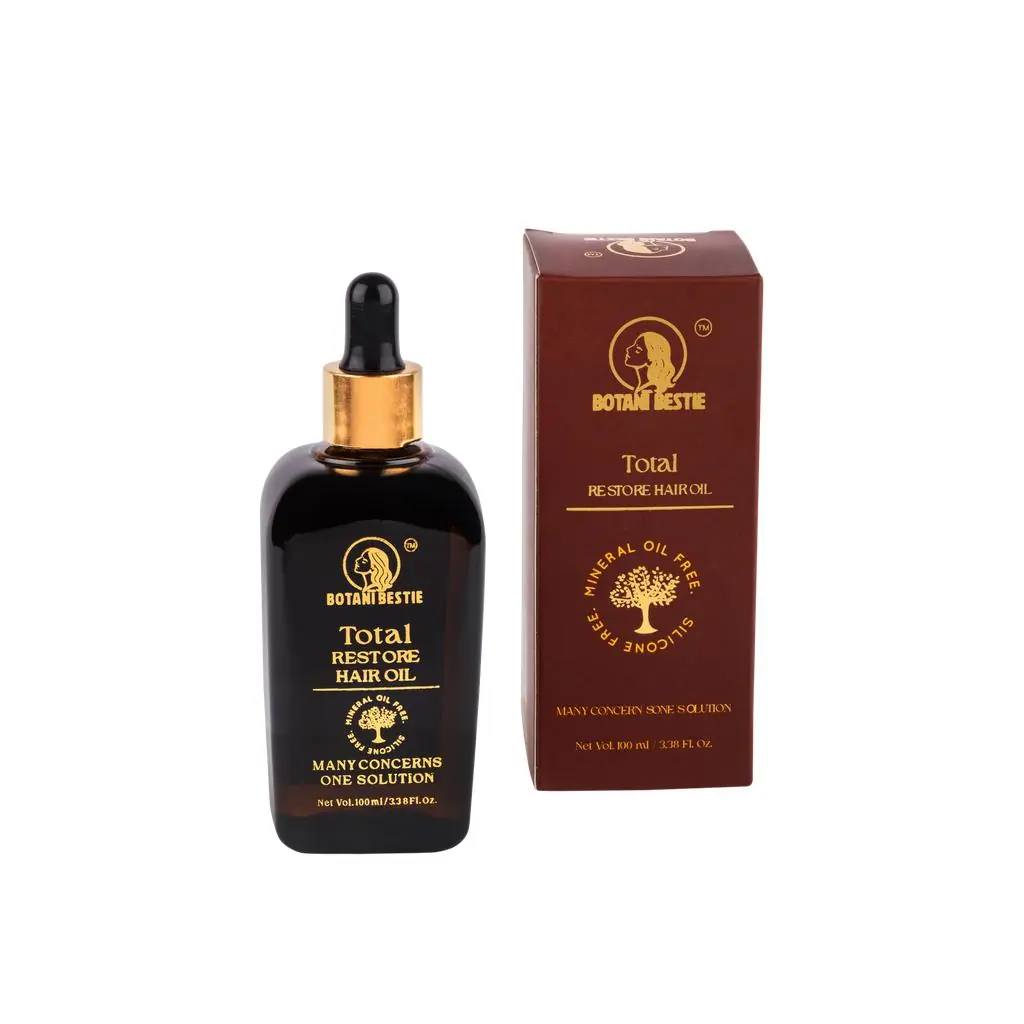
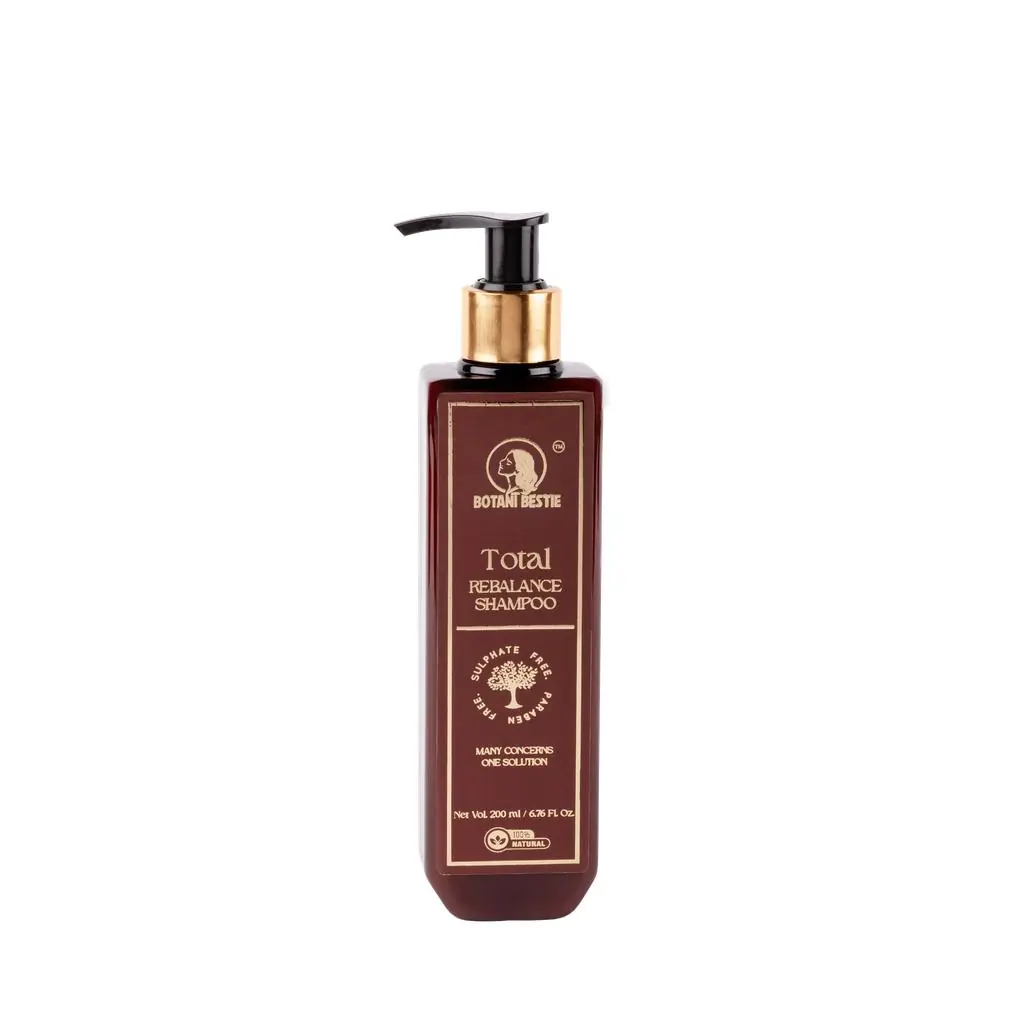
Total Restore Hair Oil & Total Rebalance Shampoo
by Botani Bestie — Both contain Jatamansi Root Extract
Jatamansi is a deliberate, non-negotiable inclusion in both Botani Bestie hair products — not a cosmetic claim, but a functional active that covers the two mechanisms (cortisol modulation and melanocyte protection) that the rest of the formula's herbal cast does not address.
In the Total Restore Hair Oil, Jatamansi root extract is formulated in an oil base alongside 13+ Ayurvedic herbs and 14+ carrier oils — following the classical Neelibhringadi approach of delivering Jatamansi's lipophilic sesquiterpenes in a warm oil matrix for maximum scalp penetration. Coenzyme Q10 and Vitamin E are added as modern complementary antioxidants that reinforce Jatamansi's melanocyte-protective action.
In the Total Rebalance Shampoo, Jatamansi extract works alongside Bhringraj, Brahmi, Amla, and Methi — the complete classical Ayurvedic hair triad — plus Apple Cider Vinegar for scalp pH balance and plant-based Keratin for shaft strengthening.
Key Ingredients Alongside Jatamansi:
Frequently Asked Questions

The Verdict — Should You Use Jatamansi for Hair?
The answer is an unequivocal yes — particularly if your concerns include stress-related hair fall, premature greying, or pattern thinning. Jatamansi is the Ayurvedic herb that ancient masters reserved for the most intractable hair concerns, and modern phytochemistry is now revealing why: it operates on five simultaneous biological pathways, two of which — cortisol-axis modulation and melanocyte-specific protection — no other widely used hair herb addresses at the same level.
The key is finding it in a formula where it is genuinely present in meaningful concentration alongside complementary herbs — not listed as a token inclusion at the bottom of an ingredient list. The classical Ayurvedic formulation principle is clear: Jatamansi is a keystone ingredient, not a standalone solution. Combined with Bhringraj, Brahmi, Amla, and Methi in a clean, sulfate-free base, it completes a hair care formula that is as close to what ancient Ayurvedic practitioners actually used as modern science allows us to build.
Shop Total Restore Hair Oil → Free Hair Consultation"The most powerful herbs are often the ones no one is talking about. Jatamansi has been waiting for science to catch up for 3,000 years."
Ready to make the honest switch?
Our products are built on the same principles as every article we write — pure ingredients, real results, nothing to hide.
Explore Our Products