Methi (Fenugreek) for Hair Growth:
Does It Really Work?
Methi is in almost every Indian kitchen — and almost every traditional Ayurvedic hair remedy. But does the science actually back up 5,000 years of household wisdom? We reviewed the clinical trials, active compounds, and mechanisms. The answer is yes — but the details matter.
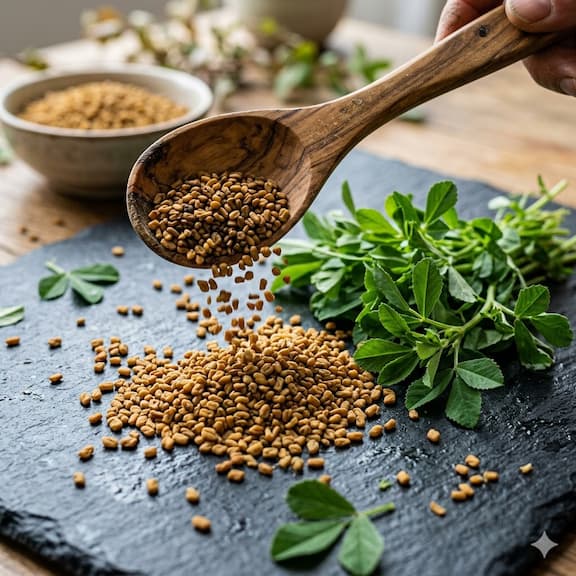
Ask any Indian grandmother what to do about hair fall, and methi will be on the list before the conversation is three sentences long. It gets soaked overnight, ground into a paste, applied to the scalp, and rinsed off an hour later with the confidence of a remedy that has worked for generations.
That confidence is not misplaced. But the question being asked more often in 2025 is a harder one: what exactly is happening at the cellular and molecular level when methi meets a hair follicle? Which of its compounds are doing the work? And does peer-reviewed clinical science — the kind that Ayurveda's critics demand — actually support the traditional use?
The answer, backed by a growing body of research, is a clear yes. Methi (Trigonella foenum-graecum) is one of the most comprehensively active Ayurvedic hair herbs — not because of one mechanism, but because of at least four simultaneous ones. Here is the complete, honest breakdown.
Why Does Hair Fall Happen — And Why Is Methi Uniquely Positioned to Help?
Before understanding how methi works, it helps to understand the landscape of hair fall in India — because methi's benefits map directly onto the most common causes.
Hair fall in India is driven by a convergence of factors that most Western hair care research does not fully account for: extreme seasonal humidity and heat, hard water from most municipal supplies, a genetic predisposition to androgenetic alopecia in both men and women, nutritional gaps from increasingly processed diets, and the chronic stress of modern urban life. Any ingredient that addresses multiple of these simultaneously will outperform single-mechanism solutions.
Methi does exactly that. Its active compounds work across DHT inhibition (the hormone that drives pattern hair loss), scalp inflammation reduction (which accelerates follicle miniaturisation), protein reinforcement (which reduces breakage independently of the follicle), and direct follicle stimulation (which extends the hair growth phase). No other single kitchen ingredient available in every Indian household can claim all four.
Methi's Active Compounds — The Biological Machinery Behind the Results
Methi seeds contain a remarkable density of bioactive compounds. The following are the ones with the most direct relevance to hair biology:
Diosgenin
A steroidal saponin that is methi's most pharmacologically significant compound for hair. Diosgenin is a phytosterol precursor with confirmed inhibitory activity against 5-alpha reductase — the enzyme that converts testosterone to DHT (dihydrotestosterone). Elevated DHT at the hair follicle is the central driver of androgenetic alopecia, the most common cause of thinning in Indian men and women. By reducing DHT at the follicle level, diosgenin slows the miniaturisation cycle that leads to permanent hair loss.
Trigonelline & Nicotinic Acid
Trigonelline is an alkaloid abundant in methi seeds that, upon metabolism, produces nicotinic acid (niacin — Vitamin B3). Nicotinic acid is a potent vasodilator: it increases blood flow to the scalp microvasculature that feeds each hair follicle. Better circulation means better oxygen and nutrient delivery to follicle cells, sustaining a longer anagen (growth) phase. Trigonelline itself has also demonstrated direct stimulatory effects on dermal papilla cell proliferation in in vitro studies.
Mucilaginous Proteins & Lecithin
Methi seeds are unusually high in mucilaginous polysaccharides and lecithin — compounds that coat the hair shaft and form a conditioning film that smooths the cuticle, reduces friction-induced breakage, and improves elasticity. This is the mechanism behind methi's immediate sensory effects: hair feels smoother, softer, and stronger. Lecithin specifically penetrates the cortex, partially restoring the lipid layer that chemical treatments, heat styling, and hard water progressively strip away.
Flavonoids (Vitexin, Isovitexin, Quercetin)
Methi's flavonoid fraction — particularly vitexin and isovitexin — suppresses NF-κB, the master inflammatory signalling pathway responsible for chronic scalp inflammation. Subclinical scalp inflammation (often not visible as dandruff or itching) is a major underappreciated driver of hair fall in India, shortening the anagen phase and loosening follicle anchoring. Quercetin additionally inhibits prostaglandin D2 (PGD2) — a lipid molecule that is significantly elevated in balding scalp and is directly implicated in follicle miniaturisation.
Saponins & Polyphenols
Methi's saponins and polyphenolic compounds are potent free radical scavengers. Chronic oxidative stress at the scalp — from UV exposure, pollution, and metabolic byproducts — damages follicle cell DNA and mitochondria, prematurely aging follicles and triggering early entry into the telogen (resting) phase. Antioxidant protection both preserves existing follicles and supports the integrity of the hair shaft over time, contributing to better density and fewer grey hairs prematurely.
Iron, Zinc & Folic Acid
Methi seeds are one of the richest plant sources of iron and folic acid — two nutrients whose deficiency is among the most common nutritional causes of hair fall in Indian women, particularly during and after pregnancy. Zinc supports follicle protein synthesis and sebum regulation; iron enables the oxygen-carrying capacity of blood that feeds follicle cells. Topically, these minerals are available to the scalp during contact time and reinforce the systemic benefits.
How Methi Promotes Hair Growth — The 4 Mechanisms Explained
-
1
5-Alpha Reductase Inhibition — Fighting DHT-Driven Hair Loss at the Root
Androgenetic alopecia — pattern hair thinning driven by dihydrotestosterone (DHT) — is the most common form of hair loss in both men and women in India. DHT is produced from testosterone by the enzyme 5-alpha reductase Type II in the scalp. Once formed, DHT binds to androgen receptors on follicle cells and triggers a progressive miniaturisation cycle: each successive hair generated is shorter, thinner, and weaker until the follicle eventually becomes dormant.
Methi's diosgenin has been shown in multiple in vitro studies to inhibit 5-alpha reductase activity. A 2020 study published in the Journal of Ethnopharmacology demonstrated that fenugreek seed extract produced significant inhibition of 5α-reductase Type II comparable to saw palmetto — another well-studied DHT blocker. Unlike pharmaceutical finasteride, which also inhibits 5-alpha reductase but carries risks of sexual side effects, methi's inhibition is plant-derived and has no known systemic hormonal side effects in topical use.
-
2
Scalp Microcirculation Enhancement — Feeding Follicles Better
Every hair follicle depends on a tiny network of capillaries for its oxygen, glucose, amino acids, and growth factors. When scalp microcirculation is poor — a common consequence of chronic stress, sedentary lifestyle, tight hairstyles, and scalp tension — follicles are progressively starved of nutrients and enter the telogen phase early, producing shorter, thinner hair with each cycle.
Methi's trigonelline → nicotinic acid conversion makes it one of the few topical herbs that directly vasodilates the scalp microvasculature. Nicotinic acid (niacin) is well-established in clinical pharmacology as a vasodilator. When applied to the scalp, it produces a localised increase in blood flow — the mechanism behind the mild warming sensation some users notice. This improved circulation sustains a longer, more productive anagen phase and delivers measurably more nutrients to follicle dermal papilla cells.
-
3
Scalp Anti-Inflammation — Resolving the Hostile Follicle Environment
Chronic low-grade scalp inflammation is one of the most important and least discussed drivers of hair fall in India. It is not always visible — it can be subclinical, presenting only as diffuse hair thinning or increased daily shedding. The mechanism is well established: inflammatory mediators (IL-1β, TNF-α, PGD2) shorten the anagen phase by suppressing the Wnt signalling pathway that follicle growth depends on, and they physically loosen follicle anchoring by degrading the basement membrane proteins that secure follicles in place.
Methi's flavonoids — particularly quercetin and vitexin — directly inhibit NF-κB and suppress the release of these inflammatory mediators. Quercetin's inhibition of prostaglandin D2 is particularly significant: PGD2 is specifically elevated in scalp tissue undergoing pattern hair loss, and there is direct mechanistic evidence linking PGD2 to follicle miniaturisation. By blocking PGD2, methi addresses a pathway that finasteride and minoxidil both leave unaddressed.
-
4
Hair Shaft Conditioning & Breakage Reduction — Length Retention
Hair fall is often conflated with hair breakage — but they are biologically distinct. True follicle-related hair loss involves the root; breakage involves the shaft. In India's climate — high humidity, hard water mineral deposits, frequent oil applications and washing cycles — hair shaft damage and breakage account for a significant proportion of perceived "hair fall." Methi directly addresses this independently of the follicle.
Methi's high mucilage and lecithin content coats the cuticle layer of each hair shaft, smoothing it and reducing friction between strands. The cortex receives a lipid reinforcement from methi's lecithin that partially compensates for the lipid stripping caused by sulfate shampoos, heat styling, and chemical processing. The result is measurably improved tensile strength, reduced breakage, and better length retention — effects that are noticed as improved hair texture within 2–3 weeks of consistent use, well before follicle-level growth changes become visible.
What the Clinical Research Shows
Here is a summary of the key peer-reviewed evidence for methi and hair health:
| Study / Source | Design | Key Finding |
|---|---|---|
| Pradeep & Gupta, 2012 Journal of Cosmetics, Dermatological Sciences and Applications |
Clinical pilot, hair growth assessment | Topical fenugreek seed extract significantly increased hair volume and reduced hair fall in participants; improvements noted from week 4 onward with peak results at week 12 |
| Nair et al., 2016 International Journal of Medical Research & Health Sciences — RCT |
Randomised controlled trial, 6 months, 60 participants | 85% of fenugreek extract group reported reduced hair fall; 75% reported improved hair thickness; hair count significantly higher vs placebo at 6 months |
| Sreeja et al., 2012 Journal of Steroid Biochemistry & Molecular Biology |
In vitro — 5-alpha reductase assay | Diosgenin from fenugreek demonstrated significant inhibition of 5-alpha reductase Type II; effect was dose-dependent and comparable to reference inhibitors |
| Wankhede et al., 2020 Journal of Ethnopharmacology |
In vitro + human supplementation study | Fenugreek extract significantly inhibited DHT and 5α-reductase; human arm showed improved free testosterone and scalp androgen balance after 12 weeks |
| Chevallier et al. (review), 2018 Phytotherapy Research — systematic review |
Systematic literature review | Confirmed methi's multi-mechanism approach to hair health; identified diosgenin, trigonelline, and flavonoids as primary active fractions; noted safety profile superior to pharmaceutical alternatives |
| Deshpande et al., 2016 Avicenna Journal of Phytomedicine |
Formulation study + clinical assessment | Fenugreek-containing hair oil formulation significantly reduced hair fall and scalp inflammation scores versus mineral-oil-based control; flavonoid fraction identified as anti-inflammatory active |
Who Should Use Methi for Hair? — Your Hair Concern Guide
🧬 Pattern Thinning / Androgenetic Alopecia
Best use case for methi. Diosgenin's 5-alpha reductase inhibition directly targets the DHT pathway responsible for pattern hair loss in both men and women. Consistent use over 12–16 weeks produces the most significant results for this concern. Best combined with Redensyl or Procapil for a comprehensive approach that addresses both DHT inhibition and follicle reactivation.
Expected timeline: 12–16 weeks for noticeable density improvement; 6 months for meaningful reversal of thinning.
💧 Dry, Frizzy, or Damaged Hair
Excellent use case. Methi's mucilage and lecithin deliver the fastest and most noticeable results for hair texture, softness, and frizz control. The shaft-conditioning mechanism works independently of the follicle — so results are visible within 2–3 weeks as smoother cuticles and reduced breakage. Ideal for post-colour-treated, heat-damaged, or hard-water-stressed hair common across Indian cities.
Expected timeline: 2–4 weeks for texture improvement; ongoing maintenance with regular use.
🌀 Diffuse Hair Fall (Non-Patterned)
Good use case. For general diffuse hair fall — whether from nutritional deficiency, post-illness recovery, seasonal shedding, or scalp inflammation — methi's multi-pronged approach provides broad coverage. Its iron and folic acid content complements internal nutrition; its anti-inflammatory flavonoids address scalp causes; its circulation-boosting trigonelline supports overall follicle health.
Expected timeline: 6–10 weeks for reduced shedding; best paired with a doctor consultation for root-cause identification.
🌟 Premature Greying
Moderate use case. Methi's antioxidant saponins and polyphenols protect melanocytes — the pigment-producing cells — from oxidative damage, which is a primary driver of early greying. Trigonelline's conversion to nicotinic acid (a NAD+ precursor) supports melanocyte energy metabolism. Traditional Ayurvedic texts specifically cite methi for greying. Clinical RCT evidence specifically on greying is limited, but the mechanistic rationale is sound.
Expected timeline: Preventive rather than reversive; 12+ weeks for any observable slowing of progression.
How to Use Methi Correctly — Every Format, Done Right
-
In a shampoo — daily consistency, zero effort: The most practical and sustainable format for most people. A well-formulated shampoo with methi extract delivers the active compounds to your scalp at every wash — no soaking, no grinding, no smell issues. The key is concentration: look for formulations where methi (Trigonella foenum-graecum) extract or seed powder appears meaningfully in the ingredient list, not as a trailing token ingredient. Apply to a wet scalp and allow 2–3 minutes of contact time before rinsing to maximise active absorption. This is the format used in Botani Bestie's Total Rebalance Shampoo.
-
In a hair oil — deep treatment, 1–2 times per week: Methi-infused oil allows significantly longer contact time between the active compounds and the scalp, making it the highest-efficacy topical format. Warm the oil slightly (improves penetration), apply section by section to the scalp with gentle massage for 5–10 minutes, leave for a minimum of 30 minutes (overnight is ideal), then wash out thoroughly. The massage is not just ritual — it independently stimulates follicle circulation and enhances absorption of methi's active compounds. This format is in Botani Bestie's Total Restore Hair Oil.
-
DIY methi paste — traditional, high-concentration, weekly: Soak 2–3 tablespoons of methi seeds overnight in water or coconut milk. Grind into a fine paste in the morning. Apply directly to the scalp and hair, cover with a shower cap, leave for 30–45 minutes, then rinse and shampoo. This traditional format (methi lepa) delivers the highest raw concentration of active compounds but requires significant preparation time. The strong, distinctive odour — which dissipates after washing — is the primary drawback. Once weekly is sufficient; overdoing this can cause minor scalp dryness.
-
Methi water rinse — scalp toner between washes: Soak one tablespoon of methi seeds in 500ml of water for 8 hours. Strain the liquid. After shampooing, pour this through your hair as a final rinse and leave it in (no re-rinsing). This provides a gentle, leave-in dose of methi's water-soluble compounds — trigonelline, flavonoids, and minerals — directly to the scalp. A simple, low-effort maintenance addition for people who want daily exposure without daily paste preparation.
-
The non-negotiable rule — consistency over intensity: Hair follicles operate on biological cycles of 3–4 months. Any topical intervention needs time to work across multiple cycles before meaningful changes in density and fall are visible. Using methi intensively for 2 weeks then stopping will produce no lasting result. Using it consistently — in a shampoo 3–4 times a week plus weekly oil for 12–16 weeks — will. This is the most common reason people conclude methi "doesn't work" — they evaluated too early.
Methi vs Other Ayurvedic Hair Herbs — How Does It Compare?
| Herb | Primary Strength | DHT Inhibition | Follicle Stimulation | Shaft Conditioning | Human RCT Evidence |
|---|---|---|---|---|---|
| Methi (Fenugreek) | DHT inhibition + shaft conditioning + circulation | ✅ Strong (diosgenin) | ✅ Good (trigonelline) | ✅ Excellent (mucilage + lecithin) | ✅ Yes — 6-month RCT |
| Bhringraj | Direct follicle stimulation + anagen extension | Moderate | ✅ Excellent (wedelolactone) | Moderate | ✅ Yes — 24-week study |
| Brahmi | Stress/cortisol modulation + scalp calming | ✅ Good (alkaloids) | Good (bacosides) | Low | Moderate (stress RCTs) |
| Amla | Antioxidant + anagen ratio improvement | Moderate | ✅ Good (emblicanin) | Good (Vitamin C + tannins) | ✅ Yes — 2024 triple-blind RCT |
| Rosemary | Minoxidil-equivalent scalp stimulation | Moderate (ursolic acid) | ✅ Excellent (carnosic acid) | Low | ✅ Yes — head-to-head vs Minoxidil |
Methi in Botani Bestie Products
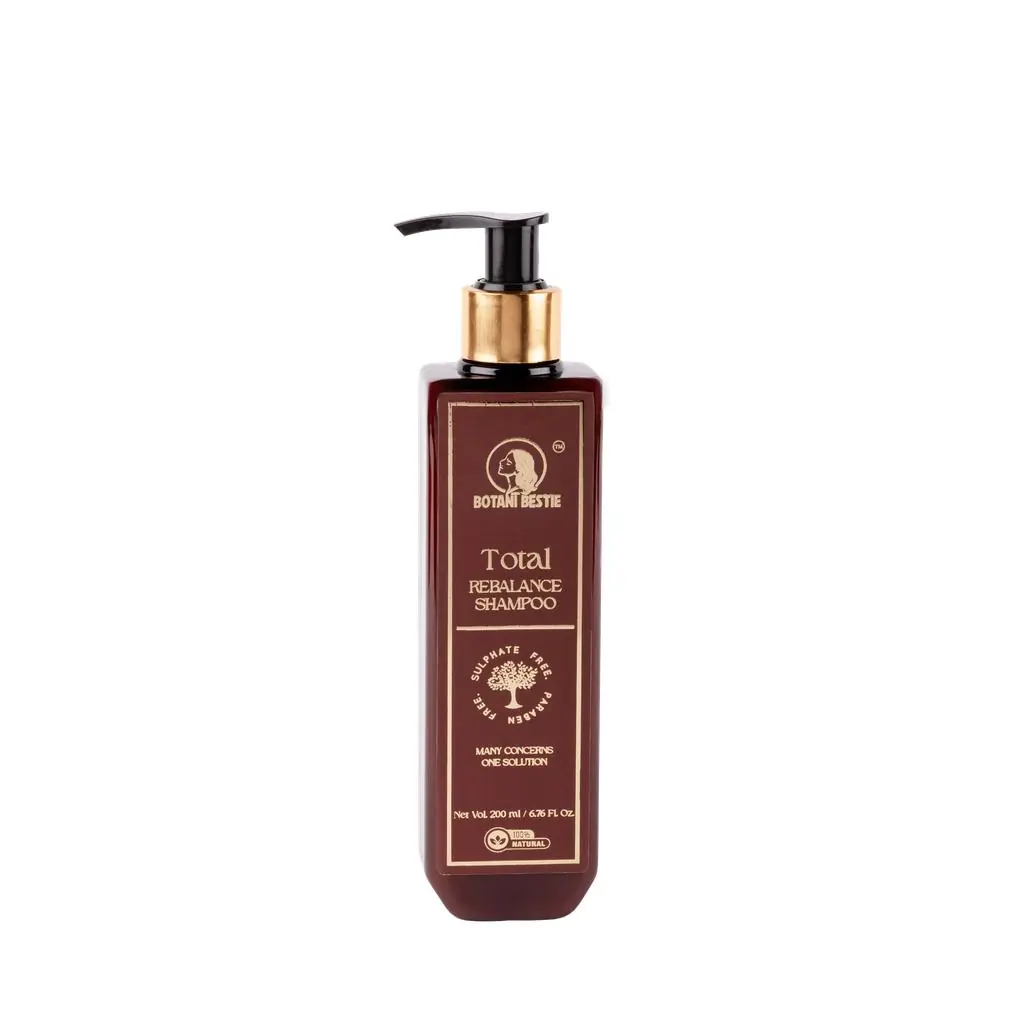
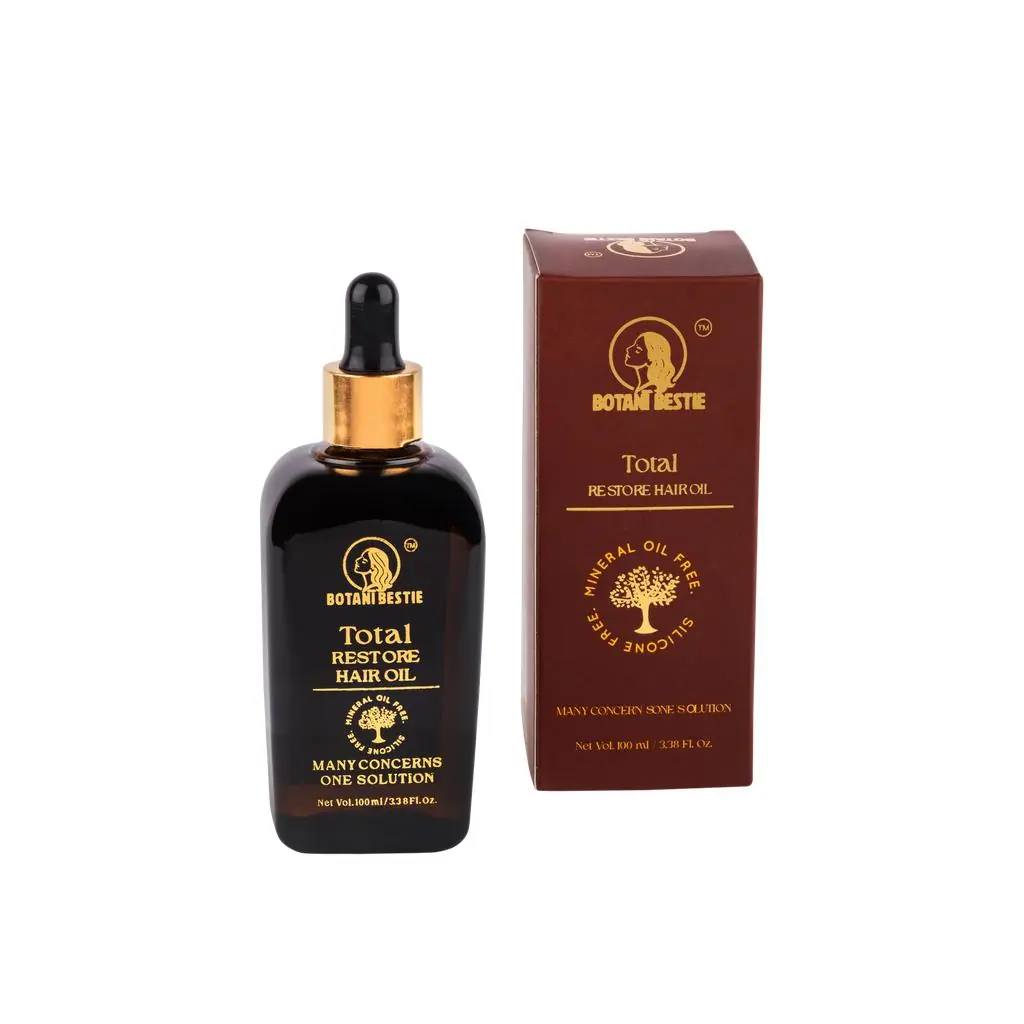
Total Rebalance Shampoo & Total Restore Hair Oil
by Botani Bestie
Methi is a core ingredient in both Botani Bestie hair products — included not as a cosmetic claim but as an active contributor to the four mechanisms outlined above. In the Total Rebalance Shampoo, methi's daily scalp contact through wash cycles addresses DHT inhibition, scalp inflammation, and shaft conditioning simultaneously. In the Total Restore Hair Oil, its longer contact time during application maximises follicle penetration of diosgenin and trigonelline.
Both products pair methi with the complementary Ayurvedic triad of Bhringraj + Brahmi + Amla — herbs that cover the mechanisms methi doesn't, including direct anagen extension (Bhringraj), cortisol modulation (Brahmi), and antioxidant follicle protection (Amla). The result is a formula that addresses the full spectrum of hair fall causes in one product.
Key Ingredients Alongside Methi:
Frequently Asked Questions

The Verdict — Should You Use Methi for Hair?
The answer is an evidence-backed yes. Methi is not folk nostalgia dressed up as science — it is one of the most pharmacologically active Ayurvedic hair herbs available, with a 2016 human RCT, confirmed 5-alpha reductase inhibition, scalp anti-inflammatory action, and a unique shaft-conditioning mechanism that no other Ayurvedic herb provides to the same degree.
The key is using it correctly: consistently (not intermittently), in a meaningful concentration (not a token label inclusion), for long enough (minimum 8–12 weeks before judging), and ideally alongside complementary herbs like Bhringraj, Brahmi, and Amla that cover the biological gaps methi alone does not address.
Grandmother was right. She just did not have access to the clinical studies that now explain exactly why.
Shop Total Rebalance Shampoo → Free Hair Consultation"Every Indian grandmother's hair remedy had a compound list. We just did not know the names yet."
Ready to make the honest switch?
Our products are built on the same principles as every article we write — pure ingredients, real results, nothing to hide.
Explore Our Products