Aloe Vera for Hair and Skin:
The Complete Science-Backed Guide
Aloe vera is one of the most recognised plants on earth — and one of the most underestimated. Beyond the sunburn gel stereotype, it contains over 75 active compounds with clinical evidence for hair growth, scalp health, acne, dark spots, and barrier repair. Here is what the research actually shows.
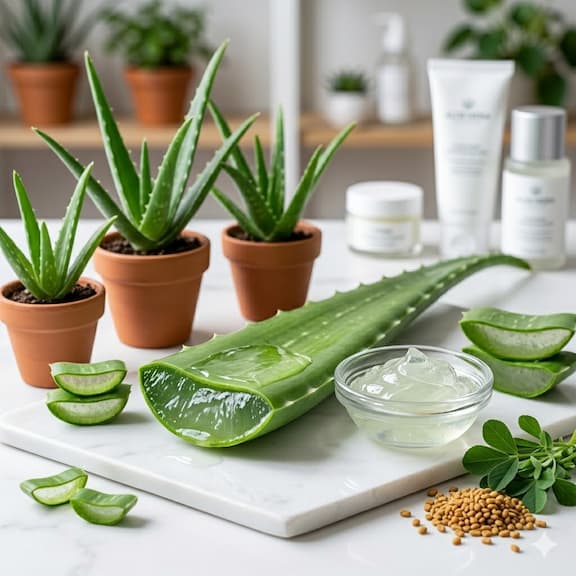
There is hardly a household in India without an aloe vera plant on the balcony or a bottle of aloe gel in the bathroom shelf. It has been used in Ayurveda as Kumari — "the young one," a reference to its rejuvenating properties — for over 5,000 years. Every grandmother has a hair or skin use for it.
But in the modern skincare and hair care world, aloe vera often gets dismissed as a basic, filler ingredient — something brands add to the label because it sounds natural, not because it delivers meaningful results.
That dismissal is wrong, and the science says so clearly. Aloe vera contains over 75 active compounds — polysaccharides, vitamins, enzymes, minerals, anthraquinones, and amino acids — that have been studied in peer-reviewed clinical trials for a remarkable breadth of hair and skin benefits. The question is not whether aloe works. The question is: which applications are backed by real evidence, and how do you use it correctly?
Aloe Vera's Active Compounds — What Actually Does the Work
Most people think of aloe vera as gel and water. In reality, the inner leaf gel of Aloe barbadensis miller is a complex biological matrix with multiple distinct bioactive fractions. Here are the key compounds relevant to hair and skin:
Acemannan
Aloe's most studied active compound — a long-chain β-(1,4)-acetylated mannan polysaccharide. Acts as a humectant, immune modulator, anti-inflammatory agent, and has demonstrated direct stimulation of dermal papilla cells in hair follicle research. The quality of any aloe product is largely determined by its acemannan content.
Aloesin & Aloin
C-glucosyl chromone compounds that inhibit tyrosinase — the key enzyme in melanin synthesis. Clinical studies confirm aloesin's ability to reduce post-inflammatory hyperpigmentation and sun-induced dark spots, making it one of the few plant-derived brightening agents with strong mechanistic evidence. Particularly relevant for Indian skin types prone to PIH.
Anthraquinones (Barbaloin, Isobarbaloin)
Present in the outer rind and in small amounts in gel. Demonstrate broad antimicrobial activity against bacteria (including C. acnes, the primary acne bacterium) and antifungal activity against Malassezia (the scalp yeast behind dandruff). These compounds give aloe its unique dual role as both a soothing and antimicrobial agent.
Proteolytic Enzymes (Bradykinase, Catalase)
Aloe contains unique proteolytic enzymes that break down dead keratin proteins at the scalp surface and follicle opening — removing buildup that can physically block follicle emergence. Bradykinase specifically reduces the inflammatory bradykinin produced in damaged skin. Catalase neutralises hydrogen peroxide accumulation — a key driver of premature hair greying.
Vitamins C, E & Beta-Carotene
Aloe naturally contains antioxidant vitamins that protect hair follicles and skin cells from UV and free-radical oxidative stress. Vitamin C supports collagen synthesis in the scalp dermis for stronger follicle anchoring. Vitamin E protects cell membranes from lipid peroxidation, a major cause of follicle damage and premature ageing.
Zinc, Magnesium & 20 Amino Acids
Aloe provides zinc (essential for follicle protein synthesis and sebum regulation), magnesium (cofactor for over 300 enzymatic reactions including those governing hair cycle regulation), and all 8 essential amino acids — the direct building blocks of keratin, the structural protein that forms the hair shaft.
Aloe Vera for Hair — The Evidence-Backed Benefits
The most exciting recent development in aloe vera research is the discovery that acemannan activates the Wnt/β-catenin signalling pathway — the same core pathway through which Minoxidil and several clinical hair growth actives exert their effects. A 2021 study published in the International Journal of Molecular Sciences confirmed that acemannan treatment significantly increased dermal papilla cell proliferation and upregulated Wnt target genes including CTNNB1 and LEF1.
A separate clinical RCT (2019, Journal of Dermatological Treatment) tested a 10% aloe vera emulsion on patients with seborrhoeic dermatitis-associated hair loss — and found significantly improved hair growth, reduced scaling, and improved follicle density versus the vehicle control at 8 weeks.
Aloe vera attacks dandruff from multiple directions simultaneously — which explains why it has been used as a scalp remedy across virtually every traditional medicine system globally.
- Antifungal action: Aloe's anthraquinones and saponins inhibit Malassezia furfur and Malassezia globosa — the fungal species responsible for seborrhoeic dandruff. A 1999 double-blind RCT in the Journal of Dermatology found aloe vera gel significantly more effective than placebo for seborrhoeic dermatitis symptoms, with reduced scaling and itching.
- Anti-inflammatory soothing: Aloe's acemannan and glycoproteins (aloe lectins) suppress the scalp inflammation triggered by Malassezia overgrowth — reducing redness, itching, and the follicle damage caused by chronic scalp inflammation.
- pH compatibility: Aloe gel's natural pH of 4.5–5.5 is almost identical to the scalp's optimal pH. This means it cleanses and soothes without disrupting the acid mantle that protects the scalp microbiome from pathogen overgrowth — including the dandruff-causing Malassezia species.
- Proteolytic cleansing: Aloe's enzymes break down keratin flakes and sebum buildup at the scalp, physically removing the substrate that feeds Malassezia proliferation.
One of aloe vera's most distinctive properties is its ability to deeply hydrate the scalp and hair shaft without leaving any greasy residue — unlike most moisturising oils. This is because acemannan is a water-binding polysaccharide that forms a lightweight, breathable hygroscopic film rather than a physical oil barrier.
For Indian hair types — which tend to be coarser, drier at the shaft, yet often oilier at the scalp — this is an ideal property. Aloe hydrates where hydration is needed (shaft and scalp skin) without contributing to the oiliness that triggers more frequent washing and, with sulfate-containing shampoos, more stripping.
Aloe Vera for Skin — The Evidence-Backed Benefits
🌑 Dark Spots & Hyperpigmentation
Aloe's aloesin compound is a clinically validated tyrosinase inhibitor. A 2002 study in the Journal of Investigative Dermatology confirmed aloesin significantly inhibited UV-induced pigmentation. A clinical trial comparing aloesin with hydrocortisone cream found aloesin produced superior results for post-inflammatory hyperpigmentation with better tolerability — making it particularly valuable for Indian skin types that are more reactive and prone to PIH.
Best pairing: Aloesin + Niacinamide — complementary mechanisms, enhanced combined brightening.
🔴 Acne & Blemishes
A 2014 RCT published in the Journal of Dermatological Treatment compared aloe vera gel with tretinoin 0.025% cream and a combination therapy for mild-to-moderate acne. The aloe vera combination produced the best results — including reduced lesion count, inflammation, and sebum — with the fewest side effects. Aloe's acemannan suppresses C. acnes proliferation and the IL-1β/TNF-α inflammatory cascade that creates the redness of active breakouts.
Best pairing: Aloe + Salicylic Acid — SA clears pores; aloe soothes the irritation SA can cause.
🛡️ Skin Barrier & Hydration
Multiple clinical studies confirm aloe vera gel significantly reduces transepidermal water loss (TEWL) and increases stratum corneum water content within 2–4 hours of application. A 2008 study found twice-daily aloe vera application significantly improved skin hydration parameters at 8 weeks versus baseline — consistent with acemannan's humectant and barrier-supporting mechanisms. This is not just surface moisturisation; aloe's polysaccharides stimulate fibroblast proliferation and collagen production for structural improvements.
Best for: Post-exfoliation recovery, reactive/sensitive skin, compromised barrier states.
☀️ UV Damage & Photoprotection
Aloe vera does not replace sunscreen — but it meaningfully supports UV-damaged skin in multiple ways. Its antioxidant vitamins (C, E, beta-carotene) neutralise UV-generated free radicals. Its polysaccharides accelerate repair of UV-damaged keratinocytes. Its aloesin inhibits the UV-triggered melanin overproduction that creates sun-induced dark spots. For Indian skin — exposed to one of the world's highest UV indices year-round — this daily antioxidant protection is a significant benefit.
Note: Aloe is not sunscreen. Always pair with SPF 30+ for sun protection.
What the Clinical Research Shows
| Study / Source | Design | Key Finding |
|---|---|---|
| Vardy et al., 1999 Journal of Dermatology |
Double-blind RCT, seborrhoeic dermatitis | Aloe vera gel significantly reduced scaling, itching, and seborrhoeic symptoms; Malassezia counts reduced versus placebo |
| Choi et al., 2002 Journal of Investigative Dermatology |
In vivo + in vitro, UV pigmentation | Aloesin significantly inhibited UV-induced pigmentation and tyrosinase activity; comparable to arbutin with better tolerability |
| Hekmatpou et al., 2019 Journal of Dermatological Treatment — RCT |
Randomised trial, hair loss patients | 10% aloe vera emulsion significantly improved hair growth, follicle health, and reduced inflammation versus vehicle at 8 weeks |
| Hajheydari et al., 2014 Journal of Dermatological Treatment |
RCT, 3 arms, mild-to-moderate acne | Aloe vera + tretinoin combination outperformed tretinoin alone on lesion counts, inflammation, and tolerability |
| Dal'Belo et al., 2006 International Journal of Cosmetic Science |
Clinical, 20 volunteers, 8 weeks | Aloe vera gel significantly increased skin hydration and improved TEWL at both 2-hour and 8-week measurements |
| Junlatat & Sripanidkulchai, 2021 Int. J. Molecular Sciences |
In vitro — dermal papilla cells | Acemannan activated Wnt/β-catenin signalling in dermal papilla cells, significantly increasing proliferation — the same pathway as Minoxidil |
How to Use Aloe Vera Correctly — For Hair and Skin
-
In a shampoo — for scalp health and hair growth (daily): A well-formulated aloe vera shampoo allows meaningful aloe contact time during washing. Look for "aloe vera gel" or "Aloe barbadensis leaf juice" in the first five ingredients — indicating genuine concentration. Allow shampoo to sit on the scalp for 1–2 minutes before rinsing. The pH-compatibility of aloe means it works with your scalp rather than against it, even at daily wash frequency.
-
In a face wash — for acne, brightening, and barrier support (twice daily): A face wash containing aloe vera delivers cleansing alongside the anti-inflammatory, antioxidant, and tyrosinase-inhibiting benefits of aloe. Critically, aloe in a face wash buffers the potential irritation of active ingredients like salicylic acid and niacinamide — which is exactly why it appears alongside these actives in a well-designed formula. Use morning and evening, massaging gently for 30–60 seconds before rinsing.
-
As a pure gel — for spot treatment or soothing (as needed): Direct application of 99% aloe vera gel to inflamed breakouts, freshly waxed skin, sun-exposed skin, or reactive patches is one of the most effective and gentle calming interventions available. Apply a thin layer and allow to absorb — aloe gel absorbs quickly without residue. For dark spot treatment, apply to the affected area twice daily, always following with SPF in the morning.
-
As a scalp pre-treatment — for dandruff and follicle stimulation (2–3x per week): Apply pure aloe gel directly to the scalp, section by section, using fingertips. Leave for 20–30 minutes, then shampoo out. This pre-treatment extends aloe contact time with the follicle and scalp skin significantly beyond what a rinse-off shampoo achieves — useful for more persistent dandruff or as a growth-support protocol.
-
What to avoid — the common mistakes: Leaving aloe gel on the skin or scalp overnight every day can cause mild dryness in some people due to its enzyme content. The most common error with DIY fresh aloe is using the yellow latex sap from the outer leaf layer rather than the pure inner gel — the latex contains concentrated anthraquinones that can cause scalp irritation and, with repeated use, sensitisation. Stick to the clear inner gel or cosmetic-grade aloe products where this is handled in formulation.
Aloe Vera in Every Botani Bestie Product
Aloe Vera — Across the Entire Botani Bestie Range
by Botani Bestie
Aloe vera is a foundational ingredient in all Botani Bestie products — not as a filler, but as an active contributor to each product's core function. Its compatibility with other actives, its pH alignment with skin and scalp, and its breadth of mechanisms make it uniquely suited to anchor a clean, multi-benefit formula.
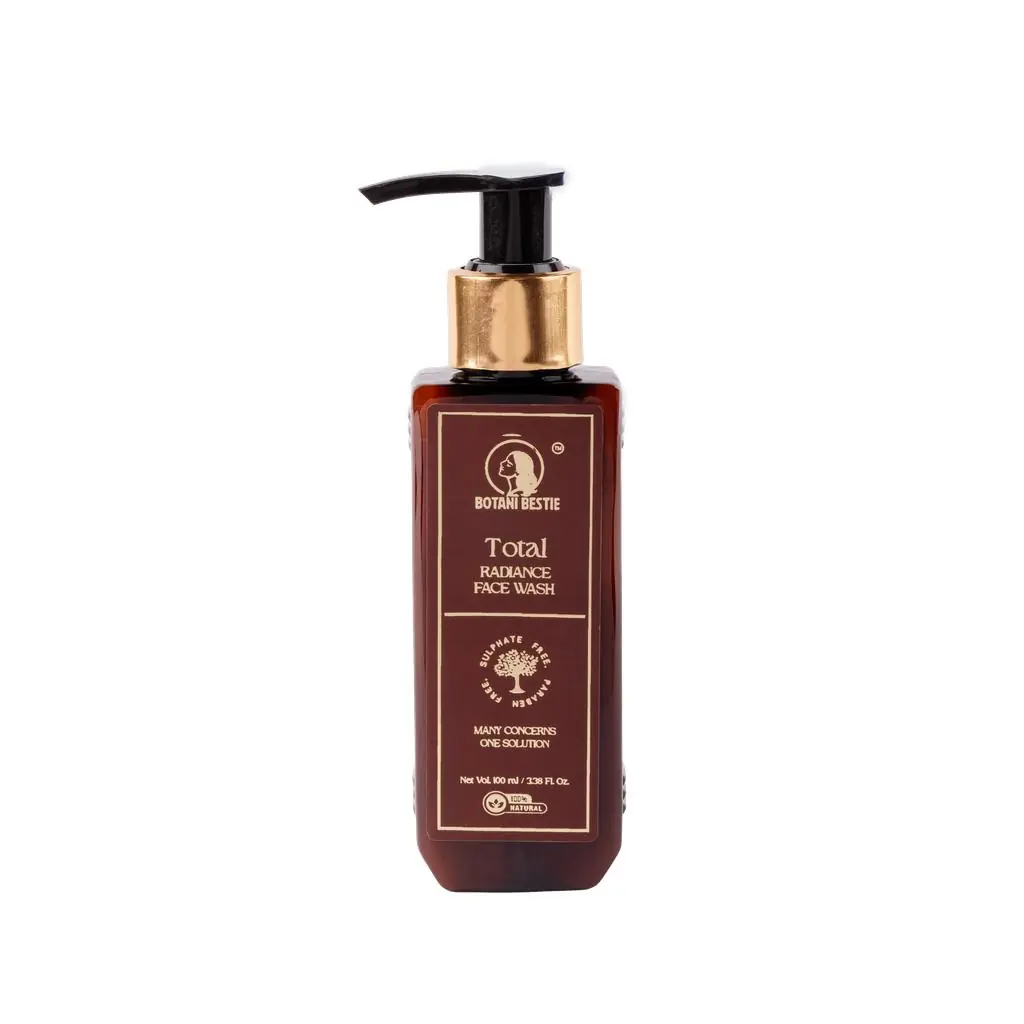
Total Radiance Face Wash — Aloe Vera + Actives:
Aloe soothes the potential irritation of Salicylic Acid; its aloesin complements Niacinamide's brightening action; its barrier support protects the skin after cleansing.
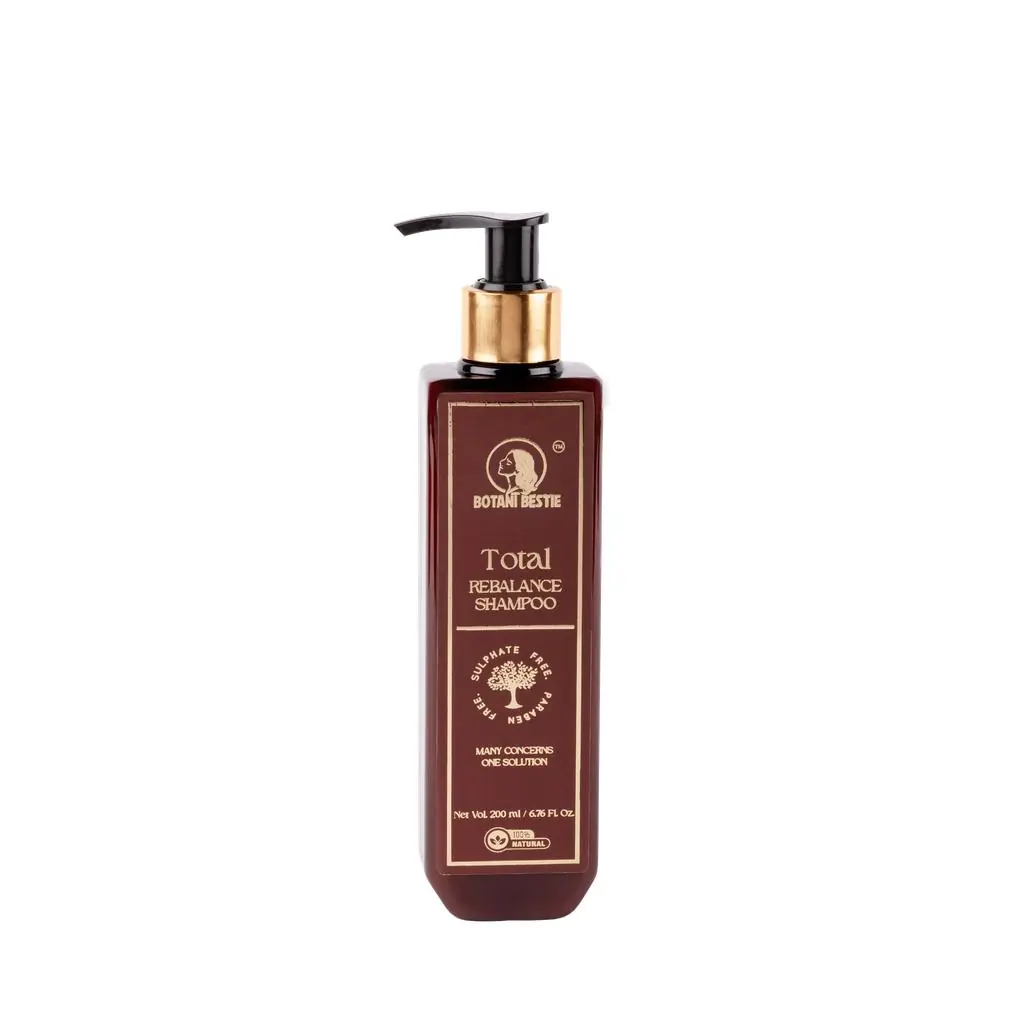
Total Rebalance Shampoo — Aloe Vera + Herbs:
Aloe's antifungal and anti-inflammatory properties work alongside Bhringraj and Brahmi for scalp health; its pH 4.5–5.5 aligns with the scalp's ideal environment for a healthy microbiome.
Frequently Asked Questions
"Aloe vera survived 5,000 years of human use because it works. Science now knows exactly why."
Ready to make the honest switch?
Our products are built on the same principles as every article we write — pure ingredients, real results, nothing to hide.
Explore Our Products