Liquorice for Skin — Does It Really Work for Dark Spots? The Complete Science-Backed Answer
Known in India as Mulethi — the sweet root of Ayurveda — liquorice has been brightening skin for centuries. Modern science has now confirmed exactly why it works, with in vitro evidence showing it has 16 times the skin-lightening activity of hydroquinone. Here is the complete, honest guide.

Walk through any Ayurvedic pharmacy in India and you will find Mulethi — liquorice root — displayed prominently. It is one of the oldest documented ingredients in Ayurvedic medicine, referenced in the Charaka Samhita and Sushruta Samhita for its skin-brightening, anti-inflammatory, and healing properties. In Sanskrit it is called Yashtimadhu — "sweet stick."
What is less known outside of dermatology research circles is that liquorice root is now one of the most clinically substantiated natural ingredients for hyperpigmentation in existence. Its primary active compound, glabridin, has been the subject of multiple mechanistic studies, in vitro comparisons with hydroquinone, and increasingly robust clinical trials — including a 2025 randomised study that found measurable skin lightening in the majority of participants within four weeks.
This guide explains exactly what liquorice does to dark spots at a biological level, what the clinical evidence shows, how it compares to the ingredients you already know (niacinamide, hydroquinone, Vitamin C), and which skin types and dark spot patterns respond best.
💡 What Type of Dark Spots Do You Have?
Liquorice addresses hyperpigmentation through multiple pathways — each relevant to a different type of dark mark. Identify yours below:
👉 Scroll to your dark spot type — each mechanism section explains exactly how liquorice addresses it.
What is Liquorice? — Meet Glycyrrhiza glabra, the Mulethi of Science
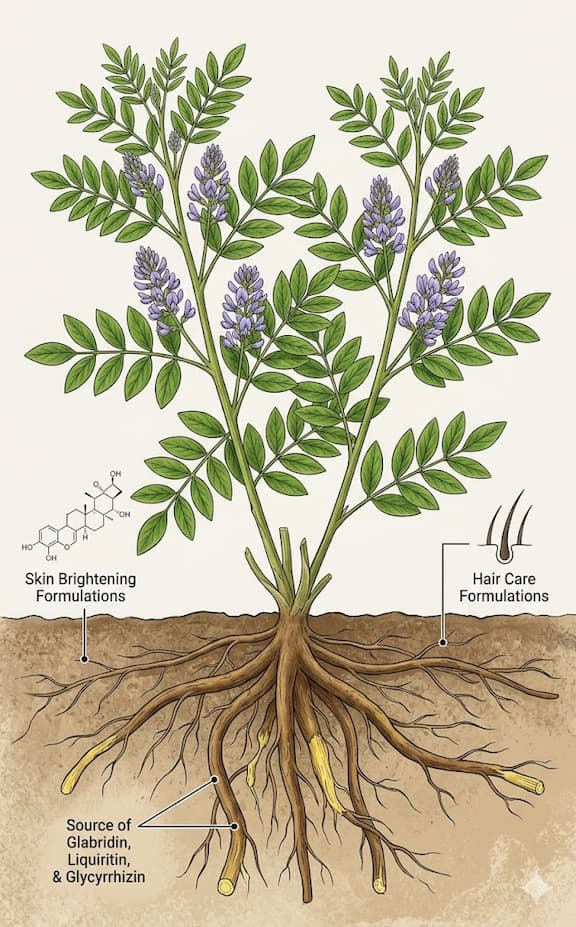
Liquorice (Glycyrrhiza glabra L., family Fabaceae) is a perennial herb native to the Mediterranean, Central Asia, and South Asia — where it has been grown and used medicinally for over 4,000 years. In India, it is known as Mulethi or Yashtimadhu, and referenced extensively in Ayurvedic classical texts for skin disorders, inflammation, and complexion brightening.
The root is the medicinally active part and contains nearly 300 identified phytochemical compounds — a pharmacological complexity that explains its broad spectrum of biological activities. For skin, the most important compounds are:
| Compound | Type | Primary skin action |
|---|---|---|
| Glabridin | Isoflavonoid (hydrophobic) | Tyrosinase inhibition, ROS scavenging, anti-inflammatory, UV pigmentation blocking |
| Liquiritin | Flavanone glycoside | Disperses existing melanin; depigmentation |
| Licochalcone A | Chalcone | Sebum regulation, anti-inflammatory, antioxidant |
| Glycyrrhizin | Triterpenoid saponin | Anti-inflammatory, skin barrier support, anti-allergic |
| 18β-Glycyrrhetinic acid | Triterpene | Anti-inflammatory, 5α-reductase inhibition |
| Isoliquiritigenin | Chalcone | Tyrosinase inhibition (both mono- and diphenolase activity) |
How Liquorice Fades Dark Spots — 4 Distinct Mechanisms
What makes liquorice scientifically compelling is not just one mechanism but four interconnected pathways — addressing pigmentation at the production level, the accumulation level, the inflammatory trigger level, and the UV protection level simultaneously:
Best for: Melasma, sun-induced pigmentation, general hyperpigmentation
Melanin production begins with an enzymatic chain reaction regulated by tyrosinase — the enzyme that converts tyrosine (an amino acid) into DOPA and then into melanin. Inhibiting tyrosinase at this early stage stops the entire pigmentation cascade before it begins.
Glabridin is one of the most potent natural tyrosinase inhibitors identified to date. The landmark Yokota et al. study confirmed that glabridin inhibits the T1 and T3 tyrosinase isozymes at concentrations as low as 0.1 to 1.0 µg/ml — with in vitro measurements showing 16 times the skin lightening activity of hydroquinone. Critically, it does this without affecting DNA synthesis — meaning it does not damage or alter melanocyte function, only regulates their pigment output.
A 2025 PubMed mechanistic study (Liu et al., Journal of Ethnopharmacology) identified the complete molecular pathway: glabridin suppresses CREB phosphorylation and SOX10 protein expression, inhibits nuclear translocation of CRTC1 (a transcription coactivator critical for MITF activation), and thereby reduces the expression of melanogenic enzymes downstream of MITF — the master transcription factor that controls the entire pigmentation programme. This is the most detailed mechanistic confirmation of glabridin's action yet published.
Best for: Post-acne dark marks (PIH), existing dark spots, uneven tone
While glabridin prevents new melanin from being produced, liquiritin addresses the melanin that is already deposited in the skin. Liquiritin achieves depigmentation through a different mechanism: it disperses melanin — breaking apart the accumulated melanin granules already present in skin cells — rather than blocking the enzymes that produce it.
A clinical study by Amer and Metwalli (International Journal of Dermatology, 2000) found that topical liquiritin 1% cream significantly improved melasma over an 8-week treatment period — one of the earliest clinical confirmations of liquiritin's depigmenting efficacy in humans. The combination of glabridin (blocks production) + liquiritin (disperses existing deposits) is why liquorice root extract as a whole is more powerful against dark spots than any single isolated compound within it.
For Indian skin — where post-acne PIH marks accumulate over months or years before treatment begins — this dispersal mechanism provides meaningful therapeutic value on top of what niacinamide (which primarily blocks transfer rather than dispersing deposits) delivers.
Best for: Sun spots, UV-induced darkening, preventing new pigmentation
UV radiation is the single largest driver of hyperpigmentation in India — triggering an inflammatory melanin response that darkens existing spots and creates new ones with every unprotected exposure. Glabridin addresses UV-induced pigmentation through a direct demonstrated mechanism.
The original Yokota et al. study confirmed that topical application of 0.5% glabridin inhibited both UVB-induced pigmentation and erythema (redness) in guinea pig skin models — demonstrating that glabridin's protection extends to the UV-triggered pigmentation response, not just the baseline enzymatic production. A single-centre, double-blind clinical study of 18 subjects (Makino et al., Journal of Drugs in Dermatology) compared a hydroquinone-free formula containing glabridin to 4% hydroquinone cream in reducing UV-induced hyperpigmentation. The glabridin-containing formula demonstrated significant reductions in pigmentation compared to baseline and produced greater increases in L* brightness compared to hydroquinone.
In India's UV environment — where the UV index averages 8–11 year-round — liquorice's UV pigmentation inhibition mechanism is particularly relevant. It functions as both a treatment for existing UV damage and a preventive agent against new UV-triggered dark spots, making it especially valuable in combination with daily SPF.
Best for: Overall skin tone, PIH from inflammation, sensitive skin brightening
Inflammation is the trigger behind the majority of dark spots in Indian skin — whether from acne, friction, hormonal fluctuation, or environmental stress. Every time the skin experiences significant inflammation, melanocytes are overstimulated — producing excess melanin as part of the skin's wound-healing response. This is the biological mechanism behind post-inflammatory hyperpigmentation (PIH).
Glabridin demonstrates direct anti-inflammatory action by inhibiting superoxide anion production and cyclooxygenase activities — the same pathways targeted by NSAID medications like ibuprofen. Glycyrrhizin inhibits pro-inflammatory cytokines and has been used clinically for decades in Japan as an anti-inflammatory skin treatment (approved by the Japanese Ministry of Health). By calming skin inflammation at its source, liquorice reduces the inflammatory trigger for new dark spot formation — not just treating existing marks but preventing new ones.
Additionally, glabridin functions as a potent reactive oxygen species (ROS) scavenger — neutralising the oxidative damage from UV, pollution, and cellular stress that triggers melanocyte overstimulation and contributes to skin sallowness and uneven tone.
💡 Want glabridin + niacinamide + salicylic acid in one clean, pH-balanced formula designed for Indian skin?
See Total Radiance Face Wash →The Clinical Evidence — What Studies Actually Show
| Study | Design | Key Finding | Strength |
|---|---|---|---|
| Liu et al., 2025 PubMed / Journal of Ethnopharmacology — CRTC1/MITF pathway |
In vitro + in vivo mechanistic | GGE80 (80% ethanol liquorice extract) most potent inhibitor of mushroom tyrosinase; glabridin identified as primary melanin-inhibitory agent via CRTC1/MITF suppression pathway | High — 2025 PubMed mechanistic |
| Preprints SSG RCT, 2025 Randomised, double-blind, placebo-controlled — SelectSIEVE Glitter (Glycyrrhiza glabra + Olea Europea) |
Double-blind RCT, 8 weeks, ITA° measurement + dermatologist assessment | ITA° skin lightening: +11.8% at Week 4 (p<0.001), +18.9% at Week 8 (p<0.001); 54.5% dermatologist-assessed improvement at Week 4; 63.6% at Week 8. Significantly better than placebo at both timepoints. | High — double-blind RCT, 2025 |
| Makino et al., 2013 Journal of Drugs in Dermatology — 18 subjects, double-blind |
Single-centre, double-blind clinical, glabridin formula vs 4% hydroquinone | Glabridin-containing formula showed greater increases in L* brightness vs 4% hydroquinone; significant pigmentation reduction vs baseline; superior tolerability | High — human double-blind vs HQ |
| Costa et al., 2010 Anais Brasileiros de Dermatologia — melasma RCT |
Emblica + licorice + belides combination vs 2% hydroquinone in melasma patients | Degree of depigmentation in both groups not statistically different — confirming liquorice combination is clinically comparable to hydroquinone 2% for melasma | High — human RCT vs HQ |
| Amer & Metwalli, 2000 International Journal of Dermatology |
Topical liquiritin 1% cream, 8 weeks, melasma patients | Significant improvement of melasma scores over 8 weeks — first controlled clinical confirmation of liquiritin's depigmenting efficacy in humans | Moderate — human study, liquiritin-specific |
| Yokota et al., 1998 Pigment Cell Research — foundational study |
In vitro (B16 melanoma cells) + in vivo (guinea pig) | Glabridin inhibits tyrosinase T1 and T3 isozymes; 16x hydroquinone in vitro skin lightening; inhibits UVB-induced pigmentation and erythema topically at 0.5% | Moderate — foundational in vitro + animal |
| Parvizi et al., 2025 Journal of Cosmetic Dermatology — scoping review |
Systematic scoping review of 21 clinical trials on herbal melasma treatment | Licorice extracts and three main flavonoids (licochalcone A, glabridin, dehydroglyasperin C) are the most studied natural compounds for skin whitening and anti-ageing effects in dermatology | High — 2025 systematic review |
Myth vs. Truth — What Most People Get Wrong About Liquorice for Skin
| Common Myth | The Scientific Truth |
|---|---|
| Liquorice is a mild ingredient — it can't compete with hydroquinone | In vitro studies show glabridin has 16x the tyrosinase-inhibiting activity of hydroquinone. Human studies find it comparable to 2% hydroquinone in melasma treatment with zero hydroquinone-associated side effects. |
| All dark spots respond the same way to liquorice | Glabridin (tyrosinase inhibition) works best for new and UV-induced pigmentation; liquiritin (melanin dispersal) works best for existing accumulated marks. Both are in full-spectrum liquorice root extract — which is why the whole extract outperforms isolated compounds. |
| You can eat liquorice candy for the same skin effect | Liquorice candy contains very little actual Glycyrrhiza glabra extract and often uses artificial flavouring. The effective compound (glabridin) is in the hydrophobic fraction of the root extract — topical application delivers it directly to the skin cells that need it. |
| Liquorice causes photosensitivity like some brightening ingredients | Liquorice causes no photosensitivity. In fact, glabridin actively inhibits UVB-induced pigmentation and erythema — it protects against UV-driven darkening rather than increasing UV sensitivity. It is suitable for morning use. |
| You need to use liquorice in high concentration for it to work | The foundational Yokota study confirmed significant tyrosinase inhibition at concentrations of 0.1–1.0 µg/ml, and UVB pigmentation inhibition topically at just 0.5%. Effective concentrations in well-formulated products are well within conventional cosmeceutical ranges. |
Liquorice vs. Other Brightening Ingredients — Honest Comparison
| Ingredient | Primary mechanism | Efficacy for dark spots | Safety for Indian skin | Works with liquorice? |
|---|---|---|---|---|
| Liquorice (Glabridin) | Tyrosinase inhibition + melanin dispersal + UV blocking | Comparable to 2% HQ; clinical evidence at 4–8 weeks | Excellent — no photosensitivity or rebound | — Reference |
| Niacinamide | Blocks melanosome transfer to keratinocytes | Strong — 35–68% transfer inhibition | Excellent — no rebound risk | ✅ Best pairing — different pathways, synergistic |
| Hydroquinone (4%) | Tyrosinase inhibition + melanocyte toxicity | Fast — gold standard for melasma | ⚠️ Ochronosis risk; rebound darkening; not for long-term use | ⚠️ Liquorice preferred for darker skin; not needed together |
| Vitamin C (Ascorbic Acid) | Antioxidant; reduces melanin oxidation | Good for UV-induced brightening; less effective for deep PIH | ⚠️ Unstable; can irritate at high concentrations | ✅ Complementary — antioxidant overlap |
| Salicylic Acid | Keratolytic — accelerates cell turnover | Good for PIH via exfoliation; not directly depigmenting | Excellent for Indian skin | ✅ Excellent — SA exfoliates; liquorice blocks production |
| Kojic Acid | Tyrosinase inhibition (different binding site than glabridin) | Good — weaker than glabridin in vitro | ⚠️ Can cause contact dermatitis in sensitive skin | ✅ Can be combined but liquorice has superior safety profile |
Which Dark Spots Respond Best to Liquorice?
🟤 Post-Acne Dark Marks (PIH)
Excellent response. This is where liquorice's dual mechanism — glabridin (blocks new melanin production) + liquiritin (disperses existing melanin) — works most powerfully. PIH from acne involves both accumulated existing melanin AND ongoing inflammatory melanin production from residual skin irritation. Liquorice addresses both simultaneously.
Best combination: Liquorice + Niacinamide (blocks transfer) + Salicylic Acid (accelerates turnover) + SPF 50. See our Niacinamide guide →
🌀 Melasma
Good to excellent response. Multiple clinical studies confirm liquorice (both glabridin and liquiritin individually) is effective for melasma — the 2010 Costa et al. RCT found it comparable to 2% hydroquinone, and the 2025 RCT showed 63.6% improvement at Week 8. Melasma requires patience (12–24 weeks) and absolute daily SPF. Without SPF, no brightening ingredient — including hydroquinone — produces lasting results.
Best combination: Liquorice + Niacinamide + SPF 50. Dermatologist evaluation recommended for persistent melasma.
☀️ UV / Sun Spots
Excellent response. Glabridin's direct inhibition of UVB-induced pigmentation and erythema — demonstrated in the foundational Yokota study — makes liquorice particularly effective for UV-driven dark spots. The Makino clinical study (glabridin vs 4% HQ for UV-induced pigmentation) found greater brightening with glabridin. Consistent use with SPF provides both treatment of existing spots and prevention of new UV-triggered ones.
Best combination: Liquorice + Vitamin C (antioxidant overlap) + SPF 50 daily without exception.
🌑 Deep / Long-Standing Pigmentation
Moderate response — realistic expectations needed. Dermal pigmentation — where melanin has migrated below the epidermis into the dermis — is significantly harder to treat with topical agents. Liquorice's liquiritin (melanin dispersal) mechanism has some relevance here, but very deep spots typically require professional intervention (chemical peels, laser). Liquorice remains an excellent maintenance ingredient to prevent new pigmentation and slow the progression of deeper marks.
Best approach: Dermatologist consultation for treatment options + liquorice maintenance routine.
📅 What to Expect — A Realistic Week-by-Week Timeline
| Timeframe | What You'll Notice | What the Clinical Data Shows |
|---|---|---|
| Week 1–2 | Skin feels calmer, less reactive. Redness from existing marks may reduce slightly. No visible brightening yet. | Anti-inflammatory and antioxidant mechanisms active from first use. Tyrosinase inhibition beginning at cellular level — not yet visible at surface. |
| Week 4 | Gradual brightening noticeable. Existing dark marks beginning to look less intense. Skin tone slightly more even. | 2025 RCT: ITA° skin lightening +11.8% at Week 4 (statistically significant vs placebo, p<0.001). 54.5% of participants showed dermatologist-assessed improvement. |
| Week 6–8 | Visible reduction in dark mark intensity. Overall skin tone noticeably more radiant and even. PIH marks lighter. | 2025 RCT: ITA° +18.9% at Week 8 (p<0.001). 63.6% dermatologist-assessed improvement. Clinical comparison studies confirm equivalence to 2% hydroquinone at this stage. |
| Week 12+ | Sustained brightening maintained with continued use. New UV-induced spots prevented or significantly reduced. Melasma measurably improved. | Liquorice's dual mechanism (production blocking + dispersal) continues delivering cumulative results. Continued use prevents new pigmentation from forming — making it a maintenance ingredient for life, not just a spot treatment. |
Still Struggling with Dark Spots Despite Multiple Products? Here is the Difference.
Most brightening face washes contain a single brightening active in isolation. The science of hyperpigmentation in Indian skin — particularly the PIH that follows acne, the melasma driven by hormones and UV, and the UV-induced spots accumulated over years — requires a multi-pathway approach that addresses production, transfer, dispersal, and inflammation simultaneously.
The Total Radiance Face Wash combines liquorice root extract's glabridin (tyrosinase inhibition and melanin dispersal) with niacinamide (melanin transfer blocking) and salicylic acid (cell turnover acceleration) — addressing the full hyperpigmentation pathway in a single, twice-daily cleansing step.
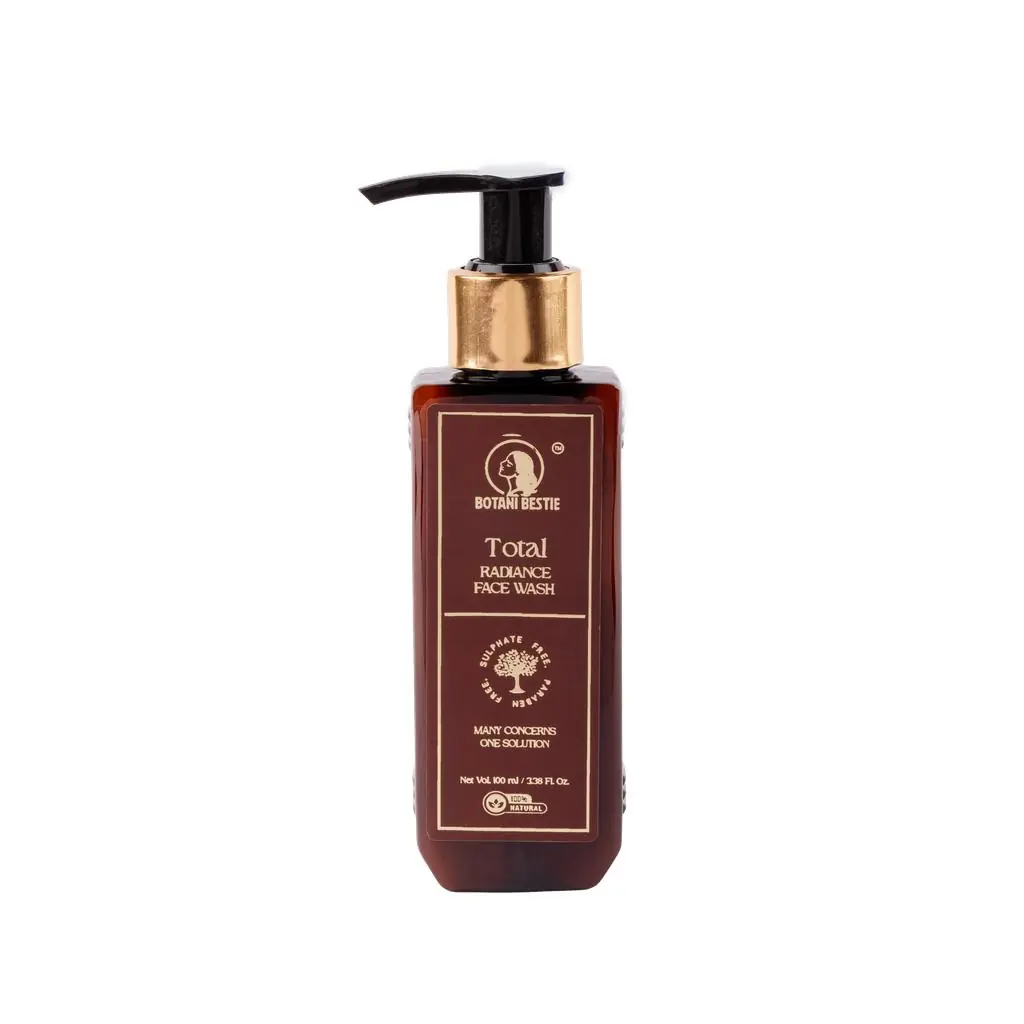
Total Radiance Face Wash
by Botani Bestie — ₹499 (MRP ₹650)
The multi-pathway brightening formula for Indian skin:
- ✔ Liquorice Root Extract (Glabridin + Liquiritin) — inhibits tyrosinase to block new melanin production; disperses existing accumulated melanin; blocks UVB-induced pigmentation; clinically comparable to 2% hydroquinone in melasma studies
- ✔ Niacinamide — blocks melanosome transfer from melanocytes to skin cells (the step that deposits melanin in visible dark marks); regulates sebum to prevent acne-triggered PIH
- ✔ Salicylic Acid (BHA) — accelerates cell turnover to bring fresh, unpigmented cells to the surface faster; preferred over glycolic acid for PIH in darker skin tones (2024 systematic review)
- ✔ Sandalwood (Alpha-santalol) — Ayurvedic skin brightener with modern evidence for keratinocyte migration and inflammatory cytokine reduction
- ✔ Aloe Vera & Green Tea — anti-inflammatory and antioxidant protection against UV and pollution-triggered pigmentation triggers
pH balanced at 5.0. Free from sulfates, parabens, silicones, synthetic fragrance, and alcohol.
How it addresses hyperpigmentation vs a single-active brightening wash:
| Pigmentation pathway | Generic brightening wash | Total Radiance Face Wash |
|---|---|---|
| Block melanin production (tyrosinase) | ❌ Often absent | ✅ Liquorice / Glabridin |
| Disperse existing melanin deposits | ❌ | ✅ Liquiritin (in liquorice extract) |
| Block melanin transfer to skin cells | ❌ | ✅ Niacinamide |
| Accelerate cell turnover (exfoliation) | ⚠️ Sometimes | ✅ Salicylic Acid |
| Reduce UV-triggered pigmentation | ❌ | ✅ Glabridin + Green Tea |
| Soothe inflammation (PIH prevention) | ❌ | ✅ Glycyrrhizin + Aloe Vera |
| Sulfate-free, pH 5.0 balanced | ❌ Typically pH 7–9 | ✅ |
Join the growing community of customers across India who have made the switch to clean, science-backed skin brightening.
🎁 Not Sure Which Brightening Routine is Right for Your Skin?
Get a free personalised skin consultation with our in-house dermatologist — no purchase required. Tell us your dark spot type, skin tone, and concerns, and receive a targeted routine built specifically for you.
Book Free Skin Consultation → WhatsApp Us📖 Continue your clean beauty research:
Frequently Asked Questions
The Verdict: Mulethi is Not Just a Folk Remedy — It is One of the Best-Evidenced Natural Brighteners in Dermatology
Liquorice root extract sits in a rare category: a traditional Ayurvedic ingredient with genuine, independent, peer-reviewed clinical validation — not just in vitro cell studies, but in human double-blind trials against hydroquinone, the pharmaceutical benchmark for skin brightening.
Its dual mechanism — glabridin blocking new melanin production at the CRTC1/MITF pathway level, and liquiritin dispersing existing melanin deposits — makes it uniquely comprehensive for the post-acne PIH, melasma, and UV pigmentation that disproportionately affect Indian skin.
With the right formula, daily SPF, and 8 weeks of consistency, the science is on your side.
Get Brighter Skin — Try Total Radiance → Free Skin Consultation"The oldest remedies often work. Science is finally explaining why."
Ready to make the honest switch?
Our products are built on the same principles as every article we write — pure ingredients, real results, nothing to hide.
Explore Our Products