Liquorice for Hair Fall — Does It Really Help? The Science-Backed Answer (2025)
Mulethi has been used in Indian hair care for millennia. A 2024 PubMed study has now confirmed why — liquorice's active compound stimulates human hair follicle cells directly and inhibits the enzyme responsible for DHT-driven hair loss. Here is the complete, honest guide.
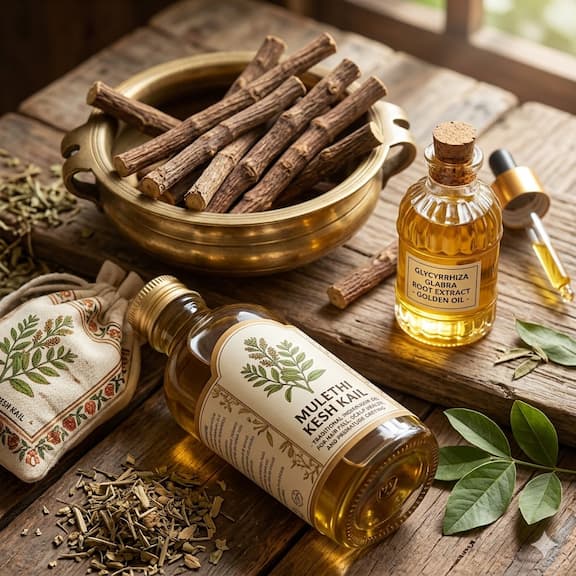
In Indian households, Mulethi is most commonly known as the sweet root added to herbal teas and Ayurvedic formulations. What is far less widely known — even among people who have been using Bhringraj, Amla, and Brahmi for years — is that liquorice root (Glycyrrhiza glabra) has a rich and scientifically grounded history as a hair fall remedy, referenced in both the Charaka Samhita and Sushruta Samhita for hair strengthening and premature greying prevention.
In 2024, a landmark study published in the Biological & Pharmaceutical Bulletin (Hagiwara et al., Tokyo University of Technology and Maruzen Pharmaceuticals) provided the most direct scientific validation yet: 18-β-glycyrrhetinic acid, the primary active in liquorice root, was shown to stimulate the proliferation of both human dermal papilla cells and outer root sheath cells — the two cell types most critical for hair follicle health and growth. The same compound inhibited 5α-reductase activity — the enzyme responsible for converting testosterone to DHT, the primary driver of androgenetic (pattern) hair loss.
This guide explains the complete science, all five mechanisms through which liquorice supports hair and scalp health, how it compares to better-known hair fall ingredients, and which hair fall types benefit most — with the honest caveat about where the evidence is strong and where more human research is still needed.
💡 What Type of Hair Fall Do You Have?
Liquorice addresses hair fall through five different mechanisms — each relevant to a different root cause. Identify yours:
👉 Each mechanism section explains exactly how liquorice addresses your specific hair fall pattern.
What Makes Liquorice Relevant for Hair — The Active Compounds
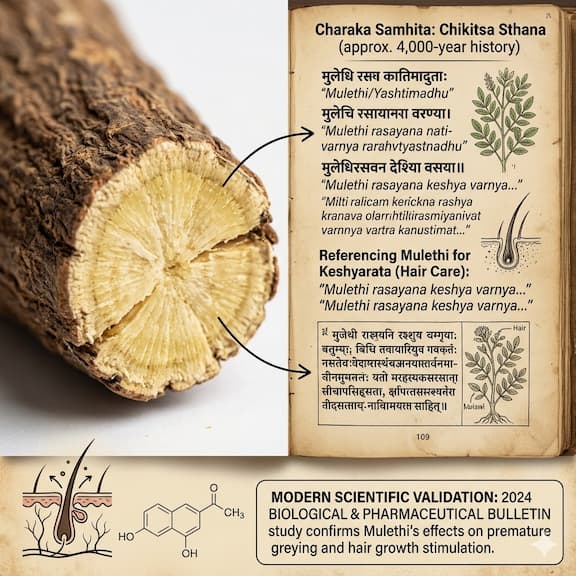
Liquorice root contains nearly 300 identified phytochemical compounds. For hair and scalp health specifically, the most relevant are:
| Compound | Hair-specific action |
|---|---|
| 18-β-Glycyrrhetinic acid (GA) | Stimulates dermal papilla + ORS cell proliferation; inhibits 5α-reductase (DHT blocker) |
| Glycyrrhizin | Scalp anti-inflammatory (approved by Japan MoHLW); anti-allergic; supports scalp barrier |
| Licochalcone A | Sebum regulation — reduces oily scalp conditions and follicle-clogging excess oil |
| Glabridin (isoflavonoid) | Antioxidant protection for follicle melanocytes; mild phytoestrogenic activity (extends anagen) |
| Flavonoids + Saponins | Antimicrobial, antifungal (anti-dandruff); anti-inflammatory scalp support |
| Phytoestrogens | Mild oestrogen-mimicking activity — may extend anagen phase; relevant for hormonal hair fall |
This compound diversity is what distinguishes liquorice from most single-mechanism hair ingredients — it addresses hair fall from the follicle cell level, the hormonal level, the scalp inflammation level, and the sebum balance level simultaneously.
How Liquorice Addresses Hair Fall — 5 Mechanisms Explained
Best for: Androgenetic alopecia (male and female pattern thinning), PCOS-related hair fall
Dihydrotestosterone (DHT) is the primary hormonal driver of androgenetic alopecia — the most common form of hair loss in India. DHT is produced from testosterone by the enzyme 5α-reductase (5αR). DHT binds to androgen receptors in hair follicles, progressively miniaturising them over successive growth cycles until they can no longer produce visible hair. Finasteride and dutasteride — the most effective pharmaceutical treatments for pattern hair loss — work by inhibiting 5αR.
The landmark 2024 Hagiwara et al. study (Biological & Pharmaceutical Bulletin, Tokyo University of Technology) found that 18-β-glycyrrhetinic acid (GA), the primary active form of liquorice's glycyrrhizin, inhibited testosterone 5α-reductase activity with an IC50 of 137.1 µM. This is the first published study to quantify GA's specific 5αR inhibitory activity — providing the mechanistic basis for earlier in vivo observations that petroleum ether extract of Glycyrrhiza glabra roots prevented testosterone-induced alopecia in male rats when combined with standard treatments.
A separate 2018 animal study (Upadhyay et al., Research in Pharmacy) confirmed that glycyrrhetinic acid isolated from G. glabra provided a protective effect against androgen-induced alopecia in male rats comparable to finasteride. While human RCT data specifically for this mechanism is still needed, the convergence of mechanistic and pre-clinical evidence is compelling.
Best for: General thinning, follicles in the telogen (resting) phase, slow hair growth
Dermal papilla (DP) cells are the master regulators of the hair follicle — they send the signals that determine whether a follicle enters the anagen (growth) phase, how long it stays there, and how thick the resulting hair fibre is. Outer root sheath (ORS) cells form the structural layer of the follicle and play a critical role in initiating new hair growth cycles.
The 2024 Hagiwara et al. study — conducted with human-isolated DP and ORS cells — found that 18-β-glycyrrhetinic acid (GA) stimulated the proliferation of both dermal papilla cells and outer root sheath cells. This is the most direct in vitro confirmation that liquorice's primary active compound promotes the biological activity of both key cell types responsible for initiating and sustaining hair growth. The study explicitly concluded: "this compound promotes hair growth."
This DP cell proliferation mechanism is the same pathway targeted by Redensyl (via Wnt/β-catenin activation in dermal papilla cells) — confirming that liquorice addresses hair growth through a fundamentally sound biological route, not just peripheral scalp support.
Best for: Stress-related shedding, dandruff-driven fall, irritated or reactive scalp
Scalp inflammation — from dandruff, hard water pH disruption, pollution, or stress-induced cortisol — is one of the most underdiagnosed drivers of hair fall in India. When the scalp experiences chronic low-grade inflammation, follicles are pushed prematurely from the anagen (growth) phase into telogen (resting), resulting in widespread diffuse shedding.
Glycyrrhizin — the primary saponin in liquorice root — is one of the most potent natural anti-inflammatory compounds documented in dermatological research. The Japanese Ministry of Health, Labour and Welfare officially acknowledges glycyrrhetinic acid's (GA's) anti-inflammatory effect on the skin (scalp) — a regulatory-level validation rarely granted to natural compounds. The 2024 Hagiwara et al. paper explicitly states: "When inflammation occurs on the scalp, it has been reported that the quality of hair produced from that area diminishes — therefore, calming scalp inflammation is crucial for growing healthy hair."
Glycyrrhizin inhibits pro-inflammatory cytokines (TNF-α, IL-1β, IL-6) and reduces prostaglandin synthesis — directly addressing the inflammatory cascade that suppresses follicle activity and drives premature telogen entry. A controlled RCT (ScienceDirect) found compound glycyrrhizin tablets significantly improved alopecia areata outcomes over a controlled period — demonstrating glycyrrhizin's clinical relevance beyond just topical scalp use.
Best for: Oily scalp, follicle clogging, dandruff from sebum imbalance
Excess sebum on the scalp creates an occlusive environment that blocks follicles, promotes Malassezia fungal overgrowth (the primary cause of dandruff), and creates the anaerobic conditions in which scalp bacteria thrive — all of which drive secondary hair fall. In India's hot, humid climate, this is a particularly common presentation.
Licochalcone A — a unique chalcone compound found specifically in Glycyrrhiza inflata root (a species related to G. glabra) — has been clinically shown to regulate sebum production and reduce oily scalp conditions. A clinical study found that Glycyrrhiza inflata root extract (containing licochalcone A) worked exceptionally well at easing symptoms of dry, itchy, and subclinically inflamed scalps. Multiple formulation studies have specifically noted liquorice extract's sebum-regulating and scalp-balancing properties as reasons for its inclusion in anti-dandruff shampoos.
A PMC formulation study (Formulation and Evaluation of Licorice Shampoo) confirmed that a Glycyrrhiza glabra shampoo demonstrated excellent physicochemical stability and comparable performance to commercial shampoos while delivering the herb's anti-sebum and anti-inflammatory properties — validating its practical use in hair wash formulations.
Best for: Premature greying, oxidative damage from pollution and UV, long-term follicle health
Hair follicle melanocytes — the cells that produce the pigment giving hair its colour — are particularly vulnerable to oxidative stress from UV radiation, pollution, and cellular ageing. The progressive depletion and death of these melanocytes is the primary cause of grey hair. Premature greying occurs when this oxidative damage accumulates faster than normal — a particular concern in Indian urban environments with high UV indices and particulate pollution levels.
Glabridin — the isoflavonoid that also drives liquorice's skin brightening — is a potent reactive oxygen species (ROS) scavenger. Its antioxidant activity at the follicle level protects melanocytes from oxidative damage, potentially slowing the greying process. This is the scientific basis for liquorice root's traditional Ayurvedic use for premature greying — referenced specifically in classical texts as Yashtimadhu for palitya (premature greying).
Additionally, glycyrrhizin's documented hepatoprotective properties support systemic detoxification — indirectly supporting hair health through the liver's role in hormone metabolism and nutritional absorption, both of which affect hair growth quality.
💡 Want liquorice + Bhringraj + Amla + 10 more Ayurvedic herbs in one standardised formula?
See Total Rebalance Shampoo →The Clinical Evidence — What Studies Actually Show
Here is an honest summary of the current research, with transparent assessment of each study's evidence strength:
| Study | Design | Key Finding | Strength |
|---|---|---|---|
| Hagiwara et al., 2024 Biological & Pharmaceutical Bulletin — Tokyo University of Technology |
In vitro, human-isolated dermal papilla + ORS cells | 18-β-glycyrrhetinic acid (GA) stimulated proliferation of both human DP cells and ORS cells; inhibited 5α-reductase activity with IC50 137.1 µM; explicitly concluded "this compound promotes hair growth" | High — 2024 PubMed, human cells |
| Upadhyay et al., 2018 Research in Pharmacy — androgenic alopecia animal model |
In vivo, male rats, testosterone-induced alopecia model | Glycyrrhetinic acid isolated from G. glabra provided protective effect against androgen-induced alopecia — comparable to finasteride control group. Rats on testosterone alone developed alopecia; those on GA + testosterone did not. | Moderate — animal model, finasteride benchmark |
| Hair Tonic Study (ResearchGate, GJRMI) Hydro-alcoholic extract hair growth study |
Animal study — hair growth stimulation, Minoxidil 2% as control | 2% liquorice extract showed better stimulatory results than 2% Minoxidil without causing irritation or sensitivity; safe for various types of hair problems including alopecia | Moderate — animal, Minoxidil benchmark |
| Compound Glycyrrhizin RCT (ScienceDirect) Randomised controlled study, alopecia areata patients |
RCT, oral compound glycyrrhizin tablets, mild-to-moderate active AA | Oral compound glycyrrhizin (widely used in Japan since 1948 for inflammatory conditions including alopecia) significantly improved alopecia areata outcomes; anti-inflammatory and immunomodulatory mechanism confirmed | High — human RCT (alopecia areata specifically) |
| Japan Ministry of Health Approval Quasi-drug Ingredients List, 2008 |
Regulatory evidence base | The Japanese Ministry of Health, Labour and Welfare officially acknowledges glycyrrhetinic acid's anti-inflammatory effect on skin (scalp) and its role in maintaining a healthy scalp environment for hair growth | High — regulatory-level validation |
| Licorice Shampoo PMC Study PMC — Formulation and Evaluation of Licorice Shampoo |
Formulation + consumer evaluation study | G. glabra aqueous shampoo demonstrated excellent physicochemical stability, comparable performance to commercial shampoos, effective scalp delivery of anti-inflammatory and sebum-regulating actives | Moderate — formulation validation |
Myth vs. Truth — What Most People Get Wrong About Liquorice for Hair
| Common Myth | The Scientific Truth |
|---|---|
| Liquorice is only for skin — it has no hair benefits | The 2024 Biological & Pharmaceutical Bulletin study found liquorice's primary active directly stimulated human dermal papilla and ORS cells AND inhibited 5α-reductase. This is the exact mechanism of action required for hair growth promotion. |
| Mulethi is only good for greying hair | While it is classically referenced for premature greying (via antioxidant protection of melanocytes), its 5α-reductase inhibition, DP cell stimulation, and scalp anti-inflammatory properties make it relevant for all major types of hair fall. |
| Liquorice shampoos are too mild to make a difference | Glycyrrhizin's scalp anti-inflammatory action is potent enough to receive regulatory approval from Japan's Ministry of Health. Standardised liquorice shampoos deliver meaningful active concentrations with every wash — particularly valuable for dandruff-driven and inflammation-related hair fall. |
| You need to drink liquorice tea for the hair benefits | Topical application delivers actives directly to the scalp where they are needed. Oral use has different — and in some cases more systemic — benefits. Both routes are supported by evidence, but for hair fall specifically, topical application in oil and shampoo is the most direct and well-documented approach. |
| Liquorice can completely stop pattern baldness | No. Its 5α-reductase inhibition is meaningful but not equivalent to pharmaceutical-grade dutasteride or finasteride. For significant androgenetic alopecia, dermatologist-prescribed treatments remain more strongly evidenced. Liquorice's most powerful role is preventive, complementary, and for early-stage hair fall. |
Which Hair Fall Types Benefit Most from Liquorice?
🧬 Early-Stage Androgenetic / Pattern Thinning
Good response as a preventive and supportive ingredient. Liquorice's 5α-reductase inhibition (IC50 137.1 µM, 2024 study) addresses one of the two enzymatic steps in DHT production. For early-stage thinning, using a liquorice-containing shampoo and oil alongside Bhringraj (Wnt/β-catenin activation) and Amla (DHT-blocking via a different pathway) creates multi-pathway coverage. For moderate-to-severe AGA, pharmaceutical options should be discussed with a dermatologist.
Best combination: Liquorice + Bhringraj + Amla + Methi (synergistic DHT suppression from three independent pathways). See Bhringraj guide →
🔴 Dandruff-Driven and Scalp Inflammation Hair Fall
Excellent response — this is liquorice's strongest hair fall application. Glycyrrhizin's anti-inflammatory properties are clinically validated to the level of Japanese Ministry of Health acknowledgment. Licochalcone A regulates the sebum that feeds Malassezia fungal overgrowth. Together they address both the inflammatory and the sebum-imbalance root causes of dandruff-driven shedding.
Best combination: Liquorice + Bhringraj (antifungal + anti-inflammatory) + ACV (scalp pH restoration). See scalp pH guide →
🌡️ Stress-Related / Diffuse Shedding
Good supportive response. Liquorice's adaptogenic and hepatoprotective properties (glycyrrhizin) support the liver's role in cortisol metabolism — elevated cortisol from chronic stress being one of the most common drivers of telogen effluvium in urban India. The anti-inflammatory mechanisms additionally calm the follicular inflammation that stress-induced cortisol spikes trigger.
Best combination: Liquorice + Brahmi (primary adaptogen for stress-related shedding) + Bhringraj (anti-inflammatory follicle stimulation).
🌑 Premature Greying + Hair Thinning
Excellent for greying prevention; good for thinning. Glabridin's ROS-scavenging antioxidant properties protect follicle melanocytes from oxidative damage — the primary cause of premature greying. This is liquorice's most classical Ayurvedic hair use, and it has a credible modern scientific basis. For the simultaneous thinning, GA's DP cell proliferation and 5αR inhibition provide mechanistic coverage.
Best combination: Liquorice + Bhringraj + Coconut oil carrier (maximum penetration for antioxidant delivery to follicle).
How Liquorice Compares to Other Hair Fall Ingredients
| Ingredient | Primary mechanism | Evidence level | Best for | Works with liquorice? |
|---|---|---|---|---|
| Liquorice (GA) | 5αR inhibition + DP cell stimulation + scalp anti-inflammatory | Pre-clinical strong; human RCT limited for topical AGA use | Dandruff shedding, androgenetic (early), greying, oily scalp | — Reference |
| Bhringraj | Wnt/β-catenin + 5αR + VEGF + antifungal | 2025 molecular study; 24-week human trial | All hair fall types — the broadest evidence base | ✅ Excellent synergy — different but complementary pathways |
| Amla | DHT blocking; antioxidant; collagen synthesis at root | Strong traditional + emerging clinical evidence | Androgenetic, oxidative follicle damage | ✅ Triple DHT suppression with liquorice + amla + methi |
| Redensyl | Wnt/β-catenin DP cell activation (DHQG + EGCG2) | Human RCT; 45% DP cell proliferation | Early-to-moderate hair fall; strong human evidence | ✅ Complementary — Redensyl activates growth; liquorice protects scalp environment |
| Minoxidil | Vasodilation — increases blood flow to follicles | 35+ years of human RCTs — gold standard | Moderate-to-severe AGA | ⚠️ No known interaction — use liquorice for scalp health support alongside Minoxidil |
| Brahmi | Adaptogen — reduces cortisol; calms scalp inflammation | Traditional + emerging clinical | Stress-related shedding, inflammation-driven fall | ✅ Complementary anti-inflammatory combination |
📅 What to Expect — A Realistic Timeline
| Timeframe | What You May Notice | What's Happening Biologically |
|---|---|---|
| Week 1–2 | Scalp feels less itchy and irritated. Oiliness may reduce slightly. No visible hair fall reduction yet. | Glycyrrhizin's anti-inflammatory action begins calming scalp inflammation. Licochalcone A starts regulating sebum production. |
| Week 3–6 | Dandruff-related shedding noticeably reduced (if applicable). Scalp feels healthier. Hair may feel slightly stronger. | 5α-reductase inhibition accumulating — DHT levels at the follicle level beginning to reduce. DP cell proliferation initiated (takes 4–6 weeks to reflect at surface). |
| Week 6–12 | Reduction in daily shedding. Scalp environment measurably healthier. Baby hairs may begin appearing at hairline. | Hair growth cycle (4–6 weeks) now reflecting biochemical changes at scalp level. DP cell stimulation translating to anagen phase initiation in dormant follicles. |
| Week 12–24 | Maintained reduction in shedding. Improved hair texture and density with consistent oil + shampoo use. Premature greying progression slowed. | Cumulative effect of 5αR inhibition, DP stimulation, anti-inflammatory scalp support, and antioxidant follicle protection. Liquorice works best as a long-term maintenance ingredient. |
Liquorice Works Best When It Works Together — The Botani Bestie Complete Routine
Liquorice's power for hair is amplified when it is combined with synergistic herbs that address the same root causes through different pathways. The Total Restore Hair Oil and Total Rebalance Shampoo pair liquorice with 12+ other Ayurvedic actives — creating a formulation whose combined effect is substantially more comprehensive than any single-herb product.
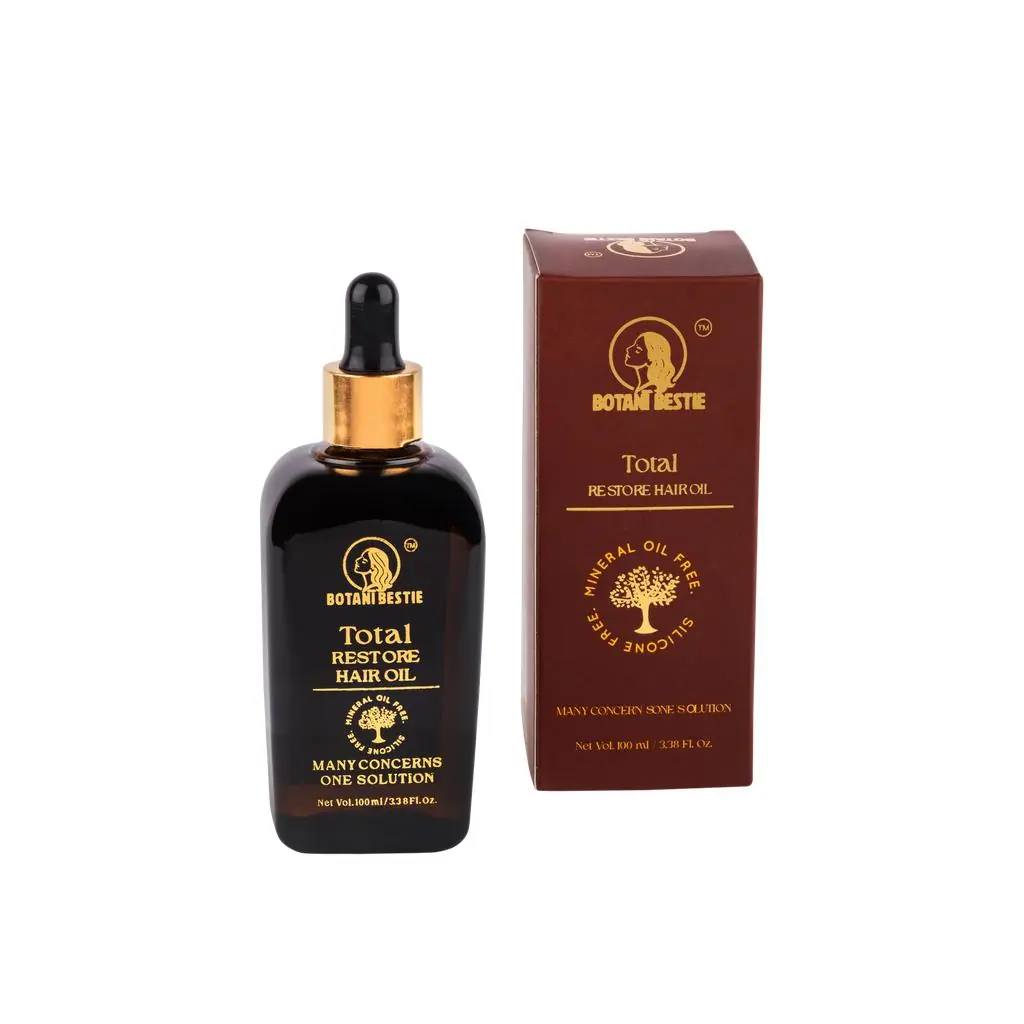
Total Restore Hair Oil + Total Rebalance Shampoo
by Botani Bestie — the complete Ayurvedic + science hair fall routine
Total Restore Hair Oil — Pre-Wash Treatment
Liquorice root extract works within a 13+ herb synergy formula in a 14+ oil carrier base — providing prolonged scalp contact time for maximum active penetration:
- ✔ Liquorice Root Extract — 5αR inhibition, DP cell stimulation, scalp anti-inflammatory, antioxidant follicle protection
- ✔ Bhringraj — Wnt/β-catenin activation, VEGF upregulation, antifungal scalp clearing
- ✔ Amla + Methi — DHT blocking from two complementary pathways; folic acid and Vitamin C for follicle nutrition
- ✔ Brahmi — adaptogen for stress-related shedding; scalp inflammation calming
- ✔ CoQ10 + Vitamin E — antioxidant follicle protection; complements liquorice's glabridin antioxidant action
Total Rebalance Shampoo — Every-Wash Reinforcement
- ✔ Liquorice Root Extract — consistent anti-inflammatory and sebum-regulating delivery with every wash
- ✔ Bhringraj, Amla, Brahmi, Methi + 9 more herbs — standardised Ayurvedic synergy, sulfate-free
- ✔ Apple Cider Vinegar — restores scalp pH to 4.5–5.5, optimising the environment for all herb actives
- ✔ Fermented Rice Water — inositol for hair shaft strength and breakage reduction
Single-herb liquorice product vs Botani Bestie routine:
| Feature | Single-herb liquorice oil | Botani Bestie routine |
|---|---|---|
| Liquorice root extract | ✅ | ✅ |
| Bhringraj (Wnt/β-catenin + VEGF) | ❌ | ✅ |
| Multi-pathway DHT suppression | ❌ Single pathway | ✅ Liquorice + Amla + Methi |
| Matching shampoo for every-wash delivery | ❌ | ✅ |
| ACV scalp pH optimisation | ❌ | ✅ |
| CoQ10 + Vitamin E antioxidant boost | ❌ | ✅ |
| Free dermatologist consultation | ❌ | ✅ |
Join the growing community of customers across India making the switch to clean, science-backed Ayurvedic hair care.
🎁 Not Sure What's Causing Your Hair Fall?
Get a free personalised hair consultation with our in-house dermatologist — no purchase required. Tell us your hair fall pattern, duration, and scalp condition for a targeted routine recommendation built specifically for you.
Book Free Hair Consultation → WhatsApp UsFrequently Asked Questions

The Verdict: Liquorice is One of Hair Care's Most Underrated Ingredients
Mulethi has earned its place in Ayurvedic hair care through generations of observation — and the 2024 Biological & Pharmaceutical Bulletin study has now given it its most rigorous modern validation. A compound that directly stimulates human dermal papilla and ORS cells while simultaneously inhibiting 5α-reductase and providing clinically validated anti-inflammatory scalp effects is, by any measure, a genuinely significant hair ingredient.
Its greatest value is as part of a comprehensive multi-herb formulation — not replacing Bhringraj or Amla, but amplifying them. Liquorice is the scalp environment architect: it reduces inflammation, balances sebum, blocks DHT, and protects follicle melanocytes — creating the optimal conditions for every other herb in your routine to work more effectively.
The king of hair (Bhringraj) needs the right soil to grow in. Liquorice provides it.
Start Hair Recovery — Shop Hair Oil → Free Hair Consultation"Great hair care is not one ingredient working alone — it is a community of actives, each addressing a different root cause."
Ready to make the honest switch?
Our products are built on the same principles as every article we write — pure ingredients, real results, nothing to hide.
Explore Our Products