Ayurvedic Hair Care Routine — Morning + Night
Most Ayurvedic hair care guides tell you what ingredients to use. This one tells you when, why, and in what sequence — building a morning and night routine around both the science of the hair growth cycle and the timing logic that makes traditional Ayurvedic practice more effective than people realise.

The word "routine" is doing a lot of work in the hair care world — and most of what gets called an Ayurvedic routine is a list of products with no coherent biological rationale for their timing or sequence. Apply oil. Wash hair. Use a hair mask sometimes. Repeat.
Actual Ayurvedic hair care — the kind with a 5,000-year lineage in texts like the Charaka Samhita and Ashtanga Hridayam — was built around a different premise: that the body operates in cycles, and that the timing of treatment matters as much as the treatment itself. Dinacharya (daily routine) was a core pillar of Ayurvedic medicine precisely because the ancient practitioners understood that applying the same herb at different times of day produced different results.
Modern hair biology validates much of this logic. Hair follicles have circadian rhythms — they enter active DNA synthesis and cell division in the evening and early morning, and their sensitivity to growth stimulants, anti-inflammatory compounds, and repair signals varies across the 24-hour cycle. Night application of herbal scalp oils aligns with peak follicle repair activity. Morning routines that are light and protective work with the daily pattern of UV exposure, environmental oxidative stress, and physical styling demands the hair will face during the day.
This guide builds both routines with the biology and tradition in mind simultaneously.
Your Complete Ayurvedic Hair Care Routine — At a Glance
🌅 Morning Routine
- Scalp check — note oiliness, itch, any new flaking (1 min)
- Detangle gently — wide-tooth wooden comb from tips upward (2–3 min)
- Light protective application (on wash days: skip; on non-wash days: 1–2 drops of hair serum or light oil on lengths only, not scalp)
- Wash-day morning — pre-wash oil treatment (if starting wash now); follow with herbal shampoo + conditioner sequence
- Protect before styling — heat protection if using tools; UV-protective serum if outdoors for extended periods
🌙 Night Routine
- Scalp oil treatment — herbal scalp oil applied in sections; massage 5–10 min (on oil nights: 2–3× per week)
- Scalp massage technique — fingertip circular motions; move scalp skin, not just hair
- Leave-in time — minimum 30 min; overnight for maximum effect (wash next morning)
- Loose braid or bun — contain oiled hair to avoid pillow transfer; silk or satin pillowcase if possible
- On non-oil nights — loose plait to reduce mechanical friction; no tight elastics
Why Timing Matters — The Biology Behind Morning vs Night Application

Hair follicles are among the most actively proliferating cell populations in the human body — second only to bone marrow in cell division rate. This high metabolic activity follows the body's circadian rhythm: a study published in the Proceedings of the National Academy of Sciences (Lin et al., 2009) demonstrated that the expression of clock genes (CLOCK, BMAL1, PER1, PER2) in dermal papilla cells varies significantly over 24 hours — and that follicle sensitivity to growth stimulation peaks during the rest phase.
Specifically, DNA synthesis in follicle matrix cells (the rapidly dividing cells that produce the hair shaft) peaks in the late evening to early morning hours — aligning with the body's general repair and regeneration cycle. Growth hormone secretion peaks in early deep sleep. Cortisol — which inhibits hair follicle activity — is at its daily minimum during deep sleep.
This means: applying active herbal ingredients to the scalp at night places them at the follicle when the follicle is most responsive. The anti-inflammatory action of Bhringraj's wedelolactone, the DHT-blocking tannins of Amla, the PGD2-modulating ricinoleic acid of castor oil — all of these are most relevant during the period when follicle cells are actively dividing and most vulnerable to disruption (or most capable of being supported).
Morning routines serve a different purpose entirely — protective, structural, and cosmetically focused. Morning is when the hair faces the day's challenge: UV radiation, particulate pollution, humidity fluctuations, mechanical stress from styling. Morning hair care is about protecting what the night built.
Understanding the Hair Growth Cycle — Essential Context for Any Routine
| Phase | Duration | What's Happening | Routine Relevance |
|---|---|---|---|
| Anagen (Growth) | 2–6 years | Active cell division in follicle matrix; hair shaft produced continuously; dermal papilla cell signalling drives growth | The phase we want to extend and protect — all Ayurvedic ingredients that support scalp health and reduce inflammation help maintain follicles in anagen |
| Catagen (Transition) | 2–3 weeks | Cell division stops; follicle shrinks; hair club forms at base; transitional phase | Brief and largely uninfluenced by topical treatment; occurs naturally at end of anagen |
| Telogen (Rest/Shed) | ~3 months | Follicle rests; club hair held in place; new anagen hair begins forming below; at end of telogen, club hair sheds | The shed hair we see in the shower or on the comb reflects a telogen entry that happened 3 months earlier — this is why results from any hair treatment take at least 3 months to become visible |
| Exogen (Shedding) | 2–5 months | Active shedding of club hair; active enzymatic release from follicle | Normal shedding of 50–100 hairs per day; premature shedding driven by inflammation, DHT, or nutritional deficiency means this number climbs significantly |
The Night Routine — Therapeutic Scalp Treatment
The night routine is the core of an Ayurvedic hair care practice. This is where the active herbal work happens — scalp treatment, follicle support, anti-inflammatory action, and microbiome maintenance.
Before applying any oil, spend 60 seconds checking your scalp condition under good lighting. Part your hair in several places and look at the scalp skin directly. This habit — rarely mentioned in hair care routines — gives you the ongoing feedback needed to understand whether your routine is working and when to adjust.
What to look for:
- Oiliness level — is your scalp visibly shiny or heavy between washes? This indicates overactive sebaceous glands, possibly Malassezia-related, possibly hormonal.
- Flaking — dry white flakes (dry scalp) or yellowish adherent flakes (dandruff / seborrheic dermatitis)? The distinction changes which oil to use.
- Redness or raised areas — inflammation visible at the scalp indicates active seborrheic dermatitis or folliculitis. Both warrant a lighter application, not a heavy oil, and possibly a dermatologist assessment if persistent.
- New growth — short, fine hairs at the hairline or parting are a positive signal that the routine is working and follicles are re-entering anagen. Note their presence and track them week to week.
This 60-second check takes no time and gives you a real-time data stream on scalp health that no product label or general advice can provide.
Warming oil before scalp application is not just a comfort measure — it has a functional basis. Viscous oils like castor oil are at approximately 1,000 centipoise at room temperature; warming to 35–40°C reduces this viscosity significantly, allowing the oil to spread more easily across the scalp surface and penetrate the follicular opening with less mechanical force. Warmer oil also increases local scalp blood flow on contact — a mild vasodilatory response that improves the delivery of oxygen and nutrients to the follicle during and after the massage.
The traditional Ayurvedic method: place the oil bottle in a bowl of hot water for 5 minutes. A quicker modern alternative: 10–15 seconds in the microwave (remove the cap, pour a small amount into a bowl). Test temperature on the inner wrist before applying to the scalp — it should feel warm, not hot. Scalp skin is thinner and more heat-sensitive than the wrist; err on the side of less heat rather than more.
Do not boil or overheat Ayurvedic oils — many of their active phytochemicals (wedelolactone in Bhringraj, emblicanin in Amla) degrade above 60°C. Warm is beneficial; hot is counterproductive.
The most common application mistake is pouring oil onto the top of the head and working it through the hair. This primarily oils the hair shafts — not the scalp skin where the follicles are. The therapeutic targets for hair fall treatment are the follicles — and they are on the scalp, not on the hair shaft.
Correct application technique:
- Part the hair into 4–6 sections using a rat-tail comb (front, crown, two sides, and if needed two back sections).
- Apply oil using a dropper or the fingertips directly to the scalp at each parting. Use a small amount at each point — you need far less oil than most people apply. The scalp absorbs oil; excess pools on the surface and runs onto the hair lengths, causing build-up.
- For each section: apply at the parting, then use your fingertips to work the oil outward along the scalp skin between partings, not by rubbing the hair together.
- Give particular attention to the temples, the nape of the neck, and the areas where you see the most thinning or shortest growth — these benefit from more direct application.
Total oil quantity: For an adult with medium-length hair, 1.5–2 tablespoons of oil is sufficient for a complete scalp treatment. Using more does not improve therapeutic outcomes — it only increases the difficulty of washing out.
Scalp massage is one of the most evidence-supported elements of an Ayurvedic hair care routine. A 2016 study by Koyama et al. published in ePlasty demonstrated that 4 minutes of standardised scalp massage daily over 24 weeks produced significant increases in hair shaft thickness — and upregulated genes associated with hair growth (including IL-6 and VEGF) in dermal papilla cells. The mechanism is mechanical stimulation of dermal papilla cells, which increases their proliferative activity and growth factor secretion.
The Ayurvedic massage technique ("Shiroabhyanga") and the modern standardised technique share the same core element — scalp skin movement, not hair rubbing:
- Use the pads (not tips) of all five fingers; nails should not contact the scalp.
- Place fingertips on the scalp and make small circular motions, applying enough pressure to feel the scalp skin moving — not just the hair sliding against the skin.
- Work from the frontal hairline backward to the crown, then from the crown down to the nape. Include the temples, the sides above the ears, and behind the ears.
- Continue for 5–10 minutes. The 5-minute mark is where meaningful mechanotransduction (mechanical signal to cell) occurs; shorter massages are better than none but produce less consistent results.
- Avoid vigorous rubbing — this creates friction damage to the hair shaft and does not provide meaningful mechanical stimulation to the follicle.
Timing: On oil-application nights (2–3× per week), massage after oil application, working the oil in during the massage. On non-oil nights, a dry scalp massage before sleeping provides mechanical stimulation without product application — useful on nights you are not washing the next morning.
Research on oil absorption into scalp skin and hair shaft indicates that most fatty acid absorption plateaus within 30–60 minutes of application. There is no evidence that leaving oil on for 8 hours produces significantly more absorption than leaving it for 60 minutes — but there is a real practical benefit to overnight application: it fits the sleep schedule naturally, places the oil at the follicle during peak repair activity, and removes the pressure to wash immediately after the massage.
For overnight application:
- After massaging, gently gather the hair into a loose braid or a loose bun secured with a soft elastic (not tight; avoid rubber bands). This prevents the oil from transferring excessively to pillows and keeps oiled hair from tangling during sleep.
- A silk or satin pillowcase significantly reduces overnight mechanical friction on both the oiled scalp and the hair shaft. Cotton pillowcase fibres have a rougher surface that creates friction against the cuticle during sleep movements — silk allows the hair to slide without resistance. This is a low-cost investment with a measurable impact on split ends and breakage.
- If leaving oil overnight, wash the next morning as your wash-day routine. Applying oil and then leaving it unwashed for more than 24 hours increases the risk of scalp build-up and Malassezia substrate accumulation on an oily scalp.
If not washing the next morning: Limit overnight oil application to well-absorbed, lighter formulations. Keep heavy oil (particularly castor oil) to 30–60 minute applications on the day you plan to wash — not overnight before a non-wash day.
Which Herbs Work Best for the Night Routine — and Why
🌿 Bhringraj — The Night Repair Herb
Bhringraj (Eclipta prostrata) is best applied at night, and this is consistent with its mechanism. Wedelolactone — Bhringraj's primary active compound — activates the Wnt/β-catenin signalling pathway, which promotes dermal papilla cell proliferation and anagen phase entry. This pathway is most active during the rest phase when follicle cells are conducting their mitotic work. Studies demonstrate that Bhringraj extract applied at equivalent potency to 2% Minoxidil produced comparable results in 45% increased hDPC (human dermal papilla cell) proliferation in vitro. Applying it during peak follicle activity (night) maximises contact time with the dermal papilla cells during their most responsive window. Additionally, Bhringraj's mild adaptogenic properties support the cortisol reduction that sleep naturally delivers — compounding the stress-reduction benefit that reduces telogen effluvium.
🫐 Amla — Night Antioxidant Coverage
Amla (Phyllanthus emblica) contains the highest Vitamin C concentration of any natural food source — up to 20× more than oranges per gram — along with emblicanin A and B (water-soluble antioxidants unique to amla), tannins that exhibit mild 5-alpha-reductase inhibitory activity, and gallic acid. During sleep, the body enters a systemic antioxidant repair cycle — and applying Amla's antioxidants to the scalp at night aligns with this peak antioxidant demand period. The tannin-based DHT-blocking activity is a slow, accumulative effect that benefits from extended contact time — overnight is ideal. Amla in hair oil also stabilises the oil formulation against oxidative rancidity, protecting the other active compounds in the formulation through the overnight period.
🛢️ Castor Oil — Overnight Anti-inflammatory Base
Castor oil's ricinoleic acid provides its most relevant benefits during the overnight application window. PGD2 inhibition via EP3 receptor modulation is a slow, cumulative pathway — ricinoleic acid needs extended contact time at the follicle level to modulate prostaglandin signalling meaningfully. Overnight application provides this. Its antifungal activity against Malassezia is similarly concentration- and time-dependent — a 30-minute application controls Malassezia numbers, but overnight provides a more sustained antifungal exposure during the period when scalp temperature and moisture create the most favourable conditions for Malassezia activity. The conditioning film on the hair shaft also protects against overnight mechanical friction from sleep movements — working protectively through the night rather than just therapeutically during waking hours.
🌀 Brahmi — Night Stress-Relief Herb
Brahmi (Bacopa monnieri) is Ayurveda's primary adaptogen for the nervous system, and it earns its place in a night hair care routine on two grounds. First, bacoside A and B — Brahmi's active triterpenoid saponins — have documented cortisol-modulating activity: a 12-week randomised trial found that Brahmi supplementation significantly reduced salivary cortisol in chronically stressed adults. Since elevated cortisol is one of the most direct triggers of stress-related telogen effluvium (pushing follicles into premature resting phase), this cortisol-lowering action has direct hair-relevant consequences. Second, Brahmi applied topically has mild scalp anti-inflammatory properties. In the night routine, Brahmi in the oil formulation contributes to the anti-inflammatory scalp environment during peak follicle repair — making it a synergistic addition to the anti-inflammatory network of Bhringraj, Amla, and castor oil.
The Morning Routine — Protection, Structure, and the Wash-Day Protocol
The morning routine has two distinct modes: wash-day morning and non-wash-day morning. Each has a different set of priorities.
🌅 Non-Wash Day Morning — Protective Routine
Step 1: Detangle Gently
Use a wide-tooth wooden comb (never a fine-tooth comb on dry, possibly oiled hair). Start from the tips and work upward in small sections, releasing tangles before moving higher up the shaft. Detangling from the root downward creates a compressive force on tangles — pulling them tighter rather than releasing them — and causes avoidable mechanical breakage. Wide-tooth wooden combs generate significantly less static than plastic combs, and less static means less cuticle disruption and frizz.
Step 2: Light Serum on Lengths (Optional)
On non-wash days, a hair serum or 1–2 drops of lightweight oil (argan, jojoba) applied to the mid-lengths and ends — not the scalp — provides UV protection, tames frizz, and prevents the moisture loss that leads to mechanical breakage throughout the day. Do not apply heavy oils to the scalp on a non-wash morning if you oiled the previous night — this compounds scalp build-up.
Step 3: Protect from UV
UV radiation is one of the most underacknowledged causes of hair shaft damage in India — especially for people spending time outdoors. UV-B degrades the melanin in the hair cortex (causing colour fading and brittleness) and breaks disulfide bonds in the keratin protein chain. In summer months or for people with extended outdoor exposure, a UV-protective hair mist or a light oil with natural UV filters (sesame oil contains sesamol with UV-absorbing properties) applied in the morning offers meaningful protection.
Step 4: Style Loosely
Tight hairstyles — particularly daily tight ponytails, buns, or braids — create traction alopecia over time: the constant mechanical tension on the hair root gradually weakens the follicle anchoring and causes progressive miniaturisation at the hairline and temples. If a tight style is necessary for work or sport, alternate it with loose styles on other days. When using hair ties, use fabric ties or coil ties rather than elastic bands with metal clasps — which create a point of high breakage stress on the shaft.
🚿 Wash Day Morning — The Complete Cleansing Sequence
Pre-Wash: Apply Oil First (If Not Oiled Overnight)
If you did not oil the previous night, apply a pre-wash scalp oil 30–60 minutes before shampooing. This is not optional if you want to preserve your scalp's natural barrier. Applying shampoo directly to an unoiled scalp strips the stratum corneum's natural lipid layer — triggering reactive sebum overproduction and increasing the scalp sensitivity that makes some people feel their scalp is "always oily." The pre-wash oil creates a partial barrier that allows thorough cleansing without barrier stripping.
Shampoo: The Correct Technique
For oiled hair: apply shampoo to dry, oil-covered hair first before adding water. Work the shampoo into the scalp and hair, then add water and continue lathering. This "dry shampoo method" allows the surfactants to bind directly to oil molecules without being diluted by water first — dramatically improving oil removal without requiring an additional shampoo pass or harsher sulfate-based cleansers. Two shampoo passes are rarely needed if this method is used correctly.
Shampoo Application: Focus on Scalp, Not Lengths
Hair cleansing only requires the scalp to be directly cleansed. The hair lengths are cleaned by the shampoo water that flows over them during rinsing — not by direct application and scrubbing. Direct shampoo application to the lengths opens the cuticle, removes the natural lipid layer of the hair shaft, and increases porosity. For all hair types, shampoo focus should be the scalp (gentle circular massage during the lather phase) and rinsing should flow the shampoo through the lengths naturally.
Conditioner: Apply Only to Mid-Lengths and Tips
Conditioner applied to the scalp clogs the follicle opening with conditioning polymers and silicones (in conventional conditioners) or heavy plant oils (in natural conditioners). Neither belongs at the follicle mouth. Apply conditioner from the mid-length downward — where the hair is oldest and most depleted of its natural lipid layer — and leave for 2–3 minutes before rinsing. For dry or damaged hair, a weekly deep-conditioning mask can replace the standard conditioner application.
Post-Wash: How You Dry Matters
Wet hair is at its most vulnerable state — the hydrogen bonds holding the keratin protein structure are disrupted by water absorption, and the swollen, softened cortex is significantly more susceptible to mechanical damage. Never towel-dry vigorously — pat or squeeze moisture out with a soft cotton or microfibre towel. If using a blow dryer, use the lowest effective heat setting with a heat-protecting serum applied before drying. Air-drying is optimal but should not leave hair wound in a tight towel turban for extended periods — wet, compressed hair loses more moisture through friction and swelling-stress cycling than gently air-dried hair.
💡 Want the complete Ayurvedic herbal oil and shampoo pairing for your specific hair fall pattern? Our dermatologist creates personalised routines.
Book Free Consultation →The Complete Weekly Schedule — Putting It All Together
Here is how a complete Ayurvedic hair care routine maps across the week for someone with active hair fall (moderate severity). Adjust frequency based on your own pattern:
| Day | Night | Morning | Notes |
|---|---|---|---|
| Sunday | Herbal scalp oil — full application + 10-min massage; leave overnight | Wash day — pre-wash (already oiled); herbal shampoo + conditioner sequence; air dry | Wash day 1 of the week. Leisurely timing — no rushing post-wash drying. |
| Monday | No oil. Dry scalp massage 3–5 min. Loose plait before sleep. | Non-wash day — gentle detangle; light serum on lengths if needed | First non-wash day. Scalp is freshly cleansed and balanced. |
| Tuesday | Herbal scalp oil — full application + 8-min massage; leave overnight | Wash day — follow full wash sequence; condition mid-lengths only | Wash day 2. Two washes per week is optimal for most oily-to-normal scalp types with active hair fall. |
| Wednesday | No oil. Dry massage 3 min. Silk pillowcase if available. | Non-wash day — detangle; UV-protective mist if outdoors | Mid-week maintenance. Check scalp condition during massage for any new flaking or redness. |
| Thursday | Herbal scalp oil — targeted application to thinning areas + 8-min massage; leave overnight | Wash day — full sequence. Optional: apply a weekly deep-conditioning mask on hair lengths after shampooing. | Wash day 3 (optional — for very oily scalp types or those with active dandruff). Can be skipped for dry scalp types; reduce to 2× per week wash if scalp feels balanced. |
| Friday | No oil. Optional: a few drops of serum on lengths before sleep if hair feels dry. | Non-wash day — detangle, style loosely | End-of-week flexibility. Note weekly hair fall count (hairs in the shower trap) to track progress month-to-month. |
| Saturday | Herbal scalp oil — full application if washing Sunday; skip if not washing Sunday | Non-wash or wash based on Sunday plan | Adjust based on lifestyle schedule — the routine should fit your week, not fight it. |
The Internal Routine — Nutrition and Lifestyle Factors That Drive Hair Growth from Within
No external routine can fully compensate for the internal conditions that most directly determine hair growth: nutritional status, stress hormones, sleep quality, and hydration. Ayurveda always treated hair care as a systemic practice — which is why this section belongs in a hair care routine guide.
🥗 Nutritional Essentials for Hair Growth
- Protein: Hair is ~95% keratin. Insufficient dietary protein (less than 0.8g/kg body weight) directly causes telogen effluvium — one of the most common and underdiagnosed causes of hair fall in Indian women on calorie-restricted diets. Include at minimum one high-protein meal per day.
- Iron / Ferritin: Serum ferritin below 30 ng/mL is strongly associated with hair fall in women. Iron deficiency is extremely common in Indian women (menstruation, vegetarian diets). Check ferritin levels if hair fall has been progressive over 6+ months.
- Zinc: Essential for follicle protein synthesis and cell division. Commonly low in vegetarian and vegan diets. Sesame seeds, pumpkin seeds, and legumes are good plant-based sources.
- Vitamin D: Serum 25(OH)D below 20 ng/mL is associated with diffuse hair fall and alopecia areata. India has high rates of Vitamin D deficiency despite abundant sunlight — sun exposure through glass does not produce Vitamin D.
- Biotin: True biotin deficiency is rare in adults eating varied diets. Biotin supplementation only helps hair fall caused by biotin deficiency — not other causes. The widespread marketing of biotin for hair growth is largely unsupported for people without a deficiency.
😴 Sleep, Stress, and the Hair Growth Cycle
- Sleep duration: Growth hormone — essential for cell proliferation including follicle matrix cells — peaks in the first 90 minutes of deep NREM sleep. Consistently sleeping less than 6 hours reduces the growth hormone secretion window available for hair follicle repair. 7–8 hours is the minimum for sustained hair growth support.
- Stress management: Cortisol is a direct hair follicle inhibitor. Elevated chronic cortisol pushes follicles into premature telogen (causing hair fall 2–3 months after the stressful period). Managing chronic stress is as therapeutically relevant as choosing the right hair oil — possibly more so for stress-pattern hair fall.
- Ayurvedic internal support: Ashwagandha (withaferin A — cortisol-modulating) and Brahmi (bacoside A — adaptogenic) taken internally as supplements are the most evidence-supported Ayurvedic herbs for stress-driven hair fall when taken alongside topical treatment.
- Hydration: The scalp skin, like all skin, requires adequate hydration for normal barrier function. 2–2.5 litres of water daily is a baseline; people in hot Indian climates or with physically demanding routines need more.
💡 Is your hair fall driven by nutritional deficiency, hormones, stress, or scalp condition? A correct diagnosis changes everything about your routine.
Get Free Hair Consultation →The Products That Power This Routine
An Ayurvedic routine is only as good as the quality and completeness of its herbal formulations. Here is the product pairing that covers the night and morning steps most effectively:
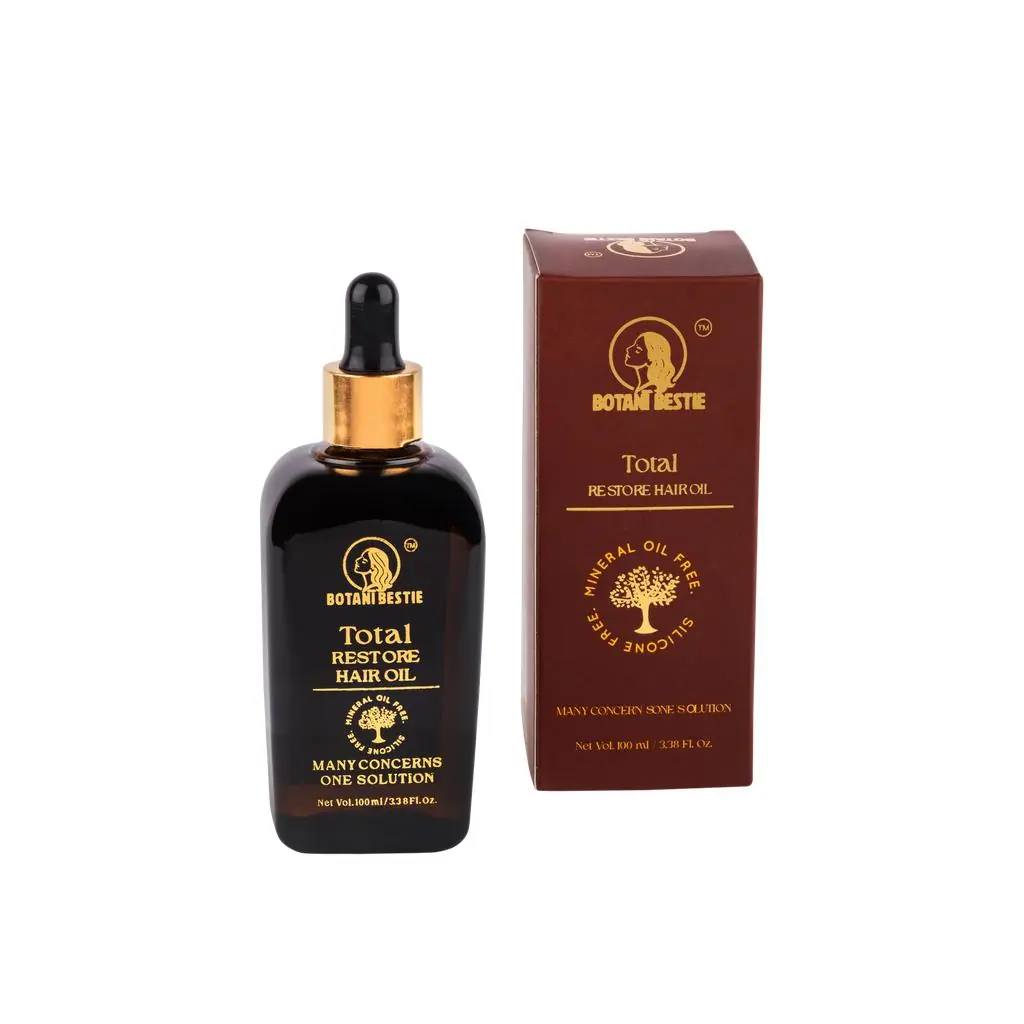
Total Restore Hair Oil — Night Routine
Pre-Wash Scalp Treatment — 2–3× per week at night
Contains all four key night-routine herbs in a single formulation: Bhringraj (Wnt/β-catenin anagen activation), Amla (DHT-blocking tannins + antioxidant protection), Brahmi (cortisol-modulating adaptogens), and Castor Oil (ricinoleic acid — PGD2 inhibition, antifungal, anti-inflammatory). Plus Onion Oil, Neem, Methi, and 7 more herbs — in 14+ carrier oils with no mineral oil.
Shop Total Restore Hair Oil →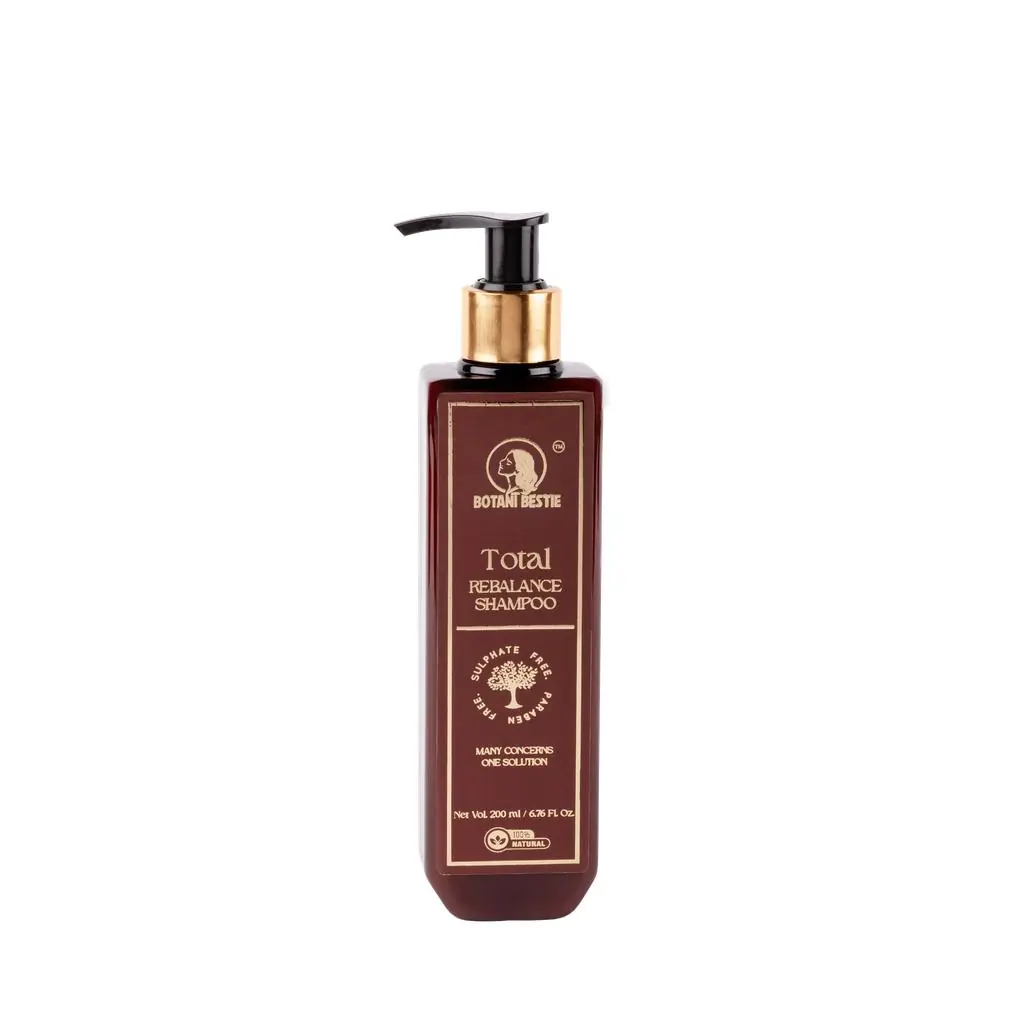
Total Rebalance Shampoo — Wash Day Morning
Herbal Scalp-Balancing Cleanse — 2–3× per week
The wash-day morning counterpart — a sulfate-free herbal shampoo formulated to remove scalp oil and product build-up without stripping the scalp's natural lipid barrier. Preserves the microbiome balance that makes the overnight oil treatment effective, rather than resetting it.
Shop Total Rebalance Shampoo →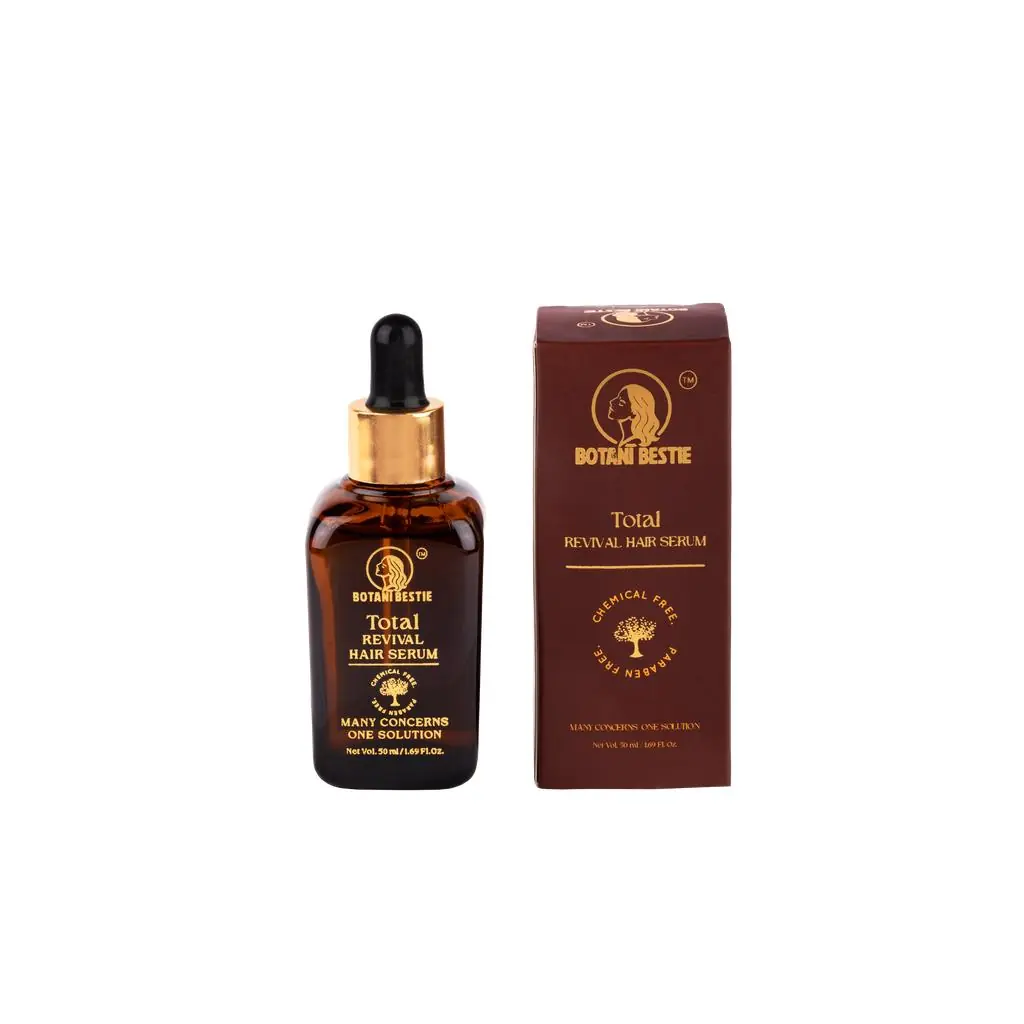
Total Revival Hair Serum — Non-Wash Days
Leave-In Scalp Serum — daily on non-wash mornings
The morning leave-in step for non-wash days — a silicone-free, water-based serum with Redensyl (3%), Procapil, Anagain, and Copper Peptides GHK-Cu. Delivers biotech growth actives directly to the scalp after the night oil has been washed out, ensuring continuous follicle support across the full weekly schedule.
Shop Total Revival Hair Serum →Realistic Timeline — What to Expect Week by Week
The hair growth cycle determines when you see results — no routine changes this biology. Here is what a consistent Ayurvedic routine produces at each stage:
| Timeframe | What You May Notice | What's Happening Biologically |
|---|---|---|
| Week 1–2 | Scalp feels calmer — less itch, reduced tightness. Hair feels softer and more manageable after wash days. Dandruff (if present) begins reducing. | Anti-inflammatory effects of Bhringraj and Amla begin reducing cytokine activity. Castor oil's antifungal action starts reducing Malassezia. Conditioning reduces mechanical breakage immediately. |
| Week 2–6 | Reduction in hair on the comb and in the shower drain. Scalp feels less inflamed between wash days. Hair appears slightly fuller — reduced breakage reducing visible thinning. | Bhringraj's Wnt/β-catenin activity promotes anagen entry in follicles previously disrupted by inflammation. PGD2 inhibition allows more follicles to enter growth phase. Hair cycle takes 4–6 weeks to visibly reflect treatment changes. |
| Week 6–12 | Noticeable reduction in daily shedding count. Short "baby hairs" visible at hairline and parting — a clear sign of new anagen entries. Scalp condition significantly improved. | Full hair cycle response underway. New anagen follicles producing visible hairs that are just emerging from the scalp surface. DHT-blocking tannins and quercetin reducing miniaturisation pressure on susceptible follicles. Stress-reducing adaptogens (Brahmi) reducing cortisol-driven telogen entries. |
| Week 12+ | Sustained improvement in density and scalp health. New growth hairs reaching measurable length. Pattern of hair fall significantly different from baseline. | Continuous multi-mechanism treatment maintaining the low-inflammation, antifungal, anti-DHT scalp environment. Discontinuing routine will gradually reverse gains as the drivers re-establish. This is a maintenance practice, not a one-time course of treatment. |
Common Routine Mistakes — What to Avoid
| Mistake | Why It Undermines the Routine | The Correct Approach |
|---|---|---|
| Oiling every single day | Daily heavy oil build-up on scalp blocks follicle openings and requires harsher surfactants to remove — creating a cycle of stripping and reactive oiliness | Oil 2–3× per week on pre-wash nights only |
| Leaving oil on for more than 24 hours without washing | Prolonged oil accumulation on the scalp provides increased substrate for Malassezia; creates build-up that is harder to remove without aggressive washing | Oil overnight; wash next morning. Maximum 8–10 hours without washing for heavy oils. |
| Applying shampoo to wet, oiled hair | Water dilutes surfactant concentration before it can bind to oil — reduces cleaning efficiency and requires extra shampoo or harsher products | Apply shampoo to dry, oiled hair first; add water after initial lathering |
| Applying conditioner to the scalp | Conditioning polymers and plant oils block the follicle opening when applied to scalp skin — potentially contributing to build-up and follicular disruption | Conditioner from mid-lengths to tips only; never to scalp |
| Using coconut oil on a dandruff-prone scalp | Coconut oil's high oleic acid content directly feeds Malassezia — can worsen dandruff and seborrheic dermatitis in people with active Malassezia overgrowth | Use castor oil or sesame oil on the scalp; coconut oil on hair lengths only for conditioning |
| Expecting visible results in 2–3 weeks | The hair growth cycle (anagen → telogen = 3-6 months) cannot be accelerated. New growth emerging from re-entered anagen takes 3 months to become visible. Early discontinuation based on impatience is the most common reason routines fail. | Commit to a minimum 12-week evaluation period before assessing effectiveness |
| Vigorous towel rubbing on wet hair | Wet hair is structurally weakest — the softened, water-swollen cortex breaks easily under the friction of rubbing. Vigorous towel drying is responsible for a significant proportion of mid-shaft breakage. | Pat or squeeze with a soft towel; microfibre towels cause the least friction damage |
| Daily tight ponytails or buns | Constant traction on hair root causes progressive traction alopecia — permanent follicle damage at hairline and temples over years of daily tight styling | Alternate tight styles with loose ones; use soft fabric ties; avoid metal clasps |
🎁 Want a Personalised Ayurvedic Hair Routine Built for Your Specific Pattern?
Every hair fall pattern has a different root cause — and the routine needs to match. Book a free personalised hair consultation with our in-house dermatologist. Share your hair fall pattern, scalp condition, and lifestyle factors — and receive a targeted morning and night routine built specifically for you.
Book Free Hair Consultation → WhatsApp UsFrequently Asked Questions

A Routine Built on Biology — Not Just Tradition
The Ayurvedic hair care tradition survived 5,000 years not because of cultural inertia but because its core practices — herbal scalp oiling, massage, dietary medicine, and lifestyle rhythm — align remarkably well with what modern hair biology tells us about how follicles grow, what disrupts them, and what supports them.
The morning-and-night framework is not a stylistic choice — it reflects the genuine difference in what the hair and scalp need across the day's two very different biological phases. Protection and structure in the morning. Repair, anti-inflammation, and active herbal delivery at night.
Build the routine, give it 12 weeks, and measure the results honestly. The biology is on your side — you just need to give it the right inputs at the right time.
Shop Total Restore Hair Oil → Free Hair Consultation"The right ingredient at the right time is what separates a habit from a treatment."
Ready to make the honest switch?
Our products are built on the same principles as every article we write — pure ingredients, real results, nothing to hide.
Explore Our Products