Hair Fall: The Complete Guide — Causes, Types & How to Actually Fix the Root (2026)
Almost everyone Googles "how to stop hair fall" before they ask the only question that matters: why is it falling? Hair fall is a symptom, not a diagnosis — and the same shedding can come from iron deficiency, a thyroid problem, postpartum hormones, genetics, or simply a stressful few months. This is the master guide that maps every cause to its fix, and links you to the deep-dive on whichever one is yours.
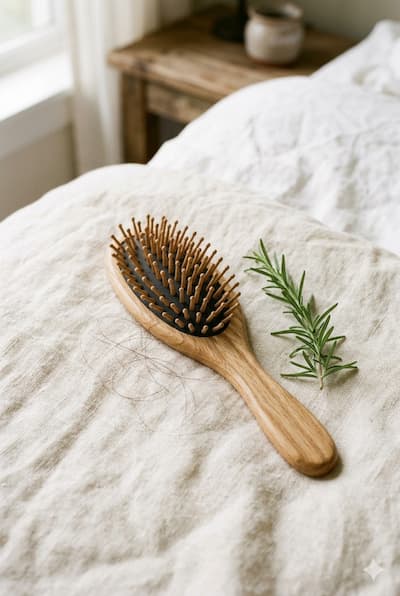
Hair fall is one of the most searched health concerns in India — and also one of the most poorly understood. The internet is full of "10 home remedies to stop hair fall" lists that treat every case as if it were the same problem. It is not. The shedding you see in the shower drain is the final, visible endpoint of a process that may have started inside your body two or three months earlier — in your iron stores, your thyroid, your hormones, your scalp, or your genes.
This guide does something most hair fall articles refuse to do: it slows down and helps you work out which kind of hair fall you actually have before recommending anything. Because the truth is uncomfortable for the industry — the right treatment for nutritional shedding will do nothing for genetic pattern loss, and the most expensive serum on the market cannot fix a thyroid problem.
Think of this as the map. Each cause below links to a full, detailed guide. Find yours, go deep, and treat the root.
⚡ Hair Fall at a Glance — Find Your Likely Cause
| If this sounds like you… | Likely category | Reversible? | Go deeper |
|---|---|---|---|
| Sudden diffuse shedding 2–3 months after illness, fever, surgery, crash diet or stress | Telogen effluvium | Yes, usually fully | Telogen effluvium guide |
| Gradual thinning at the crown/parting (women) or temples & crown (men), family history | Pattern hair loss (genetic) | Controllable, not curable | Female / Male pattern |
| Tired, breathless, heavy periods, pale — plus diffuse shedding | Nutritional (iron/Vit D/protein) | Yes, once corrected | Deficiency guide |
| Weight change, fatigue, cold/heat intolerance, irregular cycles | Hormonal (thyroid, PCOS) | Yes, with treatment | Thyroid / PCOS |
| 3–4 months after childbirth, handfuls when washing | Postpartum telogen effluvium | Yes, self-resolves | Postpartum guide |
| Flaking, itch, oily or irritated scalp alongside shedding | Scalp condition | Yes, treat the scalp | Dandruff & hair fall |
| Distinct round bald patch with smooth skin | Alopecia areata (autoimmune) | Often, needs a doctor | Alopecia areata guide |
| Hair "falls" but is actually snapping mid-length, rough ends | Breakage, not true fall | Yes, it's a care issue | Breakage vs fall |
Note: more than one row can be true at once — combined causes are the norm, not the exception. Use this as a starting hypothesis, not a final diagnosis.
Step 1 — Is This Even a Problem? Normal Shedding vs Real Hair Fall
Before you spend a rupee on treatment, establish whether what you are seeing is actually abnormal. The human scalp holds roughly 100,000 hairs, and each follicle cycles independently through growth (anagen, 2–6 years), a brief transition (catagen), and rest (telogen, ~3 months) before shedding and starting again. At any moment about 85–90% of your hairs are growing and 10–15% are resting. The resting hairs let go on their own schedule — which is why losing 50–100 hairs a day is completely normal.
Why wash day looks terrifying (and usually isn't)
If you wash your hair twice a week, the hairs that would have shed on the in-between days are released together when you finally wet, massage and comb. Seeing 200–300 hairs after a wash you do twice weekly can be entirely normal — the total across the week is what counts, not the wash-day pile. Daily washers see fewer hairs per wash for the same reason. Don't change your whole routine based on one alarming shower.
Signs that shedding has crossed from normal into a real problem worth investigating:
- Consistently well over 100 hairs/day for more than a few weeks, with the trend clearly increasing month over month.
- Your parting is visibly widening, your ponytail feels thinner, or your scalp shows through more than it used to.
- A receding hairline at the temples or thinning at the crown (the classic pattern-loss signature).
- Distinct bald patches rather than all-over thinning — this needs a doctor, as it points to alopecia areata or a fungal cause.
- Shedding plus other symptoms: fatigue, weight change, irregular periods, scalp itch/pain.
The 60-second self-check
The pull test: Take about 40–60 hairs between your fingers and gently pull from root to tip. If more than 5–6 come away each time you repeat this across different areas of the scalp, active shedding is likely.
The bulb test: Look at the root end of shed hairs. A tiny white/translucent bulb means a hair that completed its cycle normally (telogen). Lots of these = telogen effluvium. Hairs that snap with no bulb and a frayed end are breakage, which is a care problem, not a follicle problem.
Step 2 — The Crucial Split: Hair "Fall" vs Hair "Loss"
This single distinction determines everything that follows. People use the words interchangeably, but clinically they describe two very different processes with two completely different treatments.
Hair Fall (Shedding)
Living, healthy follicles release more hairs than usual — but the follicles themselves are intact and capable of full regrowth.
- Pattern: diffuse, all over the scalp
- Onset: often sudden, traceable to a trigger 2–3 months earlier
- Causes: stress, illness, postpartum, crash diet, deficiency, thyroid
- Prognosis: usually fully reversible once the trigger is fixed
- The mechanism: follicles pushed early into telogen
Hair Loss (Pattern / Miniaturisation)
Follicles progressively shrink under the influence of DHT and genetic sensitivity, producing thinner, shorter, weaker hairs until they stop.
- Pattern: specific zones — temples & crown (men), central parting (women)
- Onset: gradual, over years
- Causes: genetics + androgens (DHT)
- Prognosis: progressive; controllable, not curable
- The mechanism: follicle miniaturisation
Step 3 — The Major Causes, Mapped
Below are the buckets that explain the vast majority of hair fall in India. Each links to a full guide. Most people land in two or three of these at once — for example, an Indian woman with low ferritin (nutritional) and a postpartum shift, or a man with genetic pattern loss accelerated by stress and dandruff.
A physical or emotional shock pushes a large batch of follicles into the resting phase simultaneously; they shed together about 2–3 months later. Triggers: high fever, COVID, surgery, childbirth, crash dieting, a major stressful event, stopping the pill, or a new medication.
It looks dramatic — handfuls in the shower — but it is the most reversible kind of hair fall. The shed almost always stops within 6 months of the trigger resolving, and density returns. Read: Telogen Effluvium & Stress Hair Fall, Post-COVID Hair Fall, Sleep & Hair Loss.
Androgenetic alopecia is the most common cause of long-term hair loss. Inherited follicle sensitivity to DHT causes a slow, patterned miniaturisation — temples and crown in men, the central parting in women. It is progressive, so the earlier you act, the more you keep.
Deep dives: Male Pattern Hair Loss & DHT, Female Pattern Hair Loss, Hair Loss in Your 20s, and the actives compared in Redensyl vs Minoxidil, Anagain vs Redensyl vs Procapil, Saw Palmetto and Minoxidil side-effects.
Low iron (ferritin), Vitamin D, protein and zinc are extraordinarily common in Indian diets — roughly half of Indian women are iron-deficient and 70–80% of Indians are low on Vitamin D. The follicle is one of the most nutrient-hungry tissues in the body; starve it and it sheds. The catch: a "normal" haemoglobin can hide a ferritin far below the level hair needs (~70 ng/mL).
Read: Vitamin & Nutrient Deficiencies and the food-by-food guide, Foods for Hair Growth in India.
Hormones tightly regulate the hair cycle. An under- or over-active thyroid, the androgen excess of PCOS, and the oestrogen crash after delivery are all classic, common, and treatable drivers of hair fall — frequently mistaken for genetic loss.
Read: Thyroid Hair Loss, PCOS & Hair Fall, Postpartum Hair Fall, Hormonal patterns.
A hair only grows as well as the soil it sits in. Chronic dandruff and seborrheic dermatitis inflame the follicle opening; a perpetually oily, congested scalp suffocates it; alopecia areata is an autoimmune attack producing smooth bald patches. These are scalp problems first and hair problems second — treat the scalp and the hair follows.
Read: Dandruff & Hair Fall, Seborrheic Dermatitis vs Dandruff, Oily Scalp Treatment, Alopecia Areata, plus the full Scalp Health pillar guide.
These rarely cause hair fall on their own, but they tip a vulnerable scalp over the edge and accelerate everything else. Hard water mineral buildup, urban pollution and particulate, harsh sulfate shampoos, tight hairstyles (traction), heat styling and seasonal shifts all add load.
Read: Hard Water & Hair Fall, Pollution & Hair Fall, Seasonal Hair Fall, Harmful Ingredients in Shampoo, Why Hair Falls Out — the Ayurvedic view.
💡 Not sure which of these is yours? Our dermatologist reviews your history and bloodwork and tells you the actual cause — before you buy anything.
Book Free Hair Consultation →Step 4 — The Root-Cause Method (How to Actually Fix It)
Whatever your cause, the path to fixing it follows the same logic. Skip the random remedies; follow the order.
1. Diagnose before you treat
A short history (when it started, what changed 2–3 months earlier, family pattern, your cycle) plus a focused blood panel — serum ferritin, Vitamin D (25-OH), TSH, CBC, and a hormonal panel where PCOS is suspected — explains most cases. This is the step almost everyone skips and the one that saves the most time and money.
2. Correct the internal cause
Replenish iron to a hair-adequate ferritin, correct Vitamin D, hit your protein target, treat thyroid/PCOS medically, or begin DHT-targeted treatment for pattern loss. This is where the real result comes from — see Foods for Hair Growth.
3. Fix the scalp environment
Clear dandruff and seborrheic inflammation, de-congest an oily scalp, switch off harsh sulfates and hard-water buildup. A calm, balanced scalp is the precondition for regrowth. See the Scalp Health guide.
4. Support topically — then wait
Now topical actives earn their place: improving microcirculation, reducing breakage of the hair you have, and supplying follicle-active ingredients. And then the hardest part — patience. The follicle cycle means visible change takes 3–6 months. Judge results at 90 days, not 9.
The timeline nobody warns you about
Because shed hairs were "decided" 2–3 months ago, correcting the cause today does not stop the shower-shedding tomorrow. Expect: reduced shedding by 2–3 months, visible new baby hairs at 3–4 months, and restored density at 6–12 months. Many people quit a working plan at week 6 because they expected overnight results. The biology simply does not move that fast — consistency beats intensity.
The Ayurvedic Lens — Why "Root Cause" Was Always the Point
Long before ferritin tests, Ayurveda framed hair (kesha) as a byproduct of asthi dhatu (bone tissue) and a mirror of overall constitution and digestion. Excess Pitta is classically linked to premature greying and weakening of the root; aggravated Vata to dryness, brittleness and shedding; and Kapha/ ama (metabolic congestion) to an oily, flaky, clogged scalp. The vocabulary differs from modern dermatology, but the instinct is identical: hair fall is a downstream signal of an upstream imbalance — nourishment, digestion, stress, and scalp environment.
This is why a blanket "best oil for hair fall" rarely satisfies everyone: a dry, Vata-type scalp needs nourishment and lipids, while an oily, Kapha-type scalp needs clarifying and lightening — opposite strategies. Understanding your own constitution helps you choose the right approach. Start with Know Your Dosha and the practical Ayurvedic Hair Care Routine.
Where Topical Support Fits — Built for Step 4, Not as a Shortcut
We will be honest about what a product can and cannot do, because that honesty is the whole point of this guide. Our formulations are designed for Step 4 — supporting the follicle environment and the hair shaft while you correct the internal cause. They are not a substitute for fixing iron, thyroid, or genetics. Used that way — alongside root-cause correction — they meaningfully accelerate recovery.

Total Restore Hair Oil
Pre-Wash Scalp Oil — 2–3× Weekly
Bhringraj and amla — the two most evidence-backed Ayurvedic hair herbs — support the scalp environment and follicle, while Redensyl targets follicle stem cells and Jatamansi buffers the oxidative stress that accompanies deficiency and stress states. A massage-in pre-wash ritual that improves microcirculation and conditions the scalp while your internal correction does the heavy lifting.
Shop Total Restore Hair Oil →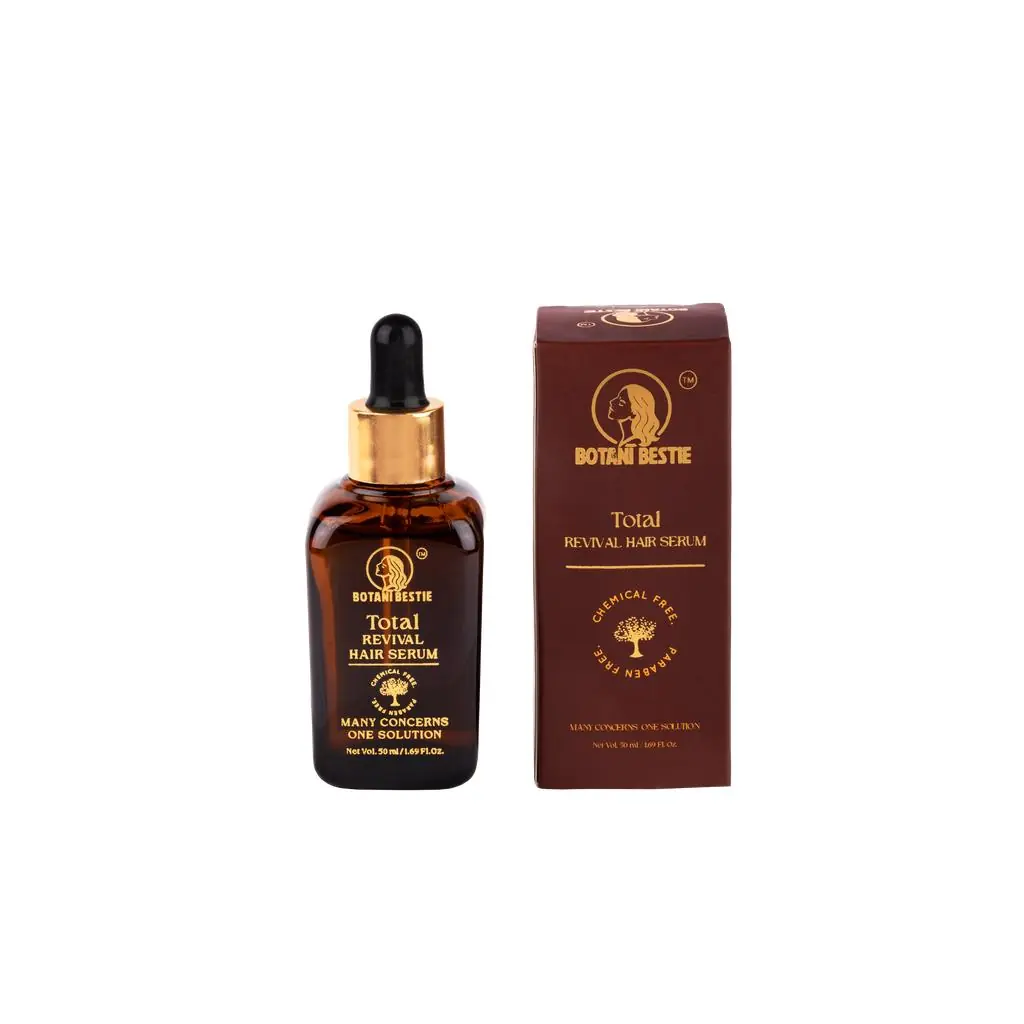
Total Revival Hair Serum
Leave-In Scalp Serum — Daily
For pattern-prone and thinning hair, this leave-in pairs Redensyl, Anagain and Procapil — actives studied for extending the growth phase and improving the scalp microenvironment — in a daily, no-rinse format. Most useful when your cause involves miniaturisation, used consistently over months. Compare the actives in our ingredient breakdown.
Shop Total Revival Hair Serum →Find Your Cause First — One Free Consultation
The fastest way to stop wasting months on the wrong fix is to identify the right cause. Our dermatologist reviews your history and bloodwork, tells you which category your hair fall falls into, and builds a targeted plan — diet, treatment, and the right topical support. No purchase required.
Book Free Hair Consultation → WhatsApp UsFrequently Asked Questions

The Bottom Line — Diagnose, Then Treat
Hair fall is not one condition with one cure. It is a symptom with at least six common root causes, and the single most valuable thing you can do is work out which one — or which combination — is yours. Everything else follows from that.
Establish whether it's even abnormal. Separate shedding from pattern loss. Map it to a cause and read the deep-dive. Correct the internal driver, calm the scalp, support topically — and give the follicle cycle the 3–6 months it genuinely needs. Done in that order, most hair fall in India is improvable, and a great deal of it is fully reversible.
Chase remedies in a panic and you'll lose months. Treat the root with patience and you'll usually get your hair back.
Find My Cause — Free Consultation Next: Scalp Health Guide"Hair fall is the question, not the answer. Find out why — then the how is easy."
Ready to make the honest switch?
Our products are built on the same principles as every article we write — pure ingredients, real results, nothing to hide.
Explore Our Products