Coconut Oil for Hair — What the Science Actually Says
Coconut oil is the most researched natural hair oil in the world. Peer-reviewed studies have measured its effects on protein loss, hair shaft penetration, and breakage. The science tells a more nuanced story than either its enthusiastic fans or dismissive critics admit — and understanding that nuance determines whether it actually helps your hair.
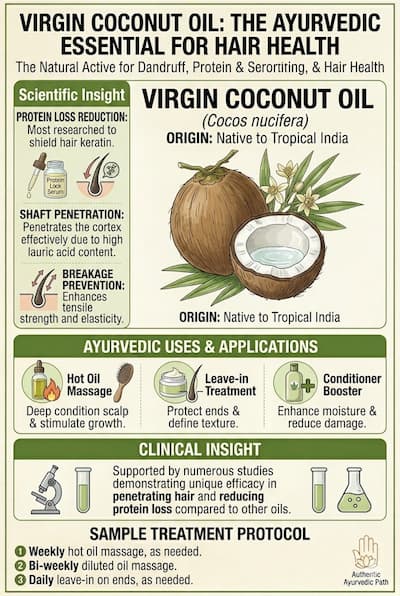
Coconut oil has been the default hair oil across South Asia, Southeast Asia, and coastal India for centuries. It is inexpensive, widely available, and deeply embedded in cultural hair care rituals. It is also one of the most misunderstood ingredients in modern hair care.
The pro-coconut oil camp attributes everything from hair growth to scalp healing to dandruff cure to a single ingredient. The anti-coconut oil camp — a more recent wave driven by dermatology social media — dismisses it entirely as "pore-clogging" and "harmful for scalp health."
Both positions are wrong. The actual science is specific: coconut oil has one well-documented, mechanistically understood benefit for hair (protein loss reduction via lauric acid shaft penetration), several secondary benefits supported by reasonable evidence, and two well-documented conditions in which it makes things worse. Knowing which category your situation falls into determines whether coconut oil helps you or hurts you.
The One Thing Coconut Oil Is Scientifically Proven to Do
Reduce Protein Loss from the Hair Shaft — Mechanism: Lauric Acid Penetration
The landmark study on coconut oil is a 2003 paper by Rele and Mohile published in the Journal of Cosmetic Science — one of the most cited studies in natural hair care science. They measured protein loss from hair treated with mineral oil, sunflower oil, and coconut oil — both as a pre-wash and post-wash treatment.
The result: Coconut oil was the only oil that significantly reduced protein loss from hair during washing — both when applied before washing (pre-treatment) and after washing (post-treatment). Mineral oil and sunflower oil showed no measurable protein-loss reduction.
Why coconut oil specifically? Lauric acid — which makes up approximately 48% of coconut oil's fatty acid profile — has an unusually low molecular weight and a straight chain structure that allows it to penetrate the hair shaft's cortex. Most other fatty acids (linoleic acid in sunflower oil, oleic acid in olive oil) are larger or branched and primarily coat the surface. Lauric acid actually enters the hair fibre, binding to keratin proteins and reducing the amount lost during washing, combing, and styling.
What this means in practice: Hair treated with coconut oil retains more of its structural keratin proteins — it experiences less thinning, less brittleness, and less breakage over time. Hair appears and feels thicker, stronger, and longer over time because less of it is being lost to mechanical damage.
The Myths: What Coconut Oil Cannot Do
Myth 1: Coconut Oil Grows Hair
Coconut oil contains no compound that activates follicle stem cells, extends the anagen (growth) phase, or blocks DHT. Hair growth is follicle-level biology — it requires ingredients that interact with dermal papilla cells, androgen receptors, or follicle growth factors. Lauric acid does not do this.
What coconut oil does is reduce breakage, which means more of the hair you grow reaches length. This is not the same as growing more hair. The distinction matters enormously for people experiencing genuine hair loss (miniaturisation, thinning, shedding) who need follicle-level intervention, not shaft protection.
Myth 2: Coconut Oil Cures Dandruff
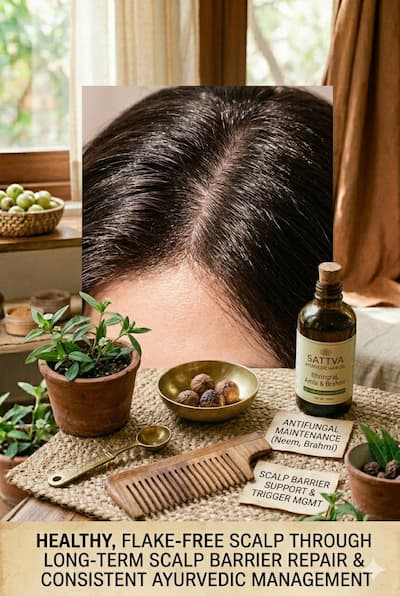
This myth is doubly dangerous. Dandruff is caused by Malassezia — a lipid-dependent fungus that feeds on the fatty acids in scalp sebum and applied oils. Lauric acid has some documented antifungal activity in vitro, but applying a rich, fatty oil like coconut oil to a Malassezia-affected scalp often worsens the condition by providing additional substrate for fungal growth.
For dandruff, the effective approach is pH restoration (acidic environment suppresses Malassezia), specific antifungal actives (Neem, ketoconazole, zinc pyrithione, ACV), and reducing scalp oil accumulation — not adding more oil.
Myth 3: More Oil = More Benefit
Lauric acid penetrates the hair shaft until it saturates the cortex — excess oil above that saturation point does not penetrate further, it sits on the surface as a coating. Applying very large amounts of coconut oil produces a heavy, greasy coating that attracts dust and requires aggressive shampooing to remove — which causes the very breakage you were trying to prevent.
The effective dose is a thin application — just enough to coat each strand without pooling. More is not better.
Myth 4: Coconut Oil Is Good for All Scalp Types
Coconut oil is comedogenic (pore-clogging potential rating: 4/5). On an oily scalp already producing excess sebum, heavy coconut oil application can clog follicle openings, creating an anaerobic environment that favours Malassezia overgrowth and bacterial folliculitis — both of which cause hair fall.
If you have an oily scalp, dandruff, or seborrheic dermatitis, keep coconut oil on the hair shaft only — or switch to lighter, less occlusive oils (Bhringraj, Sesame, Jojoba) for scalp treatment.
The Real Benefits: What Coconut Oil Is Good For
Pre-Wash Protein Protection
Applied 30–60 minutes before shampooing, coconut oil pre-loads the hair shaft with lauric acid. During the mechanical agitation and surfactant action of washing, this buffering reduces the protein stripped out by the process — particularly important for high-porosity hair (damaged, colour-treated, chemically processed) where the cuticle is compromised and protein loss is already elevated.
Best for: Damaged hair, colour-treated hair, frequently washed hair, any hair that feels brittle after washing.
Detangling and Mechanical Breakage Reduction
Coconut oil's coating action reduces inter-fibre friction during combing and detangling — particularly when hair is wet (when the cuticle is raised and hair is most vulnerable to mechanical breakage). Applying a small amount before detangling dramatically reduces the force required and the breakage that results.
Best for: Coarse, curly, or thick hair that tangles easily; post-washing detangling; any hair type prone to breakage during combing.
Carrier Oil for Active Herbal Blends
Coconut oil's low molecular weight and shaft-penetrating ability make it an effective carrier for dissolving and delivering fat-soluble active compounds from other herbs — Bhringraj extract, Brahmi, and essential oils. As a base oil in a hair oil blend, it potentially aids delivery of other actives into the hair shaft.
Best use: As the base (50–70%) in a herbal hair oil blend for pre-wash treatment, combined with Bhringraj, Amla, or Rosemary oil.
Mild Antimicrobial Protection (at Scalp, Carefully)
Lauric acid converts to monolaurin in the presence of certain scalp enzymes and has documented antimicrobial activity. On a healthy, non-oily scalp, this provides light protection against bacteria and some fungi. This benefit is easily negated by heavy application — the occlusive coating overwhelms the antifungal benefit by creating ideal conditions for Malassezia growth regardless.
Best use: Light, thin application on a healthy, normal-to-dry scalp only. Avoid heavy scalp application entirely if prone to dandruff.
Who Should Use Coconut Oil — and Who Should Not
| Hair / Scalp Type | Use Coconut Oil? | How |
|---|---|---|
| High-porosity, damaged, or chemically processed hair | Yes — highly recommended | Pre-wash treatment on length and ends, 30–60 min before washing |
| Coarse, thick, or curly hair | Yes — excellent fit | Pre-wash or light post-wash on ends; detangling aid on damp hair |
| Normal scalp, normal hair | Yes — use lightly | Light pre-wash treatment, 1–2 times per week; avoid heavy scalp application |
| Fine, straight, or low-porosity hair | Caution — often too heavy | Apply sparingly on ends only; skip scalp; try lighter oils (Argan, Jojoba) instead |
| Oily scalp | Scalp: Avoid. Hair: OK lightly | Keep strictly to mid-length and ends; use a different oil (Bhringraj, Rosemary) for scalp |
| Dandruff / seborrheic dermatitis | Scalp: Avoid entirely | Use antifungal oils (Neem, Tea Tree) on scalp instead; coconut oil may worsen fungal growth |
| Fungal folliculitis | Avoid on scalp | All heavy oils worsen folliculitis — use lightweight, non-comedogenic options only |
How to Use Coconut Oil Correctly
- Take a small amount of coconut oil (1–2 teaspoons for shoulder-length hair) — warm between palms until liquid.
- Section dry hair and apply from mid-length to ends. Apply lightly to the scalp if your scalp type is appropriate (normal to dry, no dandruff).
- Detangle gently with a wide-tooth comb while the oil is on — this is the ideal time for detangling.
- Leave for 30–60 minutes. Wrap in a warm towel to aid penetration (heat opens the cuticle slightly, improving lauric acid absorption).
- Wash with a gentle, sulfate-free shampoo. You may need two rounds of shampoo to fully remove the oil.
The most effective way to use coconut oil for hair fall is as a base for active Ayurvedic herbs:
- Bhringraj + Coconut Oil: Infuse dried Bhringraj leaves in warm coconut oil (low heat, 45 min) — strain and cool. Apply to scalp and length. Bhringraj provides follicle stimulation; coconut oil provides shaft protection and delivery.
- Amla + Coconut Oil: Same infusion method with dried Amla pieces. Amla adds antioxidant protection and Vitamin C for follicle collagen.
- Essential oil blend: Add 4–5 drops of Rosemary essential oil per tablespoon of coconut oil — studies show Rosemary oil equals Minoxidil 2% in scalp application for hair density.
For hair ends and length only (not scalp):
- Take a very small amount — a pea-sized quantity for the ends is enough. Less is more here.
- Warm between palms and smooth over the bottom third of hair strands — ends are the oldest, most damaged, most protein-depleted part of the hair shaft.
- Do not apply to roots or scalp — this is a length treatment only.
- Can be used daily on ends if hair is very dry and brittle. Use sparingly on fine hair to avoid weight.
For follicle-level hair fall treatment — not just shaft protection — look for a comprehensive herbal formula with Bhringraj, Amla, Brahmi, and Jatamansi in a bioavailable oil base.
See Total Restore Hair Oil →Coconut Oil vs Other Popular Hair Oils
| Oil | Primary Mechanism | Shaft Penetration | Scalp Suitability | Best For |
|---|---|---|---|---|
| Coconut Oil | Protein loss reduction (lauric acid shaft penetration) | High (lauric acid) | Normal to dry scalp only | Shaft protection, pre-wash treatment, breakage prevention |
| Bhringraj Oil | Follicle stimulation (Wnt pathway), DHT blocking, anti-inflammatory | Moderate | All scalp types | Hair fall treatment, follicle activation, growth phase extension |
| Castor Oil | Scalp coating (ricinoleic acid), circulation, anti-inflammatory | Low (too heavy to penetrate) | Light use only — very occlusive | Eyebrows, edges; use very diluted on scalp |
| Sesame Oil | UV protection (natural SPF ~4), antifungal, anti-inflammatory | Moderate | All scalp types including oily | Scalp treatment, UV-exposed hair, hot climate India use |
| Rosemary Oil | Circulation (scalp vasodilation), DHT blocking (5α-reductase inhibition) | Essential oil — scalp active, not shaft penetrant | All scalp types (diluted only) | Androgenetic hair loss, male pattern thinning |
| Jojoba Oil | Mimics sebum (wax ester structure), non-comedogenic | Moderate (surface + partial penetration) | All scalp types — best for oily scalp | Oily scalp treatment, scalp balancing, fine hair |
Going Beyond Coconut Oil: Follicle-Level Hair Fall Treatment
Coconut oil protects the hair shaft from breakage — it is a valuable step in any hair care routine. But for people experiencing genuine hair fall (increased shedding, scalp thinning, visible density loss), shaft protection alone is not enough. Follicle-level intervention requires ingredients that work at the dermal papilla — the cellular control centre of the hair growth cycle.
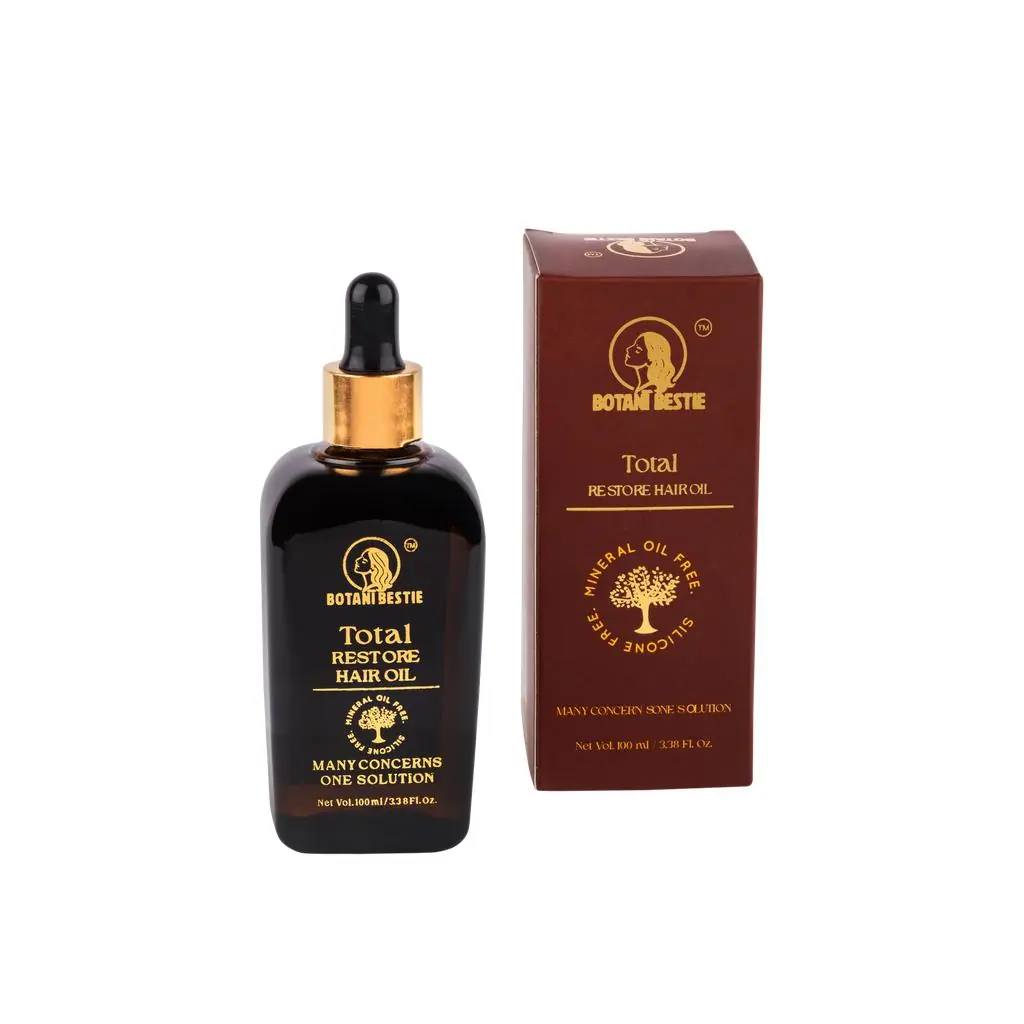
Total Restore Hair Oil
by Botani Bestie — Ayurvedic Hair Growth Oil
Formulated with 10+ Ayurvedic herbs that work at the follicle level — not just the shaft. Bhringraj (documented Wnt pathway activation + DHT blocking), Amla (antioxidant + anagen support + collagen), Brahmi (anti-inflammatory + stress-induced hair fall), Jatamansi (follicle protection), Rosemary (5α-reductase inhibition + circulation), and more — in a lightweight oil base that penetrates without clogging.
- Addresses the root cause of hair fall, not just breakage
- Lightweight base — absorbs without the heavy, greasy feel of pure coconut oil
- 10+ herbal actives at meaningful concentrations
- No mineral oil, no silicones, no synthetic fragrance
Frequently Asked Questions
The Honest Verdict on Coconut Oil
Coconut oil is genuinely useful for one specific, scientifically validated purpose: reducing protein loss from the hair shaft through lauric acid penetration. For high-porosity, damaged, or coarse hair, this benefit is real and measurable. Ignore the myths in both directions — it will not grow your hair, but it will not harm it when used correctly.
Where people go wrong is expecting coconut oil to do everything. For hair fall driven by follicle-level causes (DHT, stress, PCOS, nutritional deficiency), you need ingredients that work at the follicle — Bhringraj, Redensyl, Rosemary. For dandruff, you need antifungal actives and pH management — not more oil on an already oil-stressed scalp.
Use coconut oil as part of a complete routine — not as the entire routine.
Shop Total Restore Hair Oil → Free Hair Consultation"Coconut oil protects the hair you have. Growing new hair requires something that works at the follicle."
Ready to make the honest switch?
Our products are built on the same principles as every article we write — pure ingredients, real results, nothing to hide.
Explore Our Products