Best Face Wash for Acne & Dark Spots in India (2025) — Ingredients That Actually Work
Acne clears — and leaves a dark mark that stays for months. Indian skin (Fitzpatrick III–V) is biologically prone to this dual challenge: higher melanin reactivity means every breakout risks leaving post-inflammatory hyperpigmentation behind. Most face washes target one problem. The right face wash needs to handle both — and do it without disrupting your skin barrier or pH. Here is what the science says.
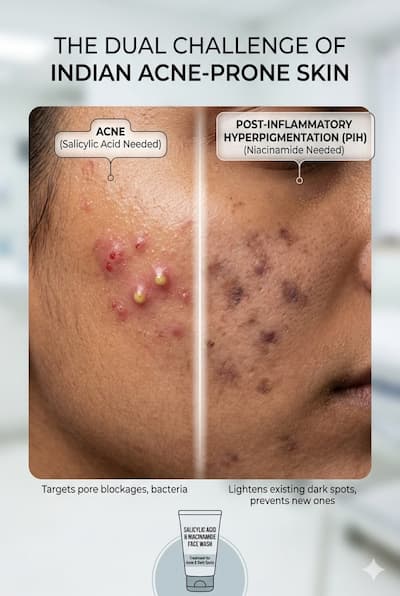
Walk through any Indian pharmacy or beauty aisle and you will find dozens of face washes claiming to fight acne. A smaller number claim to brighten. Almost none explain why they work — or whether the active ingredient is present at a concentration that actually does anything.
The reality of acne management for Indian skin is a two-phase problem. Phase one: stop new breakouts by keeping pores clear and sebum-regulated. Phase two: address the post-inflammatory hyperpigmentation (PIH) that follows — the flat dark marks that linger long after the pimple itself is gone. Most people are stuck trying to solve phase one while phase two accumulates visibly.
The face wash is the foundation of both phases — because it is the one step every person completes twice a day, regardless of the rest of their routine. If the face wash contains the right actives at the right concentration and pH, it delivers cumulative benefit with every wash. If it contains the wrong formulation — or worse, actives neutralised by an alkaline pH — it may actively worsen both problems.
This guide draws the clinical line between what works and what is marketing. Every ingredient discussed has published mechanism data. Every warning about harmful ingredients is based on documented skin chemistry — not preference.
⚡ Face Wash for Acne + Dark Spots — Quick Reference
| Feature | What to Look For | What to Avoid |
|---|---|---|
| Acne actives | Salicylic acid 0.5–2% (in first half of ingredient list) | Benzoyl peroxide in daily face wash (over-drying) |
| Dark spot actives | Niacinamide 2–5%, Liquorice extract, Green Tea EGCG | Kojic acid at high % in rinse-off (unstable, irritant) |
| pH range | 4.5–5.5 (slightly acidic, matches skin's acid mantle) | Above pH 6 — neutralises salicylic acid's exfoliant action |
| Surfactant type | Cocamidopropyl betaine, Sodium cocoyl isethionate | Sodium Lauryl Sulfate (SLS) — disrupts barrier |
| Format | Gel or foam for oily/acne-prone skin | Soap bars (pH 9–10; alkaline — disrupts acid mantle) |
| Fragrance | Fragrance-free or natural essential oil at <0.5% | "Fragrance" / "Parfum" — top allergen, comedogenic |
| Results timeline | Acne: 4–6 weeks. Dark spots: 8–12 weeks | One-wash miracle claims — impossible at rinse-off contact time |
Why Indian Skin Is Especially Prone to Acne + Dark Spots Together
Indian skin falls primarily in Fitzpatrick phototypes III–V — which means higher baseline melanin content compared to Fitzpatrick I–II (Northern European) skin. This has direct consequences for how acne presents and heals.
Higher Melanin Reactivity
Melanocytes in darker skin tones are more reactive to inflammatory signals. Every acne lesion — even a mild comedone — triggers a localised inflammatory cascade that stimulates melanocyte activity, depositing melanin in the surrounding skin. This post-inflammatory hyperpigmentation (PIH) is the dark flat mark that persists after the active acne heals. In Fitzpatrick III–V skin, PIH is commonly darker and longer-lasting than in fairer skin types — sometimes lasting 3–12 months without targeted treatment.
Year-Round Humidity + Oiliness
India's climate — particularly the 7–9 months of heat and humidity in most regions — drives sebum overproduction. Excess sebum is the primary substrate for Cutibacterium acnes (acne bacteria): the bacterium metabolises sebum into free fatty acids that trigger inflammation, comedone formation, and the subsequent PIH cycle. The combination of high androgens (common in PCOS, which affects 1 in 5 Indian women), diet high in refined carbohydrates, and environmental humidity makes acne management a year-round concern for most Indian skin types.
This is why the correct face wash for Indian skin is not simply the most aggressive acne-fighting formula — it is the one that addresses both the follicular blockage causing acne and the melanin synthesis pathway producing PIH, while preserving the acid mantle and barrier that prevent further inflammation. Disrupting the barrier to fight acne is a trade that makes PIH worse.
5 Active Ingredients That Work for Acne & Dark Spots
These are the ingredients with published mechanism data relevant to the acne + PIH dual problem in Indian skin. A face wash containing 2–3 of these in the first half of the ingredient list is formulated to deliver real results.
1. Salicylic Acid (BHA) — 0.5% to 2%
Primary role: Pore clearing, comedone dissolution, anti-inflammatory
Salicylic acid is a beta-hydroxy acid (BHA) — oil-soluble, which distinguishes it fundamentally from glycolic acid (AHA). Because it is lipid-soluble, it can penetrate into the sebum-filled environment inside a pore, where it dissolves the keratin plug (comedone) and loosens the cell bonds lining the follicle wall. This is why it is the only exfoliant that can actually reach the site of blockage — not just exfoliate the skin surface.
At the scalp and skin surface, salicylic acid also has a clinically documented anti-inflammatory effect: it inhibits the arachidonic acid pathway, reducing the prostaglandin production that drives the redness and swelling around inflamed acne lesions. This dual action — clearing pores while reducing inflammation — makes it the most evidence-backed acne ingredient for a rinse-off product.
Critical formulation note: Salicylic acid only functions as a BHA exfoliant at pH 3.0–4.0. Most commercially "gentle" face washes are formulated at pH 5–6 for skin compatibility. At pH above 5, salicylic acid loses its exfoliant activity and acts as a preservative — present in name but not in function. Always verify product pH or choose brands that specifically state pH-adjusted formulations.
2. Niacinamide (Vitamin B3) — 2% to 5%
Primary role: Sebum regulation, dark spot reduction, barrier strengthening
Niacinamide is arguably the most versatile active for Indian skin because it simultaneously addresses multiple aspects of the acne + PIH cycle. Its mechanisms are well-characterised:
- Sebum regulation: Inhibits the enzyme 5-alpha reductase in sebaceous glands, reducing sebum excretion rate. A 2006 RCT (Kaymak et al.) showed 2% niacinamide gel comparable to 1% clindamycin gel in reducing acne severity over 8 weeks.
- Dark spot reduction: Inhibits the transfer of melanosomes (melanin packets) from melanocytes to surrounding keratinocytes — interrupting the final step of visible pigmentation without affecting melanocyte function itself. This makes it effective at both preventing new PIH and reducing existing marks.
- Barrier strengthening: Stimulates ceramide synthesis, improving the skin's permeability barrier — which reduces transepidermal water loss (TEWL) and the compensatory sebum overproduction that often follows harsh face washing.
- Anti-inflammatory: Reduces IL-1β, IL-6, and TNF-α — the same cytokines that drive post-acne inflammation and melanocyte stimulation.
At 2–5% in a face wash, niacinamide delivers meaningful benefit across all four mechanisms with consistent twice-daily use. It is well-tolerated by sensitive skin and has no photosensitivity concerns, making it safe year-round in Indian climate conditions.
3. Liquorice Root Extract (Glabridin) — Ayurvedic + Clinical
Primary role: Tyrosinase inhibition, anti-inflammatory, depigmentation
Liquorice root (Glycyrrhiza glabra) contains glabridin — a polyphenol compound with one of the most potent documented tyrosinase-inhibitory activities among plant-based ingredients. Tyrosinase is the key enzyme in melanin synthesis: inhibiting it at the source prevents melanin production before it can be deposited in the skin. Multiple in vitro and in vivo studies confirm glabridin's depigmenting activity at concentrations as low as 0.5%.
Beyond tyrosinase inhibition, liquorice extract contains glycyrrhizin and liquiritin — anti-inflammatory compounds that reduce the acute inflammatory response to acne, directly reducing the melanocyte stimulation that causes PIH. This dual action (prevent inflammation + block melanin production) makes liquorice one of the few ingredients addressing both the cause and mechanism of PIH.
In Ayurveda, liquorice (Yashtimadhu) has been used in skin brightening formulations for centuries — and the clinical data now validates the mechanism. It is well-tolerated, non-photosensitising, and works synergistically with niacinamide because they target different steps in the melanin pathway.
4. Green Tea Extract (EGCG) — Antioxidant + Anti-Acne
Primary role: Sebum reduction, anti-inflammatory, oxidative stress protection
Epigallocatechin gallate (EGCG) — the primary catechin in green tea — has documented anti-acne activity through mechanisms distinct from salicylic acid. A 2016 RCT published in the Journal of Investigative Dermatology demonstrated that 2% EGCG solution significantly reduced sebum production and inflammatory acne lesion count over 8 weeks — comparable in magnitude to 4% erythromycin at 4 weeks.
EGCG's primary acne mechanism is 5-alpha reductase inhibition (shared with niacinamide), which reduces dihydrotestosterone (DHT) — the androgen that stimulates sebaceous gland hyperactivity. This makes it particularly relevant for hormonal or androgen-driven acne common in Indian women with PCOS or during post-cycle hormonal fluctuation.
As a potent antioxidant, EGCG also neutralises the reactive oxygen species (ROS) generated by UV exposure — which is a key trigger for melanin overproduction in dark spots. Green tea extract in a face wash used before sun exposure provides a layer of antioxidant protection that directly reduces UV-triggered PIH exacerbation.
5. Turmeric / Curcumin — Traditional Skin Brightener with Clinical Evidence
Primary role: Anti-inflammatory, tyrosinase inhibition, antimicrobial
Turmeric (Curcuma longa) has been used in Indian skin care for millennia — and clinical science has now identified the specific molecules responsible for its documented effects. Curcumin, the primary bioactive, demonstrates both tyrosinase inhibitory activity and direct anti-inflammatory action through NF-κB pathway suppression — reducing the cytokine signals that stimulate melanin production during inflammation.
Curcumin also has documented antimicrobial activity against Cutibacterium acnes (the acne bacterium) — complementing salicylic acid's pore-clearing action with a direct antibacterial component in a rinse-off product.
The challenge with turmeric in skincare is the yellow staining of curcumin — which is why standardised turmeric extract (curcumin at lower, non-staining concentrations) is preferred over raw turmeric powder in face wash formulations. When formulated correctly, it provides genuine brightening benefit. When used raw (kitchen-grade turmeric DIY), the curcumin concentration is uncontrolled and staining is common.
4 Ingredients to Avoid in a Face Wash for Acne-Prone Indian Skin
These are not arbitrary preferences — each has a documented mechanism by which it worsens acne, damages the skin barrier, or exacerbates PIH in darker skin tones.
Harmful Ingredients — What They Do and Why to Avoid Them
| Ingredient | INCI Name on Label | Why It Is Harmful for Acne + PIH |
|---|---|---|
| SLS / SLES | Sodium Lauryl Sulfate, Sodium Laureth Sulfate | Disrupts the skin's acid mantle by raising surface pH — increases C. acnes colonisation, triggers compensatory sebum overproduction. The excessive stripping often leads to reactive oiliness that worsens breakouts. Also demonstrated to damage tight junctions in skin barrier, increasing sensitivity and inflammation that feeds PIH. |
| Denatured Alcohol | Alcohol Denat., SD Alcohol, Ethanol (high %) | Creates an illusion of oil control via rapid evaporation — but simultaneously strips ceramides and natural moisturising factors from the stratum corneum. The resulting barrier damage triggers an inflammatory stress response that elevates cytokines, directly stimulating melanin production. Particularly damaging for Fitzpatrick III–V skin where barrier disruption disproportionately triggers PIH. |
| Synthetic Fragrance | Fragrance, Parfum, Perfume | "Fragrance" is a single INCI listing that can contain 3,000+ individual chemicals. It is the number one cause of contact dermatitis and allergic sensitisation in cosmetics. For acne-prone skin, fragrance-triggered contact sensitisation is indistinguishable from a new breakout — but repeatedly applying the allergen perpetuates the cycle. Several common fragrance compounds (cinnamic alcohol, geraniol) are also documented comedogens. Entirely unnecessary in a face wash; serves marketing (smell = "works") rather than skin benefit. |
| Alkaline Soap / High pH Base | Sodium palmate, Sodium palm kernelate, Potassium hydroxide (in soaps) | Traditional soap bars have pH 9–10 — over 3 pH units above the skin's natural 4.5–5.5 acid mantle. Every wash temporarily raises skin pH toward alkaline, disrupting the acid mantle for 60–90 minutes post-wash. At alkaline pH: salicylic acid is deactivated, C. acnes thrives, Malassezia overgrowth is favoured, and skin barrier enzymes (serine proteases) that regulate desquamation become dysregulated. For acne-prone skin, soap bar use is one of the most counterproductive choices — despite the deeply ingrained Indian skin care habit of soap-based cleansing. |
Why pH Is the Ingredient Nobody Talks About
Skin pH is arguably more important than any single ingredient in your face wash — because it determines whether those ingredients can actually function.
The Skin pH Spectrum and Its Consequences
| pH Range | What It Means | Effect on Acne-Prone Skin |
|---|---|---|
| 4.0–4.5 | Optimal for salicylic acid BHA activity | Maximum pore-clearing exfoliant effect; ideal for oily acne skin |
| 4.5–5.5 | Natural skin acid mantle range | Preserves acid mantle; C. acnes growth inhibited; niacinamide functions normally |
| 5.5–6.5 | Mildly elevated — "pH balanced" claims | Salicylic acid loses BHA exfoliant function; mild barrier disruption begins |
| 6.5–8.0 | Alkaline — many gel cleansers, syndet bars | C. acnes growth favoured; acid mantle disrupted; compensatory sebum spike; PIH risk increases |
| 9.0–10.0 | Traditional soap bars | Acid mantle destroyed per wash; barrier enzymes dysregulated; salicylic acid has zero exfoliant function; strong acne driver |
You can verify your current face wash pH with litmus strips (pH 1–14 range; cost ~₹50 on Amazon). Wet the strip, press to the face wash foam, read after 10 seconds. Anything above pH 6 on a salicylic acid face wash means the salicylic acid is present in name but not function.
How to Read a Face Wash Label: A 4-Step Audit
If the front label claims "salicylic acid", find it in the INCI ingredient list (legally required to be printed on the packaging). Ingredients are listed in descending concentration order. If salicylic acid appears after the preservatives (phenoxyethanol, ethylhexylglycerin — typically <1% each), its concentration is likely below 0.1% — insufficient for any therapeutic effect. The active you are paying for must appear in the first 60% of the ingredient list to be present at a clinically meaningful concentration.
The first surfactant listed determines how harsh the face wash will be. SLS (Sodium Lauryl Sulfate) or SLES (Sodium Laureth Sulfate) as the primary surfactant indicates a high-stripping formula — damaging for acne-prone skin over time. Better alternatives: Sodium Cocoyl Isethionate (derived from coconut; very gentle), Cocamidopropyl Betaine (amphoteric; mild, low irritation), Disodium Cocoyl Glutamate (amino acid-based; gentle, pH-compatible). The best acne face washes use these gentler surfactants because aggressive stripping paradoxically worsens acne through compensatory sebum and barrier disruption.
Scan the full INCI list for: (1) Sodium Lauryl Sulfate or Sodium Laureth Sulfate in the top 3 ingredients; (2) Alcohol Denat. / SD Alcohol / Ethanol in the top half; (3) the word "Fragrance" or "Parfum" anywhere — there is no safe position for synthetic fragrance in an acne-prone skin product; (4) the surfactant profile of any listed soap base (Sodium Palmate, Sodium Palm Kernelate) indicating a soap-derived product at alkaline pH. If any of these appear, the harmful ingredient is undermining whatever active it is paired with.
For a face wash to address both acne and dark spots, it needs at minimum: one pore-clearing/exfoliant active (Salicylic Acid) AND one melanin-regulating active (Niacinamide, Liquorice, Green Tea, or Turmeric). A product with only salicylic acid will clear pores but not address the PIH that follows. A product with only niacinamide will brighten but not resolve the blockage causing breakouts. The dual-function requirement is non-negotiable for Indian skin where both problems coexist. Count the actives: if only one category is covered, the product is solving half the problem.
Face Wash Category Comparison: What Indian Brands Actually Offer
Most face washes on the Indian market focus on one problem — or list actives at concentrations too low to be clinically meaningful. Here is an honest comparison by formulation profile:
| Product Category | Primary Surfactant | Acne Active | Dark Spot Active | Fragrance-Free? | For Indian Skin? |
|---|---|---|---|---|---|
| Standard "anti-acne" soap bar | Sodium Palmate (alkaline) | Salicylic acid (neutralised by pH) | None | No | No — pH destroys actives |
| SLS-based anti-acne gel | SLS / SLES | Salicylic acid 1–2% | None | Often no | Partial — strips barrier |
| Pharmacy-brand niacinamide wash | Gentle surfactants | None or trace SA | Niacinamide 2–4% | Often yes | Partial — no pore clearing |
| Ayurvedic herbal face wash (mass market) | SLS or soap base | Herb extract (trace %) | Herb extract (trace %) | No — heavy fragrance | No — actives too dilute |
| Botani Bestie Total Radiance Face Wash | Gentle amino-acid based | Salicylic Acid + Green Tea EGCG | Niacinamide + Liquorice + Turmeric | Yes | Yes — dual-function design |
Washing Frequency & Technique: What Matters Beyond the Product
Twice daily — morning and evening — is the clinically recommended frequency for acne-prone oily skin. Washing more than twice (3+ times) is counterproductive: the additional washing strips the acid mantle and triggers compensatory sebum overproduction that worsens breakouts. For dry or sensitive acne-prone skin (common in winter), once-daily active cleansing (evening) with a gentle micellar rinse in the morning is a better approach. For combination skin with an oily T-zone, twice daily on the full face or focused twice-daily on the T-zone is appropriate.
For maximum benefit from active ingredients in a rinse-off face wash, leave the lathered product on skin for 45–60 seconds before rinsing. Most people rinse immediately — limiting contact time to 10–15 seconds, which is insufficient for salicylic acid, niacinamide, or any plant extract to deliver meaningful skin contact. During the 45–60 second window, massage gently in circular motions across the entire face — this increases active ingredient contact while promoting microvasculature circulation in the superficial dermis. Avoid scrubbing motions that cause micro-tears; these worsen PIH in darker skin tones.
Lukewarm water (not hot, not cold) is correct for face washing with an active face wash. Hot water dilates pores and strips sebum aggressively — the same barrier disruption problem as SLS. Cold water constricts pores but does not "close" them (pores have no muscular control); it merely makes rinsing the face wash less effective and can prevent adequate emulsification of the surfactant. Lukewarm water at skin temperature ensures effective surfactant action, allows adequate rinsing of actives without unnecessary irritation, and preserves barrier lipids. Always end with cool — not cold — water to help the skin recover surface temperature before moisturiser application.
The 30–60 seconds immediately after rinsing off the face wash are when the skin's transepidermal water loss is at its highest — the barrier has been temporarily disrupted by surfactant action and sebum removal. Applying a non-comedogenic, oil-free moisturiser within this window locks in moisture, replenishes the surface film, and prevents the compensatory sebum response. For acne-prone skin, gel-based or water-gel moisturisers with ceramides or hyaluronic acid are ideal. Skipping moisturiser after an active face wash is a common mistake: the resulting dryness triggers the very oiliness that causes breakouts, undoing the benefit of the cleansing step.
What to Expect: 8-Week Results Timeline for Indian Skin
| Week | Acne Changes | Dark Spot Changes | What's Happening |
|---|---|---|---|
| Week 1–2 | Mild purging possible (increased surface breakouts) | No visible change | Salicylic acid is loosening existing plugs trapped in pores — they surface before clearing. This is normal; it is not a reaction. Dark spot cells haven't cycled out yet. |
| Week 3–4 | Purging subsides; fewer new breakouts | Slight surface brightening possible | Pores clearing; sebum regulation begins from niacinamide + EGCG. First skin cell cycle (28 days) beginning to complete — surface brightening starts as new cells replace melanin-dense old cells. |
| Week 5–6 | Significant reduction in active lesions | Existing dark spots visibly lighter | Two skin cell cycles complete. Melanin transfer inhibited by niacinamide; tyrosinase blocked by liquorice + turmeric. PIH marks from weeks 1–4 beginning to fade noticeably. |
| Week 7–8 | Low frequency of new breakouts; skin texture improved | Dark spots 30–50% lighter; skin tone more even | Full sebum regulation cycle complete. Three skin cell cycles complete — older PIH marks significantly faded. Skin surface pH stabilised; acid mantle intact. Results are cumulative from this point. |
| Week 9+ | Maintenance phase — breakout frequency low | Continued fading; new PIH prevented | Consistent use prevents new melanin synthesis from fresh breakouts. Long-standing PIH (3+ months old, deeper dermal) may require leave-on treatments (Niacinamide 10% serum, Vitamin C) as adjuncts. |
Looking for a face wash that delivers all five actives in one formula?
The Botani Bestie Total Radiance Face Wash combines Salicylic Acid, Niacinamide, Liquorice, Green Tea EGCG, and Turmeric — pH-adjusted, fragrance-free, and formulated for Indian skin's dual acne + dark spot challenge. See the full formulation →
Our Pick: Total Radiance Face Wash
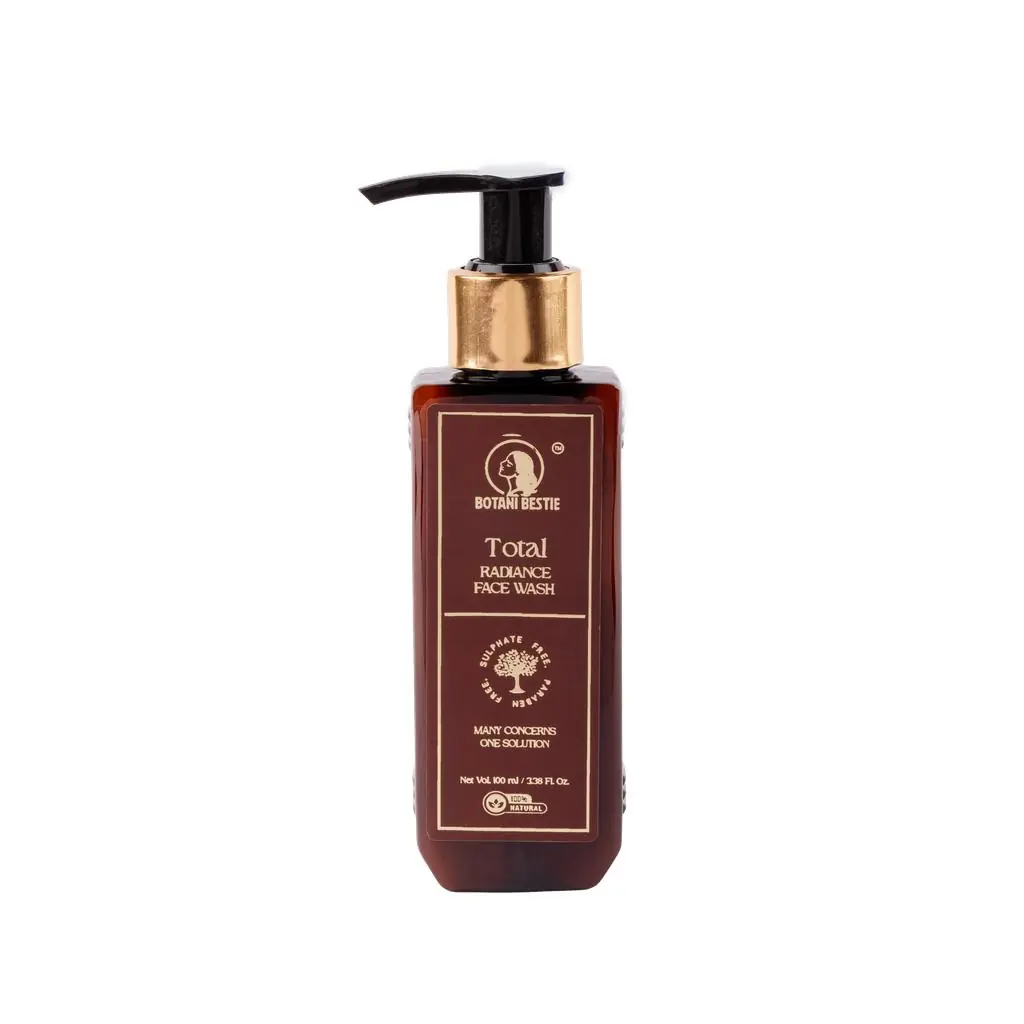
Botani Bestie Total Radiance Face Wash
Designed specifically for Indian skin's dual challenge: active acne and the post-inflammatory hyperpigmentation it leaves behind. Every active is present at a clinically meaningful concentration — verified against published mechanism data, not marketing convention.
| Active Ingredient | Function | Addresses |
|---|---|---|
| Salicylic Acid | BHA exfoliant, pore-clearing, anti-inflammatory | Active acne, blackheads, whiteheads |
| Niacinamide | Sebum regulation, melanosome transfer inhibition, barrier repair | Acne frequency + dark spots + barrier |
| Liquorice / Glabridin | Tyrosinase inhibition, anti-inflammatory | PIH prevention + brightening |
| Green Tea EGCG | 5-AR inhibition, antioxidant, anti-C. acnes | Hormonal acne + UV-triggered PIH |
| Turmeric / Curcumin | Tyrosinase inhibition, NF-κB anti-inflammatory, antimicrobial | Brightening + acne inflammation |
Not Sure Which Skin Issue to Address First?
Our AI-powered consultation asks the right questions about your acne type, PIH history, skin barrier health, and Indian climate factors — then recommends the exact products and routine for your skin profile.
Get a Free Skin Consultation →Frequently Asked Questions
The face wash you use twice every day is the most consequential product in your skin care routine — not because a rinse-off product is more powerful than leave-on serums, but because consistency is the most powerful variable in skin care. A correctly formulated face wash with the right actives, right pH, and right surfactants delivers cumulative benefit with every wash across weeks and months.
For Indian skin managing the acne + PIH cycle, the standard is clear: you need a face wash with Salicylic Acid for pore clearing, Niacinamide for sebum regulation and melanosome inhibition, and plant-based tyrosinase inhibitors (Liquorice, Green Tea, Turmeric) for brightening — all in a pH-adjusted, fragrance-free base that does not strip your acid mantle. That is not a premium ask. It is the minimum that the science justifies.
"The face wash is not the final step of your routine. It is the foundation — and if the foundation disrupts your acid mantle, nothing you apply afterward can fully compensate for it."
Struggling with Acne and Dark Spots Together?
Our free consultation helps identify your skin type, acne pattern, and PIH severity — and gives you an exact routine built for Indian skin conditions.
Start Your Free Consultation →