Hair Mask for Hair Growth — The 7 Best DIY Hair Packs for Indian Hair (2025)
Hair masks are not the same as hair oils — they deliver concentrated nutrients to the scalp and follicle that oils alone cannot, and for ingredients like methi, hibiscus, and onion juice, the mask format is the only effective delivery method. This guide covers the 7 most effective DIY hair masks for hair growth and fall control, built specifically for Indian hair types, ingredients, and climate conditions.
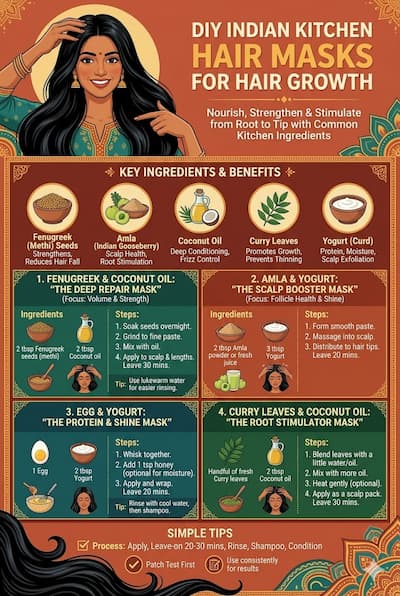
The Indian kitchen has always been a hair care pharmacy — methi, amla, hibiscus, onion, and egg have been used in hair packs for centuries, and modern research has begun explaining the mechanisms that made them work. The difference between random application and a protocol that actually produces results is understanding what each ingredient does, how to prepare it correctly, and how frequently to use it without overdoing a single category (protein vs. moisture vs. stimulation).
Hair masks work differently from hair oils. An oil penetrates the hair shaft's cortex to reduce hygral fatigue (the repeated swelling and contracting that causes mechanical damage) and delivers lipid-soluble nutrients to the follicle. A mask, by contrast, delivers water-soluble nutrients, plant-derived proteins, and bioactive compounds directly to the scalp skin and the follicle opening — reaching the bulb environment that oil cannot access as effectively.
For hair growth specifically, the target is the dermal papilla cells at the base of each follicle — the cells that determine whether the follicle stays in anagen (growth phase) or shifts to telogen (shedding). Several Indian kitchen ingredients contain compounds that directly stimulate dermal papilla cells, extend anagen duration, and reduce the DHT-driven miniaturisation that causes progressive hair thinning.
This guide gives you the 7 most effective hair masks, the exact recipe for each, the biological mechanism behind each one, and how to build them into a weekly protocol without protein overload or scalp irritation.
Why Hair Masks Work (The Biology)
Hair masks work through four distinct mechanisms, and understanding which mechanism your chosen mask operates through tells you exactly what result to expect:
1. Follicle Stimulation
Some ingredients contain bioactive compounds that directly stimulate dermal papilla cell proliferation — the mechanism behind actual hair growth rate improvement. Onion (quercetin, allicin), methi (diosgenin, lectins), and bhringraj (wedelolactone) all have published evidence for this mechanism. This is the category that actually produces new growth, not just better-looking existing hair.
2. Protein Delivery
Hair fibre is 95% keratin protein. Masks rich in amino acids (egg yolk, methi) deliver sulphur-containing amino acids (cysteine, methionine) and peptides that are absorbed transdermally into the follicle to support keratin synthesis. This improves hair fibre diameter and tensile strength from the follicle outward — growing a thicker strand, not just coating the surface.
3. Scalp Environment
The scalp microbiome and sebum balance directly affect follicle health. Some masks (neem, amla, tea tree) reduce Malassezia fungal overgrowth that drives inflammatory hair fall; others (hibiscus) regulate sebum production on oily scalps; others (aloe) repair scalp skin barrier. A healthy scalp environment removes the inflammatory burden on follicles and allows them to cycle normally.
4. DHT Inhibition (Topical)
DHT (dihydrotestosterone) binding to follicle receptors is the primary driver of androgenetic (pattern) hair loss in both men and women. Several Indian ingredients have measured topical 5-alpha reductase inhibitory activity — the enzyme that converts testosterone to DHT. Saw palmetto (lipidosterolic extract), methi seed extract, bhringraj, and amla all show this activity in vitro. Topical application directly at the follicle is more targeted than systemic oral inhibitors.
The 7 Best DIY Hair Masks for Hair Growth India
Mask 1: Egg Yolk + Castor Oil (Protein + Growth Stimulation)
Why it works: Egg yolk contains biotin (a B-vitamin cofactor for keratin synthesis), sulphur-containing amino acids (the structural building blocks of keratin), and small peptide growth factors. Castor oil's ricinoleic acid is a prostaglandin E2 receptor agonist — prostaglandin E2 directly stimulates anagen induction in dermal papilla cells, which is why castor oil has a reputation for hair growth that most vegetable oils lack. The combination delivers both structural protein substrate and a direct follicle growth signal.
Recipe: 2 egg yolks + 1 tablespoon cold-pressed castor oil + 1 tablespoon coconut oil (to thin the castor oil for easier application). Whisk together. Apply to scalp and hair lengths.
Duration: 30 minutes. Frequency: Once per week. Wash out with: Cool or lukewarm water (not hot — heat cooks the egg protein in your hair). Shampoo twice to remove completely.
Best For
- ✓ Thinning hair / fine hair
- ✓ Slow hair growth
- ✓ Protein-deficient diet
- ✓ Brittle, breaking hair
Avoid If
- ✗ Egg allergy
- ✗ Stiff, brittle hair (protein overload already)
Mask 2: Methi (Fenugreek) Paste (Follicle Stimulation + DHT Inhibition)
Why it works: Methi seeds are among the most studied Ayurvedic hair ingredients. They contain diosgenin (a steroidal saponin with 5-alpha reductase inhibitory activity), lecithin (which coats and strengthens the hair shaft), nicotinic acid (a vasodilator that improves scalp blood flow), and protein-rich mucilage. A 2012 randomised trial of a standardised methi seed extract supplement showed significant improvement in hair volume and thickness over 6 months. Topically, the active compounds penetrate transdermally to reach the follicle. Full methi for hair guide →
Recipe: Soak 2 tablespoons methi seeds overnight in water. Grind to a smooth paste (add a few tablespoons of soaking water to achieve paste consistency). Optional: add 1 tablespoon of yogurt for its lactic acid (gently exfoliates scalp).
Duration: 30–45 minutes. Frequency: Once per week. Notes: Methi paste dries tight on the scalp — the slight pulling sensation is normal. It has a strong smell that fades after washing.
Best For
- ✓ Androgenetic hair thinning
- ✓ Dandruff-associated fall
- ✓ Oily scalp
- ✓ Hair breakage
Mask 3: Hibiscus Flower + Coconut Oil (Follicle Regeneration + Scalp Conditioning)
Why it works: Hibiscus rosa-sinensis has specific published evidence for hair growth. A 2003 study in the Journal of Ethnopharmacology found that hibiscus leaf and flower extracts produced significantly higher hair growth and anagen ratio compared to minoxidil 2% in animal studies. The active compounds include quercetin and kaempferol glycosides (follicle stimulants), organic acids that gently condition the scalp, and mucilaginous polysaccharides that coat and protect the hair shaft. Hibiscus also has mild 5-alpha reductase inhibitory activity. Full hibiscus hair guide →
Recipe: Grind 4–6 fresh hibiscus flowers (or 2 tablespoons dried) with a small handful of hibiscus leaves to a smooth paste. Mix with 2 tablespoons coconut oil (melted). The paste will have a deep red-purple colour — this will temporarily stain light-coloured hair.
Duration: 30 minutes. Frequency: Once per week. Note: May temporarily darken grey or blonde hair — this is the natural dye compound in hibiscus and fades after 1–2 washes.
Best For
- ✓ Premature greying prevention
- ✓ Androgenetic fall
- ✓ Dry, damaged hair
- ✓ Dull, frizzy hair
Mask 4: Amla + Shikakai Paste (Antioxidant + Natural Cleanse)
Why it works: Amla (Phyllanthus emblica) has the highest recorded Vitamin C content of any fruit (20× more than oranges by weight), plus a suite of ellagic acid, gallic acid, and tannins that make it an extraordinarily potent antioxidant at the follicle level. Oxidative stress is a primary mechanism of both premature greying (melanocyte damage) and follicle miniaturisation — amla's antioxidant blanket over the follicle is a direct biological defence. Amla also has 5-alpha reductase inhibitory activity. Shikakai (Acacia concinna) is a natural saponin-rich cleanser that opens the scalp pores for better mask penetration. Full amla for hair guide → | Shikakai guide →
Recipe: Mix 2 tablespoons amla powder + 1 tablespoon shikakai powder with enough warm water to form a smooth paste. Let sit 5 minutes so the powders hydrate fully. Optional: add 1 tablespoon of yogurt or aloe vera gel for additional conditioning.
Duration: 30 minutes. Frequency: Once per week. Note: Amla can temporarily darken white/grey hair with repeated use — this is natural tannin staining, not permanent colour change.
Best For
- ✓ Premature greying
- ✓ Oxidative-stress-driven fall
- ✓ Pollution-exposed scalp
- ✓ Itchy, irritated scalp
Mask 5: Onion Juice + Honey (Clinically Proven for Hair Fall Reduction)
Why it works: Onion juice has the strongest clinical evidence of any common DIY hair treatment. A 2002 study in the Journal of Dermatology randomised 38 alopecia areata patients to apply onion juice or tap water twice daily. After 8 weeks: 86.9% of onion juice patients showed hair regrowth vs. 13% of water controls — a statistically significant result that has been replicated in subsequent studies. The active mechanism is quercetin (anti-inflammatory, DHT-modulating) and allicin (antimicrobial, circulation-enhancing) — both in very high concentrations in fresh onion juice. Honey is added to reduce the irritation potential of onion's sulphur compounds and for its humectant properties.
Recipe: Grate or blend 1 medium onion and extract the juice through a fine mesh strainer or cheesecloth. Mix onion juice with 1 teaspoon raw honey. Apply with a cotton ball directly to scalp sections, parting methodically.
Duration: 30–45 minutes. Wash out thoroughly. Frequency: 1–2 times per week. Note: The smell is strong and lingers — shampoo twice. Rinse with water containing a few drops of lemon juice to further neutralise odour. Full onion + ACV hair guide →
Best For
- ✓ Alopecia areata
- ✓ Patchy hair loss
- ✓ General hair fall
- ✓ Slow regrowth areas
Mask 6: Bhringraj + Sesame Oil (Ayurveda's Premier Anagen Extender)
Why it works: Bhringraj (Eclipta alba) is Ayurveda's single most specific hair herb — "Kesharaj" meaning "king of hair." Scientific investigation has validated this status. A 2008 study in the Archives of Dermatological Research found Eclipta alba extract promoted hair growth in C57/BL6 mice at 30 days faster than minoxidil 2% — significantly more follicles in anagen (growth phase) and a higher anagen-to-telogen ratio. The active compound wedelolactone inhibits 5-alpha reductase and has direct dermal papilla cell proliferation stimulating activity. Sesame oil is the traditional carrier for bhringraj and independently provides sesamin and sesamolin, which have antioxidant and anti-inflammatory activity at the follicle. Full bhringraj guide →
Recipe: Mix 2 tablespoons bhringraj powder with 3 tablespoons sesame oil to form a thick paste. Warm slightly (not hot) before application. For a more potent version, add 1 tablespoon amla powder.
Duration: 45 minutes to 2 hours. Frequency: Once per week. This is the recommended primary hair mask for androgenetic hair thinning or anyone with consistent, progressive fall over 6+ months.
Best For
- ✓ Pattern hair thinning (M/F)
- ✓ Slow growth rate
- ✓ DHT-driven fall
- ✓ Receding hairline
Mask 7: Aloe Vera Gel + Coconut Oil (Scalp Barrier Repair + Moisturisation)
Why it works: Aloe vera's hair benefits come from its unique mucopolysaccharide gel matrix, which contains acemannan (a bioactive polysaccharide with anti-inflammatory and wound-healing properties), proteolytic enzymes that remove dead skin cells from scalp pores, and salicylic acid (anti-inflammatory, gentle exfoliant). Unlike the other masks on this list, aloe vera's primary action is scalp barrier repair and inflammation reduction rather than direct follicle stimulation — making it the right mask for itchy, irritated, flaky scalps where inflammation is the source of hair fall. Full aloe vera guide →
Recipe: 4 tablespoons fresh aloe vera gel (from a plant, or pure commercial gel with no added fragrance or alcohol) + 2 tablespoons coconut oil + 5 drops rosemary essential oil (optional, for added follicle stimulation). Mix well. The aloe will be the base; coconut oil prevents the gel from drying tight.
Duration: 30–45 minutes. Frequency: 1–2 times per week. Note: This is the gentlest mask on the list — safe for sensitive or reactive scalps that cannot tolerate the sulphur compounds in onion or the strength of methi.
Best For
- ✓ Irritated, itchy scalp
- ✓ Inflammatory hair fall
- ✓ Dry, dehydrated scalp
- ✓ Post-chemical treatment recovery
How to Build a Weekly Hair Mask Protocol
| Hair Concern | Primary Mask (Weekly) | Alternate Mask (Bi-weekly) | Avoid |
|---|---|---|---|
| General hair fall + slow growth | Methi paste OR Bhringraj + sesame | Egg yolk + castor oil | Overloading on protein (2+ protein masks/week) |
| Androgenetic thinning (pattern) | Bhringraj + sesame (every week) | Onion juice (twice weekly if tolerated) | Heat-heavy routines that worsen DHT inflammation |
| Dandruff + hair fall combo | Methi + yogurt paste | Aloe vera + coconut oil | Sugar-heavy conditioners that feed Malassezia fungus |
| Premature greying | Amla + shikakai | Hibiscus + coconut oil | Egg white alone (drying without yolk's nutrients) |
| Dry, damaged hair | Aloe vera + coconut oil | Hibiscus + coconut oil | Protein overload (avoid egg if hair is already stiff/brittle) |
| Oily scalp + hair fall | Onion juice (scalp only) | Methi paste | Oil-heavy masks on the scalp (use oil on lengths only) |
Hair Mask Application: Step by Step
Step 1: Pre-Oil (Optional but Recommended)
Apply a light oil (coconut or Total Restore Hair Oil) to hair lengths 30 minutes before the mask. This "fills" the hair shaft with lipids so the water in your mask causes less swelling and hygral fatigue. Skip if using an oil-based mask like bhringraj + sesame.
Step 2: Section and Apply to Scalp First
Part your hair into 4 sections. Apply the mask starting from the scalp — use your fingertips or a brush to work the mask directly into the scalp in each section. Do scalp first (where the follicles are), then apply the remaining mask down the hair shaft to the ends.
Step 3: Wrap and Wait
Cover with a shower cap, then wrap a warm towel over it. The heat opens the scalp pores and improves ingredient penetration. Wait the recommended time for your specific mask. Do not exceed 45 minutes for protein masks or onion juice — longer does not mean better and can irritate the scalp.
Step 4: Rinse Thoroughly
Rinse with cool or lukewarm water — never hot. Hot water opens the cuticle excessively during rinsing, causing more frizz and breakage. For egg masks, cool water is essential to prevent the protein from hardening in the hair shaft. Rinse until the water runs completely clear.
Step 5: Shampoo (Twice for Oil-Based Masks)
Shampoo once for paste masks. For oil-based masks, apply shampoo to dry (un-wetted) hair first — this allows the shampoo's surfactants to emulsify the oil before water is added. Then wet and lather normally. Shampoo twice total for oil-heavy masks. Total Rebalance Shampoo →
Step 6: Follow with Serum (Not Conditioner)
On mask days, skip conditioner — the mask has already delivered conditioning actives. Instead, apply a few drops of hair serum to damp hair before air-drying. The serum seals the cuticle and locks in the nutrients the mask delivered. Total Revival Hair Serum →
Frequently Asked Questions
Hair Masks in Your Complete Routine
Hair masks are a weekly treatment, not a daily practice. They work best as part of a complete protocol: weekly mask on wash day, followed by a sulphate-free shampoo that does not strip the scalp's acid mantle, and a leave-in hair serum on damp hair to seal the cuticle and continue delivering biotech actives between mask days.
Our Total Restore Hair Oil is formulated as a pre-mask treatment and an overnight oil — its Bhringraj, Brahmi, and Jatamansi base works synergistically with the Bhringraj mask above, and the serum's Redensyl + AnaGain + Copper Peptide complex provides the follicle-level growth signals on the days between mask applications.
Shop Total Restore Hair Oil → Shop Total Revival Hair Serum →"Your kitchen is an Ayurvedic formulation lab. Most people just don't know the formulas."
Ready to make the honest switch?
Our products are built on the same principles as every article we write — pure ingredients, real results, nothing to hide.
Explore Our Products