Apple Cider Vinegar & Onion for Hair:
The Kitchen Duo Science Is Finally Explaining
Two of the most searched hair remedies in India — one in every kitchen, both dismissed by mainstream brands as "too messy." But the science tells a different story. ACV corrects scalp pH. Onion beat tap water in a human RCT. Here is the complete, honest breakdown.

There is a particular kind of credibility that comes not from a laboratory press release, but from surviving millions of Indian households for generations. Apple cider vinegar has been in pantries for centuries. Onion has been pressed and applied to scalps across every region of the subcontinent — from Kashmiri hair rituals to Tamil Siddha medicine — long before "hair care" became an industry.
Both have been dismissed by conventional brands as messy, smelly, and unscalable. The smell of onion juice. The inconvenience of ACV rinses. The difficulty of incorporating kitchen ingredients into a daily routine. These are real practical barriers — which is why they have largely stayed in the DIY space rather than graduating into serious formulations.
But the scientific evidence for both has grown considerably in the past decade, and the practical barriers are entirely solvable with proper formulation. This guide covers exactly what ACV and Onion do at the molecular level, what the clinical research shows, where each fits in a hair care routine — and why Botani Bestie includes both in the Total Rebalance Shampoo and Total Restore Hair Oil.
Apple Cider Vinegar (ACV)
The scalp's most underappreciated variable — and ACV's most important job — is pH. Here is the complete science.
What is Apple Cider Vinegar? And Why Does the Scalp Need It?
Apple cider vinegar is produced through a two-stage fermentation process: first, crushed apples are fermented by yeast into apple cider (ethanol), then acetobacter bacteria convert the ethanol into acetic acid — the primary bioactive compound in ACV. Quality ACV also retains "the mother" — a colony of beneficial bacteria, enzymes, and proteins formed during fermentation — which contains additional bioactive compounds beyond acetic acid alone.
The reason ACV matters for hair starts with one underappreciated biological fact: the scalp has a natural pH of approximately 4.5–5.5. This mildly acidic environment is not arbitrary — it is the precise pH at which the scalp's acid mantle functions optimally, supporting a healthy microbiome, resisting pathogen colonisation (including Malassezia, the dandruff-causing fungus), maintaining cuticle integrity, and supporting the follicle environment needed for healthy hair cycling.
The problem is that almost everything in modern hair care disrupts this pH. Most commercial shampoos are formulated at pH 7–9. Hard water in most Indian cities sits at pH 7.5–8.5. Even many "natural" products exceed the optimal scalp pH. The cumulative result — used multiple times per week, for years — is a chronically alkalinised scalp: swollen, disrupted cuticles, Malassezia overgrowth, sebum dysregulation, weakened follicle anchoring, and the quiet, persistent hair fall that millions of Indians attribute to "my hair type" rather than their shampoo's pH.
ACV's Active Compounds — What's Actually in the Bottle
Acetic Acid (5–6%)
The dominant active compound in ACV. When applied to the scalp at appropriate dilution, it lowers surface pH back toward the optimal 4.5–5.5 range. This single action restores the acid mantle, reduces Malassezia proliferation (which requires near-neutral pH to thrive), smooths the hair cuticle (cuticle scales lie flat at lower pH), and improves shine. Acetic acid also chelates mineral deposits from hard water on the hair shaft and scalp.
Malic Acid
An alpha hydroxy acid present in ACV that gently exfoliates dead keratinocytes and product buildup from the scalp surface. This physical clearing of follicle-clogging debris is ACV's second major scalp-health mechanism — a mild chemical exfoliation that removes the keratin and sebum buildup that physically obstructs follicle emergence, without the harshness of synthetic exfoliants.
Acetic Acid + Phenolic Compounds
ACV has demonstrated broad antimicrobial activity in multiple studies. Its acidic environment and phenolic compounds inhibit Malassezia furfur and Malassezia globosa — the two yeast species most responsible for seborrhoeic dandruff. A 2018 study confirmed ACV's antifungal activity against common scalp pathogens at diluted concentrations. This makes ACV a genuinely effective, non-stripping antifungal alternative to medicated shampoos for mild-to-moderate dandruff.
Chlorogenic Acid & Polyphenols
Raw ACV contains chlorogenic acid and catechins — polyphenolic antioxidants that reduce scalp oxidative stress and suppress the inflammatory NF-κB pathway. Chronic scalp inflammation (often subclinical) is a leading driver of hair fall in India. ACV's anti-inflammatory polyphenols address this alongside its pH-correction mechanism — creating a dual scalp-calming action that supports the follicle environment needed for sustained anagen growth.
"The Mother" — Enzymes & Beneficial Bacteria
Unfiltered ACV retains "the mother" — a colony of acetobacter bacteria, enzymes (including proteolytic enzymes that break down dead cell buildup), and proteins. The scalp, like the gut, has a resident microbiome that is protective when balanced. ACV's pH-lowering and enzyme activity supports a microbiome environment where beneficial bacteria outcompete pathogens — a natural, sustainable approach to scalp dysbiosis that no antifungal shampoo can replicate long-term.
Acetic Acid (secondary role)
Beyond pH correction, acetic acid specifically chelates calcium and magnesium ions deposited by hard water on the hair shaft — the same ions that cause the rough, dull, brittle texture Indian city hair is known for. By removing these mineral deposits, ACV restores the hair's natural surface smoothness, improves light reflection (shine), and reduces the friction between strands that causes mechanical breakage during combing and styling.
How ACV Benefits Hair — The 4 Proven Mechanisms
-
1
Scalp pH Restoration — The Foundation of Everything Else
This is ACV's most important mechanism — and the one that makes all other hair care ingredients work better. At pH 7–9 (the range of most commercial shampoos), hair cuticle scales are swollen and raised, increasing friction, porosity, and frizz. The scalp's acid mantle is disrupted, reducing its ability to resist pathogen overgrowth. Follicle enzyme systems that depend on acidic conditions — including those involved in keratin synthesis — are impaired. ACV's acetic acid corrects all of this by restoring the surface pH back toward 4.5–5.5. A 2014 study in the International Journal of Trichology confirmed that shampoo pH significantly affects hair shaft integrity and cuticle morphology — and that lower-pH formulations produced measurably better hair quality parameters. ACV in a shampoo formula is the direct practical application of this finding.
-
2
Dandruff Control via Antifungal pH Mechanism
Malassezia — the yeast responsible for seborrhoeic dandruff — is a pH-sensitive organism that thrives when scalp pH rises above 6. This is why alkaline shampoos can actually worsen dandruff over repeated use despite temporarily appearing to clear it. ACV attacks dandruff at this fundamental level: by keeping scalp pH low, it creates an environment where Malassezia proliferation is naturally suppressed — without the resistance risk of antifungal actives like zinc pyrithione or ketoconazole. Multiple studies confirm acetic acid's antifungal activity against common Malassezia species at concentrations achievable in properly diluted ACV formulations.
-
3
Hard Water Mineral Removal — India's Specific Problem, Solved
Hard water mineral deposits (primarily calcium carbonate and magnesium) build up on the hair shaft and scalp surface with each wash, progressively raising local pH and creating a physical barrier between the scalp's acid mantle and the environment. Over months and years — which is the reality for most Indian city residents — this calcium buildup contributes to chronic scalp alkalinisation, follicle-clogging deposits, and significantly degraded hair quality. ACV's acetic acid dissolves these deposits through a simple acid-base reaction, acting as a natural descaling agent for both the scalp and hair shaft. This is one of the clearest, most chemically straightforward benefits of ACV — and one of the most relevant for the Indian context specifically.
-
4
Cuticle Smoothing & Shine Restoration
The hair shaft is covered by overlapping cuticle scales — like roof tiles. At the scalp's natural acidic pH, these scales lie flat and smooth, protecting the cortex beneath, reflecting light uniformly (shine), and reducing friction between hairs (smoothness, reduced frizz). When pH rises above 6, cuticle scales swell and raise, creating the rough texture that makes hair look dull, frizzy, and tangled. ACV directly lowers hair surface pH, causing cuticle scales to contract and flatten. This produces the immediate smoothing and shine effect that generations of Indian households have observed from ACV rinses — it is not a conditioning coating like silicone, it is a structural response to pH correction. The effect is genuine and replicable.
Onion (Allium cepa)
A human RCT. Quercetin as a DHT blocker. Sulphur as the forgotten building block of hair. The onion science you weren't expecting.
Why Onion for Hair? The Science Behind the Most Underrated Ingredient
Onion (Allium cepa) has been applied to the scalp in Indian hair rituals, Unani medicine, and home remedies for centuries. The mechanism was always understood intuitively — onion makes the scalp "warm" and "stimulating." Modern phytochemistry now explains precisely why: onion contains a dense concentration of organosulfur compounds, flavonoids, and enzymes that, collectively, stimulate follicle circulation, inhibit DHT, fight scalp inflammation, and directly feed keratin synthesis — the structural protein that hair is made of.
What makes onion particularly credible in hair science is the existence of an actual human randomised controlled trial — not an in vitro study or an animal model, but a published RCT in the Journal of Dermatology that showed onion juice produced statistically significant hair regrowth in patients with alopecia areata. This is a level of clinical evidence that most kitchen ingredients simply do not have.
Onion's Active Compounds — The Chemistry Behind the Results
Quercetin
Onion is one of the single richest dietary and topical sources of quercetin — a flavonoid with multiple published hair-relevant mechanisms. Quercetin inhibits 5-alpha reductase (reducing DHT production), blocks prostaglandin D2 receptor signalling on dermal papilla cells (a mechanism directly implicated in androgenetic follicle miniaturisation), and suppresses NF-κB-mediated scalp inflammation. Its triple-action on the three major androgenetic alopecia pathways makes quercetin-rich onion one of the most pharmacologically interesting natural DHT-fighting ingredients available.
Allicin & Diallyl Disulfide (DADS)
Allicin is formed when onion cells are crushed — the enzyme alliinase converts alliin into allicin, the compound responsible for onion's sharp smell and much of its bioactivity. Allicin and its stable derivative DADS are potent vasodilators: they relax smooth muscle in scalp capillaries, significantly increasing blood flow to the follicle. Since every follicle depends on microvascular blood supply for oxygen and nutrients during the anagen phase, this circulation boost directly supports stronger, faster-growing hair.
Catalase
Catalase is an enzyme naturally present in onion that breaks down hydrogen peroxide (H₂O₂) into water and oxygen. H₂O₂ accumulates in hair follicles naturally with age and oxidative stress — and its buildup is one of the primary biochemical drivers of premature greying, destroying the melanin-producing melanocytes. Onion's catalase content actively neutralises this H₂O₂ at the follicle level. This is also the mechanism behind one of the most widely discussed properties of onion for hair — its traditionally observed ability to slow premature greying.
Organic Sulphur Compounds
Hair is approximately 14% sulphur by composition — sulphur forms the disulfide bonds that give keratin its structural strength and elasticity. Onion is exceptionally rich in bioavailable organic sulphur compounds that, when applied topically to the scalp, provide a direct sulphur supply to follicle cells engaged in keratin synthesis. This is why hair grown in an onion-rich scalp environment is often described as thicker, stronger, and more resistant to breakage — the follicle has more raw material to build denser keratin bonds.
Thiosulfinates & Cepaene
Onion's thiosulfinates and cepaene compounds demonstrate broad antimicrobial activity against bacteria (including Staphylococcus aureus, which is implicated in folliculitis-related hair loss) and antifungal activity against Malassezia species. This antimicrobial dimension adds a scalp-cleansing property to onion's more celebrated growth-stimulating effects — addressing the pathogen load that contributes to scalp inflammation and hair fall, particularly in India's humid climate.
Kaempferol & Myricetin
Secondary flavonoids in onion that contribute anti-inflammatory activity via COX-2 inhibition and suppression of pro-inflammatory cytokine release. Kaempferol specifically has demonstrated inhibitory effects on the PGD2 pathway in follicle tissue — the same inflammatory prostaglandin that is elevated in balding scalp and directly miniaturises follicles. Together with quercetin's PGD2 blocking, onion provides a multi-flavonoid approach to follicle inflammation that is more comprehensive than any single-compound pharmaceutical intervention.
The Clinical Evidence — What Research Says About Onion for Hair
Onion is unusual among kitchen ingredients in having a genuine human RCT — a fact that still surprises most people when they encounter it. Here is the complete evidence picture:
| Study / Source | Design | Key Finding |
|---|---|---|
| Sharquie & Al-Obaidi, 2002 Journal of Dermatology — Human RCT |
Randomised controlled trial, 38 participants, alopecia areata, 8 weeks, twice-daily application | 86.9% of onion juice group showed hair regrowth vs 13% tap water control; full regrowth in 73.9% of onion group at 8 weeks; statistically significant (p<0.0001) |
| Ranjitha et al., 2018 Journal of Pharmacognosy & Phytochemistry |
In vitro — 5-alpha reductase inhibition + dermal papilla cells | Allium cepa extract demonstrated significant 5-alpha reductase inhibitory activity; quercetin fraction identified as primary active compound; dermal papilla cell proliferation significantly increased |
| Kim et al., 2016 Annals of Dermatology |
In vitro — quercetin on dermal papilla cells | Quercetin significantly promoted DPC proliferation and upregulated Wnt/β-catenin signalling — the primary pathway driving follicle anagen entry; also inhibited PGD2 receptor signalling on DPCs |
| Abubakar et al., 2019 Journal of Ethnopharmacology — review |
Systematic review of Allium cepa hair studies | Confirmed multiple hair-relevant mechanisms of onion extract: sulphur-driven keratin stimulation, catalase-mediated H₂O₂ neutralisation, antifungal/antibacterial scalp action, and vasodilatory circulation benefits |
| Morales-Ubaldo et al., 2022 Plants (MDPI) — Quercetin review |
Comprehensive phytochemical review | Confirmed quercetin's triple action on androgenetic alopecia: 5-alpha reductase inhibition, NF-κB anti-inflammation, and PGD2 pathway blockade — all three primary pathways of DHT-driven follicle miniaturisation |
| Buhl et al., 1992 (H₂O₂ / catalase mechanism) Journal of Investigative Dermatology |
Biochemical study — follicle oxidative stress | Established H₂O₂ accumulation in grey hair follicles as a key mechanism of pigment loss; catalase deficiency identified as primary driver — providing the mechanistic basis for onion catalase's anti-greying traditional use |
5 Myths About ACV & Onion — Debunked With Science
ACV makes hair grow faster by itself
ACV does not directly stimulate hair follicles or promote growth. Its mechanism is scalp environment correction — pH restoration, mineral removal, antifungal action. This indirectly supports better hair growth by removing the obstacles that suppress it, but ACV alone is not a hair growth stimulant. It is a scalp health optimiser that makes other growth ingredients (like Bhringraj, Onion, Rosemary) work better.
Onion juice has a published human clinical trial proving hair regrowth
The 2002 Sharquie & Al-Obaidi RCT is real, peer-reviewed, and published in the Journal of Dermatology. 86.9% of participants showed hair regrowth with onion juice versus 13% in the control group, with statistical significance of p<0.0001. This is a higher response rate than many pharmaceutical interventions for the same condition.
You should use raw ACV directly on your scalp
Raw ACV has a pH of 2–3 — genuinely acidic enough to cause chemical burns and cuticle damage with repeated application. The correct use is always diluted (minimum 1:10) or in a pH-balanced formulated product. Undiluted ACV on the scalp is not more effective; it is harmful.
Formulated onion products smell as bad as raw onion juice
Raw onion juice smells because volatile organosulfur compounds (particularly allicin and its breakdown products) evaporate from the hair shaft. In professionally formulated extracts, these volatile compounds are largely removed during processing while the non-volatile, active compounds — quercetin, stable sulphur fractions, catalase — are preserved. A quality onion extract in a hair product delivers the benefits without the odour problem that makes DIY onion juice impractical.
ACV and Onion work best together in a complete formula
Their mechanisms are genuinely complementary: ACV corrects the scalp pH and removes mineral deposits that impair ingredient absorption; Onion then stimulates follicle circulation, inhibits DHT, and provides sulphur to keratin-building follicles. ACV prepares the scalp for other actives to work, and Onion is one of the actives that benefits most from that preparation. Together, they address both the environmental barriers (ACV) and the biological drivers (Onion) of hair fall simultaneously.
How to Use ACV & Onion Correctly — Getting the Benefits Without the Problems
🍎 ACV — Correct Usage
In a formulated shampoo (best): Use a shampoo that incorporates ACV at calibrated pH. This delivers consistent scalp pH correction at every wash without preparation effort or burn risk. Botani Bestie's Total Rebalance Shampoo uses ACV in this format — pH-balanced and buffered within the formula.
As a diluted rinse (DIY): Mix 1–2 tablespoons of raw ACV in 500ml water (pH ~4.5 at this dilution). After shampooing, pour through hair and scalp as a final rinse. Leave for 2–3 minutes then rinse. Use 1–2 times per week maximum. Never use undiluted.
Who needs it most: People washing with hard city water (Delhi, Bangalore, Mumbai), those with persistent dandruff unresponsive to antifungal shampoos, and anyone experiencing dull, rough, lifeless hair despite using "good" products — these are all classic signs of scalp pH disruption that ACV addresses directly.
🧅 Onion — Correct Usage
In a hair oil (deepest penetration): Onion extract in a hair oil allows the longest scalp contact time — maximising absorption of quercetin, allicin derivatives, and sulphur compounds into the follicle layer. Apply warm to scalp, massage for 5–10 minutes, leave 45 minutes to overnight, wash out. Botani Bestie's Total Restore Hair Oil uses onion in this format.
In a shampoo (consistent daily exposure): Onion extract in a daily shampoo builds cumulative scalp exposure through every wash cycle. This format is best for the anti-inflammatory and antimicrobial benefits that require regular contact. The Total Rebalance Shampoo includes onion extract for this purpose.
DIY onion juice (if you must): Extract juice from half a red onion. Apply to scalp only (not hair length). Leave for 30 minutes, then shampoo thoroughly with a sulfate-free shampoo. Use twice weekly maximum. Accept that some odour will linger for 12–24 hours — the volatile compounds do not fully wash out. For most people, a formulated product is significantly more practical.
ACV & Onion in Botani Bestie Products
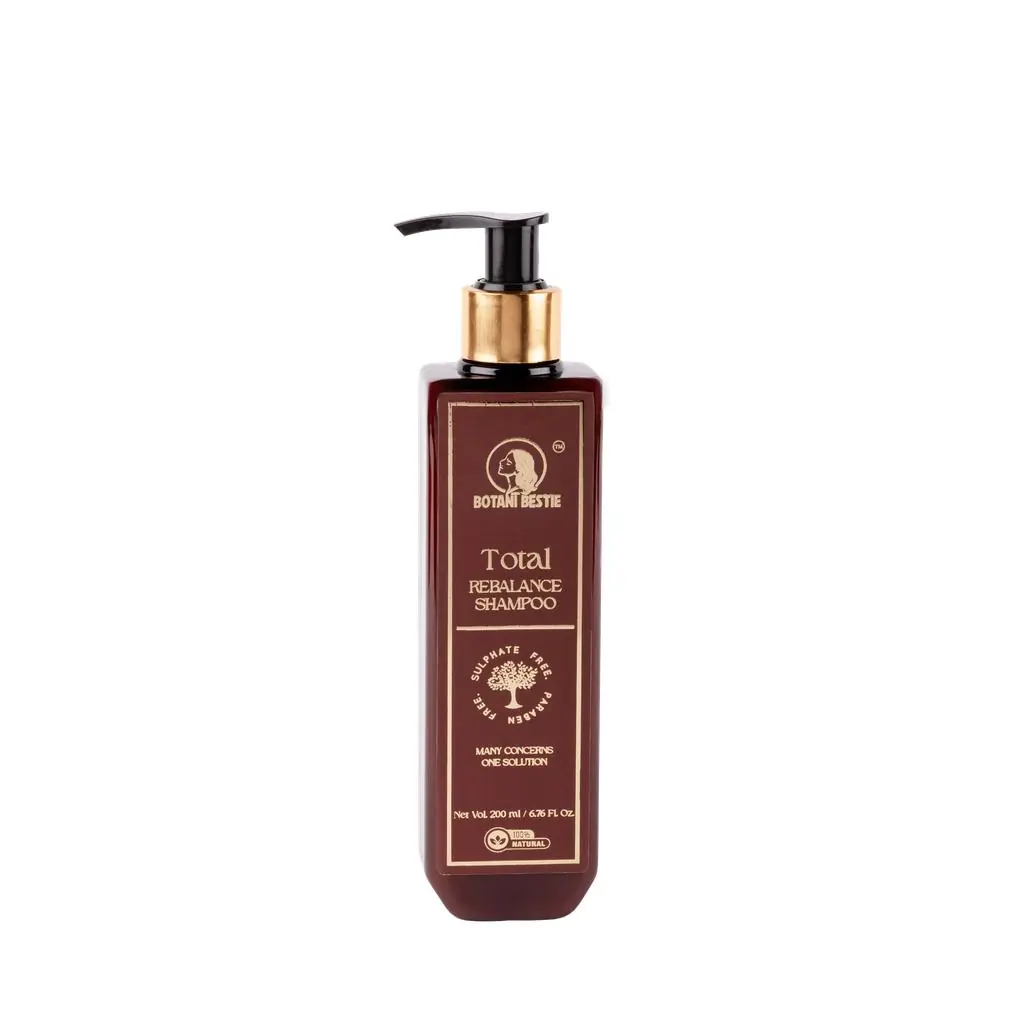
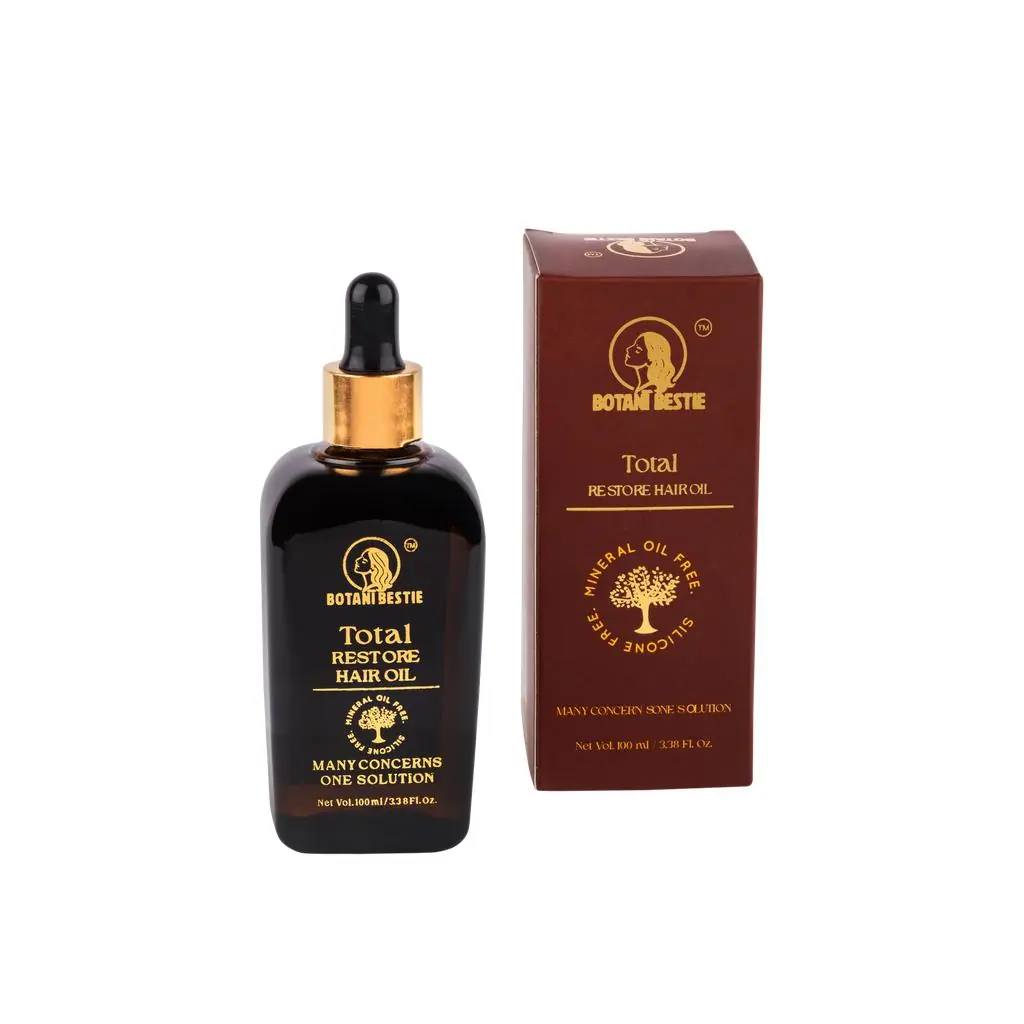
Total Rebalance Shampoo & Total Restore Hair Oil
by Botani Bestie
ACV and Onion are deliberately placed in the products where each works best — based on their mechanisms, optimal delivery formats, and contact time requirements.
🍎 ACV — in Total Rebalance Shampoo
ACV belongs in a shampoo because pH correction needs to happen at every wash — the single most consistent touchpoint between product and scalp. It is formulated at a calibrated pH within the shampoo's buffering system, making it safe, effective, and consistent without any dilution effort from the user.
🧅 Onion — in Both Total Restore Hair Oil AND Total Rebalance Shampoo
Onion extract is used in both products because its mechanisms benefit from both formats: the oil delivers maximum follicle penetration for quercetin and sulphur compounds during extended contact; the shampoo provides consistent daily anti-inflammatory and antimicrobial scalp maintenance. Both products use deodorised onion extract — the hair-active compounds without the volatile odour.
Complete formula alongside ACV & Onion:
Frequently Asked Questions
"The smartest ingredient in your hair routine has been sitting in your kitchen this whole time. It just needed the right formula to work properly."
Ready to make the honest switch?
Our products are built on the same principles as every article we write — pure ingredients, real results, nothing to hide.
Explore Our Products