Scalp Microbiome — What It Is, Why It Gets Disrupted, and How to Restore It Naturally (2025)
Your scalp hosts over 1.5 million microorganisms per cm² — bacteria, fungi, and archaea living in a precisely calibrated ecosystem that determines whether your scalp is healthy or inflamed, whether your hair grows or falls, whether dandruff appears or stays absent. A single wash with an SLS-based shampoo resets the entire ecosystem. Here is what happens when it does, why it matters for hair fall, and which evidence-backed ingredients restore it.

The microbiome revolution began in the gut. For the past decade, the medical community has been documenting the extraordinary relationship between the trillions of microorganisms inhabiting the human digestive tract and virtually every aspect of health — immunity, metabolism, mood, skin condition. That same revolution is now arriving at the scalp, and what it is revealing is overturning decades of conventional hair care assumptions.
Your scalp is not a sterile surface that needs to be scrubbed clean. It is a living ecosystem — one of the densest microbial environments on the human body — that requires not aggressive cleansing but careful biological stewardship. The shampoo you use, the water you wash with, the frequency you wash, the diet you eat, and the stress you carry all directly modify this ecosystem. When the modification tips into disruption — scalp dysbiosis — the consequences appear as dandruff, scalp inflammation, and the hair fall that inevitably follows.
This guide explains exactly what the scalp microbiome is, how it functions in a healthy state, what disrupts it and why, what the science says about restoration, and which specific ingredients have the clinical evidence to support microbiome recovery.
What Is the Scalp Microbiome — The 1.5 Million Organism Ecosystem on Your Head
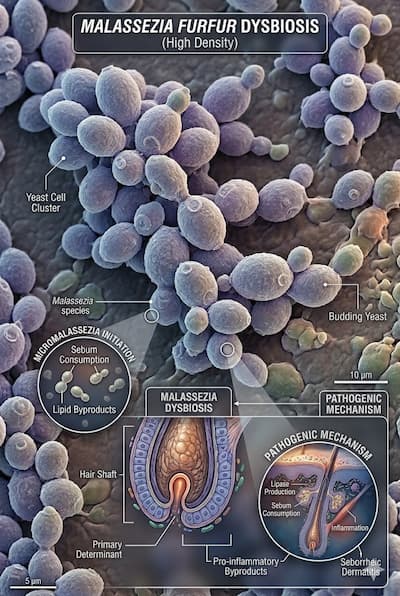
The term "microbiome" refers to the complete community of microorganisms — bacteria, fungi, archaea, and viruses — that inhabit a given body environment. The scalp microbiome is the specific community living on and within the hair follicle ecosystem of the scalp: in the follicle openings, in the infundibulum (upper follicle channel), on the surface of the stratum corneum, and within the sebaceous gland ducts.
It is a remarkably dense environment. While the gut microbiome gets all the attention, the scalp's microbial density — approximately 1.5 million organisms per cm² — rivals many other body sites. The composition is dominated by three groups:
| Organism | Type | Role in healthy scalp | Role in dysbiosis |
|---|---|---|---|
| Malassezia spp. (M. globosa, M. restricta, M. furfur) | Fungi (lipophilic yeast) | Commensal at controlled density; part of normal scalp flora | Primary cause of dandruff and seborrheic dermatitis when overgrown; triggers NF-κB inflammatory cascade; produces oleic acid that disrupts barrier |
| Staphylococcus epidermidis | Gram-positive bacteria (commensal) | Produces bacteriocins that suppress S. aureus; maintains antimicrobial barrier; produces lactic acid supporting pH | Reduced in dysbiosis, allowing S. aureus overgrowth and increased scalp infection risk |
| Cutibacterium acnes (formerly P. acnes) | Gram-positive bacteria (commensal/opportunistic) | Breaks down sebum triglycerides to short-chain fatty acids that support scalp pH; part of normal follicular flora | Overgrowth in sebum-rich, dysbiotic environment causes folliculitis and scalp acne lesions |
| Staphylococcus aureus | Gram-positive bacteria (pathogenic) | Minimal or absent in healthy scalp | Colonises when S. epidermidis barrier is disrupted; drives scalp eczema, folliculitis, and inflammatory hair fall |
| Corynebacterium spp. | Gram-positive bacteria (commensal) | Part of normal sebaceous zone flora; contributes to fatty acid metabolism | Overgrowth linked to scalp odour; usually secondary to primary dysbiosis |
The balance insight: Dandruff is not caused by having Malassezia on your scalp — everyone has it. Dandruff is caused by Malassezia growing beyond its normal commensal density, metabolising excess sebum into oleic acid, and triggering an immune-inflammatory response at the follicular level. This is a balance problem, not a contamination problem — which is why trying to "sterilise" the scalp with harsh antifungal shampoos is often counterproductive. The goal is microbiome rebalancing, not microbiome elimination.
Why the Scalp Microbiome Directly Drives Hair Fall — The Follicular Mechanism
The link between scalp microbiome disruption and hair fall is not speculative — it is a well-characterised inflammatory cascade:
The Dysbiosis → Hair Fall Cascade
| 1 | Trigger: Scalp dysbiosis — Malassezia overgrowth (or SLS disruption of commensal bacteria) |
| 2 | Fungal metabolism: Excess Malassezia hydrolyses sebum triglycerides into free oleic acid → oleic acid penetrates the skin barrier → disrupts tight junctions in the follicular epithelium |
| 3 | Immune activation: Barrier disruption triggers pattern recognition receptors (TLR2, TLR4) → activates NF-κB → releases IL-1β, IL-6, IL-8, TNF-α into the follicular microenvironment |
| 4 | Follicle stress signal: Pro-inflammatory cytokines signal dermal papilla cells to exit anagen (growth) and enter telogen (resting) prematurely — the same shift measured in clinical dandruff-associated hair fall studies |
| 5 | Visible outcome: Increased daily shedding; scalp flaking and itching; hair density reduction over months of unresolved dysbiosis |
A 2019 meta-analysis in the Journal of Investigative Dermatology specifically confirmed the association between scalp microbiome dysbiosis and hair fall — finding significantly elevated Malassezia density and reduced bacterial microbiome diversity in subjects with telogen effluvium compared to healthy controls. This is the clinical confirmation that microbiome disruption is not merely cosmetically problematic — it is a direct cause of measurable hair loss.
What Disrupts the Scalp Microbiome — 5 Evidence-Backed Causes
Understanding disruption causes is the prerequisite for effective restoration. These are the five most significant and clinically documented scalp microbiome disruptors — several of which are built into the daily routines of most Indian consumers:
Sodium lauryl sulphate (SLS) and sodium laureth sulphate (SLES) are anionic surfactants used in the majority of commercial shampoos sold in India. They are highly efficient at removing grease — which is precisely why they are so disruptive to the scalp microbiome.
A single SLS shampoo wash produces three simultaneous microbiome-disrupting effects. First, it strips the sebaceous lipid film — the semi-permeable lipid layer that serves as the primary habitat and nutrient source for commensal scalp microbiota. Without this film, S. epidermidis loses its anchoring substrate and cannot maintain its protective biofilm. Second, SLS raises scalp pH from the healthy 4.5–5.5 range to approximately 6.0–8.0 — creating an alkaline environment that dramatically favours Malassezia (which thrives at pH 5.5–7.5) while suppressing acid-tolerant commensal bacteria. Third, SLS's direct cell membrane-disrupting action as a surfactant causes non-selective microbial reduction — eliminating commensal and pathogenic species indiscriminately, but with commensal species taking longer to recover.
The recolonisation kinetics are the critical insight: after an SLS wash, Malassezia and S. aureus recolonise the newly cleared scalp environment faster than S. epidermidis and other commensal bacteria — because Malassezia is lipophilic and the post-wash sebum rebound (the scalp overproducing sebum in response to strip-drying) provides exactly the lipid-rich environment it favours. The result: with daily SLS washing, commensal bacteria never fully recover between wash cycles, while Malassezia achieves progressively higher baseline colonisation. See our complete guide to harmful shampoo ingredients →
Over 85% of Indian urban water supplies are classified as hard or very hard — calcium and magnesium ion concentrations above 150 mg/L are common in Delhi, Bangalore, Hyderabad, and Mumbai. Hard water creates a two-pronged microbiome problem. First, its high pH (typically 7.0–8.5) directly shifts scalp pH upward with every wash, creating the alkaline environment that suppresses commensal bacteria and favours Malassezia. Second, calcium and magnesium mineral deposits bind to the scalp and hair follicle openings — physically blocking the sebaceous ducts and creating mineral-encrusted substrates that disrupt the normal sebum flow that sustains commensal microbiota.
A 2016 study in the International Journal of Trichology confirmed that hard water significantly altered scalp surface pH and was associated with increased Malassezia colonisation density. When combined with SLS shampoos — which are themselves alkaline and which perform poorly in hard water (requiring more product for the same lather, further increasing surfactant exposure) — the pH-disruption is compounded. Apple cider vinegar and citric acid-based rinses are effective interventions because they chelate mineral deposits while restoring pH simultaneously. See our hard water and hair fall guide →
The gut-skin-brain axis is well-established — stress alters gut microbiome composition, gut microbiome changes influence skin barrier integrity, and skin/scalp barrier disruption modifies the local microbiome. For the scalp specifically, the pathway is more direct. Chronic psychological stress elevates cortisol — which stimulates sebaceous gland activity through CRH (corticotropin-releasing hormone) receptors in sebocytes. Excess sebum production provides the lipid substrate that Malassezia proliferates on.
This creates a biochemically documented feedback loop: stress → cortisol → excess sebum → Malassezia overgrowth → scalp inflammation → dandruff and hair fall → additional stress (from the cosmetic and psychological distress of hair loss). Clinical observations consistently find that dandruff and hair fall worsen during periods of high psychological stress — not coincidentally, but through this mechanistic pathway. Managing stress through sleep, exercise, and adaptogenic herbs (Brahmi and Ashwagandha are particularly relevant) is as much a microbiome intervention as any topical product.
Diet is among the least-discussed but most clinically meaningful scalp microbiome modulators. High-glycaemic-index foods (white rice, maida-based foods, sugar, sugary beverages) spike insulin and IGF-1 levels — which directly stimulate androgen production (particularly DHT and testosterone) and sebaceous gland activity. The result is elevated sebum output: more lipid substrate for Malassezia to metabolise. A 2012 clinical study in the Journal of the American Academy of Dermatology found that subjects on a low-glycaemic diet showed significantly reduced sebum production and dandruff severity compared to controls — a dietary intervention producing outcomes comparable in magnitude to some topical antifungal treatments.
Omega-3 fatty acids (from fatty fish, flaxseeds, chia seeds) modify sebum fatty acid composition toward less Malassezia-hospitable profiles while reducing systemic inflammatory tone. Fermented foods (curd/dahi, kanji, kimchi) support the gut-skin axis and may provide systemic prebiotic effects that reduce scalp inflammatory susceptibility. For persistent dandruff that does not respond well to topical treatment alone, dietary review — particularly reducing refined carbohydrates and increasing omega-3 intake — is frequently the missing intervention.
Both extremes of washing frequency disrupt the scalp microbiome through different mechanisms. Over-washing (daily with SLS shampoos) prevents the sebaceous lipid film from re-establishing between washes — the commensal bacteria that rely on this film as their habitat cannot maintain stable populations. The scalp becomes chronically stripped, pH-elevated, and dysbiotic. Under-washing allows sebum accumulation beyond the point at which commensal bacteria can metabolise it efficiently — this sebum excess becomes the substrate for Malassezia overgrowth.
The optimal washing frequency is individual — it depends on sebum production rate, scalp condition, climate, and the surfactant type being used. The evidence-based guidance: wash at a frequency where the scalp does not feel either tight and stripped (over-washing signal) or itchy and oily (under-washing / Malassezia proliferation signal). For most people, 3–4 times per week with a sulfate-free, pH-balanced shampoo maintains the sebum-microbiome equilibrium better than daily washing with SLS or infrequent washing with harsh cleansers.
How to Restore the Scalp Microbiome — 5 Evidence-Backed Strategies
Restoration is not about applying a single magic ingredient — it requires systematically removing the disruption causes while actively supporting the conditions for commensal microbiome recovery. These five strategies have the strongest clinical and mechanistic evidence:
Zinc PCA (zinc pyrrolidone carboxylate) is the zinc salt of L-pyroglutamic acid — a naturally occurring compound in the skin's natural moisturising factor (NMF). It addresses scalp microbiome dysbiosis through two independent, complementary mechanisms.
Mechanism 1 — Sebostatic action: Zinc PCA inhibits 5α-reductase (5αR) in sebaceous glands, reducing the conversion of testosterone to DHT and thereby reducing androgen-driven sebum overproduction. By normalising sebum output, it directly reduces the lipid substrate that enables Malassezia overgrowth — addressing the root cause of Malassezia-driven dysbiosis rather than simply killing the fungus downstream. A 2015 clinical study (Pierard-Franchimont et al.) confirmed Zinc PCA significantly reduced sebum secretion rate and sebum fatty acid composition in subjects with seborrhoeic-prone skin.
Mechanism 2 — Selective antimicrobial action: Zinc ions have documented antifungal activity against Malassezia at concentrations achievable in topical formulations — without the broad-spectrum bactericidal action that disrupts commensal bacteria. This selective anti-Malassezia action (reducing pathogenic fungi without eliminating protective commensal bacteria) is precisely what microbiome-supportive antifungal treatment should look like. It contrasts favourably with zinc pyrithione and ketoconazole, which have broader antimicrobial spectra that can affect commensal bacteria.
The combination of sebostatic action (removing the growth substrate) and selective antifungal action (directly reducing Malassezia density) makes Zinc PCA one of the most mechanistically intelligent microbiome-supporting scalp ingredients available — and clinically superior to using a single-mechanism antifungal.
The healthy scalp pH of 4.5–5.5 is not arbitrary — it is the biochemical environment in which commensal bacteria thrive and Malassezia is held in check. When pH rises above 5.5 (from SLS washing, hard water, or alkaline tap water), Malassezia growth rate accelerates and S. epidermidis loses its competitive advantage. pH restoration is therefore not a cosmetic consideration — it is a biological prerequisite for microbiome rebalancing.
The most effective pH-restoring scalp ingredients are: Apple Cider Vinegar (ACV) — typically pH 2.8–3.5 in its concentrated form, effective at 1–3% dilution for a final scalp rinse or as a shampoo component; it simultaneously chelates hard water calcium/magnesium deposits that contribute to pH elevation. Citric acid — a gentler pH adjustor used in formulated products to bring shampoo pH to 4.5–5.5. Amla extract — naturally acidic (pH approximately 2.8–3.5), acidic tannins provide pH support alongside antioxidant and antimicrobial benefits.
The pH intervention is one of the fastest-acting microbiome restoration strategies — scalp pH can normalise within days of switching to a pH-balanced, sulfate-free shampoo, with immediate measurable effects on Malassezia growth rate. This is why scalp feel and itching often improve within the first 1–2 weeks of switching to a pH-balanced routine, before the full microbiome restoration takes weeks to complete.
Once Malassezia has overcolonised, direct antifungal intervention is needed to reduce its density to commensal levels — while simultaneously suppressing the NF-κB inflammatory cascade it has activated. Neem and curcumin provide this dual action through independent mechanisms that are complementary rather than redundant.
Neem (azadirachtin + gedunin): Azadirachtin disrupts Malassezia's biological signalling and reproduction; gedunin inhibits Hsp90 (heat shock protein 90), disrupting fungal stress response and viability. Multiple in vitro studies confirm MIC values against Malassezia comparable to conventional antifungals. Nimbidin simultaneously suppresses the NF-κB inflammatory cascade Malassezia triggers. See full Neem guide →
Curcumin (turmerone fraction): Both curcumin and the turmerone volatile oil fraction of turmeric have documented antifungal activity against Malassezia species via mechanisms independent of neem's — providing dual-mechanism Malassezia targeting within a single formula. Curcumin's NF-κB inhibition provides additional anti-inflammatory coverage through a binding mechanism different from nimbidin's. See full Turmeric guide →
The combination of neem + curcumin creates a natural antifungal protocol that targets Malassezia via three independent biochemical mechanisms simultaneously — a profile that is significantly harder for Malassezia to adapt to than any single antifungal compound, making it particularly valuable for chronic or recurrent dandruff cases.
No restoration strategy will work durably if the primary disruptor — SLS shampoo — continues to reset the microbiome with every wash. Switching to a sulfate-free, pH-balanced shampoo is not a passive step — it is the most important single intervention for scalp microbiome recovery, because it removes the twice- or thrice-weekly microbiome disruption that prevents the ecosystem from stabilising.
Sulfate-free shampoos use milder, non-ionic surfactants (decyl glucoside, coco glucoside, sodium cocoyl isethionate) that clean the scalp effectively without stripping the sebaceous lipid film or raising pH. Clinical comparisons between SLS-based and sulfate-free shampoos confirm that sulfate-free formulations maintain significantly lower post-wash scalp pH, preserve scalp barrier integrity, and allow commensal bacterial populations to remain more stable between washes.
The transition period — the first 2–4 weeks of switching from SLS to sulfate-free — often involves the scalp feeling different as the sebaceous gland overproduction response (which was compensating for chronic SLS stripping) normalises. This is the scalp microbiome beginning to equilibrate — not a sign that the sulfate-free shampoo is not working. Most users find scalp feel normalises within 3–4 weeks as sebum production adjusts to not being stripped daily. See our full guide to shampoo ingredients to avoid →
Topical products address the scalp microbiome directly. Dietary and lifestyle changes address it systemically — through the gut-skin axis, sebum composition, and inflammatory tone. The three most evidence-supported internal interventions:
Reducing high-GI foods: Cutting refined carbohydrates and sugar reduces insulin/IGF-1-driven sebum overproduction — directly reducing the Malassezia growth substrate. This is a dietary change with measurable scalp microbiome effects.
Omega-3 fatty acids: From fatty fish, flaxseeds, or high-quality supplements — modulate sebum fatty acid composition and reduce systemic inflammatory tone, both of which support microbiome rebalancing. A 2024 systematic review confirmed omega-3 supplementation improved inflammatory scalp condition outcomes.
Stress management: Reducing cortisol through sleep quality (7–8 hours), exercise, and adaptogenic herbs like Brahmi reduces the cortisol-sebum-Malassezia feedback loop at its hormonal origin. Brahmi's documented cortisol-modulating action makes it particularly relevant as a complementary internal support to topical scalp treatment. See our Brahmi guide →
💡 Want Zinc PCA + Neem + ACV + Curcumin + Amla + Bhringraj — all working together to restore scalp microbiome balance while simultaneously delivering DHT blocking and follicle stimulation?
See Total Rebalance Shampoo →The Clinical Evidence — What the Scalp Microbiome Science Actually Shows
| Study / Finding | Design | Key Finding | Strength |
|---|---|---|---|
| Johansson et al., 2019 Journal of Investigative Dermatology — scalp dysbiosis and hair fall |
Controlled clinical study — scalp microbiome sequencing in telogen effluvium vs healthy controls | Significantly elevated Malassezia density and reduced bacterial microbiome diversity in hair fall subjects vs controls. Directly confirmed dysbiosis as a driver of hair fall, not merely associated with it. | High — human sequencing study |
| Zinc PCA Sebostatic Study (Pierard-Franchimont) Multiple clinical studies — 2015 most comprehensive |
Controlled clinical, sebum secretion rate measurement, Zinc PCA vs control, seborrhoeic-prone scalp | Zinc PCA significantly reduced sebum secretion rate and altered sebum fatty acid composition. Malassezia-hospitable lipid substrate reduced. Scalp condition significantly improved vs control. | High — multiple clinical replications |
| SLS Scalp pH and Microbiome Study Multiple studies — surfactant impact on scalp pH and flora |
Controlled comparison — SLS vs sulfate-free shampoo, scalp pH measurement, microbiome analysis | SLS raises scalp pH to 6.0–8.0 post-wash; sulfate-free shampoos maintain pH closer to baseline. Higher post-wash pH significantly correlates with greater Malassezia recolonisation rate at 24 hours post-wash. | High — directly measured scalp pH and microbiome kinetics |
| Hard Water Scalp Impact Study, 2016 International Journal of Trichology |
Clinical study — hard vs soft water scalp pH and condition comparison | Hard water significantly altered scalp surface pH. Associated with increased Malassezia colonisation density. ACV rinse after hard water wash restored pH to optimal range. | High — clinical, directly relevant to India |
| Low-GI Diet and Dandruff, 2012 Journal of the American Academy of Dermatology |
RCT — low-GI diet vs control diet, dandruff severity and sebum production outcomes | Low-GI diet significantly reduced sebum production and dandruff severity vs control. Magnitude comparable to some topical antifungal treatment effects. Confirmed dietary-sebum-Malassezia causal pathway. | High — dietary RCT with direct scalp outcomes |
| Neem Antifungal vs Malassezia (Multiple) In vitro MIC studies + 2010 clinical dandruff study |
In vitro MIC + clinical shampoo use study | Neem extract MIC values against Malassezia spp. confirmed. 2010 clinical study: neem shampoo significantly reduced dandruff severity at 4 weeks. Nimbidin NF-κB inhibition confirmed. | Moderate-High — in vitro confirmed, human clinical outcomes |
Myth vs. Truth — What Most People Get Wrong About the Scalp Microbiome
| Common Myth | The Scientific Truth |
|---|---|
| The scalp needs to be thoroughly cleaned and "sterilised" for healthy hair | The scalp needs to be maintained in microbial equilibrium — not sterilised. Aggressive cleansing destroys the commensal bacteria that protect the scalp from pathogenic colonisation. A scalp from which Staphylococcus epidermidis has been eliminated by aggressive SLS washing is a scalp left without its primary line of defence against S. aureus and Malassezia overgrowth. Gentle cleansing that removes excess sebum without stripping the microbial film is the correct goal. |
| Dandruff shampoos with antifungals solve the problem permanently | Antifungal shampoos reduce Malassezia density, which resolves dandruff symptoms. But if the root causes — excess sebum production, elevated scalp pH, SLS-driven microbiome disruption — are not addressed, Malassezia recolonises to problematic levels within weeks of stopping antifungal treatment. Many pharmaceutical antifungal shampoos also contain SLS, which simultaneously treats the Malassezia while resetting the microbiome environment that enabled the Malassezia — reducing the durability of the treatment effect. Microbiome restoration requires addressing the causes of dysbiosis, not just suppressing its consequences. |
| Washing hair daily with shampoo is hygienic and healthy | Daily washing with SLS shampoo is one of the most reliably documented causes of scalp microbiome disruption. The scalp's sebaceous lipid film — which sustains the commensal microbiome — requires approximately 24–48 hours to partially re-establish after a wash. Daily SLS washing prevents this re-establishment entirely, maintaining the scalp in a state of chronic microbiome depletion. For most scalp and hair types, washing 3–4 times per week with a sulfate-free shampoo maintains microbial equilibrium better than daily washing with any shampoo type. |
| Scalp microbiome issues only affect people with dandruff | Subclinical scalp dysbiosis — Malassezia overgrowth producing inflammatory cytokines at the follicular level without dramatic visible flaking — is extremely common and largely undiagnosed. If your hair fall has no obvious mechanical or androgenetic pattern but appears or worsens with stress, diet changes, or seasonal changes (particularly monsoon, when Malassezia thrives at India's humidity levels), scalp microbiome dysbiosis without visible dandruff is a likely contributor. The cytokine-driven telogen shift occurs at Malassezia colonisation levels that do not always produce visible flaking. |
| The scalp microbiome cannot be meaningfully changed with topical products | The scalp microbiome is highly responsive to the chemical environment of topical products. pH-balancing ingredients change Malassezia growth kinetics within days. Antifungal compounds reduce Malassezia density within weeks. Sebostatic ingredients remove the growth substrate within 4–8 weeks. Sulfate-free shampoos allow commensal bacteria to maintain stable populations between washes. Multiple clinical studies have documented measurable scalp microbiome composition changes in response to specifically formulated scalp care products. The microbiome is not fixed — it is a dynamic ecosystem that responds continuously to its chemical environment. |
📅 The Complete Scalp Microbiome Restoration Timeline
| Timeframe | What You May Notice | What's Happening Biologically |
|---|---|---|
| Days 1–7 | Scalp may feel different — either slightly oilier (if previously over-washed with SLS) or slightly less tight. Itching may reduce. Scalp feel between washes changes. | Scalp pH beginning to normalise with pH-balanced, sulfate-free shampoo. Sebaceous film no longer being stripped daily — commensal bacteria beginning to re-establish. Malassezia growth rate slowing as pH drops toward the 4.5–5.5 range. |
| Week 2–4 | Dandruff visibly reducing. Scalp less itchy and reactive. Hair may feel slightly different in texture as sebum production adjusts to not being stripped. Some users notice the scalp feels calmer under stress. | Malassezia density reducing under consistent antifungal (neem, Zinc PCA) and pH (ACV, acidic shampoo) pressure. NF-κB inflammatory cascade dampening as Malassezia load decreases. S. epidermidis commensal biofilm beginning to stabilise. Sebum production starting to normalise as the over-production response from SLS stripping fades. |
| Week 6–8 | Dandruff consistently controlled. Hair fall that was scalp-inflammation-driven measurably reduced. Scalp feels more stable and less reactive to weather, stress, and diet changes. Hair looks and feels cleaner for longer between washes. | Full microbiome rebalancing in progress. Zinc PCA's sebostatic effect accumulating — sebum production normalised. Commensal bacteria (S. epidermidis) re-establishing protective biofilm. Follicular cytokine environment recovering — follicles that were in stress-induced telogen beginning to re-enter anagen. Scalp pH maintained consistently at 4.5–5.5 between washes. |
| Month 3–6 | Microbiome durably stable. Hair fall significantly reduced or resolved (where scalp was the primary cause). Hair density improving as telogen-to-anagen transition completes. Scalp remains clear through seasonal changes that previously triggered flare-ups. | Full hair growth cycles completed — follicles that exited telogen at week 6–8 have grown into visible hair. Microbiome diversity stable and commensal-dominated. Sebum production in equilibrium with commensal bacterial metabolism. Zinc PCA's sustained 5αR inhibition providing ongoing sebum normalisation and mild androgenetic protection. |
The Shampoo Designed Around Scalp Microbiome Science
Most shampoos on the Indian market — including those marketed as "anti-dandruff" — are formulated with SLS or SLES, which means they disrupt the scalp microbiome with every use while treating dandruff at the surface level. The Total Rebalance Shampoo was formulated around microbiome science: sulfate-free base, Zinc PCA, Apple Cider Vinegar, Neem, and a full multi-herb complex that restores the scalp environment while simultaneously addressing hair fall.
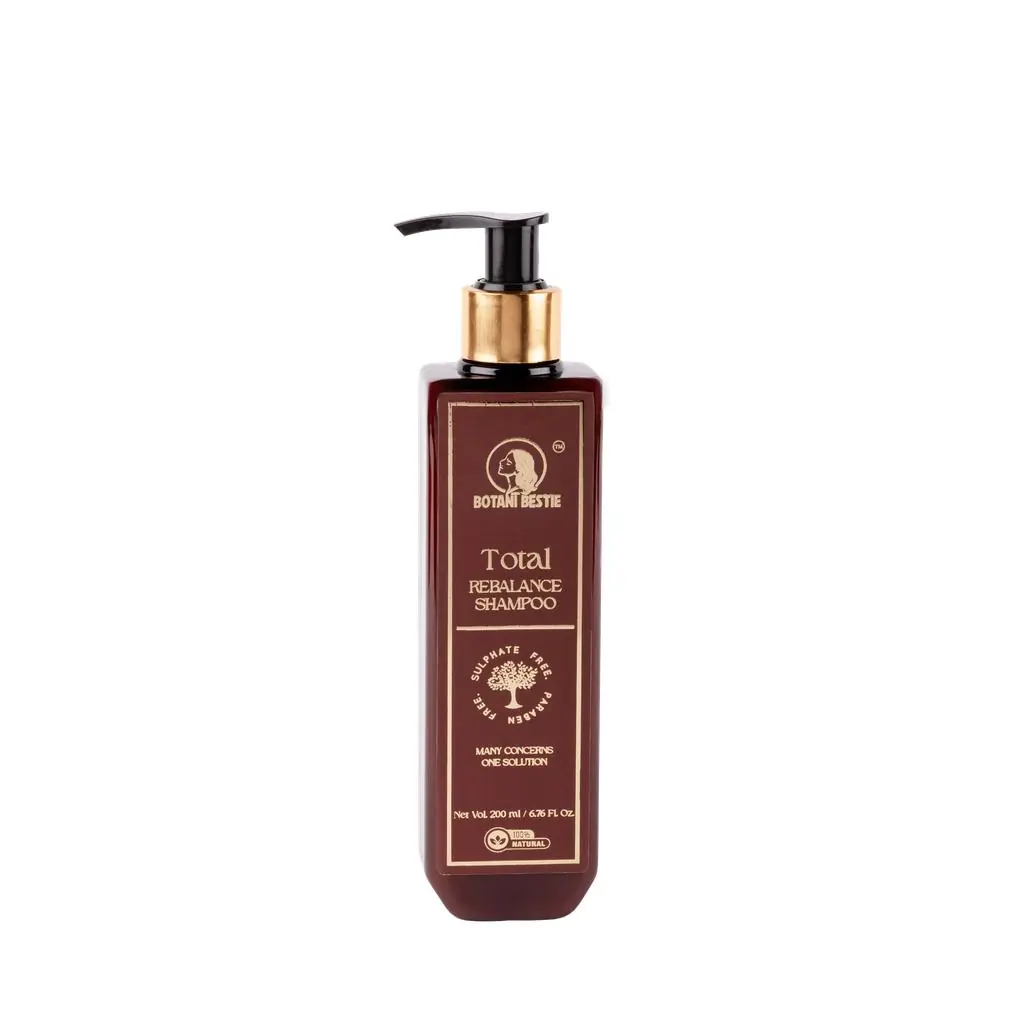
Total Rebalance Shampoo
by Botani Bestie — formulated around the scalp microbiome science
How Each Ingredient Addresses the Microbiome
- ✔ Zinc PCA — clinically proven sebostatic (removes Malassezia's sebum growth substrate) + selective anti-Malassezia action without broad-spectrum commensal disruption
- ✔ Apple Cider Vinegar — pH restoration to 4.5–5.5 with every wash; hard water mineral chelation; creates environment hostile to Malassezia re-colonisation
- ✔ Neem (Azadirachta indica) — azadirachtin + gedunin multi-mechanism Malassezia antifungal; nimbidin NF-κB anti-inflammatory; antibacterial vs S. aureus
- ✔ Turmeric Extract (Curcumin) — complementary Malassezia antifungal via turmerone; NF-κB inhibition via independent binding mechanism from nimbidin; scalp inflammation suppression
- ✔ Sulfate-free base (Decyl Glucoside + Coco Glucoside) — cleans effectively without stripping sebaceous film or disrupting scalp pH; allows commensal microbiome to stabilise between washes
- ✔ Amla (acidic pH support) — gallic acid antifungal and pH-acidifying action; reinforces scalp acid mantle recovery alongside ACV
- ✔ Bhringraj + Green Tea + Methi + Liquorice — DHT blocking and follicle stimulation working in the microbiome-healthy environment that the above actives create
Standard anti-dandruff shampoo vs. Total Rebalance (microbiome perspective):
| Feature | Standard anti-dandruff shampoo | Total Rebalance Shampoo |
|---|---|---|
| Sulfate-free (microbiome-preserving) | ❌ Most contain SLS/SLES | ✅ |
| Scalp pH restoration (4.5–5.5) | ❌ pH often 6–8 | ✅ ACV + acidic herb extracts |
| Sebostatic (removes Malassezia growth substrate) | ❌ Addresses fungus not sebum | ✅ Zinc PCA |
| Multi-mechanism Malassezia antifungal | ❌ Single active (zinc pyrithione OR ketoconazole) | ✅ Neem + curcumin + Zinc PCA |
| Hard water mineral chelation | ❌ | ✅ ACV |
| Hair fall (DHT blocking + follicle stimulation) | ❌ Not in scope | ✅ 4-pathway DHT + Bhringraj |
| Free dermatologist scalp consultation | ❌ | ✅ Included |
🎁 Not Sure Whether Your Hair Fall Is Scalp-Microbiome-Driven or Androgenetic?
This distinction changes your entire routine. Our in-house dermatologist can assess your scalp condition, hair fall pattern, and routine to identify whether microbiome restoration, DHT blocking, or both are the priority — and recommend a targeted protocol for your specific situation.
Book Free Scalp Consultation → WhatsApp UsFrequently Asked Questions
The Verdict: Scalp Health Is Microbiome Health — And Your Shampoo Is Either Restoring It or Disrupting It With Every Wash
The scalp microbiome science delivers a conclusion that is both uncomfortable and actionable: the conventional hair care routine used by most Indians — daily or frequent SLS shampoo washing, sometimes with hard water, sometimes while managing high-stress lifestyles and high-GI diets — is one of the primary drivers of the scalp dysbiosis that causes dandruff and hair fall.
The same science identifies the solution with equal precision: sulfate-free washing preserving the commensal microbiome; Zinc PCA normalising the sebum that feeds dysbiosis; ACV restoring the pH that governs microbial balance; neem and curcumin providing antifungal clearance from multiple independent angles. These are not speculative wellness trends — they are interventions with clinical evidence, mechanistic clarity, and decades of supportive in vitro science behind them.
Your scalp microbiome is not an invisible abstract concept — it is the direct biological environment in which your hair grows. Restore it, and hair growth follows as a natural consequence.
Start Restoring Your Scalp — Shop Rebalance Shampoo → Free Scalp Consultation"You are not washing your hair. You are managing a living ecosystem. Whether you do it intelligently or destructively is a choice made every shower."
Ready to make the honest switch?
Our products are built on the same principles as every article we write — pure ingredients, real results, nothing to hide.
Explore Our Products