How to Choose Hair Products: 2 Things to Check Before You Buy
Most Indians flip a shampoo bottle, see "sulfate-free" and put it in the cart. That's only half the check — and missing the second half is why your hair still isn't improving. Here is the complete, two-step process.

Walk through any pharmacy or scroll through any beauty marketplace and you will see the same labels everywhere: "sulfate-free", "paraben-free", "chemical-free", "natural". These claims have become so common they have lost almost all meaning — because brands discovered that removing one bad ingredient and advertising it heavily is far cheaper than formulating a product that actually works.
The truth is, a shampoo or hair oil that is free from harmful ingredients will not damage your hair — but it also will not help your hair. Safety and efficacy are two different things. The complete check for any hair product requires two questions, not one.
At Botani Bestie, both questions sit at the core of every formula we make. This guide explains exactly what to look for — and what to walk away from.
The 2-Step Hair Product Check — Quick Summary
Check the ingredient list for SLS, SLES, parabens, silicones, mineral oil, and formaldehyde-releasing preservatives. If any appear in the first 5 ingredients — put it back.
Check for active nourishing ingredients — Ayurvedic herbs (Bhringraj, Amla, Brahmi), proteins (Keratin, Silk Protein), and beneficial oils (Argan, Rosemary, Neem). If none are present, it is just a safe-but-useless cleanser.
Ingredients are listed by concentration — the first 5 matter most. Scroll down for the complete lists and what each ingredient does.
Step 1 — Ingredients That Must Not Be Present
These are the ingredients that make a product unsafe for regular use. Their presence in a hair product is a hard disqualifier — no amount of beneficial ingredients can compensate for active harm being done to your scalp and hair follicles over time.
| Ingredient | What It Does | Why to Avoid It |
|---|---|---|
| SLS / SLES (Sodium Lauryl/Laureth Sulfate) |
Harsh foaming detergent | Strips scalp's natural sebum barrier, raises pH, causes chronic dryness, frizz, and accelerated color fade |
| Parabens (Methyl-, Propyl-, Butylparaben) |
Synthetic preservative | Mimic estrogen; linked to hormone disruption; can accumulate in tissue with daily scalp absorption |
| Silicones (Dimethicone, Cyclopentasiloxane) |
Coating agent for instant shine | Creates a plastic-like barrier that prevents real nourishment from reaching the hair shaft; leads to buildup, dullness, and dependency |
| Mineral Oil / Petrolatum | Cheap moisturiser filler | Derived from petroleum; coats hair without penetrating; clogs follicles with long-term use; no nutritional value for hair |
| Formaldehyde Releasers (DMDM Hydantoin, Quaternium-15) |
Preservative | Slowly release formaldehyde into the formula; strong scalp irritant; associated with contact dermatitis and long-term health concerns |
| Synthetic Fragrance / "Parfum" | Scent | "Parfum" is a blanket term covering hundreds of undisclosed chemicals; a leading cause of contact dermatitis and scalp sensitisation |
Total Rebalance Shampoo
by Botani Bestie
Bhringraj · Amla · Apple Cider Vinegar · Fermented Rice Water · Coconut Milk · Shikakai — every ingredient chosen for a specific reason. Nothing hidden. Nothing harmful.
Everything on the harmful list above?
None of it is in this bottle.
Free shipping · 30-Day Money-Back Guarantee
Step 2 — Ingredients That Must Be Present
This is where the real difference is made. A hair product that passes the first check (no harmful ingredients) but fails the second (no nourishing actives) is just an expensive bottle of water with some fragrance. Look for these categories of active ingredients:
Ayurvedic and Herbal Extracts
These are the most researched natural ingredients for Indian hair — chosen by Ayurveda over 3,000 years and now increasingly validated by clinical studies:
| Ingredient | Primary Benefit for Hair | Best Used In |
|---|---|---|
| Bhringraj | Reduces hair fall; promotes anagen (growth) phase; anti-inflammatory at follicle level | Oil, shampoo |
| Amla (Indian Gooseberry) | Blocks DHT via 5α-reductase inhibition; prevents premature greying; 30x more Vitamin C than oranges | Oil, shampoo |
| Brahmi | Reduces stress-related (telogen effluvium) hair loss; strengthens roots; improves scalp circulation | Oil, serum |
| Shikakai | Gentle natural cleanser; maintains scalp pH; conditions without stripping | Shampoo |
| Jatamansi | Promotes melanin synthesis (fights greying); calms scalp inflammation; thickens hair over time | Oil, serum |
| Methi (Fenugreek) | Rich in protein and nicotinic acid; reduces dandruff; prevents hair thinning | Oil, shampoo |
Hair-Strengthening Proteins
Proteins repair structural damage at the hair shaft level — especially critical if your hair has been coloured, heat-styled, or chemically treated:
- Keratin — The primary structural protein of hair. Topical keratin replenishes lost protein bonds, reduces breakage, and smooths the cuticle for frizz-free, stronger hair.
- Hydrolysed Soya Protein — Small molecular weight allows penetration into the hair cortex; improves elasticity, reduces split ends, and adds body.
- Silk Protein (Sericin) — Unique film-forming properties lock in moisture; adds a natural smoothness without silicone-like coating.
- Wheat Protein — Strengthens the hair shaft from within; particularly effective for fine, limp hair prone to breakage.
Carrier Oils and Essential Oils
Not all oils are equal — mineral oil coats without nourishing, while these plant-based oils genuinely penetrate and feed the scalp and hair shaft:
- Argan Oil — Rich in oleic acid, linoleic acid, and Vitamin E; deep conditions, reduces oxidative damage, and adds real shine (not silicone shine).
- Neem Seed Oil — Potent antifungal and antibacterial; the most effective natural treatment for Malassezia-driven dandruff, which is the most common cause of inflammation-related hair fall in India.
- Rosemary Essential Oil — A 2023 randomised clinical trial found rosemary oil comparable to 2% minoxidil for improving hair density at 6 months, with significantly fewer side effects (scalp itch). Works via improved follicular microcirculation.
- Tea Tree Oil — Antimicrobial; keeps pores clear and scalp healthy; synergises well with neem against dandruff.
- Lavender Oil — Promotes follicle activity; anti-inflammatory; shown in murine studies to significantly increase follicle number and depth.

The Formula That Works: Both Checks Together
Real, healthy hair care is a positive and negative check applied together. A product that passes both is genuinely rare — which is exactly why most people cycle through product after product without meaningful results.
The next time you pick up a shampoo, oil, or serum, flip it over and do the two steps in sequence:
- Step 1 — Scan for SLS, parabens, silicones, mineral oil, formaldehyde releasers. If present: put it back.
- Step 2 — Look for Bhringraj, Amla, Keratin, Argan Oil, or Rosemary. If none are present: it offers no real benefit.
Products that pass both checks are the only ones worth your money.
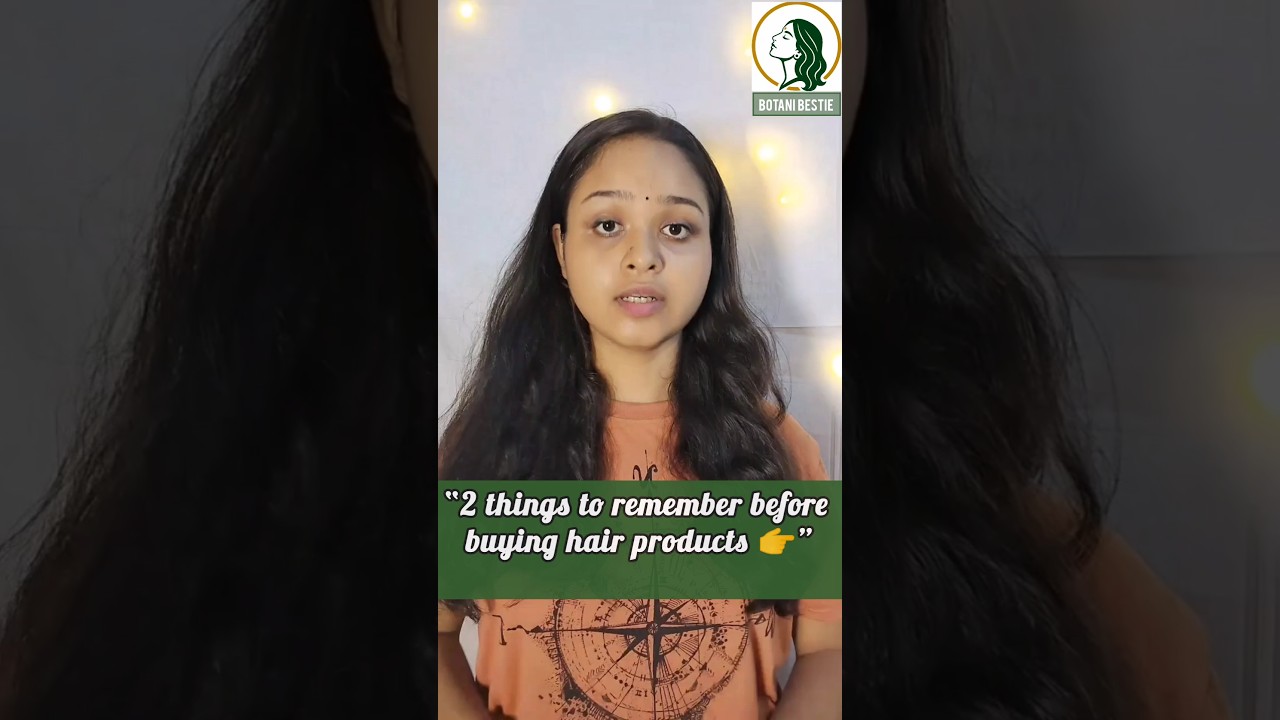
Watch: How to Read a Hair Product Label
Frequently Asked Questions
Not Sure What Your Hair Needs?
Take the Free 5-Min Hair & Skin Test
Answer a few questions about your hair type, concerns, and current routine. We will identify your exact hair fall triggers and recommend the right Ayurvedic formula for your specific needs — for free.
Start Free Hair TestBotani Bestie Products That Pass Both Checks
Total Rebalance Shampoo
SLS-free, paraben-free, silicone-free. 13+ Ayurvedic herbs, ACV, Fermented Rice Water.
View ProductTotal Restore Hair Oil
Mineral oil-free. Bhringraj, Amla, Brahmi, Argan, Neem, and 15+ Ayurvedic herbs.
View ProductTotal Revival Hair Serum
Silicone-free leave-in treatment. Keratin, Silk Protein, Rosemary, and Argan Oil.
View Product"Good hair care means avoiding the bad and embracing the good — both are equally important. Doing one without the other is the reason most routines don't deliver results."
Ready to make the honest switch?
Our products are built on the same principles as every article we write — pure ingredients, real results, nothing to hide.
Explore Our Products