Redensyl vs Minoxidil: Which is Actually Better for Hair Growth?
Minoxidil has ruled the hair loss world for 35 years. Now a plant-based newcomer called Redensyl is giving it a serious challenge — and the clinical data is surprising. Here's the honest, science-backed answer to which one actually wins.
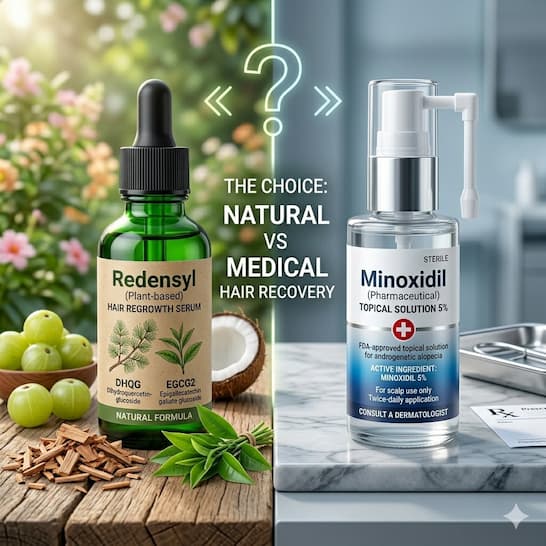
If you've been researching hair regrowth treatments in India, you've likely come across two names more than any other: Minoxidil — the FDA-approved pharmaceutical that's been the gold standard since the 1980s — and Redensyl, the newer plant-derived molecule that's rapidly gaining attention in dermatology circles and clean beauty communities alike.
Both work. Both have clinical evidence. But they work in fundamentally different ways, carry very different risk profiles, and suit different types of hair loss. Choosing the wrong one doesn't just mean wasting money — it can mean months of delayed results.
In this guide, we cut through the marketing noise and compare them head-to-head on the factors that actually matter: mechanism of action, clinical evidence, side effects, cost, and suitability for Indian hair types.
At a Glance: Redensyl vs Minoxidil
| Factor | Redensyl | Minoxidil |
|---|---|---|
| Type | Plant-based cosmeceutical | FDA-approved pharmaceutical drug |
| How it works | Activates hair follicle stem cells | Increases blood flow to follicles (vasodilator) |
| Years of research | ~10 years (limited studies) | 35+ years (extensive studies) |
| Side effects | Minimal — very well tolerated | Scalp dryness, itching, initial shedding, facial hair |
| Hair fall after stopping | Less likely (stem cell mechanism) | Hair loss often returns on stopping |
| Best for | Early-stage hair loss, sensitive scalps | Moderate-to-severe androgenetic alopecia |
| Application | Serum, once or twice daily | Solution/foam, twice daily |
| Cost in India | ₹650–1,200/month | ₹250–800/month |
| Fragrance / Alcohol | Usually none in quality formulas | Often contains alcohol (causes dryness) |
What is Redensyl? How Does It Work?

Redensyl is a patented cosmetic molecule developed by Givaudan, a Swiss fragrance and flavour company. Despite sounding synthetic, it's composed of entirely plant-derived compounds — primarily two polyphenols: DHQG (dihydroquercetin-glucoside), sourced from the Siberian larch tree, and EGCG2 (epigallocatechin gallate glucoside), a potent antioxidant found in green tea.
Its mechanism is what makes it genuinely exciting in hair science. Rather than simply improving blood flow like Minoxidil, Redensyl works at a more fundamental level: it directly activates the outer root sheath stem cells (ORS cells) of the hair follicle — the cells responsible for initiating the anagen (growth) phase. It also boosts the metabolism of dermal papilla fibroblasts, which are key regulators of follicle health and hair thickness.
In simple terms: Redensyl doesn't just wake up dormant follicles, it targets the biological machinery that decides whether a hair grows or rests.
What is Minoxidil? How Does It Work?
Minoxidil's hair loss origin story is one of medicine's more famous accidents. Originally developed in the 1970s as an oral medication for high blood pressure, researchers noticed that patients taking it were growing unexpected body and scalp hair — a side effect called hypertrichosis. This led to the development of a topical formulation specifically for hair loss.
The FDA approved topical Minoxidil for male pattern baldness in 1988, making it the first drug ever to receive this approval. Female pattern hair loss was added in 1991. It remains the only FDA-approved topical treatment for androgenetic alopecia to this day.
Minoxidil is a vasodilator — it widens blood vessels in the scalp, increasing blood flow and nutrient delivery to the hair follicle. This prolonged nourishment extends the anagen (growth) phase of the hair cycle and revitalises follicles that have been miniaturising due to DHT. The key limitation: it doesn't address the root cause of miniaturisation (DHT sensitivity), so hair loss typically resumes when Minoxidil is stopped.
What Does the Clinical Research Actually Say?
This is where it gets genuinely interesting — and where most blogs get it wrong by cherry-picking data.
Redensyl: The Evidence
- Pilot trial (Givaudan, 26 participants): In a double-blind placebo-controlled study, 85% of volunteers applying 3% Redensyl once daily for 3 months showed clinical improvement — including an average of +9% anagen (growing) hairs, −17% telogen (resting) hairs, and an increase in hair density corresponding to approximately 10,000 new hairs.
- Randomised controlled study (41 patients, PubMed, 2020): In a study of combined Redensyl and Sepicontrol A5 applied twice daily for 24 weeks, 7.7% of active-treatment patients showed great improvement and 73.1% showed moderate improvement. The anagen-to-telogen ratio increased significantly from 2.25 to 6.02 over 24 weeks.
- RCP vs Minoxidil study (106 patients, Karaca & Akpolat, 2019): A randomised controlled trial compared a combination of Redensyl, Capixyl and Procapil (RCP) against 5% Minoxidil in male AGA patients over 24 weeks. The RCP group showed a significantly higher researcher evaluation score (64.7%) versus the Minoxidil group (25.5%), and a better global photographic evaluation score (88.9% vs. 60%).
⚠ Important caveat: The initial Redensyl pilot trial was conducted by Givaudan (the manufacturer), and most Redensyl studies test it in combination with other actives. More large-scale independent research is needed before definitive conclusions can be drawn.
Minoxidil: The Evidence
- 35+ years of clinical data: Minoxidil is one of the most thoroughly studied hair loss treatments in existence, with hundreds of independent randomised controlled trials across different populations, geographies, and hair loss stages.
- Patient satisfaction consistently above 70% in controlled trials across both the 2% and 5% formulations, with 5% showing faster and more substantial regrowth.
- Effective in both frontal and vertex areas of the scalp — covering the full pattern of typical androgenetic alopecia.
- Proven rebound effect: Multiple studies confirm that hair loss resumes within 3–6 months of stopping Minoxidil, confirming that it manages rather than cures the underlying condition.
Side Effects: This is Where Redensyl Has a Clear Advantage
For many people — especially those with sensitive scalps, who are pregnant or breastfeeding, or who simply prefer to avoid pharmaceutical interventions — the side effect profiles of these two ingredients are decisive.
- Minimal side effects reported in all clinical studies
- No known hormonal interactions
- No initial shedding phase
- Safe for sensitive scalps
- No unwanted body or facial hair growth
- Generally considered safe for long-term cosmetic use
- Scalp dryness, itching, and flaking (common)
- Initial shedding in weeks 2–4 (temporary but alarming)
- Unwanted facial hair growth — particularly in women
- Scalp irritation from propylene glycol (in some formulas)
- Contact dermatitis in sensitive individuals
- Rapid hair loss on discontinuation
It is worth noting that Minoxidil's side effects are well-documented and generally manageable — which is actually a strength of a 35-year-old treatment. With Redensyl, the absence of reported side effects partly reflects the relative novelty and smaller size of its research base. More long-term data will emerge in coming years.
Redensyl or Minoxidil — Which One is Right for You?
🌿 Choose Redensyl if you…
- Are in the early stages of hair thinning or diffuse hair fall
- Have a sensitive or reactive scalp
- Prefer plant-based, clean beauty formulations
- Want a leave-in serum that doesn't disrupt your styling routine
- Are concerned about facial hair growth from Minoxidil (common in women)
- Want to use it as a preventive measure before significant loss occurs
- Are pregnant, breastfeeding, or avoiding pharmaceutical ingredients
💊 Choose Minoxidil if you…
- Have moderate-to-severe androgenetic alopecia (pattern baldness)
- Have significant crown or hairline recession
- Have already consulted a dermatologist who has recommended it
- Want the treatment with the most long-term clinical backing
- Are comfortable with twice-daily pharmaceutical application
- Are not deterred by the dependency (continuing use to maintain results)
Our Pick: Botani Bestie Total Revival Hair Serum with Redensyl
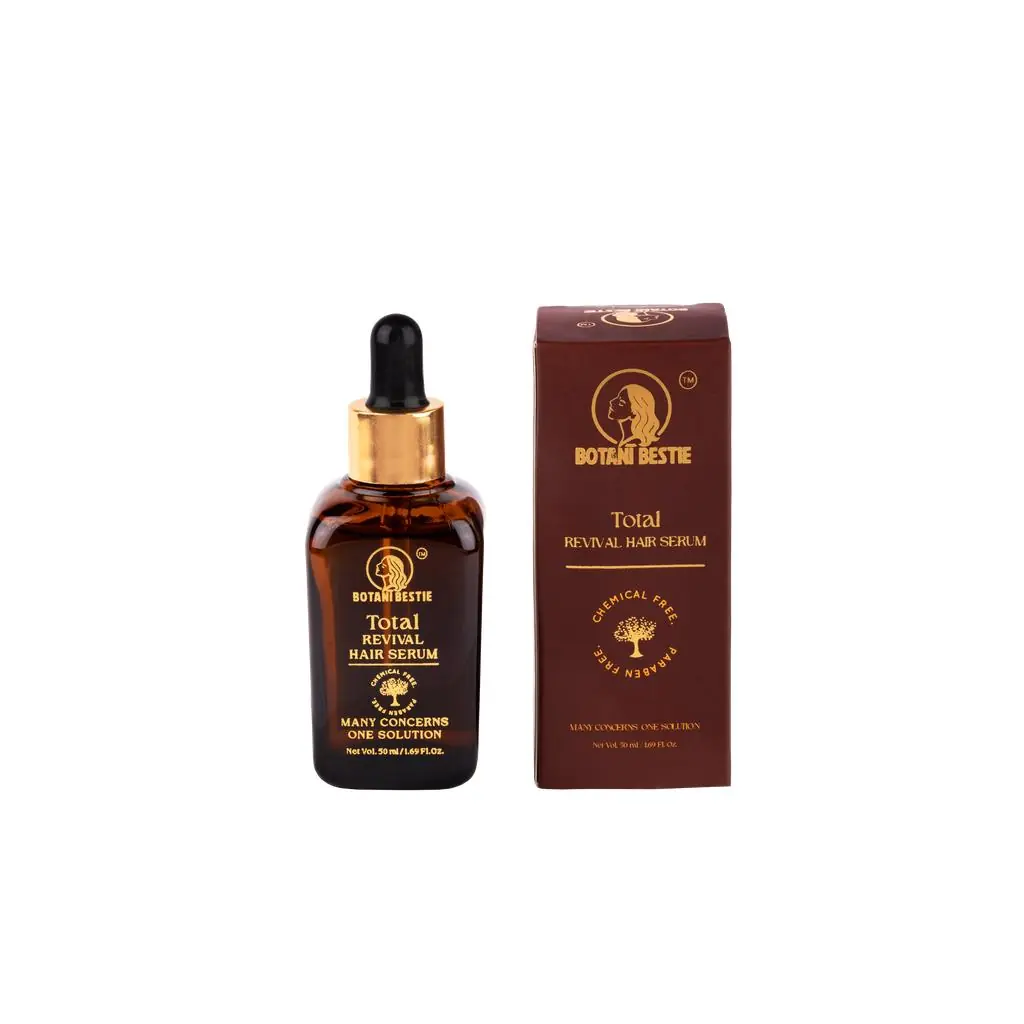
Total Revival Hair Serum
by Botani Bestie — ₹750 (MRP ₹999)
Rather than relying on Redensyl alone, the Total Revival Hair Serum stacks it with four other clinically backed actives — addressing hair fall from multiple biological pathways simultaneously:
- Redensyl — activates hair follicle stem cells to push hair into the anagen (growth) phase
- Procapil — a combination of Apigenin, Oleanolic Acid, and Biotinyl Tripeptide-1 that combats follicle ageing and DHT-induced miniaturisation
- Melitane™ — a biomimetic peptide that delays and reverses premature greying by stimulating melanin production
- Copper Peptides — promote wound healing at the follicle, increase hair shaft thickness, and have demonstrated anti-inflammatory scalp benefits
- Pea Sprout Extract & Green Tea — antioxidant protection for the follicle environment
Free from alcohol, parabens, silicones, and synthetic fragrance — making it safe for daily use without scalp irritation.
Shop Now → Free Hair ConsultationHow to Use a Redensyl Serum Correctly
To get maximum results from a Redensyl-based hair serum, follow this dermatologist-recommended protocol:
- Apply to a clean, towel-dried scalp: Redensyl penetrates best when the scalp is clean and pores are open after washing. Avoid applying to product-coated or oily hair.
- Section and apply directly to the scalp: Divide hair into sections and apply the serum directly onto the scalp — not the hair length. The active ingredients need to reach the follicle, not coat the shaft.
- Massage gently for 2–3 minutes: Use your fingertips (not nails) in circular motions to improve absorption and stimulate local blood circulation.
- Do not rinse: Redensyl serums are leave-in treatments. Rinsing removes the active ingredients before they can work.
- Use consistently — once or twice daily: Clinical studies use twice-daily application for 24 weeks. Consistency is non-negotiable. Most people notice reduced shedding within 6–8 weeks, and visible density improvement by 3 months.
- Pair with a strengthening shampoo: A sulfate-free shampoo with Bhringraj and ACV creates an optimal scalp environment for the serum to work in. Toxic shampoo ingredients will undermine the serum's effort.
Frequently Asked Questions

The Verdict: Which Should You Choose?
If you are in the early stages of hair thinning, have a sensitive scalp, or are simply looking for a clean, plant-based treatment that works without pharmaceutical risk — Redensyl (especially in combination with Procapil and Copper Peptides) is the smarter starting point.
If you have significant androgenetic alopecia, have consulted a dermatologist, and need the most extensively studied treatment on the market — Minoxidil remains the gold standard, ideally used alongside a clean serum stack.
For most people experiencing everyday Indian hair fall — driven by hard water, stress, nutritional gaps, and scalp inflammation — a Redensyl serum paired with the right shampoo is the most balanced, sustainable, and side-effect-free starting point available today.
Try Total Revival Serum → Free Hair Consultation"The best treatment is the one you'll use consistently — safely, and for the long term."
💚 Related Reads for Your Clean Beauty Journey

Foods for Hair Growth: What Indian Hair Actually Needs — The Nutrition-Follicle Guide (2025)
Hair is made of keratin protein — and Indian vegetarian diets are frequently too low in the amino acids, iron, zinc, and Vitamin D that build it. Before any oil or serum can work, the follicle needs nutrition arriving via the bloodstream. The honest, desi-food-specific guide to what your hair actually needs from your plate.
Read Article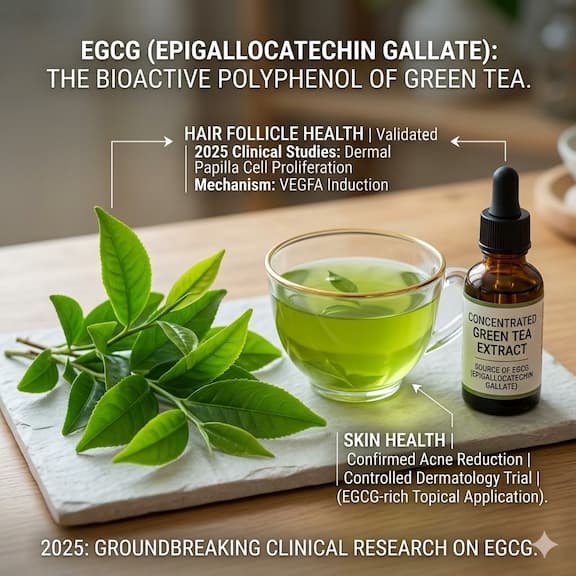
Green Tea (EGCG) for Hair and Skin: The Complete Science-Backed Guide (2025)
Green tea's EGCG is in every Botani Bestie product — and for good reason. A 2025 ScienceDirect study found EGCG promotes dermal papilla cell proliferation via VEGFA. For skin, a 2009 JDD RCT confirmed 2% green tea lotion effective for acne, and EGCG reactivates dying keratinocytes. The honest, complete 2025 guide.
Read Article
Hair Fall: The Complete Guide — Causes, Types & Real Fixes
Hair fall is a symptom, not a diagnosis. The master guide that maps every cause — nutritional, hormonal, genetic, scalp and stress — to its real fix, and links you to the deep-dive on whichever one is yours.
Read Article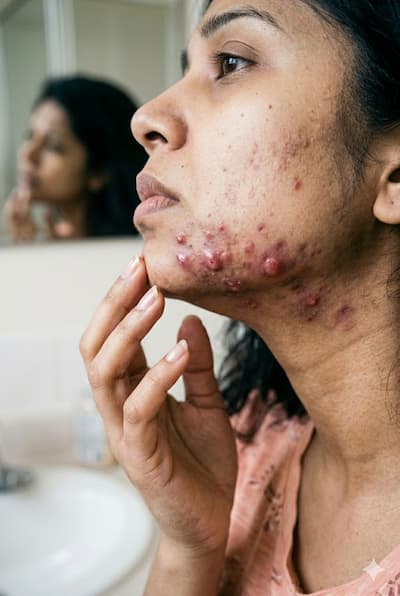
Hormonal Acne: The Real Cause and the Skin-Science Approach That Actually Works
Hormonal acne is driven by androgens, sebum excess, and inflammation — not poor hygiene. Most treatments address the surface while ignoring the root. This guide explains the mechanism and the science-backed Ayurvedic approach that works.
Read Article
5 Harmful Hair Serum Ingredients That Create a Cycle of Damage
That instant serum shine hides a damaging truth. Silicones, Alcohol Denat, DMDM Hydantoin — discover the 5 toxic hair serum ingredients that trap your hair in a dependency cycle, and what a clean serum looks like.
Read Article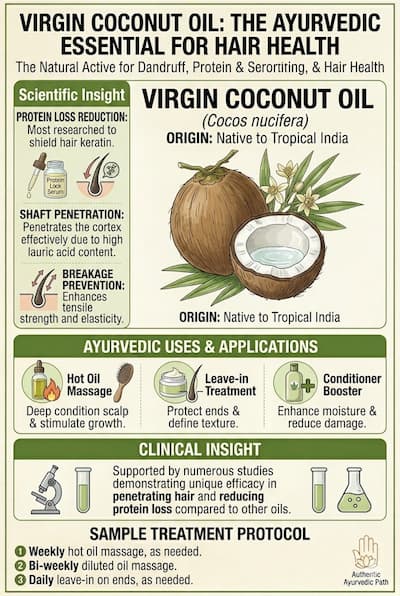
Coconut Oil for Hair: What the Science Actually Says (2025 India Guide)
Coconut oil is the most researched natural hair oil in the world — and the science tells a more nuanced story than either its fans or critics admit. This guide covers what coconut oil actually does, what it cannot do, and who should and should not use it.
Read ArticleReady to make the honest switch?
Our products are built on the same principles as every article we write — pure ingredients, real results, nothing to hide.
Explore Our Products