Post-Inflammatory Hyperpigmentation — Why Dark Marks Stay and How to Fade Them Faster
The acne heals. The waxing rash clears. The insect bite disappears. But the dark mark stays — sometimes for months, sometimes for years. Post-inflammatory hyperpigmentation (PIH) is one of the most common skin concerns among Indian women, and one of the most misunderstood. It is not a scar. It is not permanent. But it will not fade on its own schedule without the right actives — and most people are using the wrong ones. This is the complete, honest guide.

Walk into any dermatology clinic in India and the most common complaint is not acne, not dryness, not ageing. It is the dark marks left behind after the skin has healed. Post-inflammatory hyperpigmentation affects an estimated 65–70% of people with skin of colour — not because of anything wrong with darker skin, but because of a well-documented biological reality: more melanocyte activity produces a proportionally larger melanin response to the same inflammatory stimulus.
The frustrating part is that PIH is frequently treated incorrectly. People reach for brightening products before addressing the trigger still causing new marks. They use harsh actives that create new inflammation — paradoxically worsening the condition they are trying to treat. They skip SPF, which undoes every other intervention. And they expect results in days from a process that, at the biological level, takes months.
This guide explains precisely what is happening in your skin when a dark mark forms, which actives address which steps of that process, why darker skin tones require a gentler approach, and what a realistic, science-backed routine looks like — built around ingredients with documented evidence, not marketing claims.
Is It PIH? — How to Identify It and Distinguish From Other Dark Marks
Not all dark spots are PIH. The distinction matters because different types of pigmentation respond to different treatments:
- Flat, smooth surface — no texture change or raised area
- Appears after a resolved inflammatory event (acne, waxing, eczema, insect bite, cut)
- Colour matches the site of the original injury precisely
- Colour: brown, dark brown, or greyish-brown (epidermal); bluish-grey (dermal)
- Darkens noticeably with sun exposure
- Responds well to tyrosinase inhibitors + exfoliation + SPF
- Melasma — larger patches triggered by hormones + sun; symmetrical on cheeks, forehead, upper lip; pregnancy or OCP-linked; more complex to treat
- Sunspots (solar lentigines) — UV-induced, not inflammation-triggered; appear on sun-exposed areas after years of exposure
- PIE (Post-Inflammatory Erythema) — pink/red flat marks after acne; vascular, not melanin-driven; responds to anti-inflammatory not tyrosinase inhibitors
- Atrophic scars — textured, indented surface; cannot be faded with brightening actives
💡 If your dark marks are flat, match the exact site of a previous skin injury, and darken with sun — it is almost certainly PIH, and the approach in this guide applies directly. If marks are symmetrical hormone-linked patches, you may have melasma — which requires a slightly different protocol discussed with a dermatologist.
The Biology of Dark Marks — What Is Actually Happening in Your Skin
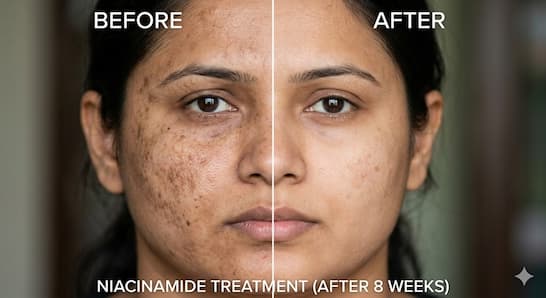
PIH begins not when the mark appears, but at the moment of inflammation — sometimes weeks before any visible discolouration. Understanding the sequence explains why treatment must start early and work across multiple steps simultaneously.
💡 Why PIH Is More Intense in Indian Skin Tones (Fitzpatrick IV–VI)
Indian skin tones fall predominantly in the Fitzpatrick IV–VI range — medium to dark brown skin with high melanocyte activity. These skin tones have the same number of melanocytes as lighter skin tones (Fitzpatrick I–III), but each melanocyte is more active — producing larger, more numerous, and more densely pigmented melanosomes per unit of inflammatory stimulus.
The practical result: the same acne breakout that produces a faint pink mark on fair skin produces a dark brown mark on medium-brown skin — and the mark takes proportionally longer to clear because there is more melanin to remove. This is a biological reality, not a flaw. It is the same mechanism that gives darker skin its superior natural UV protection and its slower visible ageing — the melanin that makes PIH more intense also provides significant photoprotection.
The implication for treatment: darker skin tones require gentler brightening approaches — aggressive actives like high-concentration AHAs, hydroquinone, or retinoids can themselves cause inflammation and new PIH if over-used. Tyrosinase inhibitors with excellent tolerability profiles (Niacinamide, Licorice, Turmeric, Aloe Vera aloesin) are the first-line approach for Fitzpatrick IV–VI skin.
5 Things That Make PIH Worse — The Mistakes to Stop Immediately
❌ Mistake 1: Picking and Squeezing Lesions
Every time you pick an acne lesion, wax burn, or scab, you create new trauma to the skin — triggering a fresh inflammatory cascade and a new round of melanocyte activation. A lesion that would have healed with mild PIH becomes a deep, prolonged-inflammation injury with significantly worse and longer-lasting pigmentation. The act of picking is the single most common reason PIH is darker and more stubborn than it needs to be.
Instead: Apply a targeted anti-inflammatory topical (Turmeric, Niacinamide, Aloe Vera) immediately around active lesions to suppress the inflammatory signal before it fully activates melanocytes. Let lesions heal undisturbed.
❌ Mistake 2: No SPF (Or Inconsistent SPF)
This is the most common and most impactful mistake. UV radiation directly stimulates melanocytes — independently of inflammation. Using tyrosinase inhibitors without daily SPF is like mopping the floor with the tap still running. Every morning without SPF 30+ darkens existing PIH marks and re-activates the melanocytes responsible for them, negating days or weeks of brightening progress.
Instead: SPF 30–50 broad-spectrum, every morning, 365 days a year — including cloudy days (UV penetrates cloud cover) and indoors (windows do not block UVA). This is non-negotiable in any PIH treatment protocol.
Lemon juice is phototoxic — its furocoumarin content reacts with UV light to produce intensified, irregular hyperpigmentation (phytophotodermatitis). Applied to PIH and then exposed to Indian sun, it reliably worsens the condition it is supposed to treat. Raw undiluted Apple Cider Vinegar has a pH of approximately 2–3 — far below the skin's natural pH of 4.5–5.5, capable of causing chemical irritation and — in darker skin tones — new PIH from the burn itself.
Instead: Use formulated brightening actives in pH-balanced, skin-appropriate concentrations — Licorice extract at 0.5–1%, Niacinamide at 5%, Turmeric in a stable formulation. These deliver the brightening benefit without the phototoxicity or acid burn risk.
Exfoliation helps PIH by accelerating the removal of melanin-loaded surface keratinocytes. But too much exfoliation — high concentrations of AHAs daily, aggressive scrubbing, multiple exfoliating products simultaneously — damages the skin barrier and creates new inflammation, triggering a new round of melanocyte activation. The resulting "over-exfoliation PIH" can be darker and more widespread than the original marks.
Instead: Salicylic Acid in a daily cleanser (at low concentration, in a pH-balanced formulation) provides consistent, gentle exfoliation without barrier disruption. Reserve higher-concentration AHA treatments for once or twice weekly maximum, and never combine multiple exfoliants on the same day.
Using brightening actives while acne is still breaking out — without addressing the acne itself — is ineffective at best. New marks are being created faster than existing ones can be faded. The brightening routine only becomes effective once the inflammatory trigger is controlled, or when the cleanser/skincare being used simultaneously addresses both the trigger and the PIH.
Instead: Use a formulation that addresses both acne (Salicylic Acid, Neem, Tulsi — antibacterial and pore-clearing) and PIH (Niacinamide, Licorice, Turmeric — melanin inhibition) in the same daily routine. This prevents new marks from forming while fading existing ones.
PIH fades from the outside in — the surface layers clear first while deeper melanin deposits are still present. Marks appear lighter before they are fully resolved, which leads many people to stop treatment prematurely. Residual deep melanin that is not cleared by sustained treatment either remains visible or resurfaces with the next sun exposure or inflammatory event.
Instead: Continue the brightening routine for at least 4–6 weeks beyond the point where the mark appears gone to the naked eye. For dermal PIH, this means months of sustained use — consistency over time, not intensity of a short burst.
💡 Niacinamide, Licorice, Turmeric, Salicylic Acid, and Green Tea — the full PIH-active stack in one gentle, pH-balanced wash.
See Total Radiance Face Wash →The 7 Actives That Fade PIH — Evidence, Mechanism, and Why Each Matters
Each active in an effective PIH routine works on a different step of the melanin-production pathway. The most effective approach combines tyrosinase inhibitors (blocking new melanin synthesis), melanosome transfer inhibitors (blocking delivery of melanin to the visible skin layers), exfoliants (removing melanin-loaded surface cells faster), and antioxidants (blocking UV and pollution-driven melanocyte re-activation).
Niacinamide's mechanism for PIH is unique and complementary to all other brightening actives. While most ingredients inhibit tyrosinase (blocking melanin synthesis in the melanocyte), Niacinamide works one step later in the pathway — it inhibits the transfer of melanosomes (the melanin-filled packages) from melanocytes to keratinocytes.
This distinction matters: even if a tyrosinase inhibitor reduces new melanin production, any melanin already synthesised and packaged in melanosomes can still be transferred to keratinocytes and appear at the skin surface. Niacinamide blocks this transfer step — reducing the delivery of existing melanin to the visible skin layers, not just the production of new melanin. Used alongside tyrosinase inhibitors (Licorice, Turmeric), the effect is additive: less melanin produced AND less of what is produced reaches the skin surface.
A 2002 double-blind RCT found that 5% Niacinamide significantly reduced hyperpigmentation and improved skin tone versus vehicle control over 8 weeks. Its secondary benefits — sebum regulation, anti-inflammatory activity, and skin barrier strengthening — also directly address the acne trigger that commonly causes PIH in the first place.
Evidence rating: Strong — multiple RCTs in human subjects confirming pigmentation reduction
Licorice root extract (Mulethi) is Ayurveda's most precise skin brightening herb — and one of the most mechanistically supported brightening ingredients in any tradition, Eastern or Western.
Its primary bioactive compound for pigmentation, glabridin, is a potent tyrosinase inhibitor. A study published in Pigment Cell Research found glabridin to be 16× more potent than kojic acid — a common synthetic brightening agent — as a tyrosinase inhibitor. It works by binding to the copper ion at tyrosinase's active site, blocking the enzyme's ability to catalyse tyrosine-to-melanin conversion. Critically, glabridin achieves this without the cytotoxic effect on melanocytes that hydroquinone produces — making it safe for long-term use in darker skin tones where hydroquinone's melanocyte damage risk is a serious concern.
A second bioactive, liquiritin, disperses existing melanin deposits by inhibiting melanin-binding proteins and breaking up melanin clusters already present in the skin — directly lightening existing marks rather than only preventing new ones. A 2002 clinical study found liquiritin cream significantly reduced facial melanin and improved evenness versus placebo over 4 weeks.
Licorice also has anti-inflammatory properties via COX-2 inhibition — reducing the inflammatory signal that activated melanocytes in the first place, providing both a preventive and corrective effect in the same ingredient.
Evidence rating: Strong — glabridin tyrosinase inhibition well-established; clinical brightening studies confirm efficacy
Turmeric works on PIH at two levels simultaneously — and this dual action makes it uniquely valuable in the PIH context.
As a tyrosinase inhibitor: Curcumin (turmeric's primary bioactive at 95–99% concentration in high-grade extracts) competitively inhibits tyrosinase activity. Multiple in vitro studies confirm curcumin's tyrosinase inhibiting activity, and a 2010 clinical study found topical turmeric cream significantly reduced facial pigmentation over 4 weeks compared to placebo.
As an anti-inflammatory: Curcumin inhibits NF-κB — the master transcription factor for inflammatory cytokine production. By suppressing IL-1α, TNF-α, and prostaglandins, curcumin reduces the inflammatory signal that activates melanocytes in the first place. This makes it simultaneously preventive (reducing new PIH formation from ongoing inflammation) and corrective (fading existing marks via tyrosinase inhibition).
At 95–99% curcumin concentration, topical turmeric provides pharmacological-grade bioactive delivery without the skin-staining associated with raw turmeric powder (which is only ~3% curcumin and contains yellow pigments that stain the skin surface).
Evidence rating: Strong — tyrosinase inhibition well-documented; clinical brightening studies confirm efficacy at standardised curcumin concentrations
Salicylic Acid's role in PIH treatment is mechanistically distinct from the tyrosinase inhibitors and Niacinamide. Rather than preventing melanin production or transfer, it accelerates the removal of melanin that has already deposited in the surface keratinocytes.
Skin naturally exfoliates over 28–40 days as keratinocytes migrate from the base of the epidermis to the surface, eventually shedding. Each of these surface keratinocytes carries the melanin pigment that was transferred from melanocytes — the melanin responsible for the visible dark mark. By accelerating this keratinocyte shedding cycle, Salicylic Acid shortens the time melanin-loaded cells spend visible at the skin surface, speeding up the physical removal of epidermal PIH.
Its lipid-soluble nature also means it penetrates the follicle and clears pore blockages — directly addressing acne, which is one of the most common sources of new PIH. This dual anti-acne and pro-exfoliation action makes Salicylic Acid particularly valuable in a face wash formulation used to address both ongoing acne-driven PIH formation and the fading of existing marks.
Evidence rating: Strong — well-established keratolytic; direct PIH studies confirm accelerated fading versus untreated skin
Aloe Vera is often dismissed as simply a soothing ingredient — but it contains aloesin, a chromone compound with documented tyrosinase inhibiting activity. A 2002 study published in Pigment Cell Research found that aloesin inhibited UV-induced melanogenesis and post-UVB hyperpigmentation in human skin — one of very few brightening compounds with evidence specifically in the PIH context (most tyrosinase inhibitor studies focus on general melanogenesis, not the post-inflammatory response specifically).
Aloesin's tyrosinase inhibition is competitive and reversible — meaning it does not damage melanocytes (making it safe for long-term use) and works by occupying the tyrosinase active site while allowing normal melanocyte function to resume when treatment stops. This profile makes it particularly well-suited to darker skin tones where aggressive irreversible melanocyte suppression carries risks.
Aloe Vera's anti-inflammatory properties are separately valuable — reducing the ongoing inflammation that continues to re-activate melanocytes even after the original skin injury has healed. The soothing effect is not cosmetic; it is anti-pigmentary at the mechanistic level.
Evidence rating: Moderate — aloesin PIH-specific study is landmark; broader clinical evidence for brightening is growing
EGCG (epigallocatechin gallate) — Green Tea's primary bioactive — addresses the PIH mechanism at a step that most brightening ingredients do not: UV and free-radical-driven melanocyte re-activation.
UV radiation generates reactive oxygen species (ROS — free radicals) that independently activate melanogenesis pathways through oxidative stress, bypassing tyrosinase inhibitors entirely. SPF blocks the UV itself; antioxidants like EGCG neutralise the ROS that UV generates, providing a secondary line of defence. A study published in the Journal of Nutrition found that EGCG significantly reduced UV-induced hyperpigmentation in a controlled setting — attributable to its ROS-scavenging capacity and its inhibition of melanocyte-stimulating hormone (α-MSH) signalling, which is one of the downstream mediators of UV-driven melanogenesis.
EGCG also inhibits IGF-1 signalling in keratinocytes — reducing the proliferative drive that underlies excessive epidermal melanin accumulation in hormonally-driven PIH (particularly relevant for PIH triggered by hormonal acne).
Evidence rating: Moderate — antioxidant and melanogenesis inhibition studies well-established; topical PIH-specific clinical data growing
Vitamin E is a lipid-soluble antioxidant that protects melanocytes and keratinocytes from the oxidative damage that drives melanogenesis. Its direct antioxidant activity scavenges the singlet oxygen and free fatty acid radicals generated by UV exposure and pollution — reducing the oxidative stress stimulus that independently activates melanocyte tyrosinase.
Vitamin E's most significant role in PIH treatment is its synergy with other antioxidants and with SPF. Research has shown that Vitamin E + SPF provides significantly greater UV protection than SPF alone — Vitamin E in the skin's surface lipid layer neutralises the reactive oxygen species that penetrate past SPF's UV filtering capacity. Similarly, Vitamin E + Vitamin C (where both are present) provides synergistic antioxidant protection greater than either alone, through the Vitamin E regeneration cycle.
It also has a soothing and barrier-repairing effect in acutely inflamed skin — reducing the intensity of the inflammatory signal that triggers melanocyte activation at the outset of PIH formation.
Evidence rating: Moderate — antioxidant mechanism and UV synergy well-established; specific PIH studies confirm adjunctive brightening role
☀️ SPF: The Non-Negotiable Foundation of Every PIH Routine
No tyrosinase inhibitor, no exfoliant, no brightening serum or face wash works effectively without daily broad-spectrum SPF. This is not a caveat — it is the most impactful intervention in any PIH treatment protocol.
UV re-activates melanocytes daily. Brightening actives fade marks while UV re-darkens them at the same rate. Net progress: zero.
UV stimulus to melanocytes is reduced by ~97%. Brightening actives work on a system that is no longer being actively re-stimulated. Marks fade measurably.
Maximum protection + maximum brightening action. The combination produces significantly faster PIH resolution than either alone.
Apply SPF 30–50 broad-spectrum every morning as the final skincare step before going outside. Reapply every 2 hours if outdoors. This applies year-round, regardless of cloud cover — UVA penetrates clouds and glass.
The PIH Skincare Routine — Building It Around the Right Actives
An effective PIH routine must simultaneously address: the trigger (acne, inflammation — prevent new marks forming), the melanin synthesis step (tyrosinase inhibitors — stop new melanin being produced), the transfer step (Niacinamide — stop melanin reaching the visible skin layers), the surface clearance step (Salicylic Acid — remove melanin-loaded surface cells faster), and the UV re-activation step (antioxidants + SPF). The Total Radiance Face Wash combines all five strategies in a single daily cleanser.
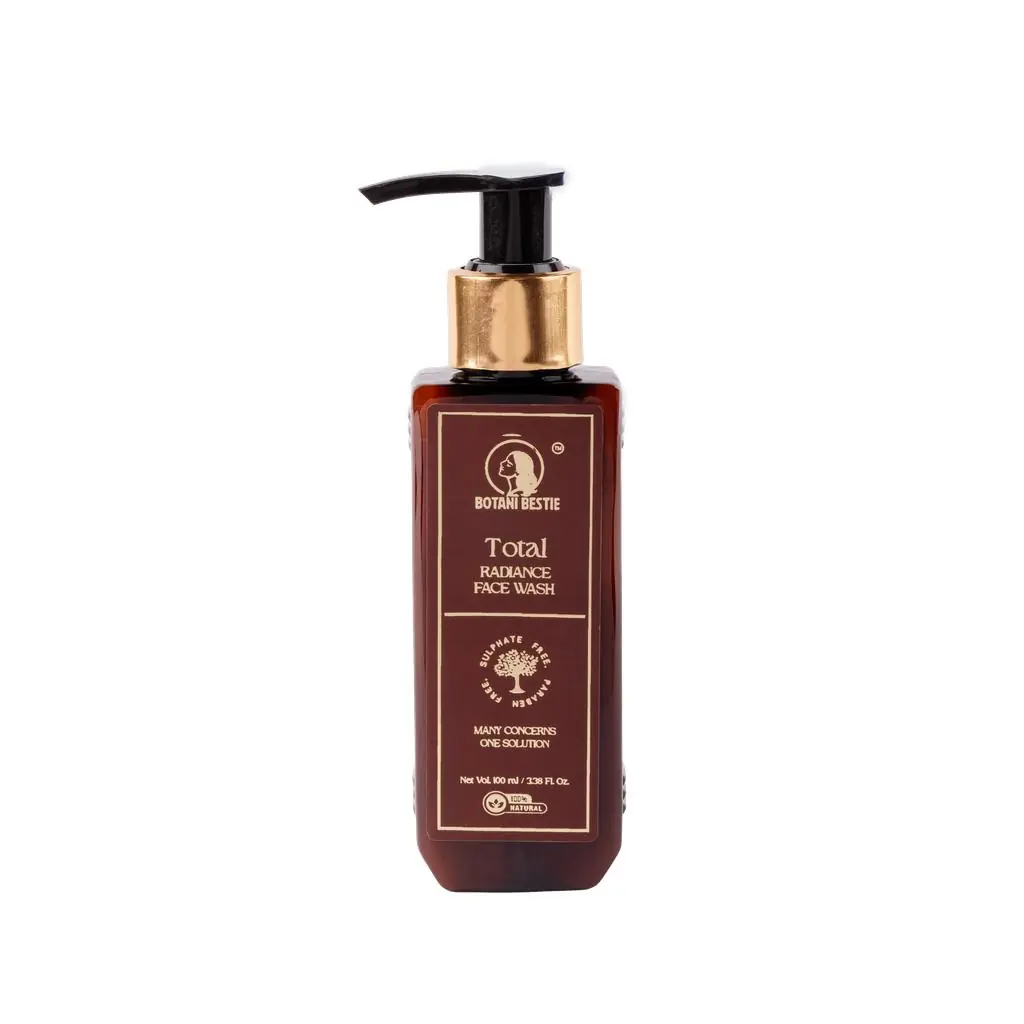
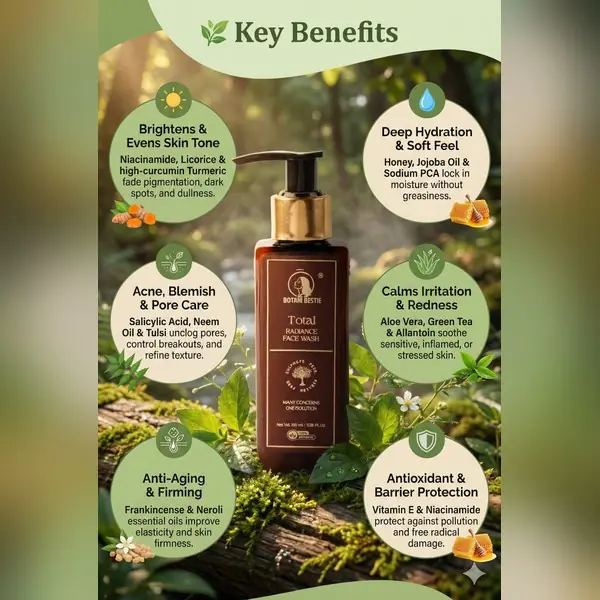
Total Radiance Face Wash
by Botani Bestie — the complete PIH-active, sulfate-free, pH-balanced daily cleanser
How every active in the formula maps to the PIH mechanism:
| Ingredient | PIH Mechanism Addressed |
|---|---|
| Niacinamide (5%) | Blocks melanosome transfer — stops existing melanin reaching the visible skin surface |
| Licorice / Mulethi extract | Glabridin inhibits tyrosinase (16× more potent than kojic acid); liquiritin disperses existing melanin deposits |
| Turmeric (95–99% Curcumin) | Tyrosinase inhibition + NF-κB anti-inflammatory; prevents new PIH while fading existing marks |
| Salicylic Acid | Accelerates surface keratinocyte shedding — physically removes melanin-loaded cells faster; clears pores to prevent new acne-triggered PIH |
| Green Tea (EGCG) | Neutralises UV-generated ROS — blocks oxidative melanocyte re-activation; α-MSH signalling inhibition |
| Aloe Vera (Aloesin) | Tyrosinase inhibition; soothes inflammation that continuously re-activates melanocytes; barrier repair |
| Vitamin E (Tocopherol) | Antioxidant UV ROS scavenging; synergistic SPF enhancement; barrier and membrane protection |
| Sandalwood Powder | Cooling anti-inflammatory; inhibits tyrosinase via alpha-santalol content; soothes active inflammation |
| Panthenol + Allantoin | Barrier repair; prevents barrier-damage-driven compensatory inflammation that creates new PIH |
📅 The Honest PIH Timeline — What to Realistically Expect
PIH does not fade in a week. The biology of melanin clearance is slow — it is governed by skin cell turnover rates, melanin degradation, and the response speed of tyrosinase to inhibitors. Here is an honest month-by-month guide:
| Timeframe | Epidermal PIH (brown marks) | Dermal PIH (grey-brown marks) | What Is Happening |
|---|---|---|---|
| Weeks 1–4 | Little visible change. Marks may appear slightly less red/inflamed. | Little visible change. | Tyrosinase inhibitors are reducing new melanin production. Salicylic Acid is beginning to accelerate surface cell turnover. Changes are happening at the cellular level — not yet visible to the naked eye. |
| Weeks 4–8 | Marks noticeably lighter around the edges. Overall mark appears smaller. | Marginal improvement. Marks may look slightly less intense. | One or two complete epidermal turnover cycles have occurred under reduced melanin production. Niacinamide's melanosome transfer inhibition is visible — less fresh melanin is reaching the skin surface per cycle. |
| Weeks 8–16 | Significant lightening. Marks become difficult to distinguish from surrounding skin without close inspection. | Visible improvement. Marks lighter and smaller. Still present. | Multiple complete turnover cycles have cleared a substantial portion of the epidermal melanin deposit. Licorice liquiritin is dispersing existing melanin clusters. With consistent SPF, UV re-darkening is prevented. |
| Months 4–6 | Near-complete resolution for most cases. Very faint residual may remain in deep-toned skin. | Noticeable but incomplete resolution. Marks continue to fade slowly. | Epidermal PIH is largely cleared. Dermal PIH requires sustained treatment because the skin's natural processes cannot exfoliate dermal deposits — only the natural macrophage-mediated clearance and slow diffusion processes operate at this depth. |
| Months 6–24 | Full resolution. Maintenance routine to prevent new marks. | Progressive improvement. Most cases significantly improved; severe dermal PIH may have residual pigment. | Dermal PIH clears through macrophage phagocytosis (immune cells consuming melanin deposits) and slow upward diffusion. Laser treatments (Nd:YAG, fractional) can accelerate dermal clearance in persistent cases — consult a dermatologist for marks unresponsive to topical treatment after 12 months. |
Myth vs. Truth — The Most Common Misconceptions About Dark Marks
| What you hear | What the science says |
|---|---|
| "Dark marks are scars and will never go" | PIH is not a scar. Scars involve changes in skin structure (collagen damage). PIH is a pigment deposit in structurally normal skin — it can be faded with the right actives and time. True scars (atrophic, keloid) are different and require different interventions. |
| "Lemon juice is a natural brightener — apply it directly" | Lemon juice is phototoxic — its furocoumarin content reacts with UV light to produce intensified, irregular hyperpigmentation. Applied to PIH and exposed to sun, it reliably makes marks darker. It also has a pH of 2–2.5, which causes acid burns on darker skin tones, producing new PIH around the burn site. |
| "Turmeric stains the skin and doesn't actually brighten it" | Raw turmeric powder (which contains only ~3% curcumin alongside yellow pigments that stain) stains skin. High-grade Turmeric at 95–99% curcumin concentration does not stain and provides pharmacological-grade tyrosinase inhibition and anti-inflammatory activity — a fundamentally different ingredient. |
| "You need SPF only in summer or on sunny days" | UVA (the primary driver of melanogenesis) penetrates cloud cover, windows, and is present at consistent levels year-round regardless of temperature or visible sunlight. PIH marks darken from UVA exposure in all weather. SPF is a daily, year-round requirement for PIH treatment to be effective. |
| "Scrubbing harder removes dark marks faster" | Physical scrubbing damages the skin barrier and creates micro-inflammation that activates melanocytes — creating new PIH at the scrub sites. Gentle chemical exfoliation (Salicylic Acid) in a pH-balanced formulation accelerates surface melanin removal without the inflammatory stimulus that generates more pigment. |
| "Darker skin tones cannot use brightening actives" | Darker skin tones can and should use evidence-based brightening actives — with appropriate selection. Aggressive actives like high-concentration hydroquinone, strong peels, and retinoids carry risk of new PIH in darker tones if used incorrectly. But Niacinamide, Licorice, Turmeric, Aloe Vera aloesin, and Salicylic Acid (in a pH-balanced formulation) have excellent safety profiles across all Fitzpatrick types and are the first-line approach for Fitzpatrick IV–VI skin. |
Not Sure If It Is PIH, Melasma, or Something Else?
The right treatment depends entirely on correctly identifying the type of pigmentation. Our in-house dermatologist will look at your marks — location, colour, pattern, history — and tell you exactly what you are dealing with and what the most effective approach is for your specific skin tone and pigmentation type.
Book Free Skin Consultation → WhatsApp UsFrequently Asked Questions
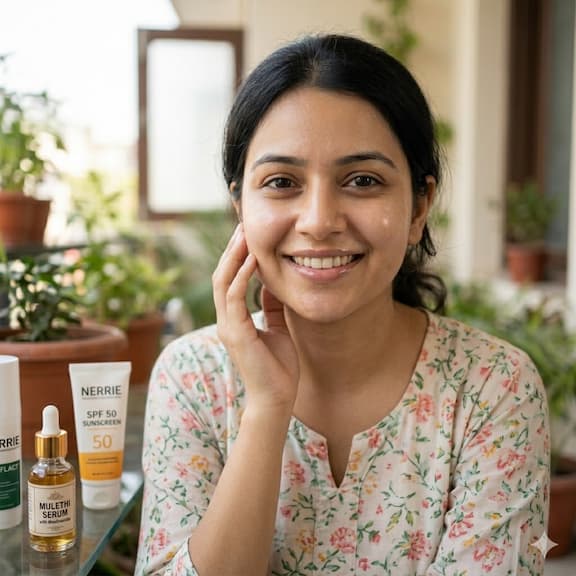
The Verdict: PIH Is Beatable — But Only With the Right Approach
Post-inflammatory hyperpigmentation is not your skin's fault. It is a completely normal biological response — melanocytes doing exactly what they are designed to do when inflammation signals them to. The problem is that the response is proportionally larger in darker skin tones, and the fading process is slow enough that most people give up, switch products, or reach for harsh interventions that make things worse.
The right approach is not aggressive — it is layered and consistent. Tyrosinase inhibitors (Licorice glabridin, Turmeric curcumin) to stop new melanin forming. Niacinamide to block existing melanin from reaching the visible skin layers. Salicylic Acid to accelerate the physical removal of melanin-loaded surface cells. Antioxidants (Green Tea EGCG, Vitamin E) to block UV-driven melanocyte re-activation. And SPF, every morning, without exception — because without it, none of the rest works.
The skin that comes through this protocol — even and clear, without the dark marks that made every photo, every mirror, every day harder — is achievable. It takes months, not days. And it starts with understanding the biology, not chasing the fastest-marketed shortcut.
Shop Total Radiance Face Wash →"The mark fades when you stop fighting your skin and start working with its biology."
Ready to make the honest switch?
Our products are built on the same principles as every article we write — pure ingredients, real results, nothing to hide.
Explore Our Products