Castor Oil for Hair — Fact vs. Fiction
Castor oil is the most over-claimed and under-explained hair ingredient on the market. Some people swear it regrew their hair. Scientists point out there is no clinical trial to prove it. Both can be true at once — if you understand what castor oil actually does versus what people say it does. This guide draws that line clearly.
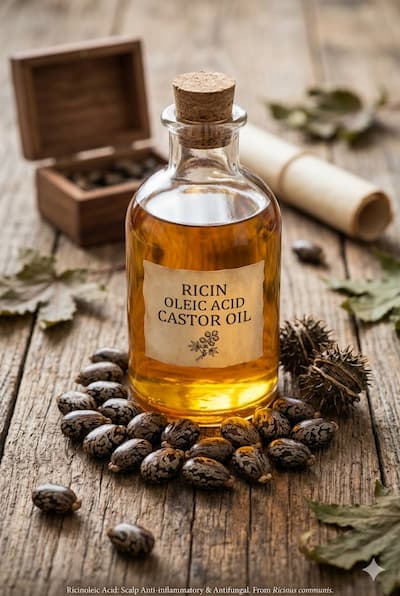
Walk through any Indian bazaar and you will find castor oil stacked next to coconut oil, sesame oil, and amla oil — a fixture in the traditional hair care aisle for over a century. On social media, it has experienced a dramatic second life: JBCO (Jamaican Black Castor Oil) challenges, overnight scalp masks, and months-long transformation videos with millions of views.
The problem is that castor oil's reputation has outrun its evidence. People believe it grows hair — there is no clinical trial that directly proves this. People believe Jamaican Black Castor Oil is scientifically superior — there is no published study supporting that claim. People believe it "thickens" the hair strand itself — it coats and conditions, but does not alter follicle diameter.
At the same time, the science that does exist for castor oil is genuinely interesting. Ricinoleic acid — castor oil's dominant fatty acid at ~90% of composition — has documented anti-inflammatory, antifungal, and prostaglandin-inhibiting properties that create a real, plausible mechanism for hair fall reduction. The ingredient has real benefits. They are just different from the ones being claimed.
This guide draws the line between fact and fiction with equal honesty about both sides.
⚡ Fact vs. Fiction — Quick Reference
✅ FACT (Science-Supported)
- Ricinoleic acid inhibits PGD2 — a confirmed hair loss signalling molecule
- Antifungal activity against Malassezia — the primary cause of dandruff
- Anti-inflammatory properties reduce scalp follicular inflammation
- Deep conditioning reduces breakage and mechanical hair loss
- Weak 5-alpha-reductase inhibiting activity (preliminary evidence)
- Improves scalp microcirculation via ricinoleic acid vasodilation
❌ FICTION (No Clinical Backing)
- "Castor oil directly regrows hair" — no human RCT exists for this claim
- "JBCO is scientifically superior to cold-pressed castor oil" — no published evidence
- "It permanently thickens each hair strand" — it coats, not restructures
- "Overnight application is necessary for results" — contact time plateaus at 60 min
- "More castor oil = more results" — excess causes build-up and follicle blockage
- "It works on completely bald follicles" — evidence only for active follicle support
What Is Castor Oil? Understanding the Ingredient Before the Claims

Castor oil is a vegetable oil cold-pressed from the seeds of Ricinus communis — the castor plant — a fast-growing shrub native to tropical East Africa that is now cultivated across India, Brazil, and China. India is the world's largest producer of castor oil, accounting for over 80% of global supply — making it one of the few hair care ingredients that is both domestically sourced and traditionally embedded in Indian hair care practice.
The oil is pale yellow to colourless, with a characteristic thick, viscous texture — among the highest viscosity of any carrier oil. This viscosity comes from its unusual fatty acid profile: approximately 85–90% of castor oil's fatty acid content is ricinoleic acid, a hydroxylated 18-carbon monounsaturated fatty acid not found in significant concentrations in any other common plant oil. This uniqueness is precisely why castor oil behaves differently from coconut, sesame, or argan oil — and why its mechanisms are distinct.
| Scientific name | Ricinus communis L. |
| Family | Euphorbiaceae |
| Primary active compound | Ricinoleic acid (~85–90% of fatty acid composition) |
| Viscosity | Extremely high — ~1,000 centipoise at 25°C (vs coconut oil at ~30 cP) |
| Traditional systems | Ayurveda, Unani, folk medicine (India, Egypt, West Africa) |
| India's global share | >80% of world castor oil production |
| Cold-pressed vs. JBCO | Cold-pressed: pale yellow, standard pH. JBCO: roasted beans, ash residue, slightly alkaline pH, dark colour. |
The Bioactive Compounds in Castor Oil — What the Science Actually Identifies
Unlike multi-compound herbs such as Bhringraj or onion, castor oil's pharmacological activity is dominated almost entirely by a single compound — ricinoleic acid — which makes understanding it simpler and the evidence assessment more straightforward.
🌿 Ricinoleic Acid — The Defining Compound
Ricinoleic acid (12-hydroxy-9-octadecenoic acid) is a hydroxylated fatty acid that accounts for approximately 85–90% of castor oil's fatty acid composition. The hydroxyl group at the 12-carbon position is what makes it unique — no other common plant oil contains ricinoleic acid at meaningful concentration. This hydroxyl group is responsible for castor oil's extreme viscosity, its unusual water-binding capacity compared to other oils, and its distinct biological activities: anti-inflammatory action via prostaglandin pathway inhibition, antifungal membrane disruption, and weak 5-alpha-reductase modulation. It is also responsible for the emollient and conditioning effects that reduce mechanical hair breakage.
⚗️ Prostaglandin D2 Inhibition — The Most Important Hair Mechanism
Prostaglandin D2 (PGD2) is a lipid signalling molecule that plays a documented role in androgenetic alopecia. A landmark 2012 study in Science Translational Medicine (Garza et al.) identified PGD2 as significantly elevated in the scalp of men with androgenetic alopecia — and demonstrated that PGD2 inhibits hair growth by binding to the GPR44 receptor on dermal papilla cells, suppressing follicle activity. Ricinoleic acid is a known agonist of EP3 prostaglandin receptors, and in vitro evidence suggests it modulates prostaglandin synthesis pathways in a direction that reduces PGD2 activity. This mechanism is castor oil's most credible and pharmacologically grounded connection to hair loss — and it is almost never mentioned in popular castor oil content.
🔬 Minor Fatty Acids
The remaining 10–15% of castor oil's fatty acid profile comprises oleic acid (~3%), linoleic acid (~4%), palmitic acid (~1%), stearic acid (~1%), and traces of others. Oleic acid (the dominant fatty acid in olive and argan oils) penetrates the hair shaft more deeply than saturated fats, contributing to moisture retention and cuticle protection. Linoleic acid (omega-6) has anti-inflammatory scalp properties and supports the skin barrier. These minor fatty acids contribute to castor oil's conditioning benefits but are not unique to castor oil — they are present at higher concentrations in other carrier oils.
💊 Tocopherols (Vitamin E)
Castor oil contains tocopherols — Vitamin E compounds — at low but measurable concentrations. Tocopherols are lipid-soluble antioxidants that protect cell membranes and fatty acids from oxidative degradation. In the context of hair, they protect the lipid layer of the hair shaft (the F-layer) and the follicle cell membranes from reactive oxygen species. Castor oil's tocopherol content is lower than dedicated Vitamin E oils (such as wheatgerm or sunflower oil) — but it contributes to the overall antioxidant environment of the scalp in a formulated product. Cold-pressed castor oil retains higher tocopherol content than heat-extracted versions.
How Castor Oil Works — 4 Evidence-Backed Mechanisms (and What It Cannot Do)
The key to using castor oil correctly is understanding what it does and does not do. Here is each mechanism explained — with an honest ceiling on each claim:
Prostaglandin D2 (PGD2) was identified by Garza et al. in a 2012 Science Translational Medicine study as a key inhibitor of hair growth in androgenetic alopecia — elevated by up to threefold in bald scalp compared to hair-bearing scalp, binding the GPR44 receptor on dermal papilla cells and suppressing anagen entry. This was a significant finding in hair biology and has driven pharmaceutical interest in GPR44 antagonists as a hair loss treatment.
Ricinoleic acid's relevance here comes from its known prostaglandin receptor activity. As an EP3 receptor agonist, ricinoleic acid modulates the prostaglandin signalling cascade in a direction that may reduce PGD2 activity. The direct evidence is not a human scalp RCT — it is mechanistic and in vitro — but the pathway is well-established, and ricinoleic acid's activity within it is pharmacologically plausible.
Honest ceiling: This is a mechanism supported by molecular biology, not a clinical trial in hair loss patients. It is plausible and notable — but not proven at the level of "castor oil reverses androgenetic alopecia in humans."
Chronic low-grade scalp inflammation — driven by pollution, stress, dandruff, hard water, and diet — is one of the most common and underdiagnosed causes of hair fall in urban India. When pro-inflammatory cytokines (TNF-α, IL-1β, IL-6) accumulate around the hair follicle, they disrupt the anagen phase signalling and push follicles prematurely into telogen.
Ricinoleic acid has well-documented anti-inflammatory activity. Studies published in the Journal of Ethnopharmacology and Inflammation Research confirm that ricinoleic acid inhibits substance P-induced inflammation and reduces the production of inflammatory prostaglandins (PGE2) in a dose-dependent manner. When applied topically to the scalp, this anti-inflammatory activity creates a lower-inflammation microenvironment around the follicle — reducing one of the most common drivers of premature telogen entry.
Honest ceiling: These studies were conducted in the context of skin inflammation, not specifically scalp or follicle inflammation. The extrapolation is mechanistically sound but not directly proven in hair follicle models.
Malassezia — the lipophilic yeast that drives dandruff and seborrheic dermatitis — is an obligate lipid-dependent organism that metabolises fatty acids from scalp sebum, producing irritant byproducts (oleic acid, arachidonic acid derivatives) that trigger the inflammatory scalp response characteristic of dandruff.
Multiple studies have confirmed castor oil's antifungal activity against Malassezia restricta and Malassezia globosa — the two species most associated with scalp dandruff. Ricinoleic acid disrupts the cell membrane integrity of these organisms via its hydroxyl fatty acid structure. A study in the Journal of the American Oil Chemists' Society identified ricinoleic acid as among the most effective naturally occurring fatty acids against lipid-dependent dermatophytes. Castor oil also demonstrates activity against Candida albicans and certain bacteria, giving it broad-spectrum scalp microbiome protection.
For dandruff-driven hair fall — where scalp inflammation from Malassezia is directly causing premature follicle shedding — castor oil's antifungal activity makes it directly therapeutic, not just preventive.
A significant proportion of what appears as "hair fall" — especially on the comb, brush, or in the shower — is actually mechanical breakage of the hair shaft, not follicle-level shedding. The hair shaft is a dead structure; once it exits the follicle, it cannot be regenerated. However, the condition of the shaft determines whether it breaks mid-strand or survives combing and styling intact.
Castor oil's extreme viscosity creates an exceptionally effective occlusive coating on the hair shaft. This coating reduces friction between strands during combing (reducing mechanical stress), seals the cuticle (reducing moisture loss and environmental damage), and provides a lipid layer that prevents breakage at the shaft level. Research on fatty acid penetration into hair published in the International Journal of Cosmetic Science confirms that oleic acid (present in castor oil at ~3%) penetrates the cortex and provides internal lubrication, while the ricinoleic acid layer at the cuticle surface reduces combing force and breakage.
Honest ceiling: This mechanism reduces breakage, not follicle-level hair fall. If you are counting hairs on a pillow, castor oil will help. If you are experiencing follicle miniaturisation or telogen effluvium, conditioning alone will not address the root cause — but it visibly improves hair density by reducing the breakage that compounds visible thinning.
The Evidence Landscape — What Research Actually Supports
Castor oil's evidence base is honest about its gaps. Here is a complete, unvarnished view of what exists:
| Study / Finding | Type | Key Finding | Strength |
|---|---|---|---|
| PGD2 Elevation in Androgenetic Alopecia, 2012 Science Translational Medicine — Garza et al. |
Human scalp molecular study | PGD2 found 3× elevated in bald vs. hair-bearing scalp; GPR44 receptor identified as the inhibitory pathway for follicle growth. Establishes the biological rationale for ricinoleic acid's PGD2-modulating relevance. | High — human scalp tissue data |
| Ricinoleic Acid Anti-inflammatory Activity Journal of Ethnopharmacology; Inflammation Research |
In vitro + in vivo (animal) | Ricinoleic acid inhibits substance P-mediated inflammation and reduces PGE2 production dose-dependently; anti-inflammatory mechanisms confirmed across multiple models | Moderate — mechanism confirmed; scalp application not directly studied |
| Castor Oil Antifungal Activity — Malassezia J American Oil Chemists' Society; Lipids in Health & Disease |
In vitro antimicrobial assay | Ricinoleic acid demonstrated significant inhibitory activity against M. restricta and M. globosa at scalp-achievable concentrations; broader antifungal spectrum confirmed against Candida | Moderate — in vitro; human dandruff RCT not published |
| Fatty Acid Penetration into Hair Shaft Int J Cosmetic Science — Rele & Mohile |
In vitro hair fibre study | Oleic acid penetrates hair cortex and provides internal conditioning; occlusive fatty acids at the cuticle reduce combing friction and breakage force measurably | High — direct hair fibre measurement |
| 5-Alpha-Reductase Inhibition (Ricinoleic Acid) Preliminary — in vitro biochemical |
In vitro enzyme assay | Weak inhibitory activity of ricinoleic acid against 5-AR detected; effect considerably weaker than pharmaceutical inhibitors or quercetin | Low — preliminary, weak effect |
| Human Clinical Trial for Hair Regrowth with Castor Oil — |
— | Does not exist. No published randomised controlled trial in humans has evaluated castor oil as a standalone hair growth treatment. This is the central gap in the castor oil evidence base. | Gap — no human RCT published |
The JBCO Myth — What the Science Actually Says About Jamaican Black Castor Oil
- JBCO contains more ricinoleic acid than regular castor oil — False. The roasting process does not increase ricinoleic acid concentration; both types contain ~85–90%.
- The ash "opens the hair follicle" — No mechanism. The alkaline pH from ash may swell the hair cuticle slightly — an effect that is cosmetic, not follicle-stimulating, and can be damaging to chemically treated hair.
- JBCO has been clinically proven to outperform regular castor oil — No such study exists.
- The dark colour indicates higher potency — False. Colour comes from ash and Maillard reaction products from roasting, not from higher active compound concentration.
- JBCO contains the same primary active compound (ricinoleic acid) at similar concentrations to regular cold-pressed castor oil.
- The alkaline pH may be marginally beneficial for extremely low-porosity hair — but this is a minor cosmetic effect, not a therapeutic one.
- The premium pricing of JBCO (typically 2–3× regular castor oil) is driven by branding and cultural cachet, not evidence of superior outcomes.
- Cold-pressed castor oil that retains its tocopherols intact is arguably a more nutritionally complete product than roasted JBCO, where heat may degrade antioxidant content.
More Myths vs. Truth — Castor Oil Edition
| Common Myth | The Scientific Truth |
|---|---|
| Castor oil regrows hair on completely bald areas | Castor oil's mechanisms support active follicles — reducing inflammation, dandruff, and PGD2. For follicles that have been dormant or miniaturised for years, there is no evidence that castor oil can reactivate them. Expectation should be hair fall reduction and density improvement, not regrowth on hairless scalp. |
| You need to leave castor oil on overnight | Fatty acid absorption into the scalp skin and hair shaft plateaus well within 60 minutes of application. Overnight application primarily increases the smell on your pillow, not the therapeutic outcome. A 30–60 minute pre-wash treatment is equally effective. |
| Castor oil "thickens" each hair strand permanently | Castor oil coats the hair shaft with a conditioning film, making each strand appear and feel thicker. This is a temporary, cosmetic effect that reverses after washing. It does not alter follicle diameter or permanently change the structural proteins of the hair shaft. |
| Using more castor oil gives faster results | Excess castor oil accumulates on the scalp and can block follicle openings — potentially worsening rather than improving hair fall. Castor oil should be applied in targeted sections to the scalp, not applied in large quantities and worked through the length of the hair. |
| Castor oil works the same for all hair types | Castor oil's high viscosity makes it particularly beneficial for coarse, thick, or low-porosity hair. For fine or high-porosity hair types, the heavy occlusive coating can weigh hair down and reduce volume. Mixing with a lighter carrier (jojoba, sesame) at a 1:3 ratio makes it suitable for finer hair textures. |
| Castor oil alone is sufficient for significant hair fall | Castor oil is a strong supporting ingredient — not a complete hair fall treatment. It does not activate Wnt/β-catenin signalling (as Bhringraj does), provide the keratin-building sulfur of onion oil, or deliver the DHT-blocking power of Amla. For meaningful hair fall reduction, it needs to work alongside herbs with complementary mechanisms. |
💡 Want castor oil paired with Bhringraj, Onion Oil, Amla, and 10 more Ayurvedic herbs in a formulation that addresses all hair fall mechanisms at once?
See Total Restore Hair Oil →How to Use Castor Oil for Hair Fall — Correct Methods and Protocols
Castor oil's extreme viscosity makes application technique more important than with any other hair oil. Here is how to use it correctly for each use case:
Best for: Active hair fall, scalp inflammation, dandruff control, general hair fall prevention
Warm the castor oil slightly (microwave 10–15 seconds or place bottle in warm water) — this reduces viscosity significantly and improves spreadability. Apply in thin sections to the scalp with a dropper or your fingertips. Massage with circular motions for 5–10 minutes to stimulate blood flow.
Leave on for 30–60 minutes before washing. Do not leave overnight — the occlusive film on the scalp for 8+ hours can trap sebum, sweat, and bacteria against the follicle opening.
Wash-out: Apply shampoo to dry oil-covered hair first, work into a lather, then add water. This "dry shampoo method" removes castor oil far more effectively than applying shampoo to wet hair.
Frequency: 2× per week for active hair fall; once weekly for maintenance.
Best for: Fine hair types; daily-use oil; scalp application without weighing down lengths
Mix castor oil with a lighter carrier oil in a 1:3 ratio (1 part castor : 3 parts jojoba, sesame, or coconut oil). This reduces viscosity to a workable consistency, improves scalp penetration, and prevents the build-up and heaviness that pure castor oil causes on fine or straight hair.
Sesame oil is the preferred carrier for an Ayurvedic approach — it is itself anti-inflammatory and antimicrobial, synergising with castor oil's mechanisms. Jojoba oil's molecular structure is closest to scalp sebum, making it a naturally scalp-compatible diluent.
Frequency: 2–3× per week as a pre-wash treatment.
Best for: Sparse eyebrows; thinning hairline edges; improving terminal hair density in small areas
Castor oil's conditioning and PGD2-modulating mechanisms make it a logical candidate for eyebrow and hairline edge density — areas where over-plucking, traction alopecia, or hormonal thinning has reduced terminal hair. Apply a small amount with a clean mascara wand or cotton swab to the affected area at night. The small surface area means the odour is minimal and the amount used is negligible.
The evidence for this specific application is anecdotal and observational — not clinical. But the mechanism (reducing PGD2, anti-inflammatory support for follicles) is the same as scalp application, making it mechanistically plausible.
Frequency: Nightly for 8–12 weeks for a fair assessment.
Best for: Maximising mechanisms; combining castor's protective role with active hair growth ingredients
Castor oil's greatest limitation is that its four mechanisms — PGD2 inhibition, anti-inflammatory action, antifungal activity, and hair shaft conditioning — are all supportive and protective. None of them directly activate the Wnt/β-catenin pathway to push follicles into anagen.
A formulated hair oil that includes castor oil alongside Bhringraj (anagen activation), onion oil (quercetin + catalase), and Amla (DHT blocking + antioxidant) addresses the complete spectrum of mechanisms — protection, prevention, and active growth stimulation — that no single ingredient can deliver alone. In this context, castor oil is a foundational carrier and mechanism contributor, not the hero ingredient.
This is the approach behind Total Restore Hair Oil — and the reason the combination outperforms standalone castor oil products in practice.
💡 Unsure whether your hair fall is inflammation-driven, hormonal, or dandruff-related? The protocol differs for each.
Get a Free Hair Consultation →Why Castor Oil Works Better with These Ingredients
Castor oil covers the protective and supportive layer of hair care exceptionally well. The herbs and actives below fill the mechanisms it cannot address alone:
| Pairing | What the partner adds | Why the combination is stronger |
|---|---|---|
| Castor Oil + Bhringraj | Bhringraj: Wnt/β-catenin activation; directly pushes follicles into anagen phase; 45% increase in dermal papilla cell proliferation | Castor oil creates a low-inflammation, low-PGD2 scalp environment; Bhringraj actively switches follicles into growth mode — protective layer + active stimulation |
| Castor Oil + Onion Oil | Onion: quercetin (potent 5-AR inhibition), catalase (H₂O₂ neutralisation), organosulfur compounds (keratin building) | Castor oil targets PGD2 and inflammation; onion oil targets DHT and oxidative stress — two complementary hormone and oxidative pathways addressed simultaneously |
| Castor Oil + Amla | Amla: richest natural Vitamin C; tannins that block DHT at the follicle; strong antioxidant protection | Dual antioxidant coverage (Amla's Vitamin C + Castor's Vitamin E tocopherols) protects the follicle from both aqueous and lipid-phase oxidative damage |
| Castor Oil + Neem | Neem: azadirachtin — potent antifungal; targets Malassezia through a different mechanism than ricinoleic acid | Dual antifungal coverage via different pathways reduces the risk of Malassezia adaptation; neem adds antibacterial coverage for folliculitis that castor oil does not address |
| Castor Oil + Sesame (carrier) | Sesame: naturally anti-inflammatory and antimicrobial; UV-protective lignans (sesamol); improves castor oil spreadability | The traditional Ayurvedic combination — sesame is the canonical Ayurvedic base oil for scalp formulations, synergising with castor oil's mechanisms while solving its viscosity challenge |
📅 What to Expect — A Realistic Timeline for Castor Oil
Because castor oil works indirectly — through anti-inflammation, antifungal activity, and PGD2 modulation rather than direct follicle activation — the timeline is gradual:
| Timeframe | What You May Notice | What's Happening Biologically |
|---|---|---|
| Week 1–2 | Scalp feels less itchy and inflamed. Dandruff may begin reducing. Hair feels softer and more manageable after washing. | Ricinoleic acid's antifungal activity begins reducing Malassezia colonisation. Anti-inflammatory effects start calming scalp cytokine activity. Conditioning film on shaft reduces mechanical breakage immediately. |
| Week 2–6 | Reduced hair on the comb and in the shower. Scalp feels healthier. Hair appears fuller, possibly due to reduced breakage as well as early follicle response. | PGD2 reduction begins allowing more follicles to enter or remain in anagen. Scalp inflammation reduction reduces premature telogen entry. Hair cycle takes 4–6 weeks to visibly reflect treatment changes. |
| Week 6–12 | Noticeable reduction in daily shedding count. Hair feels stronger at the root. Scalp condition (dandruff, oiliness, itch) significantly improved. | Full hair cycle response underway. Follicles previously disrupted by inflammation or PGD2 signalling have re-entered anagen. Antifungal effects have reset the scalp microbiome toward a healthier baseline. |
| Week 12+ | Sustained improvement in hair density and scalp health. Results plateau without continued use — castor oil is a maintenance ingredient as much as a treatment ingredient. | Continuous ricinoleic acid delivery maintains the low-inflammation, low-PGD2 scalp environment. Discontinuing use will gradually reverse gains as scalp inflammation and Malassezia re-establish. This is a long-term routine ingredient. |
Castor Oil in Total Restore Hair Oil — How We Use It (and Why Alone Isn't Enough)
Most castor oil products on the market are built around the ingredient's reputation, not its actual mechanism. A bottle of JBCO commands a premium price — but the ricinoleic acid doing the work is present at the same concentration as a ₹80 pharmacy castor oil. The premium is in the branding, not the biology.
Total Restore Hair Oil includes castor oil — but positions it correctly: as a protective and supportive base ingredient, not the hero. It is paired with herbs that cover the mechanisms castor oil cannot:
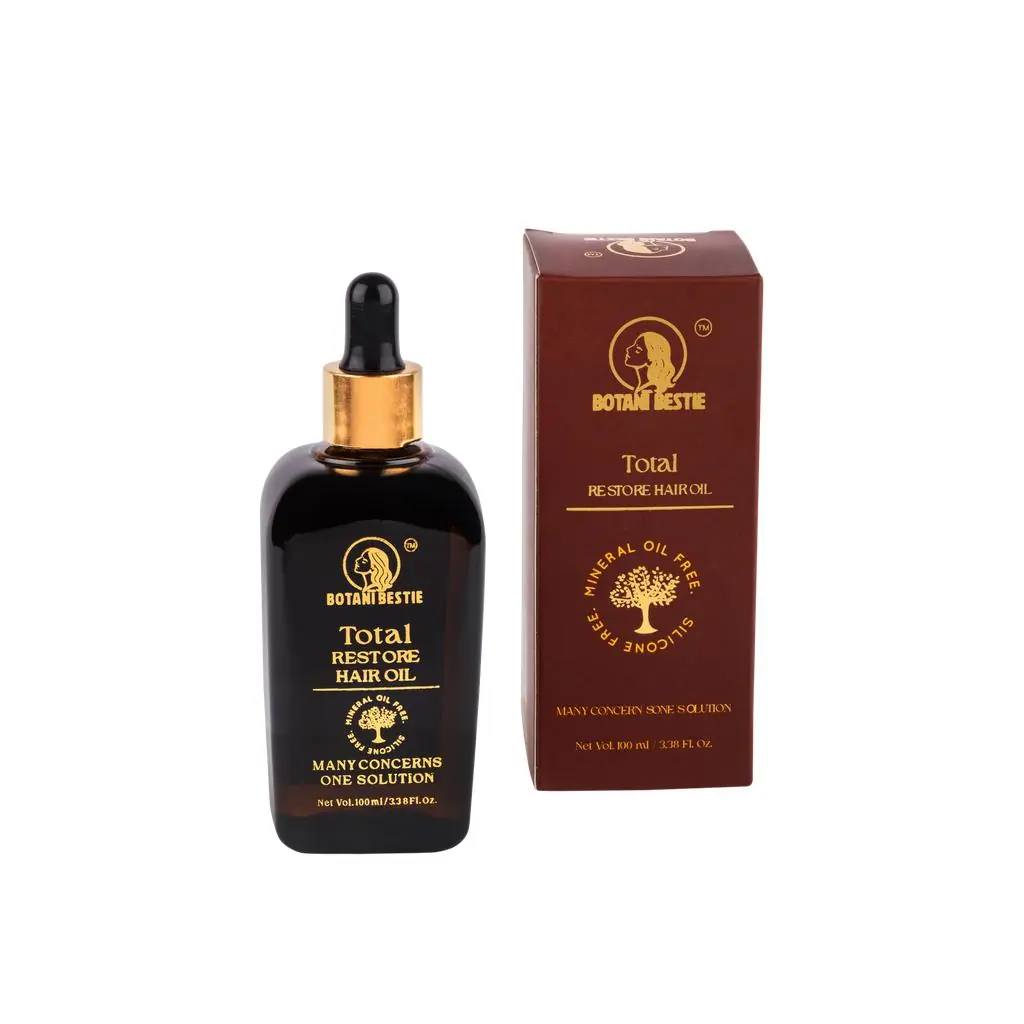
Total Restore Hair Oil — Castor Oil + 13 Ayurvedic Herbs
Pre-Wash Scalp Treatment — 2–3× per week
- ✔ Castor Oil — ricinoleic acid (PGD2 inhibition, anti-inflammatory, antifungal, conditioning)
- ✔ Bhringraj — Wnt/β-catenin activation; 45% hDPC proliferation increase; 5-AR inhibition
- ✔ Onion Oil — quercetin (DHT blocking), catalase (oxidative stress), organosulfur (keratin synthesis)
- ✔ Amla — richest natural Vitamin C; DHT-blocking tannins; antioxidant
- ✔ Brahmi — adaptogen; reduces cortisol-driven telogen effluvium
- ✔ Methi (Fenugreek) — DHT inhibition; Vitamins A, K, C; folic acid
- ✔ Neem — dual-pathway antifungal alongside castor; antibacterial for folliculitis
- ✔ 14+ carrier oils — sesame base maximises castor oil absorption; no mineral oil
How Total Restore compares to a standalone JBCO product:
| Feature | Standalone JBCO Product | Total Restore Hair Oil |
|---|---|---|
| Castor oil (ricinoleic acid — PGD2, antifungal) | ✅ | ✅ |
| Wnt/β-catenin activator (Bhringraj) | ❌ | ✅ |
| DHT blocker (quercetin, wedelolactone, tannins) | ❌ | ✅ Multiple |
| Oxidative stress coverage (catalase, Vitamin C) | ⚠ Tocopherols only | ✅ Full spectrum |
| JBCO premium price for same ricinoleic acid | ❌ You pay for branding | ✅ Priced for value |
| No mineral oil, no synthetic fragrance | ⚠ Varies by brand | ✅ Clean formulation |
| Free dermatologist consultation | ❌ | ✅ Included |
Join the growing community of customers across India making the honest switch.
🎁 Not Sure Which Hair Fall Ingredients Are Right for Your Pattern?
Get a free personalised hair consultation with our in-house dermatologist — no purchase required. Share your hair fall pattern, duration, and scalp condition, and receive a targeted routine recommendation built specifically for you.
Book Free Hair Consultation → WhatsApp UsFrequently Asked Questions
The Verdict: A Genuinely Useful Ingredient Being Sold the Wrong Story
Castor oil does not need to be oversold. Its actual mechanisms — PGD2 inhibition via a pathway confirmed by a landmark 2012 Science Translational Medicine study, antifungal activity against the yeast that causes 50% of India's dandruff-related hair fall, anti-inflammatory scalp protection, and superior hair shaft conditioning — are genuinely valuable and scientifically grounded.
What castor oil cannot do — directly activate the Wnt/β-catenin growth pathway, deliver strong 5-AR inhibition, or provide the oxidative stress neutralisation of catalase — is equally worth knowing. The ingredient is not underperforming. It is being used to carry claims that belong to other, more mechanism-specific ingredients.
Used correctly — as a pre-wash scalp treatment 2× per week, ideally in a formulation that combines its protective mechanisms with active growth stimulators — castor oil earns its long-standing place in Indian hair care. Not because of the viral claims. Because of the actual biology.
Shop Total Restore Hair Oil → Free Hair Consultation"An ingredient doesn't need myths to be worth using. The truth about castor oil is interesting enough."
Ready to make the honest switch?
Our products are built on the same principles as every article we write — pure ingredients, real results, nothing to hide.
Explore Our Products