Your hair is dry, breaking, limp, or won't hold a style — and every product you try seems to make it worse. There's a good chance the problem isn't your shampoo, your water, or your genetics. It's the ratio of protein to moisture in your hair shaft — and it's almost certainly out of balance.
Protein and moisture are the two fundamental components that give hair its structure and flexibility. Protein (primarily keratin) forms the hair shaft's cortex, providing strength and shape. Moisture (water bound by humectants and lipids) keeps the shaft pliable and able to flex without breaking. The two must exist in a ratio: too little protein and hair is limp and fragile; too much protein and it's stiff and snaps. Too little moisture and hair is dry and rough; too much and it becomes mushy and over-stretched.
The problem: protein imbalance and moisture imbalance produce nearly identical symptoms — breakage, dullness, tangles, lack of elasticity. Most people apply more conditioner when both problems appear, which fixes moisture deficiency but worsens protein overload. This guide gives you the two diagnostic tests that accurately identify which imbalance you have, so you apply the right solution.
The Two Diagnostic Tests
Test 1: The Stretch Test (Elasticity Test)
Best performed on wet hair — a single strand pulled from a brush or shed naturally, not plucked from the scalp.
How to do it: Hold a single wet strand between both index fingers, about 5 cm apart. Gently stretch it slowly. Observe what happens.
| What You See | What It Means | Fix Needed |
|---|---|---|
| Stretches slightly (30–40%) then returns to original length | Balanced — healthy elasticity | Maintain current routine |
| Barely stretches (under 10%) then snaps immediately | Protein overload — hair is too rigid | Deep moisture treatment, no protein |
| Stretches well beyond 40–50%, feels mushy, doesn't spring back | Protein deficiency / hygral fatigue | Protein treatment, reduce deep conditioning |
| Snaps immediately with no stretch on dry hair too | Severe protein deficiency — often from chemical damage | Intensive protein + moisture restore sequence |
Test 2: The Float Test (Porosity Test)
Performed on a clean, dry strand — not freshly oiled or conditioned.
How to do it: Drop a single shed strand onto the surface of a glass of room-temperature water. Wait 4 minutes. Observe where it sits.
Floats on top
Low porosity — cuticle is tightly sealed, resists water entry
Prone to protein and product build-up. Needs heat or steam to open cuticle. Moisture treatments work slowly.
Floats in the middle
Normal/medium porosity — balanced cuticle
Absorbs and retains moisture well. Responds well to most treatments. Easiest to maintain balance.
Sinks to the bottom
High porosity — cuticle is raised or damaged
Absorbs water fast but loses it just as fast. Prone to hygral fatigue. Needs protein to patch the cuticle gaps.
Note: The float test has limitations — product build-up and natural oils can affect buoyancy. Use it alongside the stretch test for a more complete picture, not as a standalone diagnosis.
Protein Overload: Symptoms, Causes, and Fix
Protein overload happens when the hair shaft has been saturated with protein treatments or protein-rich products to the point where the gaps in the cortex are overfilled. The hair shaft becomes rigid — like a wooden stick rather than a flexible rope. It no longer bends without breaking.
Signs of Protein Overload
- Hair feels stiff, rough, or straw-like even when conditioned
- Hair snaps rather than stretches when pulled gently
- Tangles dramatically increase, especially at ends
- Hair has lost its natural wave or curl pattern
- Hair feels coated or tacky after styling
- Hair looks dull despite moisturising — no shine
- Breakage worsens after protein-rich treatments
Common Indian Causes
- Weekly keratin treatments or salon protein treatments
- Using egg masks, curd, or yogurt on hair too frequently (natural protein sources)
- Protein-rich shampoos and conditioners used daily
- Post-COVID recovery protocols heavy on supplements and protein products simultaneously
- Overlapping serum + hair mask + conditioner all containing hydrolysed proteins
How to Fix Protein Overload
Hygral Fatigue (Moisture Overload): Symptoms, Causes, and Fix
Hygral fatigue is the structural damage caused by the hair cortex repeatedly expanding and contracting as water enters and exits. When hair is over-moisturised — through excessive deep conditioning, leave-ins, or ambient humidity — the cuticle is held open for extended periods. Each swelling-shrinking cycle weakens the protein bonds in the cortex, causing progressive structural failure.
It is particularly common in India during the monsoon, in cities like Mumbai, Chennai, and Kolkata where humidity stays above 75% for months — especially in low-porosity hair where water, once inside, is slow to evaporate.
Signs of Hygral Fatigue
- Hair stretches far when wet but doesn't spring back
- Hair feels mushy, soft, or limp when wet — "overcooked noodle" texture
- Excessive frizz and volume loss when dry
- Hair looks dull and lifeless despite deep conditioning
- Breakage occurs during gentle detangling when wet
- Hair that previously held waves or curls loses its pattern
- Condition worsens during monsoon / high-humidity months
Common Indian Causes
- Overnight deep conditioning every wash — common in "care" routines shared online
- High ambient humidity + already moisture-saturated hair
- Low-porosity hair in humid cities absorbs water slowly but retains it for hours
- Multiple leave-in conditioner layers without sealing with a lipid
- Skipping a protein treatment entirely for months while deep conditioning weekly
How to Fix Hygral Fatigue
Protein Overload vs Hygral Fatigue: Side-by-Side
| Feature | Protein Overload | Hygral Fatigue |
|---|---|---|
| Stretch test result | Very little stretch, snaps immediately | Stretches far, mushy, no spring-back |
| Texture when dry | Straw-like, rough, coated feel | Limp, flat, lacks body |
| Texture when wet | Stiff, tangles easily | Mushy, over-soft, gummy |
| Primary cause | Too many protein treatments / protein-rich products | Too much moisture, repeated water cycling, high humidity |
| India peak season | Year-round (over-treatment) | Monsoon — June to September |
| Wrong fix applied | More protein → hair shatters | More moisture → mushy texture worsens |
| Correct fix | Protein-free moisture treatment + stop proteins temporarily | Protein treatment + pre-poo oil + reduce deep conditioning |
| Recovery time | 2–4 weeks with consistent moisture-only routine | 2–3 weeks of protein + reduced conditioning |
Where a Hair Serum Fits Into Protein-Moisture Balance
A common question: is a hair serum the same as a protein treatment? The answer is no — and understanding the difference prevents a common mistake where people skip their serum thinking it will cause protein overload.
Protein treatments deposit structural proteins that physically fill cortex gaps in existing hair shafts. A hair growth serum containing Redensyl or Procapil works at the follicle level — it signals dermal papilla cells to re-enter the growth phase and extends the anagen period. These are different targets: one repairs the strand, the other signals new strands to grow.
The correct sequence is:
- Diagnose your current imbalance using the stretch test
- Correct the imbalance with the appropriate protein or moisture treatment
- Apply serum to the scalp as part of your daily or every-other-day routine — independent of the protein-moisture cycle
The serum does not contribute to protein overload because it works on the scalp, not on the hair shaft. It should not be skipped during a protein correction phase.
Products for Protein-Moisture Balance
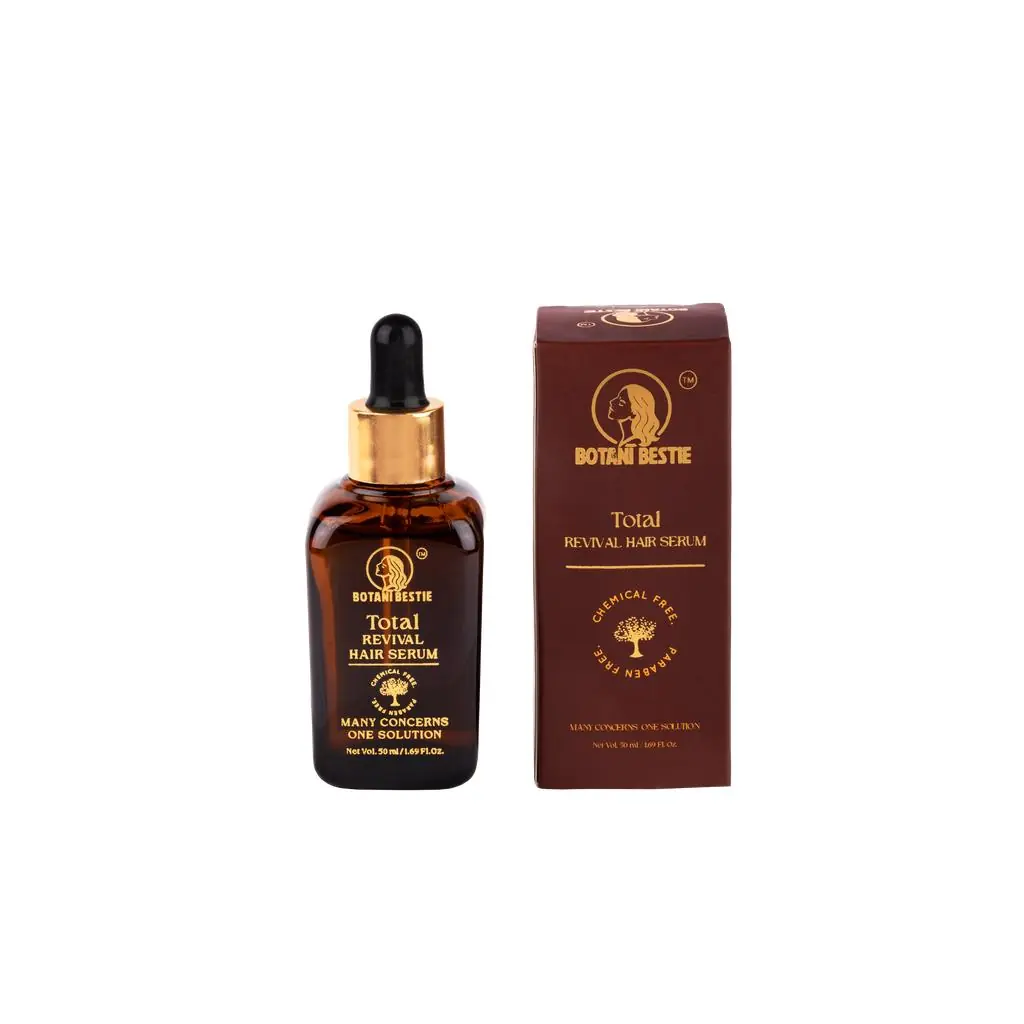
Total Revival Hair Serum
Contains Redensyl (patented dihydroquercetin-glucoside complex) and Procapil (biotinyl-GHK tripeptide + apigenin + oleanolic acid) — both of which work at the dermal papilla to extend the anagen growth phase and reduce follicle miniaturisation. Entirely different from a structural protein treatment — it grows new hair while you correct your protein-moisture balance.
View Total Revival Serum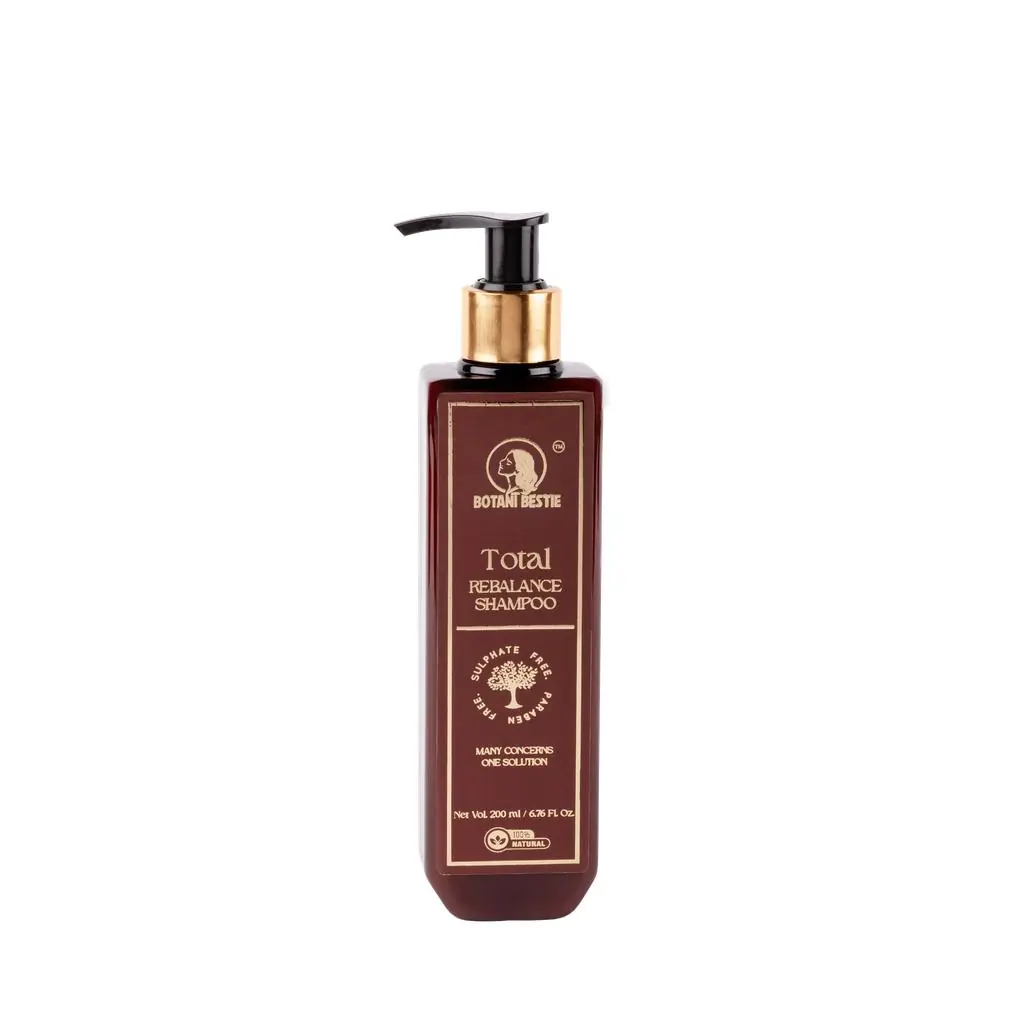
Total Rebalance Shampoo
Whether you're correcting protein overload or hygral fatigue, the wash step matters. The Total Rebalance Shampoo is sulfate-free with a balanced pH so it cleans without stripping the protective lipid layer that stabilises your protein-moisture ratio. Free from silicones and heavy film-formers that add unwanted coating during a protein correction protocol.
View Total Rebalance ShampooReady to make the honest switch?
Our products are built on the same principles as every article we write — pure ingredients, real results, nothing to hide.
Explore Our Products