Telogen Effluvium — Why Stress Causes Sudden Hair Fall and What Actually Speeds Recovery
You didn't lose 200 hairs today because of what you did today. You lost them because of what happened to your body 2–3 months ago. Telogen effluvium is a delayed, diffuse shedding event triggered by stress, illness, nutritional crash, or hormonal change — and it is almost always reversible. Here is the biology, the timeline, and the recovery approach that actually works.

The pattern is almost always the same. A stressful event — an illness, a loss, a prolonged period of anxiety, a crash diet, a surgery — and then, two to three months later, alarming amounts of hair falling out. On the pillow, in the shower drain, caught in the brush. Not thinning gradually, but suddenly, everywhere at once.
This is telogen effluvium — one of the most common forms of hair loss worldwide, and simultaneously one of the most frequently misunderstood. Patients often fear they have developed permanent pattern baldness. They reach for minoxidil, expensive serums, and aggressive scalp treatments. But the underlying problem is not the follicle — it is the hair growth cycle itself, temporarily thrown off course by systemic stress.
Understanding exactly what is happening — why the delay occurs, why it resolves, and what genuinely supports recovery — is the most important step. Telogen effluvium does not respond to topical quick fixes. It responds to removing the trigger, restoring the biological conditions for anagen re-entry, and giving the follicle what it needs to complete the cycle normally.
This guide covers the biology, the triggers, the timeline, how to distinguish telogen effluvium from other forms of hair loss, and the evidence-based Ayurvedic approach to recovery.
⚡ Telogen Effluvium — Quick Reference
| What it is | Diffuse, temporary hair shedding caused by mass shift of follicles from anagen (growth) to telogen (resting) phase |
| When shedding occurs | 2–3 months after the triggering event (the delay is the telogen phase duration) |
| Shedding pattern | Diffuse — all over the scalp, not patterned; particularly noticeable at the parting, temples, and in handfuls during washing |
| Duration | Acute TE resolves within 6 months; chronic TE (>6 months) requires trigger identification |
| Is it permanent? | No — follicles are not damaged. Full regrowth is expected once the trigger is resolved |
| Most common triggers | Psychological stress, postpartum hormonal shift, fever/illness, crash dieting, iron deficiency, surgery, thyroid dysfunction |
| Key recovery factors | Remove trigger + correct nutritional deficiencies + reduce cortisol + support anagen re-entry |
| When to see a doctor | Shedding beyond 6 months, visible scalp, patterned thinning, associated symptoms (fatigue, weight change, skin changes) |
The Hair Growth Cycle — What Telogen Effluvium Disrupts
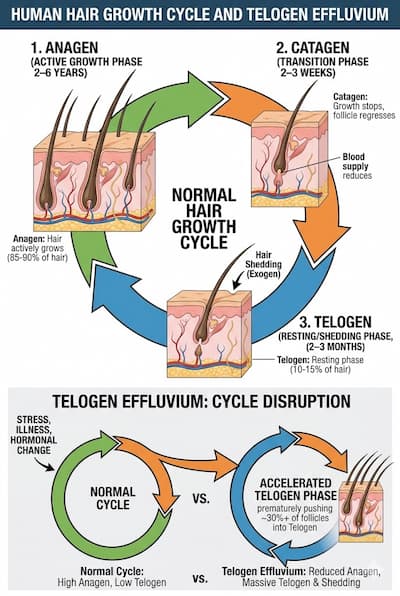
Each hair follicle on your scalp independently cycles through three phases. Understanding these phases is the only way to understand why telogen effluvium behaves the way it does — including the characteristic 2–3 month delay between trigger and shedding.
| Phase | Duration | What Happens |
|---|---|---|
| Anagen (Growth) | 2–6 years | Active hair shaft production; matrix cells divide rapidly; hair grows ~1–1.5 cm/month. 85–90% of scalp follicles are in anagen at any time in a healthy scalp. |
| Catagen (Transition) | 2–3 weeks | Cell division stops; follicle shrinks and detaches from dermal papilla; a brief involuting phase. |
| Telogen (Resting) | 2–3 months | The hair shaft is retained in the follicle but no growth occurs. The follicle rests before re-entering anagen. At the end of telogen, the hair sheds and is replaced by the new anagen hair growing beneath it. |
In a healthy scalp, 85–90% of follicles are in anagen at any given time, with only 10–15% in telogen — producing the normal baseline shedding of 50–100 hairs per day. In telogen effluvium, a systemic stress signal simultaneously pushes a large proportion of anagen follicles into telogen. Two to three months later — when those follicles complete the telogen phase — they all shed at once, producing the characteristic sudden, diffuse hair fall. The delay is simply the duration of the telogen phase itself.
What Triggers Telogen Effluvium — The 6 Major Categories
Any significant physiological or psychological stressor can push a mass of follicles out of anagen prematurely. The unifying mechanism is a disruption to the biological signals that maintain follicles in the anagen phase — primarily through cortisol elevation, nutritional depletion, or direct hormonal signalling changes.
🧠 Psychological Stress
Chronic psychological stress is the most common trigger of telogen effluvium in otherwise healthy adults. The mechanism is cortisol — the body's primary stress hormone. Elevated cortisol suppresses the hair follicle's production of insulin-like growth factor 1 (IGF-1), which is a critical anagen-maintenance signal. Cortisol also directly upregulates substance P in the scalp's perifollicular nerve fibres, which has been shown to trigger premature catagen entry in human follicles in vitro. The result is a mass transition of anagen follicles to telogen — followed by diffuse shedding 2–3 months later. Common stress triggers include bereavement, relationship breakdown, prolonged work stress, exam periods, and anxiety disorders.
🤱 Postpartum Hormonal Shift
Postpartum telogen effluvium is the single most common form of the condition — affecting up to 50% of women within 1–5 months after delivery. During pregnancy, elevated oestrogen prolongs the anagen phase, causing unusually full, thick hair. After delivery, oestrogen drops sharply to pre-pregnancy levels. The follicles that were held in extended anagen simultaneously enter telogen, producing a mass shedding event typically 3–4 months postpartum. This is a physiological — not pathological — process in most cases, and full recovery occurs within 6–12 months as the hormones normalise. It is frequently worsened by concurrent nutritional depletion from breastfeeding, sleep deprivation, and postpartum stress.
🤒 Fever, Illness, and Surgery
High fever (above 39°C) is a well-documented trigger of acute telogen effluvium — historically documented after typhoid, malaria, and COVID-19. The febrile response redirects metabolic resources away from non-essential structures like hair follicles and simultaneously creates a physiological stress signal that triggers mass telogen entry. Major surgeries and serious acute illnesses trigger the same response via the cortisol surge associated with physiological trauma. COVID-19-associated hair loss — widely reported in 2020–2021 — was primarily telogen effluvium triggered by the combination of fever, physiological stress, and systemic inflammation. Shedding typically begins 6–10 weeks post-illness and resolves within 6 months in most cases.
🥗 Nutritional Deficiency
The hair follicle matrix is one of the most rapidly dividing cell populations in the human body — it requires a continuous, high supply of micronutrients. Deficiency in any of the following can trigger or sustain telogen effluvium: iron (serum ferritin below 40 ng/mL disrupts follicle cycling even without frank anaemia), protein (hair is 90% keratin; inadequate dietary protein directly limits the follicle's synthesis capacity), zinc (essential for hair matrix cell division and keratin cross-linking), Vitamin D (follicle cycling regulation via VDR receptors), and B-vitamins (particularly biotin and B12 — less commonly deficient than believed, but relevant in restrictive diets). Crash diets that slash calories by more than 500–700 kcal/day simultaneously create multiple deficiencies and are a high-risk trigger.
🦋 Thyroid Dysfunction
Both hypothyroidism and hyperthyroidism can cause diffuse hair fall that closely mimics telogen effluvium. Thyroid hormones directly regulate the duration of the anagen phase — hypothyroid conditions shorten anagen, and hyperthyroid conditions disrupt the cycle through a different mechanism. The hair fall in thyroid-related conditions is characteristically diffuse and is often the first presenting complaint before the diagnosis is confirmed by blood tests. This is why thyroid function (TSH, free T3, free T4) is a critical investigation for anyone with diffuse hair fall lasting more than 3 months — particularly when accompanied by fatigue, weight changes, temperature sensitivity, or irregular periods. Telogen effluvium from thyroid dysfunction does not respond to topical treatment until the thyroid condition itself is managed.
💊 Medications and Hormonal Changes
Several medications can trigger telogen effluvium by interfering with the follicle growth cycle. The most common culprits include oral contraceptives (particularly on stopping — the hormonal withdrawal effect is similar to the postpartum drop), beta-blockers, retinoids (isotretinoin), anticoagulants (heparin), antidepressants (particularly SSRIs), and high-dose Vitamin A supplementation. Hormonal contraceptive changes, perimenopause, and PCOS-related androgen fluctuations all represent hormonal triggers that can destabilise the anagen phase. Identifying whether a medication was started 2–4 months before the shedding began is an important part of the diagnostic workup — a detail that is frequently missed because patients and clinicians focus on recent rather than past changes.
Is It Telogen Effluvium? — How to Distinguish It from Other Forms of Hair Loss
The distinction matters because telogen effluvium, androgenetic alopecia, and alopecia areata require fundamentally different management approaches. Here is how to tell them apart:
| Feature | Telogen Effluvium | Androgenetic Alopecia | Alopecia Areata |
|---|---|---|---|
| Pattern of loss | Diffuse — all over scalp equally | Patterned — crown/temples (M), central part (F) | Patchy — discrete circular bald patches |
| Onset | Sudden — clearly after a trigger event | Gradual — progressive over months/years | Rapid — patches appear within days/weeks |
| Follicle status | Normal — no miniaturisation; just cycle disruption | Progressive miniaturisation — shafts thin over time | Autoimmune attack on follicle; follicle intact but suppressed |
| Scalp appearance | Normal — no visible scalp; density reduced but not absent | Visible scalp at crown/part; hair density reduced in zones | Smooth, bare circular patches; sometimes exclamation-mark hairs at edges |
| Pull test | Positive — multiple hairs released easily in telogen phase | Negative — hairs do not shed easily | Positive at patch margins during active phase |
| Regrowth potential | Full — follicles undamaged; complete regrowth expected | Partial — follicles miniaturise; regrowth is limited without treatment | Variable — full regrowth in most but recurrence is common |
| Identifying trigger | Usually identifiable — stress event 2–3 months prior | Genetic — family history; no clear trigger event | Autoimmune — may coincide with stress but mechanism is immune-mediated |
The Telogen Effluvium + Androgenetic Alopecia Overlap
A critical clinical reality: telogen effluvium frequently unmasks pre-existing androgenetic alopecia. A woman with underlying but asymptomatic female pattern hair loss may experience a TE episode — the acute shedding resolves within 6 months, but the overall hair density does not fully return to baseline. The TE has removed the compensatory density that was masking the underlying pattern loss. This is why it is important to evaluate hair density recovery at 6 and 12 months post-shedding peak — not just whether the acute shedding stopped. If the parting remains noticeably wider, or temple areas continue to thin after the TE resolves, a separate evaluation for androgenetic alopecia is warranted.
Similarly, chronic stress can simultaneously trigger TE and, through DHT-mediated pathways, accelerate androgenetic alopecia in genetically predisposed individuals. Managing stress is therefore relevant for both conditions.
💡 Not sure whether your hair fall is telogen effluvium, pattern loss, or something else? Get a personalised assessment from our in-house dermatologist.
Book Free Consultation →The Telogen Effluvium Timeline — What to Expect Month by Month
One of the most distressing aspects of telogen effluvium is not knowing when the shedding will stop. The timeline is actually quite predictable in acute TE — understanding it reduces the anxiety that can ironically perpetuate the condition through continued cortisol elevation.
A physiological or psychological stressor signals a mass shift of anagen follicles into telogen. No visible hair change occurs at this point — the follicles are resting, not shedding yet. This phase is invisible, which is why patients typically cannot identify the trigger at the time the shedding begins. Looking back 2–3 months from the shedding onset is the most reliable way to identify it.
The displaced follicles remain in telogen. Hair appears normal. The patient has no idea that a wave of shedding is accumulating. Scalp density is maintained because the hairs are still physically present in the follicle, just not growing. This is the window to begin nutritional correction and stress management — the follicles have not yet shed, and supporting anagen re-entry conditions during this phase may reduce the severity and duration of the subsequent shedding event.
Telogen phase ends and the accumulated resting hairs begin to shed. The patient notices dramatically increased hair fall — often 200–400 hairs per day versus the normal 50–100. This is the most alarming stage, because the volume of shedding is dramatically visible and the cause — 2–3 months prior — is not immediately obvious. The hairs shed in TE are typically telogen hairs: they have a small white bulb at the root end, are not broken, and come out painlessly in the brush or shower.
Shedding reaches its maximum volume. The scalp may appear slightly less dense — particularly when the hair is wet or at the parting — but bald patches do not develop (unlike alopecia areata). This is the period of greatest distress for most patients. It is also when panic-driven measures like aggressive scalp scrubbing, protein-loading, and multiple simultaneous supplements are often started — most of which do not address the actual biological mechanism at this stage. The priority now is: is the underlying trigger resolved? Are nutritional deficiencies being corrected? Is cortisol being managed?
As the wave of displaced telogen follicles completes shedding, daily hair fall reduces back toward baseline. New anagen hairs — short, fine, and upright — begin to emerge at the scalp surface. These baby hairs are most visible along the hairline and parting, where the hair is thinnest. Their appearance is the most reliable confirmation that the condition is resolving. At this stage, consistent scalp circulation support (oil massage, gentle scalp stimulation) and nutritional adequacy become the most important recovery inputs.
Hair regrowth is in progress but the new anagen hairs take 12–18 months to reach full length — because hair only grows at approximately 1–1.5 cm per month. This slow recovery is frequently misread as continued hair loss, causing patients to resume panic-mode treatments. The honest picture: shedding is controlled, follicles are healthy, and density recovery is simply a function of hair growth rate. At 12 months, the regrowth hairs are typically 12–18 cm long and visible density has largely recovered. At 18 months, most patients have returned to their pre-TE density baseline — provided the underlying trigger has been resolved and is not ongoing.
Ayurvedic Herbs with Documented Relevance to TE Recovery
Ayurvedic herbs do not directly reverse the telogen effluvium process — no topical treatment can undo the follicle cycle disruption once it has occurred. What they can do is address the upstream triggers (cortisol, nutritional inadequacy, scalp inflammation) and support the conditions for anagen re-entry once the telogen wave completes. Here is the evidence for the most relevant herbs:
| Herb | Active Compounds | Mechanism Relevant to TE | Evidence Level |
|---|---|---|---|
| Bhringraj (Eclipta prostrata) | Wedelolactone, ecliptine, alkaloids | Anagen-promoting in animal models; 5α-reductase inhibitory activity; reduces perifollicular inflammation that sustains telogen signalling | Moderate — animal + traditional evidence |
| Amla (Phyllanthus emblica) | Emblicanin A & B, Vitamin C, tannins | Richest natural source of Vitamin C; collagen synthesis support for dermal papilla; antioxidant reduction of oxidative stress in the follicle microenvironment | High — collagen/antioxidant well evidenced |
| Ashwagandha (Withania somnifera) | Withanolides | Most clinically validated adaptogen for cortisol reduction (RCT: 300 mg KSM-66 reduces cortisol by ~27.9% vs placebo); directly addresses the cortisol-driven telogen signal in stress-induced TE | High — human RCT evidence for cortisol reduction |
| Brahmi (Bacopa monnieri) | Bacosides A and B | Adaptogenic; reduces psychological stress markers; neuroprotective effect on HPA axis reduces chronic cortisol elevation that sustains TE in ongoing stress states | Moderate — human studies on stress; follicle-specific indirect |
| Redensyl (plant-derived) | Dihydroquercetin-glucoside (DHQG), EGCG-2 | Targets outer root sheath stem cells; stimulates anagen re-entry; shown in clinical studies to outperform minoxidil 2% for hair density increase at 84 days | High — human clinical trials |
| Sesame Oil (Sesamum indicum) | Sesamol, sesamin, sesamolin | Improves scalp microcirculation; anti-inflammatory lignans reduce perifollicular inflammatory signals; traditional Ayurvedic carrier for scalp herbs | Moderate — antimicrobial + traditional use |
| Castor Oil (Ricinus communis) | Ricinoleic acid | Anti-inflammatory scalp effect; improves scalp blood supply when massaged; ricinoleic acid prostaglandin E2 activity has theoretical relevance to anagen maintenance | Moderate — anti-inflammatory; anagen-specific indirect |
The Practical Recovery Approach — What to Do (and What to Stop Doing)
Address the Trigger First
- Identify and resolve the triggering event where possible
- Stress management — meditation, sleep prioritisation, cortisol management (ashwagandha, brahmi)
- Rule out thyroid dysfunction, iron deficiency, and Vitamin D deficiency with blood tests
Nutritional Correction
- Adequate dietary protein: 0.8–1.2 g/kg body weight daily minimum
- Iron-rich foods (lentils, spinach, sesame seeds) + Vitamin C for absorption
- Zinc from whole food sources (pumpkin seeds, chickpeas) or supplementation
- Avoid caloric restriction during recovery — the follicle needs metabolic resources
Scalp Support
- Consistent scalp oil massage 2× weekly — improves dermal papilla blood supply
- Gentle sulfate-free cleansing — do not skip washes out of fear of shedding
- Herbs: bhringraj, amla, sesame oil as pre-wash oil treatment
Common Mistakes to Avoid
- Crash dieting during recovery — the most counterproductive action; creates additional nutritional TE triggers on top of the existing one
- Avoiding hair washing — shed hairs will fall regardless; avoiding washing only allows scalp buildup, weakening of remaining hairs, and increased scalp inflammation
- Aggressive scalp scrubbing or harsh physical treatments — does not accelerate anagen re-entry; can damage the scalp barrier and increase inflammation
- Layering multiple simultaneous supplements — can create toxicity (excess Vitamin A is a documented TE trigger itself); identify the specific deficiency first
- Anxious daily hair counting — the resulting stress directly perpetuates the cortisol signal that triggered the condition
- Applying minoxidil without confirming TE vs androgenetic alopecia — minoxidil works by extending anagen; in TE, follicles self-correct without it; stopping minoxidil later can itself trigger a TE episode
💡 Persistent hair fall beyond 6 months? Our dermatologist can help identify the root cause and build a targeted recovery plan.
Book Free Consultation →Supporting TE Recovery — The Right Products for Your Scalp
During and after a telogen effluvium episode, the scalp needs two things from a product routine: anti-inflammatory, circulation-supporting oil treatment to nourish re-entering anagen follicles, and a gentle yet effective cleanse that maintains the scalp microbiome without stripping the barrier.
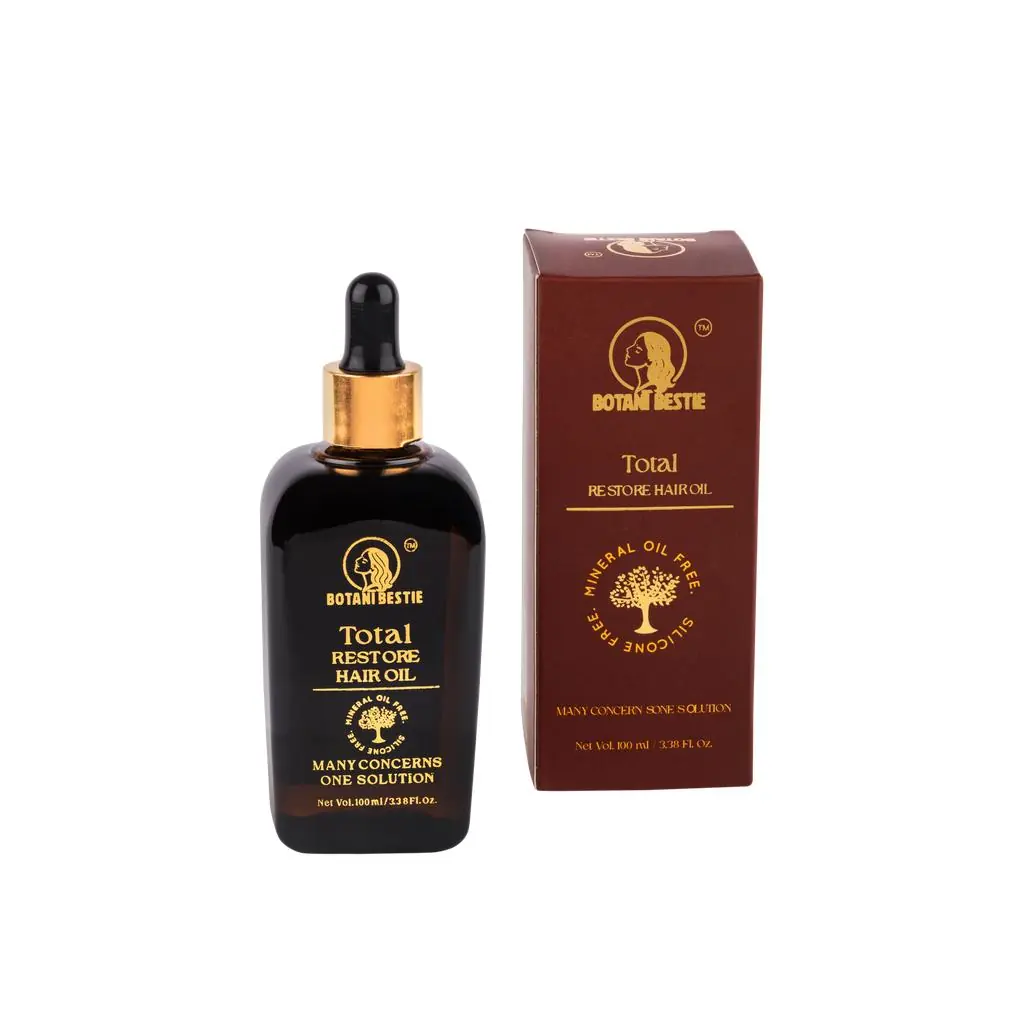
Total Restore Hair Oil
Pre-Wash Scalp Treatment — 2× per week
Formulated with bhringraj (anagen-promoting), amla (antioxidant + Vitamin C for dermal papilla collagen), castor oil (scalp microcirculation + anti-inflammatory), and sesame oil (perifollicular anti-inflammatory + carrier). Addresses the scalp-level conditions that support anagen re-entry during TE recovery — without the hormonal risks associated with minoxidil.
Shop Total Restore Hair Oil →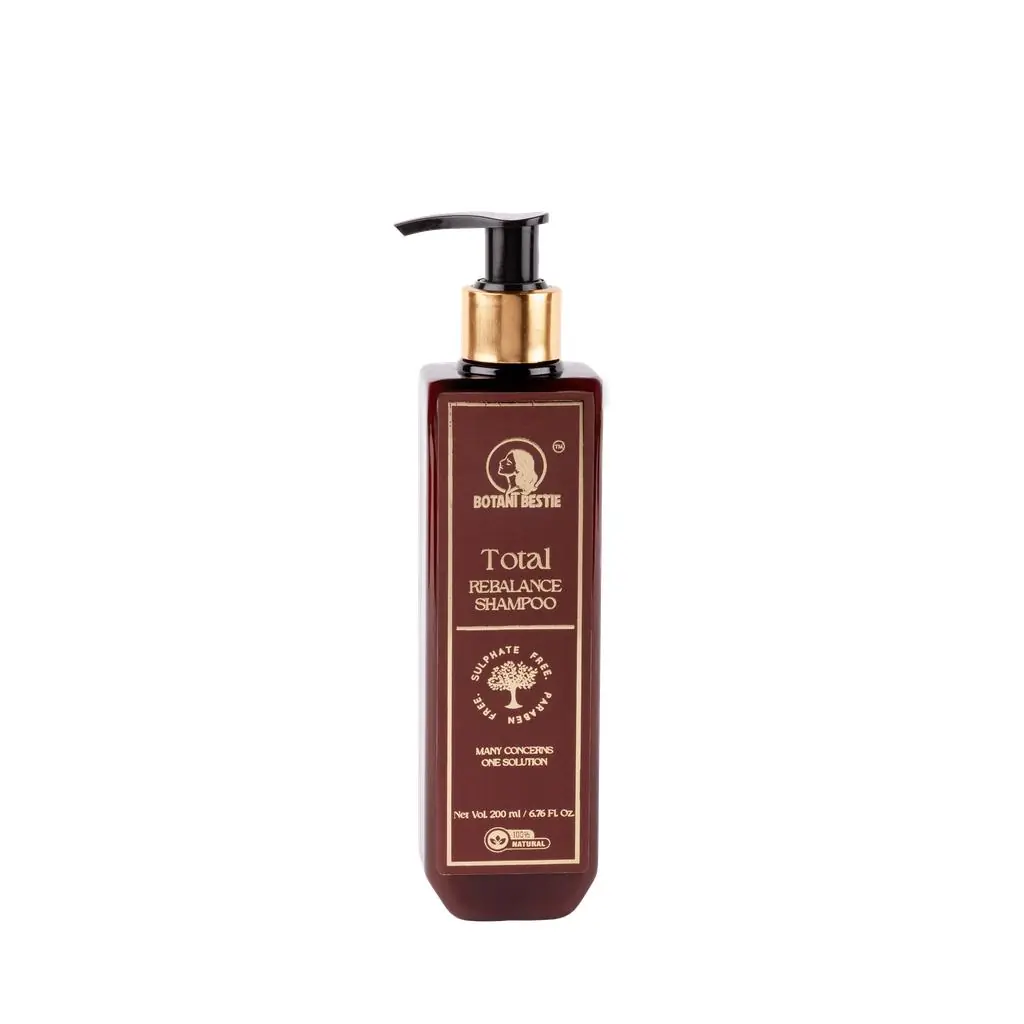
Total Rebalance Shampoo
Scalp-Balancing Cleanse — 2–3× per week
Gentle enough for frequent use during TE recovery — when consistent cleansing is essential but harsh sulfates would compound scalp inflammation. Maintains the scalp barrier and microbiome balance that creates the healthiest possible environment for new anagen follicles to establish and grow.
Shop Total Rebalance Shampoo →Concerned About Your Hair Fall? Get a Personalised Assessment
Our in-house dermatologist reviews your hair fall pattern, scalp condition, and symptom history to determine whether you're dealing with telogen effluvium, androgenetic alopecia, or another condition — and builds a targeted treatment plan. No purchase required.
Book Free Consultation → WhatsApp UsFrequently Asked Questions

The Bottom Line: It's Temporary — and Recovery Is a Biology Problem, Not a Product Problem
Telogen effluvium is not a failure of your hair. It is the body's well-documented response to stress, illness, nutritional depletion, or hormonal change — and the 2–3 month delay between trigger and shedding is built into the hair growth cycle itself, not a sign that something has gone permanently wrong.
Recovery has two phases: resolving the trigger, and restoring the biological conditions for anagen re-entry — adequate nutrition, reduced cortisol, scalp microcirculation, and anti-inflammatory support at the follicle level. Topical treatments that address the scalp environment genuinely support recovery. Topical treatments that promise to reverse TE in isolation, without addressing the underlying cause, do not.
The most important thing to understand: the follicles are waiting to grow. Give them the right conditions, and they will.
Shop Total Restore Hair Oil → Free Hair Consultation"The follicles are not gone. They are waiting. Give them the right conditions."
Ready to make the honest switch?
Our products are built on the same principles as every article we write — pure ingredients, real results, nothing to hide.
Explore Our Products