Scalp Oiling: The Right Way, the Wrong Way, and How Often — The Complete Science Guide (2025)
Scalp oiling is the most universal hair care practice in India — and also one of the most frequently done wrong. The timing, the quantity, the type of oil, and the scalp condition you apply it to all determine whether oiling helps or actively worsens your hair and scalp health. This is the complete, evidence-based guide to doing it correctly.

Oil has been applied to the hair and scalp in India for thousands of years — and this tradition is not wrong. The chemistry of hair oiling is sound. What is wrong is how it is typically practised: heavy overnight application on a scalp that already has active dandruff, using mineral oil bases that provide no bioactive benefit, or leaving oil on post-wash and expecting it to "nourish" the scalp through a sealed surface.
What oiling actually does: At the hair shaft level, oils with small fatty acid molecules (primarily coconut oil's lauric acid) penetrate the cortex and reduce the protein loss that occurs during washing — the physical swelling and friction of wet shampooing strips keratin from the shaft. Oiling before washing reduces this loss measurably. At the scalp level, oiling — paired with massage — increases dermal papilla stimulation and scalp microcirculation. The bioactive compounds in specific plant oils and infusions add further follicle-level effects.
What oiling does not do: It does not "nourish" the hair shaft in the nutritional sense — hair is dead protein and cannot absorb nutrition the way skin does. It does not directly grow hair from a follicle that is not already in anagen. And applied incorrectly, it does not help at all — it creates build-up, feeds dandruff organisms, and forces you to shampoo more aggressively to remove it, causing the very damage you were trying to prevent.
The difference between effective and ineffective oiling is almost entirely in the method.
⚡ Scalp Oiling — Quick Reference Summary
| Variable | Right Way | Wrong Way |
|---|---|---|
| Timing | 30–60 minutes before washing (pre-wash treatment) | Overnight on scalp; left on post-wash as leave-in |
| Quantity | Enough to cover the scalp and mid-lengths; thin, even coating | Saturating hair with oil from root to tip (excessive build-up) |
| Application | Fingertip massage in sections, directly on scalp; 3–5 minutes circular massage | Pouring oil onto the top of the head; no massage; soaking lengths only |
| Frequency | 1–2× per week for dry/normal scalps; once a week or less for oily scalps | Daily oiling; skipping several weeks then doing marathon overnight sessions |
| If you have dandruff | Do not oil the scalp until dandruff is controlled; use antifungal shampoo first | Oiling an active dandruff scalp — directly feeds Malassezia |
| Oil choice | Match to concern: coconut (protein loss), Bhringraj (hair fall), Rosemary (circulation), Amla (oxidative stress) | Pure mineral oil (no bioactive value); unspecified generic "hair oil" |
| Washing out | Sulphate-free, pH-balanced shampoo; may need two passes for heavy oils | Skipping wash entirely; using harsh sulphate shampoo aggressively to remove oil |
The Science of Scalp Oiling — What It Actually Does at a Biological Level
Before discussing method, frequency, or oil selection, it helps to understand the specific mechanisms through which oiling produces its effects. This determines what oiling is genuinely capable of — and what it cannot do, regardless of the oil, the frequency, or the tradition behind the practice.
This is the most scientifically validated benefit of pre-wash oiling. When the hair shaft is wet, it swells — the cortex expands as water molecules penetrate between the keratin chains. This swelling and de-swelling cycle (called hygral fatigue) stresses the cortex and cuticle with every wash. The mechanical friction of shampooing and towel drying, applied to a swollen shaft, causes keratin protein to be physically stripped from the surface — measurable as increased protein loss in wash water.
Coconut oil is uniquely effective at reducing this loss. Its dominant fatty acid — lauric acid — has a small, linear molecular structure that allows it to penetrate the hair shaft cortex (unlike most other oils, which sit on the cuticle surface). When applied before washing, it fills cortex spaces, reducing water uptake and the subsequent swelling and protein stripping. A landmark study (Rele & Mohile, 2003) demonstrated that coconut oil was the only common hair oil to significantly reduce protein loss in both undamaged and bleached hair — mineral oil and sunflower oil showed no significant effect.
Practical implication: If reducing protein loss is the goal, coconut oil applied 30 minutes before washing is the evidence-backed approach. Overnight application provides no additional benefit on this measure. Post-wash application provides zero benefit — the washing has already occurred.
The massage component of oiling is, arguably, more important than the oil itself for follicle health. A peer-reviewed clinical study (Koyama et al., 2016) demonstrated that standardised scalp massage — 4 minutes per day for 24 weeks — produced a significant increase in hair shaft thickness without any topical product, attributed to stretching forces on dermal papilla cells activating gene expression related to hair follicle cycling.
Scalp massage during oiling increases local blood flow, delivering more oxygen and nutrients to the dermal papilla — the follicle's biological "engine." It also temporarily reduces scalp tension (chronically tight scalps have been associated with impaired microcirculation to follicles) and disperses oil evenly across the scalp surface.
Practical implication: The massage matters more than the oil. Even a dry fingertip scalp massage (no oil) provides follicle-level stimulation. When oiling, spend 3–5 minutes massaging in small circular motions across all scalp zones — not just the crown — before leaving the oil on. This is the mechanism most responsible for the hair health improvements attributed to traditional oiling rituals.
A plain oil base — coconut, sesame, mineral — provides the shaft and surface benefits described above. Herbal-infused oils add a second layer of benefit: delivery of fat-soluble bioactive compounds from the infusing herb to the scalp skin surface. This is distinct from "nourishing" the hair shaft — the scalp is living tissue and does absorb lipophilic compounds through the skin barrier.
Validated examples: Bhringraj (Eclipta alba) — its active compounds (ecliptine, wedelolactone) have been shown in animal and in-vitro studies to promote anagen phase induction and outperform Minoxidil in some rodent models for anagen extension. Amla (Phyllanthus emblica) — extremely high vitamin C and tannin content supports collagen synthesis in the scalp dermis and reduces oxidative stress on follicles. Rosemary — carnosic acid and ursolic acid in rosemary extract stimulate IGF-1 expression in the scalp and improve microcirculation; a 2023 randomised clinical trial found rosemary oil matched Minoxidil 2% for hair count increase over 6 months with fewer side effects (no scalp itching). Neem — azadirachtin and nimbidin provide anti-Malassezia, anti-inflammatory, and antibacterial scalp surface protection.
Practical implication: The oil base matters less than what is infused into it. A sesame or coconut base carrying genuine Bhringraj or Rosemary extract has documented follicle-level benefits that plain oils lack. This is the scientific basis for Ayurvedic medicated oils — the herbs are the active component, the oil is the delivery vehicle.
The scalp is skin — it has a skin barrier, a microbiome, sebaceous glands, and all the vulnerability to barrier disruption that facial or body skin has. In people with dry, tight scalps, low sebum production, or barrier-disrupted scalps (from over-washing, harsh shampoos, or environmental damage), a topical oil application temporarily provides occlusion — preventing transepidermal water loss from the scalp surface — and emolliency, softening the scalp skin and reducing flaking that is not fungal in origin (dry dandruff).
This benefit is genuine but limited in scope: it addresses dry scalp flaking and tightness, not Malassezia-driven dandruff. It also operates primarily at the scalp skin surface — not at the follicle level. The scalp is not "starved" of oil in most people — most people produce sufficient sebum for scalp skin barrier function. Over-oiling a scalp that already has adequate sebum production creates build-up rather than benefit.
Practical implication: Scalp oiling as an occlusive emollient is most beneficial for genuinely dry, tight, low-sebum scalps — particularly in winter, in people who over-shampoo, and in people who use harsh sulphate shampoos. For normal-to-oily scalps, this mechanism provides marginal benefit and increases the risk of build-up.
The Right Way — Pre-Wash Oiling, Step by Step
Pre-wash oiling is the method that captures all four of the above mechanisms without the risks of overnight scalp oiling. It is the approach used in classical Ayurvedic hair care and the one supported by the current body of hair science research.
Step 1 — Choose the Right Oil for Your Concern
Start with a specific intention. Different oils address different problems, and applying a random oil without understanding its profile produces random results.
- Hair fall / follicle support: Bhringraj-infused oil, Rosemary-infused oil, Amla oil
- Protein loss / shaft strengthening: Coconut oil (lauric acid — the only common oil that penetrates the cortex)
- Dry, flaky scalp (non-fungal): Sesame oil, Almond oil (lightweight, good for scalp skin barrier)
- Scalp inflammation / oxidative stress: Amla oil, Jatamansi-infused oil
- Scalp circulation and DHT inhibition: Rosemary oil, Pumpkin seed oil (in small quantities)
- Dandruff-adjacent scalp health (no active flaking): Neem-infused oil (diluted, small quantity)
Step 2 — Apply in Sections with Deliberate Massage
This is where most people lose the benefit. Pouring oil onto the top of the head and spreading it from there means most of the scalp receives little contact and no massage.
- Warm the oil slightly (30–40°C — not hot) — warmth improves absorption and scalp penetration
- Part hair in 1cm sections across the entire scalp — crown, temples, sides, nape
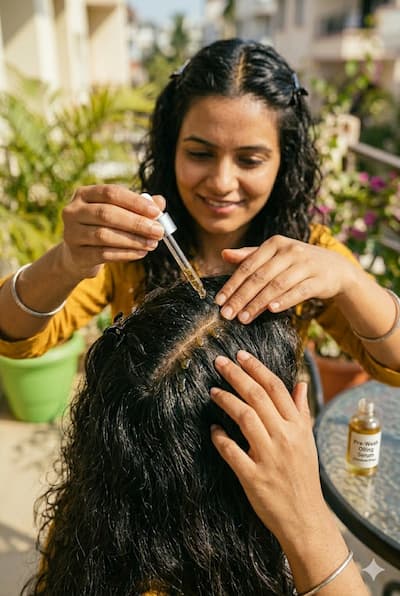
- Apply 3–5 drops directly to the scalp skin at each parting using fingertips or a dropper
- After all sections are done, massage using the pads of your fingers (not fingernails) in small circular motions, working from the nape toward the crown — 3–5 minutes minimum
- Apply any remaining oil to the mid-lengths and ends if they are dry or damaged — not the scalp again
Step 3 — Leave for 30–60 Minutes (Not Overnight)
The primary mechanisms of oiling — shaft penetration, massage-driven microcirculation — are complete within 30 minutes. Leaving oil on the scalp overnight adds no additional benefit for shaft protein protection and introduces the real risk of scalp environment disruption: 8+ hours of occluded, anaerobic scalp surface conditions that favour Malassezia proliferation, particularly in India's warm, humid climate.
A warm towel wrap for the 30–60 minute period is optional but beneficial — the gentle heat opens the cuticle slightly and improves oil uptake. A shower cap achieves a similar effect.
For the lengths: if you are applying oil to damaged mid-lengths and ends (not the scalp), a longer leave-on time of 1–2 hours is appropriate — as the shaft is dead tissue, no biological risk accumulates from longer oil exposure there.
Step 4 — Wash Out Completely with a Gentle Shampoo
Washing the oil out completely is not a failure of the oiling — it is the final and necessary step. Oil that remains on the scalp post-wash becomes build-up that attracts pollutants, clogs follicle openings, and creates the conditions described in the "wrong way" section below.
Apply shampoo directly to the dry (or barely wet) oiled scalp — this is more effective at emulsifying oil than diluting the scalp first with water. Work into a lather, then rinse fully. For heavier oils (castor, coconut applied in large quantity), a second shampoo pass may be needed.
Use a sulphate-free, pH-balanced shampoo — sulphates remove oil effectively but also strip the scalp's natural sebum layer and roughen the cuticle. The point of oiling before washing is to protect the shaft; using a harsh shampoo to remove the oil defeats part of the purpose.
The Wrong Way — Mistakes That Make Oiling Counterproductive
Most of the common ways people oil their scalp in India either provide no benefit or actively worsen the problems they are trying to address. These are the most consequential mistakes — and the science behind why each one fails.
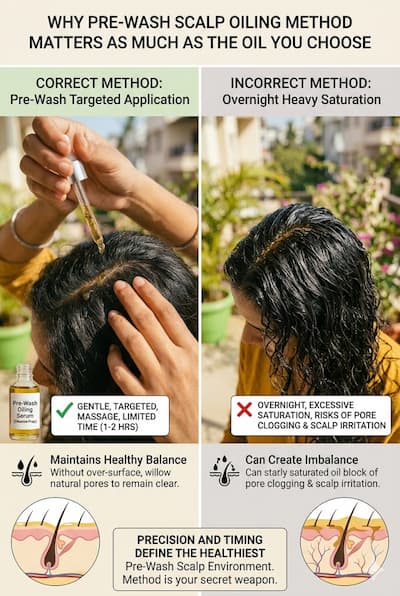
Mistake 1 — Overnight Scalp Oiling (Especially with Active Dandruff)
The scalp's sebum, sweat, and skin cell turnover create a naturally balanced microenvironment. Applying a heavy oil layer and sealing it overnight disrupts this balance: Malassezia yeast — present on every human scalp and responsible for dandruff — is lipophilic, meaning it feeds on fatty acids from oils. An overnight oil application in a warm, humid environment is essentially an extended feeding event for scalp yeast. This is why many people notice dandruff significantly worsens in the days following an overnight oiling session. Even in people without active dandruff, repeated overnight oiling creates an anaerobic scalp environment that shifts the microbiome toward Malassezia dominance over time.
Mistake 2 — Oiling an Active Dandruff Scalp
This is perhaps the most common and consequential mistake. If you have visible flaking, scalp itching, or confirmed dandruff / seborrheic dermatitis, oiling the scalp — even with a pre-wash method — feeds the Malassezia causing the condition. The correct sequence is: treat the dandruff first with an antifungal shampoo (zinc pyrithione 1–2% or ketoconazole 2%) until the scalp is clear, then resume oiling with a careful pre-wash approach. There is no oil that cures dandruff — neem and tea tree diluted in a light carrier can reduce Malassezia growth, but they are anti-dandruff topicals, not lubricating hair oils, and should be used at very low concentrations.
Mistake 3 — Using Mineral Oil as a Scalp Treatment
Many low-cost commercial hair oils in India — including several major branded products — are primarily mineral oil (liquid paraffin) with small token quantities of herbs listed on the label. Mineral oil sits on the hair surface and scalp as an occlusive barrier; it does not penetrate the cortex (too large a molecular weight), delivers no bioactive compounds, and does not provide the shaft-protein-protecting effect of coconut oil. As a scalp leave-on, it creates the same build-up risks as any other oil. The commercial justification for mineral oil is cost — it is cheap, stable, and cosmetically elegant. The consumer benefit is primarily cosmetic gloss, not hair or scalp health.
Applying a heavy oil to the scalp after washing and leaving it on throughout the day or overnight is a practice many people follow with the expectation of "nourishing" the scalp. The scalp is living skin — it does absorb some lipophilic compounds — but it also produces its own sebum, which provides all the surface lubrication and barrier support a healthy scalp needs. Layering additional oil on top of freshly produced sebum creates cumulative build-up that attracts environmental pollutants (particularly in Indian urban environments with high particulate matter), clogs follicle openings with a film of oil + pollution + skin cells, and requires increasingly aggressive washing to remove — creating a cycle of stripping and over-oiling.
For genuine scalp dryness (low sebum, tight scalp), a small amount of lightweight oil or a purpose-formulated scalp serum applied post-wash is appropriate. The distinction is quantity (a few drops, not a coating) and formulation (lightweight, non-comedogenic, ideally with scalp-specific actives rather than a pure oil).
The application technique matters especially for hair that is already chemically processed, heat-damaged, or highly porous. Rubbing oil into damaged, porous hair with a towel or aggressively with fingertips creates friction that roughens the already-disrupted cuticle further. Damaged hair has raised cuticle scales that snag on each other — aggressive rubbing causes more mechanical breakage, not the lubrication it is intended to provide.
For damaged lengths: apply oil by smoothing it downward from mid-length to ends with a gentle pressing motion — the direction of the cuticle scale overlap — rather than rubbing. The same principle applies at every step: towelling, detangling, and oil application should all move in the direction of hair growth (downward), not against it.
Oil applied to the scalp surface, even with a herbal infusion, does not reach the dermal papilla and inner root sheath of the follicle at clinically significant concentrations. The follicle bulb is embedded 3–4mm into the dermis — beyond the penetration depth achievable by topical oil application through the scalp surface. Bhringraj and Rosemary extracts do reach the peri-follicular space in the upper dermis through transdermal absorption, providing anti-inflammatory and circulation benefits. But the primary mechanism of herbal hair oil efficacy for hair fall is scalp massage + superficial bioactive delivery — not direct follicle intervention the way a leave-in serum with concentrated actives provides.
For significant hair fall — telogen effluvium, androgenetic alopecia, PCOS-driven loss — oil is a supportive practice, not a treatment. The treatment is addressing the root cause: nutritional correction, hormonal management, DHT-blocking leave-in actives (Redensyl, Anagain, Procapil, Saw Palmetto), and scalp health maintenance. See our guides on telogen effluvium, female pattern hair loss, and PCOS hair fall for the specific treatment protocols.
How Often to Oil — By Scalp Type and Hair Condition
There is no universal "twice a week" rule that applies to every scalp. The correct frequency depends entirely on your scalp type (sebum production), hair texture and porosity, and whether you have any active scalp conditions. Oiling more frequently than your scalp requires does not compound the benefits — it compounds the risks.
| Scalp / Hair Type | Recommended Frequency | Best Method | Best Oil Type |
|---|---|---|---|
| Dry scalp, low sebum Tight, itchy, flaking that is dry (not fungal) |
2× per week pre-wash | Pre-wash 30–60 min, warm towel wrap | Sesame, Almond, Bhringraj-infused sesame |
| Normal scalp, balanced sebum No excess oil, no dryness, minimal or no dandruff |
1× per week pre-wash | Pre-wash 30–60 min + 5 min massage | Coconut (protein protection), Bhringraj, Amla |
| Oily scalp, high sebum Greasy within 1–2 days of washing, large pores visible |
Once every 10–14 days or skip entirely | Apply only to mid-lengths and ends, avoid scalp entirely if possible | Light oils only (Argan, Jojoba) — skip heavy oils |
| Active dandruff / seborrheic dermatitis Visible flaking, scalp itch, yellow-white scale |
Do not oil scalp until controlled | Use antifungal shampoo until clear. After: cautious pre-wash only. | After clearing: diluted Neem, light Bhringraj blend only |
| Hair fall (telogen effluvium, AGA) Significant root shedding, visible thinning |
1× per week, focused on scalp massage | Pre-wash with 5–10 min massage. Prioritise leave-in serum over oil for active treatment. | Bhringraj, Rosemary — paired with dedicated leave-in scalp serum |
| Damaged / high-porosity hair, breakage Chemically processed, heat-damaged, breaking easily |
1–2× per week, focused on mid-lengths and ends | Apply to lengths (not scalp) 30–60 min pre-wash for protein-loss protection | Coconut oil (lauric acid penetration, protein retention) |
The Wash Frequency Relationship
Oiling frequency should match your wash frequency. If you shampoo twice a week, oiling once per wash cycle (applied before each wash) is appropriate. If you shampoo once a week, one pre-wash oiling per week is the rhythm. Do not oil between wash days — oil accumulates without a washing event to remove it, creating the build-up conditions described above. The only exception is a small amount of lightweight oil applied to dry ends (not the scalp) to manage split ends between washes — this is a sealing step, not a scalp treatment, and uses minimal product on already-dead hair tissue.
Seasonal adjustment: most people benefit from slightly more frequent oiling in winter (when scalp sebum production is lower and the environment is drier) and slightly less in summer (higher ambient humidity and sebum production).
Which Oil for Which Problem — The Evidence-Based Guide
Bhringraj Oil — For Hair Fall and Anagen Support
Active compounds: Ecliptine, wedelolactone, coumestans, flavonoids. These are fat-soluble in a sesame or coconut base and deliver transdermally to the peri-follicular scalp tissue.
Evidence: A published animal study (Roy et al., 2008) demonstrated Bhringraj-infused oil produced faster anagen initiation and longer anagen phase duration than Minoxidil 2% — the pharmaceutical gold standard for hair growth. While human RCT data remains limited, the mechanistic pathway (anagen induction, 5α-reductase inhibition) is consistent with the ingredient profile.
Best for: Telogen effluvium, early androgenetic alopecia, stress-driven shedding. Use pre-wash, with deliberate scalp massage. Also see our detailed Bhringraj guide.
Coconut Oil — For Protein Loss and Shaft Strength
Active compound: Lauric acid (48% of coconut oil fatty acid profile) — uniquely small and linear molecular structure that allows penetration into the hair cortex, not just surface coating.
Evidence: The 2003 Rele & Mohile study (widely cited in hair science) demonstrated coconut oil as the only common hair oil to measurably reduce protein loss in both undamaged and bleached hair during washing. Mineral oil and sunflower oil showed no significant effect. Coconut oil applied pre-wash reduced protein loss by 39% in undamaged hair and 46% in chemically bleached hair.
Best for: Chemically processed hair, heat-damaged hair, high-porosity hair, anyone who shampoos frequently. Apply to mid-lengths and ends; can also be applied to scalp if dry. Note: for fine, low-porosity hair, coconut oil can feel heavy — use sparingly or focus on lengths only.
Rosemary Oil — For Scalp Circulation and DHT Inhibition
Active compounds: Carnosic acid, ursolic acid, rosmarinic acid. Ursolic acid inhibits 5α-reductase (the enzyme that converts testosterone to DHT); carnosic acid stimulates IGF-1 expression in the scalp, promoting follicle cycling.
Evidence: A 2023 randomised controlled trial (Panahi et al.) demonstrated rosemary oil matched Minoxidil 2% for hair count increase after 6 months of twice-daily scalp application — with significantly less scalp itching than Minoxidil. This is the most recent and methodologically sound clinical data on a plant-derived hair growth topical.
Best for: Androgenetic alopecia (male and female pattern loss), PCOS-driven hair fall (anti-androgenic pathway), anyone wanting an alternative to pharmaceutical DHT blockers. Must be diluted in a carrier oil (2–3% concentration) — pure rosemary essential oil is too concentrated for scalp application. See our rosemary guide for full dilution protocols.
Amla Oil — For Scalp Oxidative Stress and Follicle Longevity
Active compounds: Vitamin C (highest plant source), gallic acid, ellagic acid, tannins. These are antioxidant compounds that reduce oxidative stress on follicle cells — one of the mechanisms of premature ageing and miniaturisation of follicles.
Evidence: In-vitro studies demonstrate Amla extract inhibits the enzyme responsible for premature greying (tyrosinase modulation), supports collagen synthesis in the scalp dermis, and reduces follicle oxidative damage. The iron content in Amla also supports the follicle-level oxygen delivery that is reduced in iron-deficiency hair fall.
Best for: Premature greying, follicle health maintenance, nutrient-deficiency-driven hair fall, scalp antioxidant support in high-pollution environments. See the Amla guide for complete evidence review.
Castor Oil — For Thickness and Occlusivity
Active compound: Ricinoleic acid (87% of castor oil) — unusual hydroxylated fatty acid with anti-inflammatory and antimicrobial properties. Very high viscosity.
What the evidence shows: Castor oil's reputation for hair growth is primarily anecdotal — there are limited high-quality clinical trials on human hair growth. What is established: ricinoleic acid is anti-inflammatory and may reduce scalp prostaglandin D2 (which suppresses hair growth in AGA). The high viscosity provides excellent occlusion and moisture sealing on the hair shaft — making it effective for reducing split ends and sealing the cuticle on dry, porous hair.
Best for: Sealing dry, porous ends; eyebrow and lash growth (stronger evidence base in those fine hairs); scalp with no oiliness or dandruff tendency. Not suitable as a scalp treatment for oily scalps — too heavy, difficult to wash out, promotes build-up. Always blend with a lighter carrier oil (50:50 with coconut or sesame) for scalp application.
Neem Oil — For Anti-Malassezia Scalp Health
Active compounds: Azadirachtin, nimbidin, nimbolide. These have documented anti-fungal, anti-bacterial, and anti-inflammatory effects — including specific activity against Malassezia species.
Evidence: Neem extracts demonstrate in-vitro anti-Malassezia activity, making neem-infused oil the exception to the rule that oils should not be used on dandruff-prone scalps — at the right concentration. A very diluted neem oil (5–10% in a light carrier) applied briefly before washing can reduce scalp Malassezia load without the feeding effect of heavier base oils.
Best for: Scalp prone to mild dandruff, scalp with folliculitis, oily scalps needing scalp health support without the feeding risk. Use in very small quantities, diluted in jojoba or light sesame — pure neem oil has a strong odour and is too concentrated for direct scalp application. See the Neem scalp guide.
💡 Not sure which scalp condition you have or which oiling approach is right for you? Get a targeted scalp assessment from our dermatologist.
Book Free Scalp Consultation →Products That Do What Oil Cannot — And Oil That Does It Right

Total Restore Hair Oil — The Right Oil, Done Right
Pre-Wash Treatment · Scalp + Lengths · Bhringraj · Amla · Brahmi
Built on a sesame-coconut base — the Ayurvedic formulation supported by both tradition and the published science on hair oil penetration. Bhringraj extract for anagen induction and follicle anti-inflammation. Amla for follicle antioxidant protection and collagen support in the scalp dermis. Brahmi for scalp cortisol modulation and stress-driven shedding reduction. Jatamansi for anti-inflammatory scalp environment maintenance. No mineral oil. No SLS or parabens. Designed for the pre-wash method — apply, massage for 5 minutes, leave 30–60 minutes, wash with the Rebalance Shampoo. This is what an honest hair oil formulation looks like.
Shop Total Restore Hair Oil →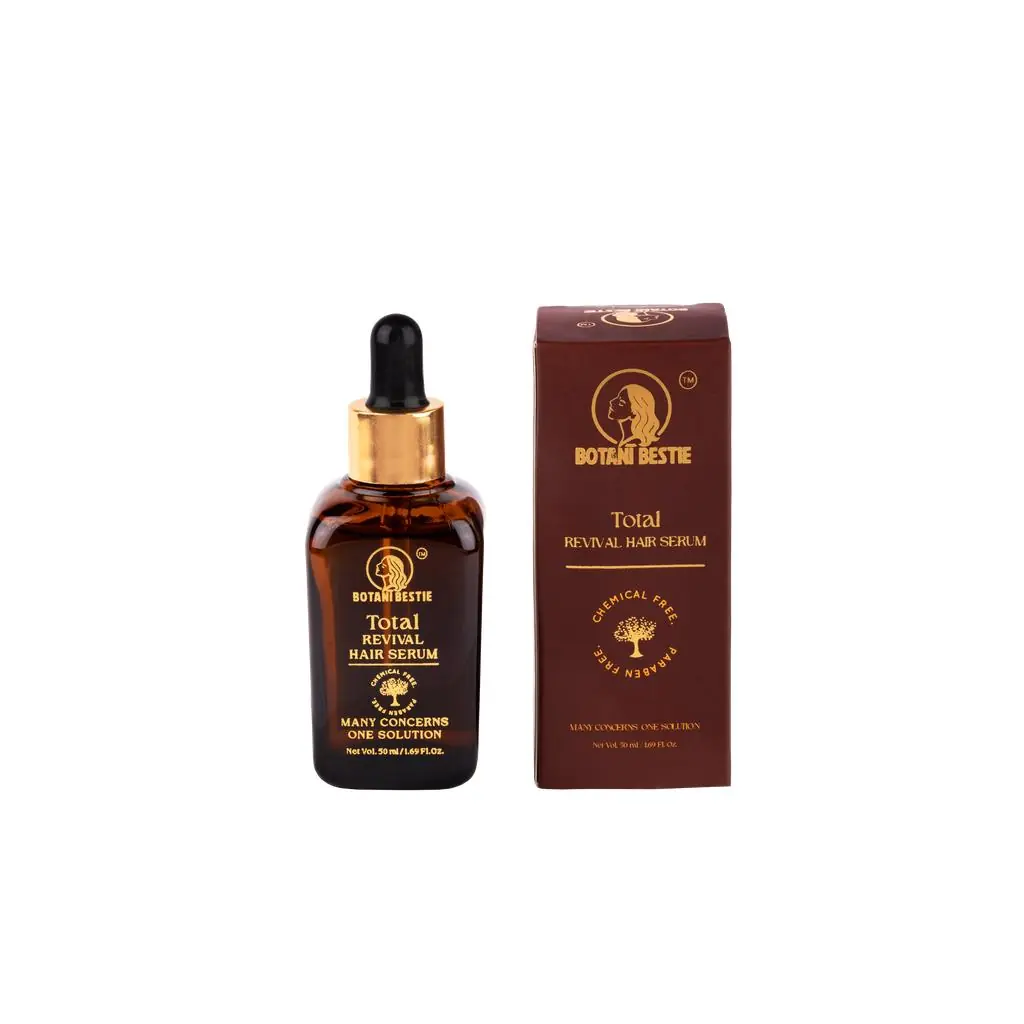
Total Revival Hair Serum — For What Oil Cannot Do
Leave-In Scalp Serum · Daily Application · Redensyl · Anagain · Procapil
Oil sits on the scalp surface. A leave-in serum with water-soluble actives penetrates the scalp dermis and reaches the peri-follicular space where follicle biology actually occurs. Redensyl (DHQG + EGCG) activates hair follicle stem cells in the outer root sheath — the pathway that determines whether a dormant follicle re-enters anagen. Anagain (organic pea sprout extract) mimics dermal papilla growth signalling to extend anagen duration. Procapil (biotinyl-GHK + apigenin) improves scalp microcirculation and reduces follicle miniaturisation driven by DHT. Applied to the scalp after washing, as a leave-in — this is the tool for active hair fall treatment. Oiling is maintenance. Serum is treatment.
Shop Total Revival Hair Serum →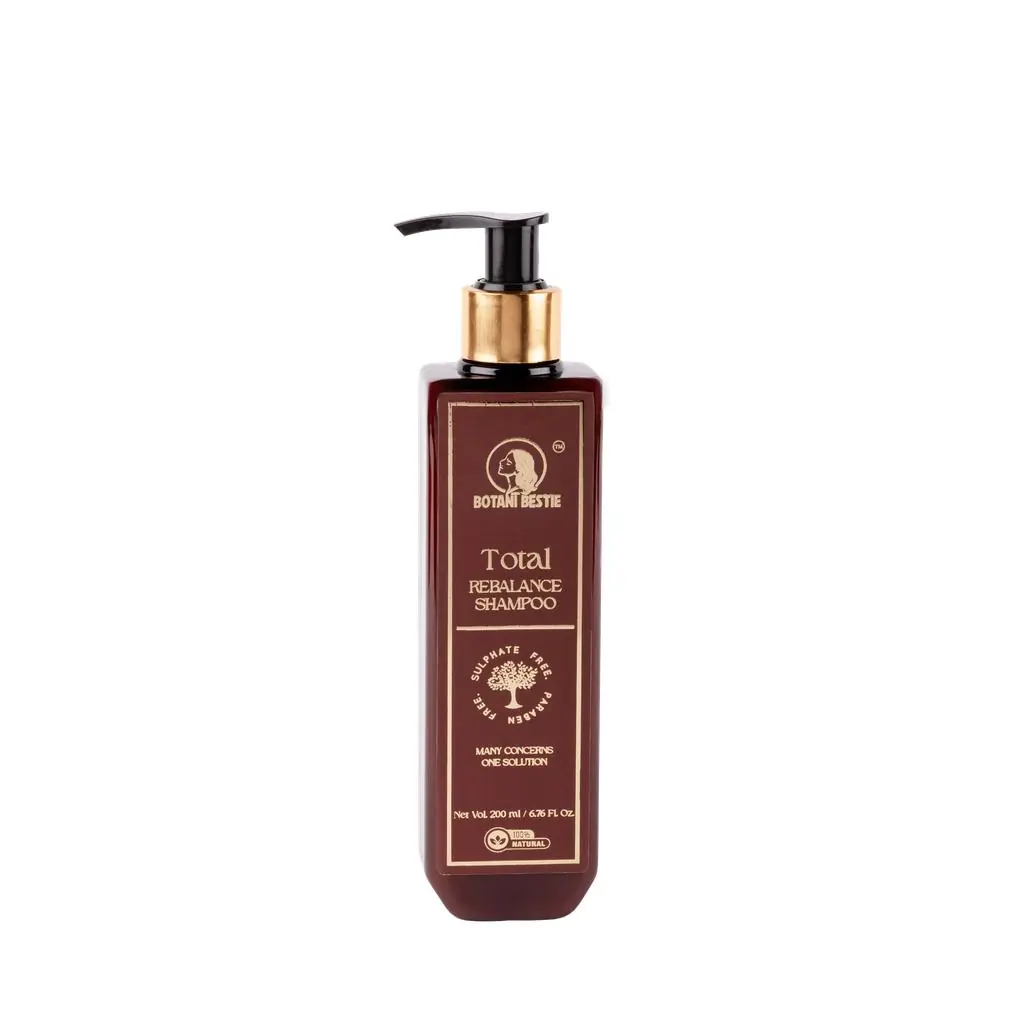
Total Rebalance Shampoo — The Right Wash After Oiling
Sulphate-Free · pH 4.5–5.5 · Bhringraj · EGCG · Rice Water Inositol
Washing out a hair oil correctly matters as much as applying it correctly. A sulphate-heavy shampoo removes the oil efficiently but also strips the natural sebum layer the scalp produces, roughens the cuticle (raising the pH above the hair's natural 4.5–5.5 acid mantle), and undoes the protein-protective work the pre-wash coconut oil achieved. Total Rebalance is sulphate-free, pH-balanced, and formulated to emulsify oils gently — removing the pre-wash treatment without stripping. Rice water inositol provides the first cuticle-smoothing step post-wash. EGCG from green tea provides scalp antioxidant protection at the surface. Bhringraj continues the scalp health support even through the wash step. The right end to a correct oiling session.
Shop Total Rebalance Shampoo →Not Sure What Your Scalp Actually Needs?
The right oiling approach depends on whether you have dry scalp, oily scalp, dandruff, active hair fall, breakage, or a combination. A dermatologist scalp assessment — including trichoscopy if needed — identifies your specific scalp type and gives you a protocol that matches what your scalp and hair require. No guesswork, no trying five different routines. Our dermatologist consults are free and give you a targeted answer within one session.
Book Free Consultation → WhatsApp UsFrequently Asked Questions
The Bottom Line — Method Matters More Than Which Oil You Use
The tradition of scalp oiling in India is not wrong. The science behind it is sound. The problem is that the tradition has been practiced in ways that no longer align with the environments we live in — urban India with high pollution, high humidity, and daily scalp stress from hard water, tight hairstyles, and heat styling — or with the specific scalp conditions many people now carry (dandruff, seborrheic dermatitis, pattern hair loss).
Pre-wash oiling with a genuine herbal blend, applied in sections with deliberate massage, left for 30–60 minutes, and washed out completely with a sulphate-free shampoo — this is what works. Overnight oil saturation on a scalp that has active dandruff, or daily oil application without washing, or mineral oil labelled as herbal — these do not work, and often create new problems.
The most important variables, in order of impact: wash the oil out every time, use a genuine herbal oil (not a mineral oil with herb labels), massage for 5 minutes regardless of the oil, and do not oil an active dandruff scalp. Get these four right and the specific oil matters far less than most people think.
Shop Total Restore Hair Oil → Free Scalp Consultation"The right oil applied the wrong way is the wrong oil. Method is everything."
Ready to make the honest switch?
Our products are built on the same principles as every article we write — pure ingredients, real results, nothing to hide.
Explore Our Products