Hormonal Acne — The Real Cause and the Skin-Science Approach That Actually Works
You wash your face twice a day. You have tried every spot treatment on the market. The breakouts keep coming back in exactly the same places — chin, jaw, cheeks — right on schedule. That is not a skincare problem. That is a hormonal problem being treated with the wrong tools. This is the complete, honest guide to what is driving your acne and what the science actually supports.
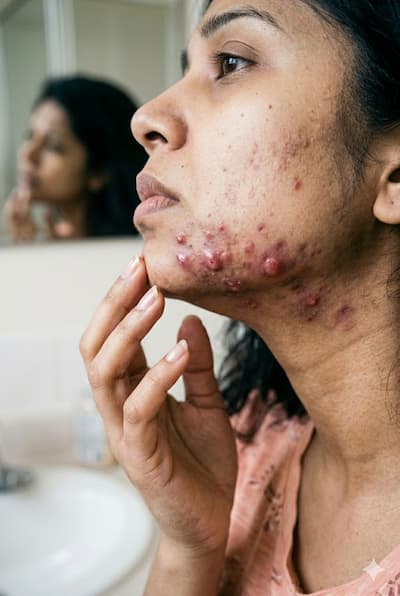
Hormonal acne is not a hygiene problem, a diet problem, or a willpower problem. It is the predictable skin-level consequence of a specific hormonal mechanism — one that has been documented in peer-reviewed dermatology literature for decades but that most over-the-counter products are not designed to address.
The reason most acne treatments fail for hormonal acne is not that they are bad products. It is that they are designed for a different type of acne — superficial comedones and bacterial overgrowth on a healthy skin barrier — not for the deeper, cyclical, cystic breakouts driven by androgen-excess sebum production from within the follicle wall.
Understanding the mechanism changes everything about how you approach treatment. It tells you which topical actives are relevant (and which are not), why diet matters more than most dermatologists discuss with patients, and where Ayurvedic herbs with documented anti-androgenic and anti-inflammatory activity fit into a science-backed routine.
This guide gives you the complete picture — from the molecular mechanism to the practical protocol — with honest assessments of every intervention at every level.
Is It Hormonal Acne? The Pattern Checklist
Hormonal acne has a specific pattern that distinguishes it from fungal acne, contact dermatitis, or stress-triggered bacterial overgrowth. Check how many of these apply:
If 3 or more of these apply, the mechanism driving your acne is almost certainly androgenic or IGF-1-mediated. The sections below explain exactly what is happening — and what to do about it at every level.
The Mechanism: How Hormones Cause Acne — Step by Step

Hormonal acne follows a specific four-step sequence. Understanding each step explains why certain treatments work and why others — despite being heavily marketed — do not address the actual mechanism.
5 Hormonal Triggers of Acne — Which One Is Yours?
Multiple hormonal mechanisms can drive the androgen-sebum cascade. Identifying your primary trigger determines which interventions — topical and systemic — will be most effective for you specifically.
This is the most common cause of hormonal acne — the cyclical breakout that peaks in the week before menstruation and often clears after the period begins.
In the luteal phase (the two weeks after ovulation and before menstruation), progesterone levels rise significantly. Progesterone itself stimulates sebaceous glands — but more significantly, it is converted to testosterone by enzymes in skin tissue, elevating local androgen levels precisely when oestrogen (which has a protective, anti-androgenic effect) is declining. The result: a predictable pre-menstrual surge in sebum production and androgen receptor stimulation at the follicle level.
Simultaneously, pre-menstrual oestrogen drop reduces the skin's ability to manage inflammation — meaning the immune response to C. acnes is both more vigorous and less well-regulated, producing deeper, more painful lesions than at other points in the cycle.
Who it affects: Women with otherwise normal hormone levels who notice a clear cyclical pattern — reliable worsening in the 7–10 days before menstruation, improvement after.
Key interventions: Consistent topical routine throughout the cycle (not just when breakouts appear); pre-cycle dietary adjustments (reducing high-GI foods in the luteal phase); anti-inflammatory actives — Turmeric, Niacinamide — used consistently.
In PCOS, elevated testosterone and DHT chronically stimulate sebaceous glands — not just pre-menstrually, but continuously. The acne pattern in PCOS tends to be more persistent (present throughout the cycle rather than just before the period), more inflammatory (deeper and more cystic), and often accompanied by other androgen-excess features — excess facial hair, scalp hair thinning, and irregular cycles.
Women with PCOS also frequently have insulin resistance, which drives IGF-1 production — amplifying androgen action in sebaceous glands beyond what the elevated testosterone alone would produce (see Trigger 4).
Who it affects: Women with diagnosed or suspected PCOS; women with persistent, treatment-resistant acne on the lower face that does not follow a clear menstrual cycle pattern.
Key interventions: Addressing insulin resistance (low-GI diet, inositol supplementation) is the single most impactful systemic intervention; topical anti-androgen herbs (Neem, Turmeric) alongside Salicylic Acid and Niacinamide; medical anti-androgens (spironolactone) for severe cases.
The stress-acne connection is one of the most documented yet most underexplained relationships in dermatology. The mechanism is direct, not psychological:
Cortisol (the primary stress hormone) is produced by the adrenal glands in response to stress. It converts in skin tissue to DHEA (dehydroepiandrosterone) and then to testosterone and DHT — directly amplifying the androgen signal at the sebaceous gland level. Additionally, corticotropin-releasing hormone (CRH) — released during stress even before cortisol rises — has been shown to directly stimulate sebocytes (oil gland cells) via CRH receptors found in human sebaceous glands.
A 2003 study at Stanford found that students who scored higher on a perceived stress scale had significantly more severe acne during exam periods — independent of diet and sleep changes. This is a reproducible, mechanistically explained finding: stress hormones directly drive sebum excess.
Who it affects: Anyone with existing acne susceptibility who notices reliable worsening during periods of high stress — exams, work deadlines, relationship stress, illness.
Key interventions: Adaptogenic herbs — Brahmi (cortisol reduction), Ashwagandha (HPA axis regulation) — to reduce the cortisol-to-androgen conversion; consistent topical anti-inflammatory routine; sleep prioritisation (sleep deprivation independently elevates cortisol).
Diet's role in acne is more precisely mechanistic than most people — or indeed many dermatologists — appreciate. The pathway is: high-GI foods → insulin spike → IGF-1 elevation → sebaceous gland stimulation + androgen amplification.
Insulin-like Growth Factor-1 (IGF-1) acts directly on sebaceous gland cells to upregulate sebum production. It also promotes keratinocyte proliferation inside follicles — accelerating comedone formation. And it increases 5-alpha-reductase activity in skin tissue, converting more testosterone to the more potent DHT. A 2007 randomised controlled trial published in the American Journal of Clinical Nutrition found that a low-GI diet significantly reduced acne lesion counts over 12 weeks compared to a high-GI control diet.
Dairy — particularly skimmed milk — is a second evidence-backed dietary trigger. It contains bovine IGF-1 (which is bioactive in humans), whey protein (which stimulates IGF-1 production), and a range of bovine androgens and androgen precursors. Multiple meta-analyses have found a significant positive association between dairy consumption and acne.
Who it affects: Anyone whose acne noticeably worsens after high-sugar meals, dairy products, or high-GI foods. Particularly relevant for Indian diets high in refined rice, white bread, sugary beverages, and mithai.
Key interventions: Low-GI diet (whole grains, legumes, vegetables, limited refined carbohydrates); reducing or eliminating skimmed milk and whey protein; zinc supplementation (zinc inhibits 5-AR and reduces IGF-1-driven sebum); green tea (EGCG reduces IGF-1 signalling in sebocytes).
Many oral contraceptive pills (OCPs) contain progestins with anti-androgenic properties (such as drospirenone or cyproterone acetate) alongside synthetic oestrogen. They suppress the body's own LH-driven androgen production and directly antagonise androgen receptors — producing significant acne improvement in many women.
When these pills are stopped — whether to conceive, due to side effects, or by choice — androgen levels rebound. The sebaceous glands that were suppressed for months or years suddenly receive androgen stimulation again, often at a level that feels significantly worse than pre-OCP acne. This "post-pill acne" is a well-documented phenomenon that can persist for 6–12 months as the body's natural hormone cycle re-establishes itself.
Who it affects: Women who develop new or worsened acne within 3–6 months of stopping an OCP, particularly those who had clear skin while taking it.
Key interventions: Post-pill acne has the same mechanism as PCOS acne — androgen excess — and responds to the same interventions: anti-androgenic topical herbs (Neem, Turmeric), Salicylic Acid for pore clearing, Niacinamide for sebum regulation and inflammation. The condition is typically self-resolving within 9–12 months as hormone levels normalise; targeted topical treatment reduces severity during this window.
💡 Niacinamide, Salicylic Acid, Turmeric, Neem, and Tulsi — all in one pH-balanced, sulfate-free face wash.
See Total Radiance Face Wash →Why Most Hormonal Acne Treatments Make It Worse
The standard response to acne — harsher cleansers, more frequent washing, high-concentration active treatments — is counterproductive specifically for hormonal acne. Here is what the research says about the most common mistakes:
❌ Over-washing and Harsh Sulfate Cleansers
Washing the face more than twice a day or using harsh sulfate-based cleansers strips the skin's natural lipid barrier — producing a paradoxical sebum surge. When the skin's barrier is depleted, sebaceous glands compensate by producing more oil. In the hormonal acne context, this means the androgen-driven excess sebum is compounded by barrier-damage-driven compensatory sebum — worsening the very condition you are trying to treat.
The fix: A gentle, pH-balanced (4.5–5.5), sulfate-free cleanser that removes excess sebum without disrupting the lipid barrier. Twice daily maximum.
❌ High-Concentration Benzoyl Peroxide Overuse
Benzoyl Peroxide (BP) is effective against C. acnes — but at concentrations above 2.5%, it generates significant free radical production and barrier disruption. Research has shown that 2.5% BP is as effective against C. acnes as 10% — with significantly less skin barrier damage. High-concentration BP on hormonally-sensitised skin causes redness, dryness, and barrier breakdown that triggers compensatory sebum production.
The fix: Anti-inflammatory and pore-clearing actives (Salicylic Acid, Niacinamide, Turmeric) that address the follicle environment without the free radical and barrier damage that high-dose BP produces.
Oily skin and dehydrated skin are not mutually exclusive — they frequently co-exist. Dehydrated skin (lacking water, not oil) triggers increased sebum production as a compensatory response. Using no moisturiser — or an occlusive, comedogenic one — creates a dehydrated skin surface over an oil-saturated follicle: precisely the combination that produces the worst hormonal breakouts.
The fix: A lightweight, non-comedogenic moisturiser with humectants (Aloe Vera, Panthenol, Glycerin) that hydrates without adding occlusive oils. Hydrated skin produces less compensatory sebum and responds better to active treatments.
Hormonal acne is driven by a chronic, recurring hormonal signal. Treating only the active lesion — while leaving the androgen-stimulated sebaceous gland environment unchanged between breakouts — produces the classic cycle of spot treatment → temporary improvement → same breakout in the same location two weeks later.
The fix: Consistent daily routine using anti-inflammatory and pore-maintaining actives (Niacinamide, Salicylic Acid, Turmeric) throughout the entire cycle — not just during the pre-menstrual flare. The goal is to maintain a follicle environment resistant to comedone formation, not to react to lesions after they form.
The 6 Actives That Address Hormonal Acne at the Right Level
An effective hormonal acne topical routine needs to work across multiple steps of the acne cascade simultaneously — regulating sebum, clearing pores, suppressing bacterial activity, and reducing inflammation — without disrupting the skin barrier that makes everything else worse. Here is the evidence on the actives that do this:
| Active | Mechanism for Hormonal Acne | Evidence | Steps |
|---|---|---|---|
| Niacinamide Vitamin B3 |
Inhibits lipid synthesis in sebocytes (reduces sebum at source); shrinks pore appearance; suppresses TNF-α & IL-1β; improves skin barrier to prevent compensatory oil surge | Strong — 4% Niacinamide = 1% Clindamycin in RCTs | 1, 2, 4 |
| Salicylic Acid BHA |
Lipid-soluble — dissolves the sebum–dead cell plug inside the follicle wall (not just on the surface); intrinsic anti-inflammatory as a salicylate | Strong — gold-standard comedolytic; multiple RCTs | 2, 3, 4 |
| Turmeric 95% Curcumin |
Inhibits NF-κB — suppresses IL-1β, TNF-α & PGE2 driving cystic inflammation; documented antibacterial against C. acnes | Strong in vitro; moderate clinical | 3, 4 |
| Neem Seed Oil Azadirachta indica |
Nimbidin & nimbolide inhibit C. acnes and reduce comedone formation; mild anti-androgenic activity at the sebaceous gland; strongly anti-inflammatory | Moderate — strong in vitro; consistent with mechanistic data | 1, 3, 4 |
| Tulsi Holy Basil |
Ursolic acid antibacterial against C. acnes (Gram-positive); adaptogenic — reduces stress-cortisol-to-androgen conversion at the skin level | Moderate — antibacterial established; skin RCTs ongoing | 3, 4 |
| Licorice Root Glycyrrhiza glabra |
Glabridin inhibits tyrosinase — fades post-acne hyperpigmentation; anti-inflammatory via COX-2 inhibition to reduce active lesion redness | Strong for PIH; moderate anti-inflammatory | 4 + PIH |
| Green Tea EGCG |
EGCG reduces IGF-1 signalling in sebocytes (counters diet-driven sebum amplification); neutralises C. acnes free fatty acids; multi-pathway anti-inflammatory | Strong — RCTs confirm sebum & lesion count reduction | 1, 2, 4 |
Myth vs. Truth — What Most People Believe About Hormonal Acne
| What you hear | What the science says |
|---|---|
| "Acne is caused by dirty skin — wash more" | Hormonal acne is driven from inside the follicle by androgen-excess sebum. Over-washing strips the skin barrier and triggers compensatory sebum production — worsening the very condition it is supposed to treat. |
| "Toothpaste on a pimple dries it out overnight" | Toothpaste contains fluoride, sodium lauryl sulfate, and mint compounds that cause contact dermatitis and chemical burns on facial skin. It does not contain any acne-specific actives. This damages the barrier and delays healing. |
| "Chocolate causes acne" | Partially — but the driver is the sugar, not the cocoa. High-cocoa dark chocolate has not been consistently associated with acne; milk chocolate and sugary confections have, because of their high glycaemic index and dairy content. |
| "You'll grow out of hormonal acne" | Not necessarily. Hormonal acne in adult women (25–40+) is driven by the same mechanisms as adolescent acne but often has different triggers (PCOS, stress, post-pill). Many women experience their worst hormonal acne in their late 20s and 30s — well past the "you'll grow out of it" window. |
| "Natural / herbal products don't actually work for acne" | Turmeric (curcumin), Neem (nimbidin), and Green Tea (EGCG) have documented antibacterial and anti-inflammatory mechanisms against the exact pathways driving acne — with human study support. Niacinamide (a B vitamin) outperformed 1% clindamycin in a clinical trial. The active matters far more than whether the source is botanical or synthetic. |
| "Sun exposure clears acne" | UV exposure causes temporary drying that can make breakouts less visible — but it damages the skin barrier, triggers post-inflammatory hyperpigmentation in darker skin tones, and increases the risk of future breakouts. Sun is not a treatment. SPF is. |
The Anti-Hormonal-Acne Diet — What to Eat, What to Reduce
Diet is not the sole cause of hormonal acne — but it is one of the most modifiable factors, and the mechanism is now well-established. Here is the evidence-based dietary framework:
- Low-GI whole grains — brown rice, oats, whole wheat roti. Reduce insulin spikes and downstream IGF-1 sebum signalling.
- Legumes — dal, rajma, chole. Low-GI, high in zinc (5-AR inhibitor) and fibre for stable insulin.
- Omega-3 rich foods — flaxseed, walnuts, fatty fish. Omega-3 reduces leukotriene B4 — a key inflammatory mediator in acne pustules.
- Green tea (consumed) — EGCG reduces IGF-1 signalling systemically; 4 cups/day associated with reduced sebum in clinical studies.
- Zinc-rich foods — pumpkin seeds, sesame seeds, chickpeas. Zinc inhibits 5-AR (reduces DHT) and has direct anti-C. acnes activity.
- Turmeric in food — dietary curcumin provides systemic anti-inflammatory effects that complement topical use.
- Skimmed milk and whey protein — contain bovine IGF-1, androgens, and whey-driven IGF-1 stimulation. Multiple meta-analyses confirm the dairy-acne association; skimmed milk shows stronger association than full-fat.
- Sugary beverages and refined carbs — white bread, maida, packaged snacks, mithai, sugary chai. Cause insulin spikes → IGF-1 → sebum.
- High-glycaemic breakfast foods — cornflakes, white bread toast, packaged juices. The high-GI morning meal sets the insulin tone for the day.
- Excessive iodine — iodised salt, seaweed, certain supplements at high doses. Iodine stimulates sebaceous glands; excess iodine intake is documented to worsen acne in susceptible individuals.
- Trans fats (vanaspati, certain fried foods) — promote systemic inflammation that amplifies the immune response to C. acnes, worsening cystic lesion severity.
The Topical Routine — Building the Anti-Hormonal-Acne Skincare Protocol
An effective hormonal acne cleansing routine does three things simultaneously: clears the follicle of the androgen-driven sebum excess, suppresses the inflammatory cascade, and maintains the skin barrier intact so compensatory sebum does not worsen the cycle. The Total Radiance Face Wash is formulated around exactly this principle.
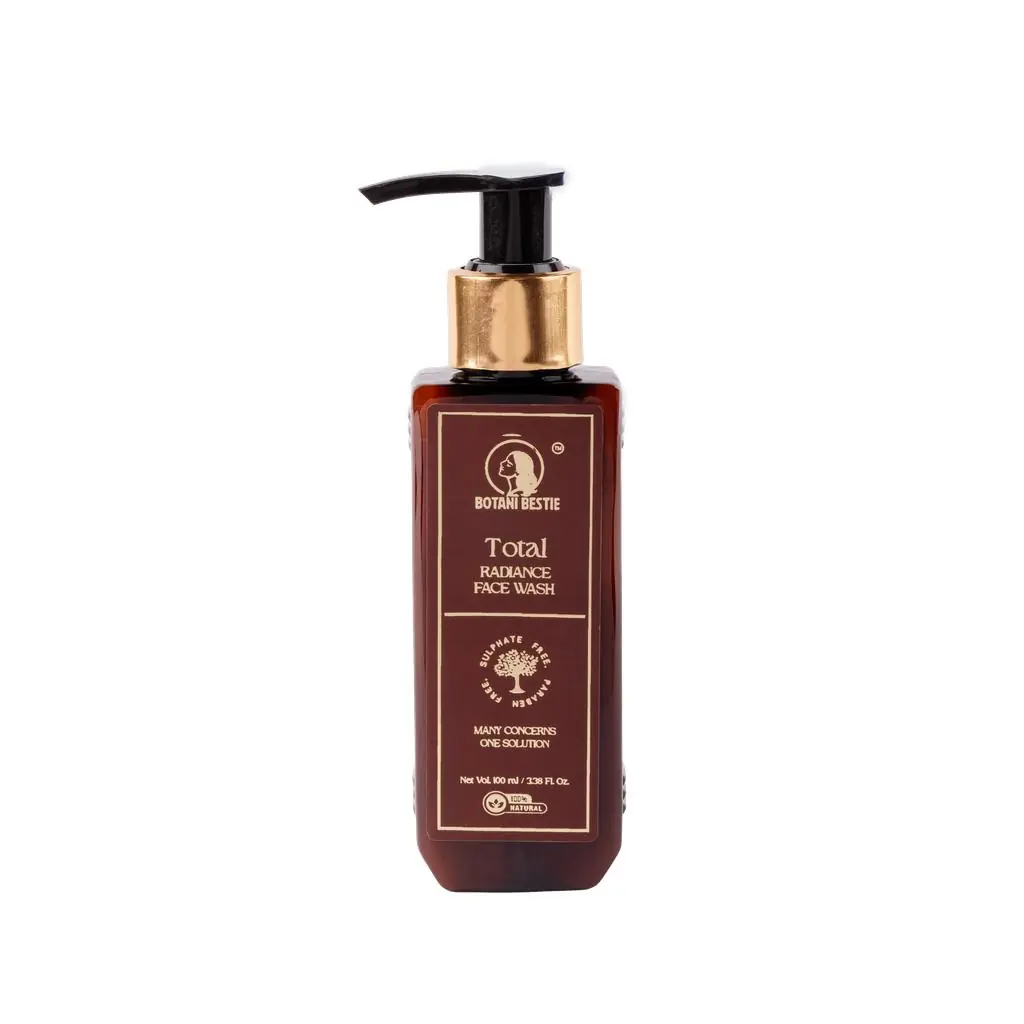
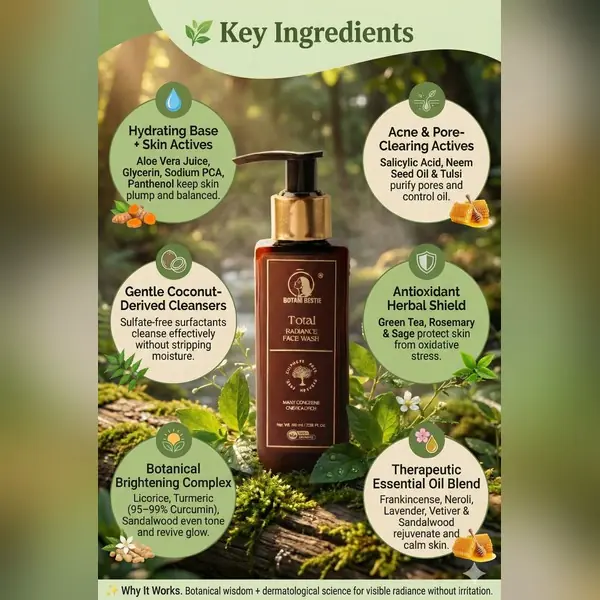
Total Radiance Face Wash
by Botani Bestie — pH-balanced, sulfate-free, multi-active hormonal acne cleanser
Why the formulation is built specifically for the hormonal acne mechanism:
Sebum Regulation + Pore Clearing
- ✔ Niacinamide (Vitamin B3) — inhibits lipid synthesis in sebocytes; reduces sebum production at the gland level; shrinks pore appearance with consistent use
- ✔ Salicylic Acid (BHA) — oil-soluble, penetrates the sebum-filled pore to dissolve the dead-cell plug from inside; the most relevant exfoliant for androgen-driven comedones
- ✔ Green Tea (EGCG) — reduces IGF-1 signalling in sebocytes, directly counteracting the diet/insulin-driven component of sebum excess
Antibacterial + Anti-inflammatory
- ✔ Turmeric (95–99% Curcumin) — inhibits NF-κB; suppresses IL-1β and TNF-α; antibacterial against C. acnes; reduces cystic lesion depth and duration
- ✔ Neem Seed Oil — nimbidin and nimbolide inhibit C. acnes; mild anti-androgenic; strongly anti-inflammatory at the follicle
- ✔ Tulsi (Ocimum sanctum) — ursolic acid antibacterial against C. acnes; adaptogenic properties address stress-driven hormonal trigger
- ✔ Sandalwood Powder — cooling anti-inflammatory; soothes active inflamed lesions; reduces redness and irritation around breakouts
Brightening + Barrier Support
- ✔ Licorice (Mulethi) Extract — glabridin inhibits tyrosinase; fades post-acne hyperpigmentation; anti-inflammatory to reduce lesion redness
- ✔ Aloe Vera Juice — soothing and anti-inflammatory; delivers humectant hydration without comedogenic occlusion; supports barrier recovery
- ✔ Panthenol (Provitamin B5) + Allantoin — barrier repair; reduces the compensatory sebum surge that barrier damage triggers
- ✔ Vitamin E (Tocopherol) — antioxidant protection; neutralises free fatty acids generated by C. acnes lipase activity
How it compares to a typical pharmacy acne face wash:
| Feature | Typical Pharmacy Acne Wash | Total Radiance Face Wash |
|---|---|---|
| Salicylic Acid (pore-clearing BHA) | ✅ Usually present | ✅ |
| pH-balanced to 4.5–5.5 | ❌ Often alkaline (disrupts barrier) | ✅ |
| Niacinamide (sebum regulation) | ❌ Rarely included | ✅ |
| Anti-inflammatory Turmeric (95% Curcumin) | ❌ | ✅ |
| Neem Seed Oil (antibacterial + anti-androgenic) | ❌ | ✅ |
| Licorice for post-acne dark mark fading | ❌ | ✅ |
| Sulfate-free (no barrier stripping) | ❌ Most contain SLS or SLES | ✅ |
| Free dermatologist consultation | ❌ | ✅ Included |
📅 Realistic Timeline — What to Expect Week by Week
Hormonal acne does not clear in 3 days. Here is an honest, clinically grounded timeline for what to expect with a consistent evidence-based routine:
| Timeframe | What You May Notice | What's Happening Biologically |
|---|---|---|
| Week 1–2 | Skin may initially feel "purging" — slight increase in small breakouts, especially if you are using Salicylic Acid for the first time. Existing active lesions do not worsen significantly. Skin feels less oily between washes. | Salicylic Acid is loosening impacted sebum from follicles that have been blocked for weeks — bringing them to the surface. This is a positive sign, not a negative reaction. Niacinamide is beginning to reduce sebocyte lipid synthesis. |
| Week 2–4 | Purging subsides. Active breakouts begin to heal faster than before. New lesions are slightly less frequent or less severe. Skin texture begins to feel smoother. | Follicles cleared by Salicylic Acid are no longer providing the anaerobic environment C. acnes needs. Turmeric and Neem are suppressing the inflammatory cascade. Niacinamide's sebum-reducing effect is measurable by week 4. |
| Week 4–8 | Noticeable reduction in breakout frequency and severity. The pre-menstrual flare is measurably less intense than before. Post-acne marks begin to fade with Licorice and Niacinamide. Skin overall clearer, less red. | One or two complete sebum turnover cycles have occurred under the Niacinamide + Salicylic Acid + Turmeric regime. The skin has adapted to the active ingredients. The inflammatory cytokine environment around follicles is meaningfully calmer. |
| Week 8–12 | Significant improvement in skin clarity. Hormonal flares still occur (the hormonal driver has not been removed) but are notably shorter in duration and smaller in severity. Hyperpigmentation from previous breakouts measurably lighter. | Multiple sebaceous gland cycles under consistent Niacinamide sebum regulation have reduced overall sebum load. The skin barrier is healthier — reducing compensatory sebum. Licorice glabridin is progressively inhibiting melanin synthesis at post-acne sites. |
| Beyond 12 weeks | Ongoing maintenance — the hormonal trigger persists (menstrual cycle, PCOS, stress) but is managed. Skincare creates a resistant follicle environment; dietary changes further reduce IGF-1 amplification. Flares occur but are shorter and milder. | Hormonal acne is a chronic condition managed, not cured, by topical treatment alone. Combining the skincare routine with dietary modification (low-GI, reduce dairy) and stress management produces the best long-term outcomes. Medical intervention (spironolactone, OCP) is appropriate for severe or persistent cases. |
Not Sure What's Driving Your Breakouts?
Get a free personalised skin consultation with our in-house dermatologist. Tell us your breakout pattern, cycle timing, diet, and skincare history — and receive a targeted routine recommendation built specifically for your skin type and hormonal profile.
Book Free Skin Consultation → WhatsApp UsFrequently Asked Questions
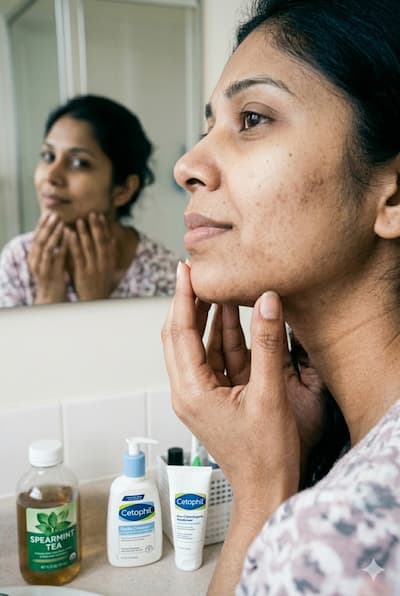
The Honest Verdict on Hormonal Acne
Hormonal acne is not a skincare problem. It is a hormonal problem with a skin-level manifestation — and treating it exclusively at the skin level, with products designed for a different mechanism, is why so many people cycle through product after product without lasting improvement.
The mechanism is clear: androgens → excess sebum → follicle plug → C. acnes → inflammatory cascade. Every step in that chain has evidence-backed interventions — Salicylic Acid for the follicle, Niacinamide and Green Tea for sebum regulation, Turmeric and Neem for the inflammatory and bacterial steps, Licorice for the aftermath. Combined with a low-GI diet, stress management, and consistency over weeks rather than days, this approach addresses hormonal acne at every level simultaneously.
The skin that comes out on the other side — when you address both the hormonal root and the follicle environment — is genuinely, lastingly clearer. Not just between breakouts. Fundamentally clearer.
Shop Total Radiance Face Wash →"Clear skin is not about washing harder. It is about understanding what is driving the problem — and addressing that."
Ready to make the honest switch?
Our products are built on the same principles as every article we write — pure ingredients, real results, nothing to hide.
Explore Our Products