Ayurvedic Hair Care for Beginners — Where to Start and How to Build a Routine That Actually Works
The most common mistake beginners make with Ayurvedic hair care is trying to do everything at once — six herbs, four oils, two powders, a weekly mask, and a daily serum. The result is an unsustainable routine that gets abandoned within a month. Three steps done consistently beat twenty steps done sporadically. This guide is the simplest, most effective starting point.
Ayurvedic hair care has been practised in India for over 3,000 years — and it works, not because of mysticism, but because the herbs in the Ayurvedic pharmacopoeia happen to target the same biological pathways that modern hair science now understands: DHT blocking, follicle stem cell activation, scalp microbiome balance, stress-neuroendocrine regulation, and antioxidant protection of follicles against UV and pollution.
Modern science did not make Bhringraj effective — it explained why Bhringraj was already effective. The practitioners who developed these protocols 2,000 years ago were observing outcomes and refining their approach empirically. They just did not have the molecular biology vocabulary to explain the mechanism.
This guide builds a beginner routine on that foundation — three steps, the highest-evidence herbs, and a schedule that fits into real life without requiring hours every week.
The 3 Pillars of Ayurvedic Hair Care
Every effective Ayurvedic hair care routine operates on three core principles. Understanding these helps you evaluate any product or protocol — including ones you find online or buy from a store.
Pillar 1: Scalp Nourishment
The scalp is the foundation. Healthy follicles require adequate blood circulation (to deliver oxygen and nutrients), a balanced microbiome (free from Malassezia overgrowth), and anti-inflammatory signalling. Herbal oils address all three when applied correctly.
Key herbs: Bhringraj, Brahmi, Amla, Neem, Sesame oil (base)
Pillar 2: Gentle Cleansing
The scalp's acid mantle (pH 4.5–5.5) must be preserved during washing. SLS shampoos at pH 6–8 disrupt this protective barrier with every wash. Ayurvedic cleansers — Shikakai, Reetha — naturally match scalp pH and cleanse without stripping. So do pH-balanced sulfate-free shampoos.
Key ingredients: Shikakai, Reetha, ACV rinse, low-pH herbal shampoo
Pillar 3: Targeted Actives
Beyond baseline care, specific hair fall causes require targeted ingredients — DHT (Bhringraj, Rosemary), stress-triggered shedding (Brahmi, Ashwagandha), dandruff-related fall (Neem, ACV, Tea Tree), nutritional gap (Amla, Methi). Knowing your root cause determines which actives to prioritise.
Key herbs: Bhringraj, Brahmi, Redensyl, Procapil, Neem
The 5 Herbs Every Beginner Should Know
There are hundreds of herbs in the Ayurvedic pharmacopoeia. For hair care, five have the strongest evidence and the broadest relevance to Indian hair fall patterns. Start with these before adding anything else.
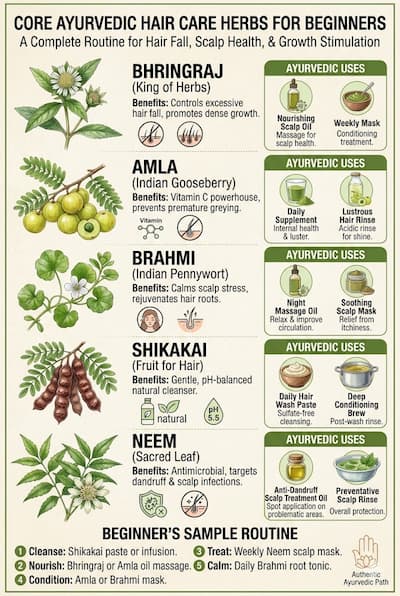
Bhringraj is the most researched Ayurvedic herb for hair — literally translated as "king of herbs for hair." Its active compounds (wedelolactone, ecliptasaponins) activate the Wnt/β-catenin signalling pathway, which regulates follicle stem cell activity and anagen phase duration. A 2009 published study found Bhringraj oil outperformed Minoxidil 2% in mouse models of hair regrowth.
It also inhibits 5α-reductase — the enzyme that converts testosterone to DHT, the hormone responsible for androgenetic hair loss. It reduces scalp inflammation and improves local scalp circulation through mild vasodilation.
How to use: As a pre-wash scalp oil, 2–3 times per week. Look for Bhringraj oil (herb infused in a carrier) or a hair oil product listing Bhringraj in the first half of its ingredient list.
Amla contains one of the highest concentrations of Vitamin C of any natural source — 20× more than oranges by weight. For hair, Vitamin C is essential for collagen biosynthesis in the follicle dermal sheath (the structural support surrounding each follicle). Amla's gallic acid, ellagic acid, and emblicanin compounds provide potent antioxidant protection against UV and pollution-induced follicle oxidative stress.
Amla has also shown 5α-reductase inhibitory activity in vitro — contributing to DHT reduction. Its tannins coat the hair shaft, reducing breakage and improving shine.
How to use: Amla oil pre-wash (or in a herbal oil blend with Bhringraj); Amla powder in hair masks (mixed with water or yoghurt); or as a dietary supplement for systemic antioxidant benefit.
Stress-induced hair fall (telogen effluvium) is one of the most common patterns in India — triggered by cortisol elevation from work stress, academic pressure, life events, sleep deprivation, and anxiety. Cortisol activates the sympathetic nervous system, which inhibits hair follicle stem cell activity through the neuropeptide Substance P — causing premature telogen shift and excessive shedding.
Brahmi (Bacopa monnieri) is an adaptogen — an herb that modulates the stress-cortisol axis and has documented anxiolytic (anti-anxiety) effects in human trials. Topically, Brahmi's bacosides have anti-inflammatory activity at the scalp. Orally, it reduces perceived stress and cortisol markers in published clinical trials.
How to use: As part of a hair oil (scalp application); or as a dietary supplement (300–600mg standardised Brahmi extract) for systemic stress modulation. Both routes are valuable.
Neem is Ayurveda's primary antifungal and antibacterial herb. Its active compounds — azadirachtin, nimbidin, nimbolide — target Malassezia through multiple mechanisms: membrane disruption, ergosterol synthesis inhibition, and biofilm disruption. Unlike pharmaceutical antifungals that target a single enzyme (making resistance development faster), Neem's multi-target approach is more durable.
Neem also has significant anti-inflammatory activity (inhibits COX-2 and pro-inflammatory cytokines) — reducing the scalp inflammation that pushes follicles into telogen. For the large proportion of Indian hair fall driven by dandruff-scalp inflammation, Neem addresses the direct cause.
How to use: Neem oil (diluted 5–10% in a carrier, or as an ingredient in a herbal shampoo); Neem powder in scalp masks; look for it listed as an active in herbal shampoos. Do not apply undiluted Neem essential oil to the scalp — use cold-pressed Neem oil diluted in a carrier.
Shikakai is the cleansing foundation of Ayurvedic hair care. Its natural saponins function as gentle surfactants at a pH of 4.5–5.5 — matching the scalp's acid mantle exactly. Unlike SLS shampoos that raise scalp pH to 6–8 (disrupting the protective barrier and beneficial microbiome), Shikakai cleans without pH disruption.
Every growth-active herb and oil treatment applied to the scalp between washes is most effective when the scalp it is applied to is pH-balanced and microbiome-healthy. Shikakai is what maintains that state — it is the infrastructure on which all other treatments build.
How to use: Traditional Shikakai powder paste (2–3 tbsp mixed with water), Shikakai liquid soak, or a herbal shampoo with Shikakai as a primary ingredient at a pH of 4.5–5.5.
The 3-Step Beginner Routine
This is the minimum effective routine — simple enough to actually maintain, comprehensive enough to address the major causes of hair fall for most people.
Step 1
2–3× per week, evening before wash dayHerbal Oil Treatment
What: Apply a Bhringraj-based herbal oil to the scalp in sections, massaging in with circular fingertip motions for 5–10 minutes. Apply lightly to the hair length as well.
Leave on: 30–60 minutes (not overnight by default — see mistakes section).
Why it works: Direct follicle stimulation, DHT inhibition, scalp circulation improvement, anti-inflammatory signalling — all from the herb actives delivered topically to the scalp.
Beginner shortcut: Use a quality ready-made Bhringraj herbal oil rather than making your own for the first 3 months.
Step 2
Wash day — 2–3× per weekpH-Preserving Cleanse
What: Wash with a low-pH, sulfate-free herbal shampoo (or traditional Shikakai preparation). Leave on scalp for 2–3 minutes before rinsing. Use cool or lukewarm water — hot water raises the cuticle and increases protein loss.
Why it works: Removes oil and product buildup without disrupting the scalp's acid mantle or stripping the microbiome of beneficial bacteria. Preserves the scalp environment the oil treatment just built.
Optional enhancement: After conditioning, do a final rinse with diluted Apple Cider Vinegar (1 tbsp in 1 cup cool water) for extra pH sealing and shine.
Step 3
Daily, on non-wash daysLeave-In Serum (Optional but Recommended)
What: On non-wash mornings, apply a small amount of a lightweight herbal serum to the scalp — a water-based formula with Redensyl, Procapil, or Rosemary. Do not apply oil on non-wash days (it accumulates and clogs follicles).
Why it works: Biotech actives (Redensyl, Procapil) work through direct cellular mechanisms that require regular daily presence at the scalp — they are not the kind of ingredients that work from a 2× weekly pre-wash application. A lightweight leave-in serum delivers them correctly.
Skip this step if: Your hair fall is mild and the oil + shampoo routine is already showing improvement. Add it if you need accelerated results or are treating significant thinning.
The 5 Most Common Beginner Mistakes
| Mistake | What It Causes | The Fix |
|---|---|---|
| Trying too many herbs at once | Cannot tell what works, routine becomes unsustainable, abandonment within weeks | Start with Bhringraj + one cleanser. Add one ingredient per month after establishing baseline. |
| Expecting results in 2 weeks | Abandonment when unrealistic expectations aren't met | Commit to 90 days minimum. Surface changes (less itch, less breakage) appear in 2–4 weeks. Follicle-level changes take 3–6 months. |
| Overnight oiling every night | Scalp oil accumulation, Malassezia proliferation, follicle clogging — makes dandruff and hair fall worse | Oil 30–60 minutes before washing, 2–3× per week. Overnight once per week maximum for dry scalps. |
| Using SLS shampoo to wash out herbal oil | Undoes the scalp pH work done by the herbal oil treatment with every wash | Match your cleanser to your routine — use a sulfate-free, pH-balanced shampoo or Shikakai. |
| Buying products with token herb quantities | No results — the herbs are present in the name/label, not at meaningful concentrations | Read ingredient lists. Herbs should appear in the first 50% of ingredients. If Bhringraj appears after preservatives, the concentration is below 1% — decorative only. |
The Botani Bestie Beginner Stack
All three steps of the beginner routine are available in ready-to-use formats — no DIY required:

Total Restore Hair Oil
Step 1 — Pre-Wash Scalp Oil Treatment
Bhringraj, Amla, Brahmi, Jatamansi, Rosemary, and 5 more Ayurvedic actives in a lightweight, non-greasy base. Apply to scalp 30–60 minutes before washing.
Shop Hair Oil →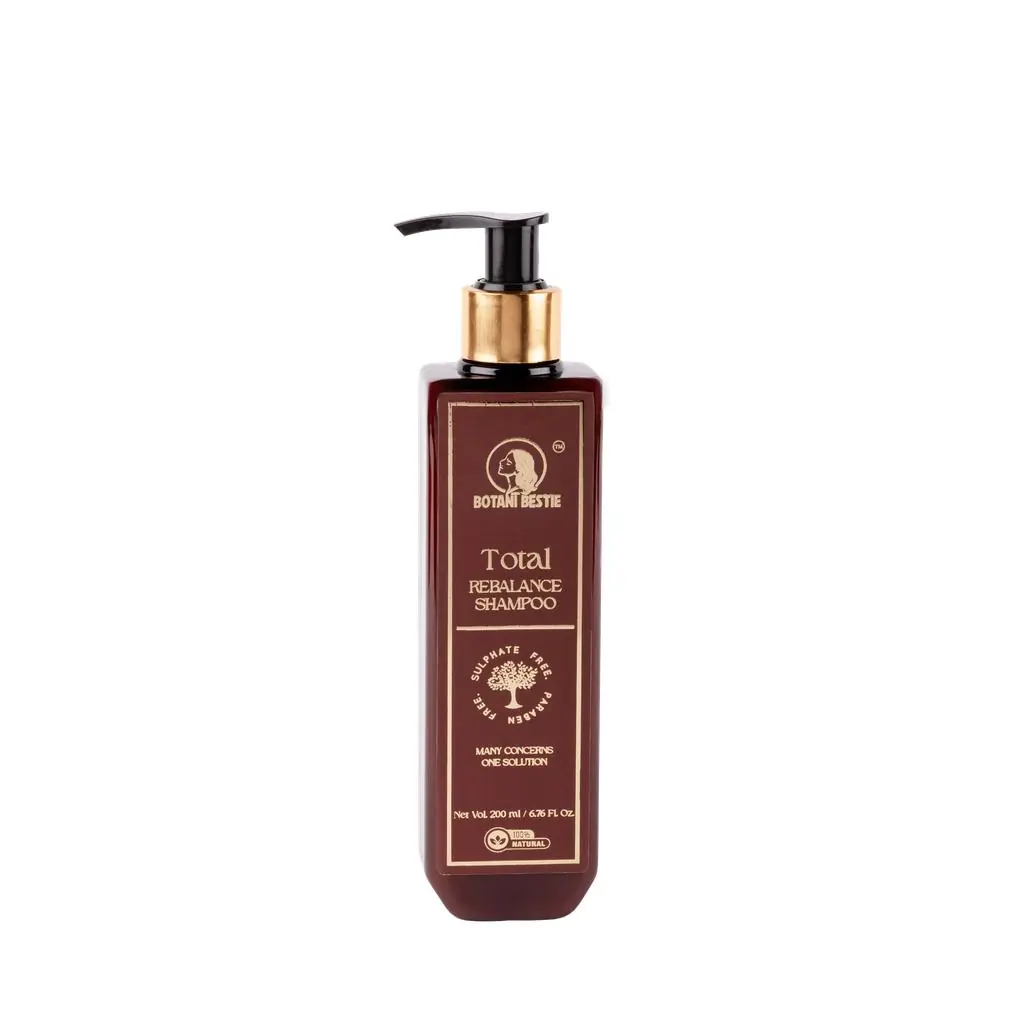
Total Rebalance Shampoo
Step 2 — pH-Balanced Herbal Cleanser
Sulfate-free, pH 5.0, with Shikakai, Bhringraj, Amla, ACV, Fermented Rice Water, Neem, and 7 more actives. Preserves the scalp environment your oil just built.
Shop Shampoo →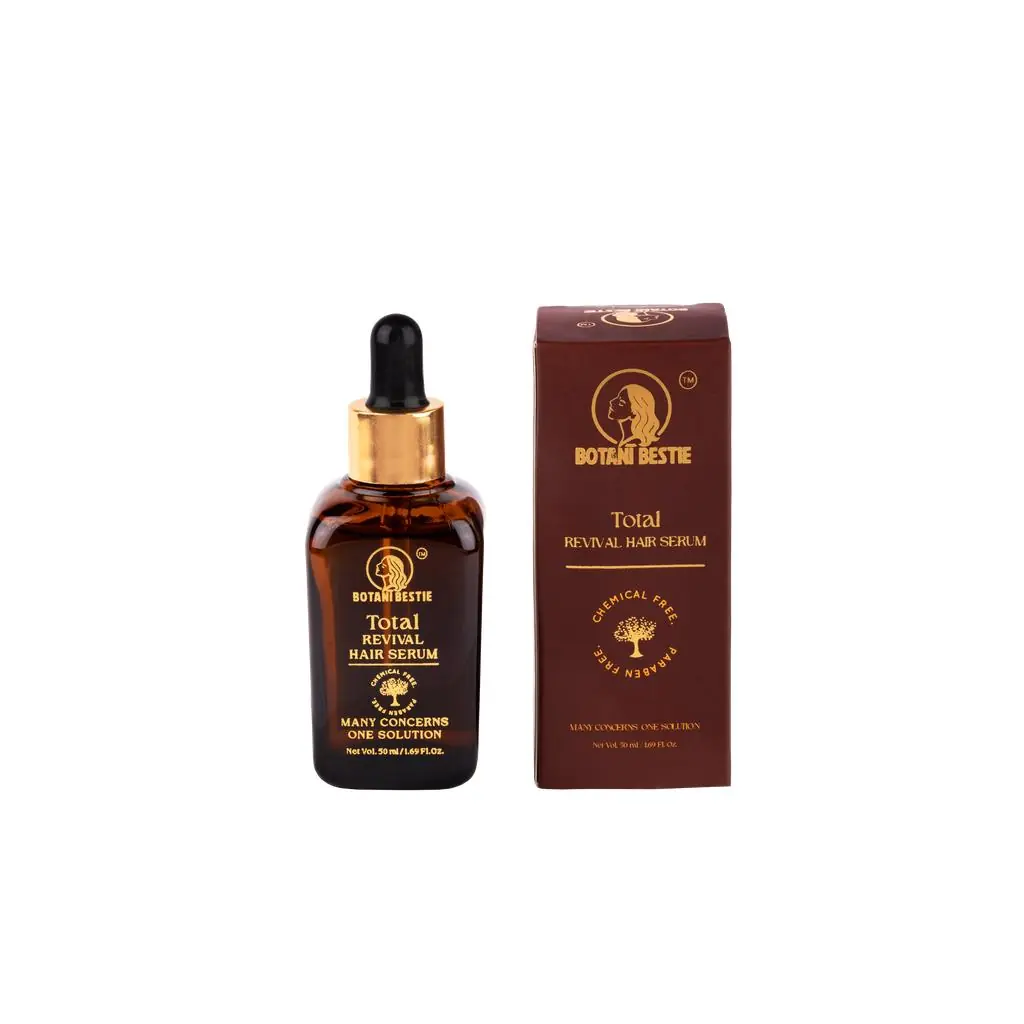
Total Revival Hair Serum
Step 3 — Daily Leave-In Scalp Serum
Redensyl (3%), Procapil, Anagain, Copper Peptides GHK-Cu — biotech actives that work at the follicle level, in a lightweight water-based formula safe for daily use.
Shop Serum →Not sure which herbs you need for your specific hair fall type?
Our certified Ayurvedic doctors offer free consultations — they will identify the root cause of your hair fall (hormonal, stress, nutritional, scalp, or androgenetic) and recommend a targeted protocol.
Frequently Asked Questions
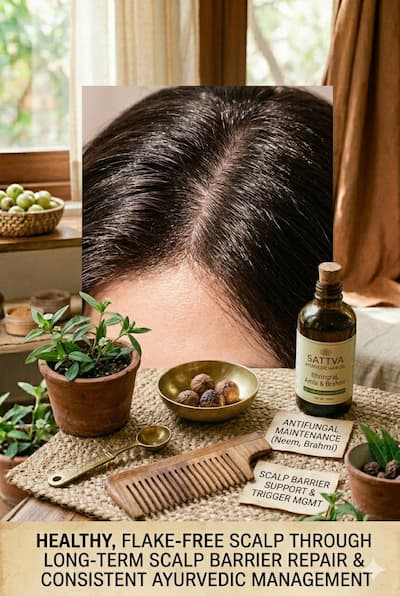
Start Simple. Stay Consistent.
The most effective Ayurvedic hair care routine is not the most complex one — it is the one you can actually maintain week after week, month after month. Three steps done correctly and consistently for 90 days will produce results that no elaborate 10-step routine done sporadically for 2 weeks can match.
Start with Bhringraj oil, a sulfate-free herbal shampoo, and patience. Add more herbs and actives once you have the foundation working. Build slowly, observe your scalp and hair response, and make decisions based on what you actually see — not on what worked for someone else with different hair, scalp, and causes of hair fall.
Ayurveda has always been personalised medicine. The 3-step framework is the universal starting point; the specifics get personalised to your root cause from there.
Shop Total Restore Hair Oil → Free Hair Consultation"Consistency with three herbs beats confusion with thirty. Start where you are, use what you have, do what you can — and stick with it."
Ready to make the honest switch?
Our products are built on the same principles as every article we write — pure ingredients, real results, nothing to hide.
Explore Our Products