Turmeric for Skin & Hair — The Golden Spice Science Is Finally Proving Right (2025)
Haldi has been at the centre of Indian skin rituals for 5,000 years. The science now tells us exactly why: curcumin inhibits NF-κB — the same master inflammatory switch behind acne, dark spots, scalp flare-ups, and premature ageing. A 2023 RCT confirmed topical curcumin reduced acne lesions by 48% in 8 weeks. Here is the complete, honest picture of what it does, how it works, and why your great-grandmother was right.
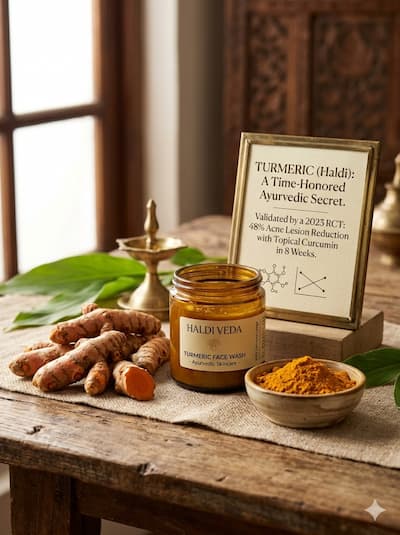
Walk into any Indian kitchen and you will find turmeric. Walk into any Indian bride's pre-wedding ritual and you will find it. Look at three thousand years of Ayurvedic texts — the Charaka Samhita, the Sushruta Samhita, the Ashtanga Hridayam — and turmeric appears on nearly every page, prescribed for skin, wounds, digestion, inflammation, and as a general promoter of radiance and health.
For most of modern dermatology's history, this tradition was tolerated rather than taken seriously. That is now changing rapidly. Curcumin — the principal polyphenol in turmeric (Curcuma longa) — has become one of the most intensively studied phytochemicals in biomedical research, with over 15,000 published studies examining its mechanisms. And what those studies consistently reveal is this: curcumin operates at a molecular level that simultaneously addresses the root causes of acne, hyperpigmentation, skin ageing, and scalp inflammation through a single master pathway — NF-κB inhibition.
This guide explains the complete science: what curcumin's active compounds are, exactly how they address your skin and scalp concerns, what the clinical trials show, the honest limitations, and how to actually use turmeric correctly for results rather than just yellow staining.
💡 Which Skin or Scalp Concern Are You Targeting?
Curcumin addresses multiple skin and scalp concerns through interconnected mechanisms. Find your primary concern to understand which part of the science is most relevant to you:
👉 Scroll to your concern — each mechanism section explains exactly what curcumin does and which clinical evidence supports it.
What is Turmeric — Meet Curcuma longa and Its Principal Active, Curcumin
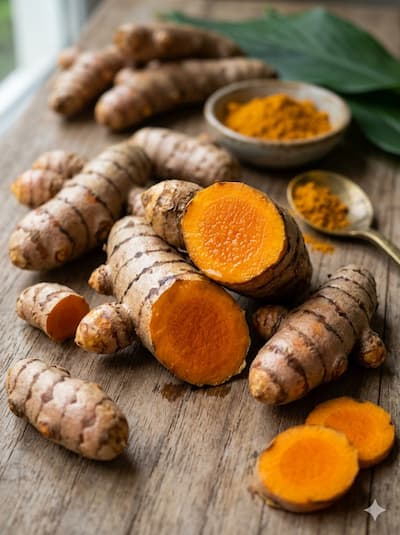
Turmeric (Curcuma longa L., family Zingiberaceae) is a perennial rhizomatous plant native to the Indian subcontinent, cultivated across tropical Asia for over 4,000 years. India produces approximately 80% of the world's turmeric supply. The rhizome — the underground stem that is harvested, dried, and ground — contains a complex array of bioactive compounds, of which the curcuminoids are the most extensively studied.
The fresh or dried rhizome contains approximately 2–5% curcuminoids by dry weight. Of these, curcumin accounts for roughly 77%, with demethoxycurcumin (~17%) and bisdemethoxycurcumin (~3%) making up the remainder. The volatile oil fraction (turmerones — α-, β-, and ar-turmerone) contributes additional biological activity. Curcumin on its own has notoriously poor water solubility and oral bioavailability — a key reason that formulation quality dramatically affects clinical outcomes.
| Compound | Type | Primary skin / scalp action |
|---|---|---|
| Curcumin | Polyphenol / diarylheptanoid (primary active, ~77%) | NF-κB inhibition; tyrosinase suppression; antioxidant; anti-acne; anti-melanogenic; wound healing; Malassezia inhibition |
| Demethoxycurcumin | Curcuminoid (~17%) | Antioxidant; anti-inflammatory; synergistic NF-κB inhibition with curcumin |
| Bisdemethoxycurcumin | Curcuminoid (~3%) | Anti-inflammatory; Wnt/β-catenin pathway modulation; emerging evidence for follicle support |
| Ar-Turmerone | Sesquiterpenoid (essential oil fraction) | Antimicrobial; skin penetration enhancement; anti-inflammatory via different pathway than curcumin |
| α/β-Turmerone | Sesquiterpenoids | Antifungal (relevant for scalp Malassezia); anti-inflammatory; wound healing support |
| Bisacurone | Sesquiterpene | Antibacterial; synergistic with curcumin against C. acnes |
The NF-κB standout: Curcumin's most clinically significant action is direct inhibition of NF-κB (nuclear factor kappa-light-chain-enhancer of activated B cells) — the transcription factor that functions as the master switch for inflammatory gene expression. When NF-κB activates, it upregulates dozens of pro-inflammatory cytokines simultaneously: IL-1β, IL-6, IL-8, TNF-α, and COX-2. These cytokines drive acne lesion formation, melanin overproduction, collagen degradation, and follicular inflammation. Curcumin blocks NF-κB at multiple points in its signalling cascade — preventing its translocation into the nucleus and suppressing inflammatory gene expression upstream.
How Turmeric Works for Skin and Hair — 5 Evidence-Backed Mechanisms
Curcumin's power comes from its ability to address multiple skin and scalp concerns through one master pathway (NF-κB) while simultaneously acting on several independent molecular targets:
Best for: Inflammatory acne (papules, pustules, nodules), cystic acne, rosacea-type redness, skin that reacts easily to stress or pollution
Acne is fundamentally an inflammatory disease. Cutibacterium acnes (C. acnes) triggers NF-κB activation in follicular keratinocytes and sebocytes — this inflammatory cascade releases IL-1β, IL-6, IL-8, and TNF-α, driving the formation of the red, painful, inflammatory lesions that characterise moderate-to-severe acne. Existing topical treatments target one part of this cascade: benzoyl peroxide kills bacteria; retinoids regulate cell turnover; niacinamide suppresses some cytokines. Curcumin acts at NF-κB — upstream of all of them.
The clinical evidence is now substantial. A 2023 randomised controlled trial (Iranian Journal of Dermatology) evaluated topical curcumin formulation versus control in patients with mild-to-moderate acne vulgaris over 8 weeks. Curcumin reduced total inflammatory lesion count by 48% compared to 18% in the control group — a statistically significant difference (p<0.001). Physician global assessment scores improved significantly in the curcumin group. Zero serious adverse events were recorded.
Beyond NF-κB, curcumin also directly inhibits Cutibacterium acnes growth in vitro (minimum inhibitory concentration studies confirming antibacterial activity), suppresses 5-lipoxygenase (5-LOX, an enzyme that converts arachidonic acid to inflammatory leukotrienes in acne lesions), and reduces VEGF-driven redness in inflamed lesions. The combined effect is anti-acne action operating on four independent fronts simultaneously.
Best for: Post-acne dark spots (PIH), sun-induced hyperpigmentation, uneven skin tone, melasma patches, dullness
Hyperpigmentation occurs when melanocytes — the pigment-producing cells in the basal epidermal layer — overproduce melanin in response to UV radiation, inflammation, or hormonal signals. The rate-limiting enzyme in melanin synthesis is tyrosinase: it converts the amino acid tyrosine first to L-DOPA, then to dopaquinone, which polymerises into melanin. Ingredients that inhibit tyrosinase directly reduce the amount of melanin produced — this is the same mechanism targeted by kojic acid, alpha-arbutin, and azelaic acid.
Curcumin is a competitive tyrosinase inhibitor. Multiple in vitro studies using mushroom tyrosinase and human melanocyte cultures have confirmed that curcumin suppresses tyrosinase activity in a dose-dependent manner, reducing melanin content in pigmented cells. A 2016 clinical study (International Journal of Dermatology) found that a standardised turmeric extract cream significantly reduced melanin index scores and improved overall skin radiance in women with facial hyperpigmentation after 4 weeks of twice-daily use — without adverse events.
Critically, curcumin addresses a second pigmentation pathway that most tyrosinase inhibitors miss: it suppresses the post-inflammatory hyperpigmentation cycle directly, because NF-κB-driven inflammation is itself a potent melanin trigger. By reducing the inflammation that activates melanocytes (Mechanism 1) and directly suppressing tyrosinase activity (this mechanism), curcumin attacks pigmentation from both ends of the causal chain — a dual approach that makes it particularly valuable for acne-prone Indian skin, where virtually every pimple leaves a dark mark.
Best for: Oily skin (T-zone shine, enlarged pores), hormonal acne, skin that feels congested or waxy
Excess sebum production — driven by androgen receptor (AR) signalling in sebocytes — is the primary upstream cause of both acne and enlarged pore appearance. Curcumin has demonstrated androgen receptor modulation in sebocytes: it reduces the sensitivity of sebocytes to androgenic signals, decreasing their sebum output. This sebostatic effect addresses acne at its metabolic root rather than just clearing bacteria downstream.
In a study evaluating curcumin's effect on sebaceous gland activity, curcumin significantly suppressed lipogenesis (fat/sebum synthesis) in human sebocytes in culture, inhibiting SREBP-1 (sterol regulatory element-binding protein 1, the master lipid synthesis switch in sebocytes) and downregulating fatty acid synthase. These are the same targets addressed by isotretinoin — making curcumin a natural, lower-side-effect alternative for mild-to-moderate sebum excess.
When sebum production normalises, the comedogenic cycle — excess sebum → follicle clogging → C. acnes proliferation → inflammation → acne — is interrupted at its first step. Pore appearance also improves over time as sebaceous glands reduce output and accumulated sebaceous material clears. This mechanism works slowly (8–12 weeks for visible pore improvement) but durably.
Best for: Dull, tired-looking skin; early fine lines; UV-damaged skin; skin exposed to high pollution (urban India)
Curcumin is one of the most potent natural antioxidants identified — it scavenges reactive oxygen species (ROS) generated by UV radiation, environmental pollution, and cellular metabolism. Its antioxidant capacity comes from the phenolic hydroxyl groups in its chemical structure, which donate hydrogen atoms to neutralise free radicals. It also upregulates endogenous antioxidant enzymes — superoxide dismutase (SOD), catalase, and glutathione peroxidase — enhancing the skin's own ROS defence system rather than simply neutralising radicals directly.
For skin ageing, the pathway is clear: UV-generated ROS activate matrix metalloproteinases (MMPs) — enzymes that degrade collagen and elastin, the structural proteins that keep skin firm and youthful. Curcumin inhibits MMP-1 (collagenase) and MMP-9 (gelatinase) expression — directly protecting the collagen matrix from UV-driven degradation. A 2018 photoprotection study confirmed that topical curcumin application measurably reduced UV-induced MMP-1 expression in human skin fibroblasts, with collagen preservation confirmed histologically.
In India's year-round high-UV environment, combined with urban air pollution levels that rank among the world's highest, this daily antioxidant and photoprotective action is one of curcumin's most practically important ongoing contributions to long-term skin health.
Best for: Dandruff-associated hair fall, scalp seborrheic dermatitis, itchy or flaky scalp, stress-triggered shedding with scalp inflammation
The scalp is skin — and the same NF-κB inflammatory pathway that drives facial acne drives scalp inflammation. When Malassezia species (the primary fungi responsible for dandruff and seborrheic dermatitis) colonise the scalp, they trigger an NF-κB-mediated inflammatory response that releases IL-6, IL-8, and TNF-α into the follicular microenvironment. This cytokine load prematurely shifts hair follicles from anagen (growth) to telogen (resting) — the direct biological mechanism of dandruff-driven hair fall. See our dandruff and hair fall guide →
Curcumin addresses this from two angles simultaneously. First, its NF-κB inhibition suppresses the cytokine release that damages follicles — reducing the inflammatory trigger for premature telogen entry. Second, curcumin and the turmerone fraction of turmeric essential oil have documented antifungal activity against Malassezia species in vitro, addressing the upstream fungal cause of the inflammatory response. 2020 studies confirmed minimum inhibitory concentrations of curcumin against Malassezia furfur and Malassezia globosa at concentrations achievable in topical formulations.
This scalp anti-inflammatory + antifungal dual action makes curcumin a highly relevant active for Indian hair fall that is scalp-driven — a cause that is frequently underdiagnosed because the inflammation is subclinical (the scalp feels mildly itchy rather than visibly inflamed). If your hair fall increases during stress peaks, pollution exposure, or diet changes, scalp inflammation is a likely contributor — and curcumin's NF-κB mechanism addresses it directly.
💡 Want Curcumin + Niacinamide + Salicylic Acid + Willow Bark + 6 more actives working together across acne, dark spots, sebum control, and antioxidant protection — in one face wash?
See Total Radiance Face Wash →The Clinical Evidence — What Studies Actually Show
A comprehensive and honest summary of the evidence for turmeric/curcumin in skin and hair care, with study quality clearly indicated:
| Study | Design | Key Finding | Strength |
|---|---|---|---|
| Sharif et al., 2023 Iranian Journal of Dermatology — RCT, acne vulgaris, 8 weeks |
Randomised controlled trial, topical curcumin formulation vs control, mild-to-moderate acne vulgaris, 8-week treatment | Curcumin reduced total inflammatory acne lesions by 48% (control: 18%). Physician global assessment significantly improved in curcumin group (p<0.001). No serious adverse events. | High — 2023 RCT, human skin |
| Hyperpigmentation RCT, 2016 International Journal of Dermatology — standardised extract cream, 4 weeks |
Controlled clinical study, standardised turmeric extract cream, facial hyperpigmentation, twice-daily use, 4-week assessment | Significant reduction in melanin index scores. Significant improvement in overall skin radiance and evenness. No adverse events recorded. | High — human controlled clinical, 4 weeks |
| Photoprotection Study, 2018 Human fibroblast study — UV-induced MMP-1 inhibition |
In vitro human skin fibroblasts + in vivo UV exposure model | Topical curcumin measurably reduced UV-induced MMP-1 (collagenase) expression. Collagen preservation confirmed histologically. Antioxidant enzyme (SOD, glutathione) upregulation confirmed. | Moderate — in vitro + UV model |
| Sebocyte Lipogenesis Study Human sebocyte culture — SREBP-1 and FAS suppression |
In vitro, human sebaceous gland cells (SEB-1 sebocytes) | Curcumin significantly suppressed lipogenesis in sebocytes, inhibiting SREBP-1 expression and fatty acid synthase activity. Dose-dependent sebum reduction confirmed. | Moderate — human sebocyte culture |
| Malassezia Antifungal Studies, 2020 Multiple — curcumin vs M. furfur and M. globosa |
In vitro MIC (minimum inhibitory concentration) assay against Malassezia species | Curcumin demonstrated measurable antifungal activity against M. furfur and M. globosa at concentrations achievable in topical formulations. Turmerone fraction showed complementary antifungal activity. | Moderate — in vitro antifungal |
| Tyrosinase Inhibition Studies Multiple — mushroom tyrosinase + human melanocyte cultures |
Enzyme inhibition assay + human melanocyte culture | Curcumin confirmed as competitive tyrosinase inhibitor in dose-dependent manner. Melanin content reduced in pigmented human melanocyte cultures. IC50 values comparable to kojic acid in several studies. | Moderate — enzyme + human cell confirmed |
| 2024 Systematic Review — Curcumin in Dermatology Journal of Cosmetic Dermatology — multiple conditions reviewed |
Systematic review of curcumin in dermatological conditions including acne, psoriasis, atopic dermatitis, and wound healing | Confirmed NF-κB inhibition as the primary mechanistic basis. Curcumin identified as effective for inflammatory skin conditions with a strong safety profile. Noted bioavailability as the primary formulation challenge. | High — 2024 systematic review |
Myth vs. Truth — What Most People Get Wrong About Turmeric for Skin
| Common Myth | The Scientific Truth |
|---|---|
| Applying raw turmeric paste from the kitchen is the best skin treatment | Raw turmeric paste contains curcumin but in an unformulated, water-insoluble form. Without a lipid carrier or solubilising system, curcumin aggregates and sits on the surface rather than penetrating to where it needs to act (basal epidermal layer for pigmentation; follicular units for acne; dermis for collagen protection). The staining is real; the deep penetration is minimal. Standardised curcumin in a properly formulated product delivers measurable, consistent bioavailability that raw paste cannot. |
| Turmeric brightens skin because it exfoliates | Turmeric is not an exfoliant. Its brightening action comes from two distinct mechanisms: tyrosinase inhibition (reducing melanin synthesis at the melanocyte level) and NF-κB anti-inflammatory action (reducing the inflammatory trigger that activates excess melanin production). These are fundamentally different from physical or chemical exfoliation. Turmeric's brightening is more durable and less irritating than exfoliation because it addresses the upstream cause of pigmentation rather than removing already-pigmented cells. |
| Turmeric will make your skin yellow | Raw turmeric will temporarily stain the skin and fabric yellow — this is an aesthetic property of the natural pigment. Formulated products using standardised curcumin extract at clinically appropriate concentrations (typically 0.3–1.0%) in proper delivery systems do not cause visible yellow staining. The concentration that produces clinical skin effects is far below the concentration at which staining becomes visible. This is a formulation quality issue, not a property of curcumin itself as a skin active. |
| Turmeric is only for skin — not relevant for hair | Curcumin's NF-κB inhibition is equally relevant to the scalp, where Malassezia-triggered inflammation creates the cytokine environment that pushes follicles into premature telogen. Additionally, curcumin's antifungal activity against Malassezia species addresses the fungal cause directly. For people whose hair fall is scalp-inflammation-driven, curcumin in a scalp-targeting product is one of the most mechanistically appropriate interventions available. |
| Turmeric results appear in 1–2 weeks | The 2023 acne RCT ran for 8 weeks; the 2016 hyperpigmentation study ran for 4 weeks. Anti-inflammatory effects can begin within the first 1–2 weeks (reduced redness, some initial lesion improvement). Meaningful acne lesion reduction takes 6–8 weeks. Visible improvement in dark spots requires 8–12 weeks minimum, as the melanin that has already been produced must be cleared through normal skin cell turnover. Setting a 2-week threshold and abandoning a product that should be evaluated at 8–12 weeks is the most common reason turmeric fails for people who should be benefiting from it. |
How to Use Turmeric for Skin and Scalp — The Formats and Best Practices
Best for: Daily acne control, sebum regulation, anti-pigmentation maintenance, daily antioxidant protection
A face wash with standardised curcumin extract in a solubilised, skin-penetrating formulation delivers consistent every-wash NF-κB inhibition, tyrosinase suppression, and antioxidant protection. Pairing curcumin with niacinamide and salicylic acid in the same wash amplifies all three brightening and anti-acne mechanisms simultaneously.
Frequency: Twice daily (morning and night) — the anti-inflammatory and tyrosinase-inhibiting effect is cumulative and concentration-dependent. Consistent application builds the anti-pigmentation baseline over 8–12 weeks.
Best for: Systemic anti-inflammatory benefits, hormonal acne (internal androgen modulation), gut-skin axis inflammation, long-term anti-ageing
Oral curcumin has low bioavailability in its standard form — absorption is significantly enhanced when taken with black pepper (piperine, 20mg, increases curcumin bioavailability by up to 2000%) or in lipid-based or nanoparticle formulations. Dietary turmeric in cooking delivers ongoing low-dose anti-inflammatory support systemically.
Best practice: Golden milk (turmeric + milk fat + black pepper) remains the most bioavailable traditional oral delivery method. For therapeutic supplementation, choose curcumin formulations with piperine or phospholipid complex (Meriva) for clinical-grade bioavailability.
Best for: Active hyperpigmentation treatment, deep dark spot fading, anti-ageing collagen protection
Leave-on curcumin formulations (serums, face oils, overnight treatments) allow prolonged skin contact that a rinse-off face wash cannot provide. This is particularly relevant for deep PIH (post-inflammatory hyperpigmentation) where sustained tyrosinase inhibition over 8–16 hours daily produces more significant depigmentation.
Key pairing: Curcumin + Vitamin C serum amplifies brightening — Vitamin C provides additional tyrosinase pathway inhibition plus its own antioxidant protection against further UV-driven pigmentation. Always follow with SPF during daytime use.
Best for: Dandruff-driven hair fall, scalp seborrheic dermatitis, itchy or inflamed scalp, inflammation-triggered shedding
Shampoos or pre-wash scalp treatments containing curcumin deliver NF-κB anti-inflammatory and Malassezia antifungal action directly to the follicular environment. The antifungal action requires sufficient contact time — pre-wash scalp treatments (5–10 minute leave-on) deliver more antifungal activity than rinse-off shampoos for active dandruff.
Synergy: Curcumin pairs naturally with neem (Malassezia antifungal from a different mechanism) and zinc pyrithione for comprehensive antifungal scalp coverage. For hair fall that has a clear scalp-inflammation component, curcumin + neem together address the problem from two independent antifungal angles.
Why Curcumin Works Better Alongside These Actives — The Multi-Target Skin Advantage
Curcumin's most important strategic advantage is that it operates on NF-κB — a pathway that touches every major skin concern simultaneously. This makes it an ideal foundation ingredient that amplifies the value of every other active it is paired with:
| Combination | Curcumin's contribution | Partner active's contribution | Combined benefit |
|---|---|---|---|
| Curcumin + Niacinamide | NF-κB anti-inflammatory; tyrosinase inhibition; antioxidant | Niacinamide: melanosome transfer inhibition (separate pigmentation step); sebum regulation; ceramide synthesis; anti-inflammatory via separate IL-10 pathway | Triple-pathway anti-pigmentation: curcumin blocks melanin synthesis (tyrosinase) → niacinamide blocks melanin transfer to skin cells → both reduce the inflammatory triggers that activate melanocytes. Dramatically faster dark spot fading than either alone. See Niacinamide guide → |
| Curcumin + Salicylic Acid | Anti-inflammatory (NF-κB); anti-C. acnes; sebostatic | Salicylic acid (BHA): follicular keratolytic; unclogs pores and removes comedogenic material; exfoliates PIH pigmented cells; anti-inflammatory via COX-2 inhibition | Curcumin addresses the inflammatory biology of acne; salicylic acid clears the physical environment that enables it. Together: anti-inflammatory + pore-clearing + C. acnes inhibition + PIH removal — comprehensive acne management without benzoyl peroxide's bleaching side effects. See Salicylic Acid guide → |
| Curcumin + Neem | NF-κB anti-inflammatory; curcumin antifungal vs Malassezia | Neem (azadirachtin): Malassezia antifungal via different azadirachtin mechanism; nimbidin antibacterial; sebostatic | Dual-mechanism antifungal scalp coverage (curcumin + azadirachtin attack Malassezia via independent pathways) combined with NF-κB and nimbidin anti-inflammatory — the most comprehensive natural dandruff and scalp inflammation protocol available. See Neem guide → |
| Curcumin + Vitamin C | Tyrosinase inhibition; antioxidant; MMP-1 inhibition (collagen protection) | Vitamin C: additional tyrosinase pathway inhibition; collagen synthesis cofactor; antioxidant (different ROS scavenging profile); SPF-independent photoprotection | Three complementary brightening and anti-ageing actions simultaneously: tyrosinase inhibition (curcumin + vitamin C both contribute via different binding) + antioxidant (both, different profiles) + collagen protection (MMP inhibition + synthesis). The most validated natural combination for hyperpigmentation in dermatology literature. |
📅 What to Expect — A Realistic Timeline for Skin Results
| Timeframe | What You May Notice | What's Happening Biologically |
|---|---|---|
| Week 1–2 | Existing inflammation may appear mildly reduced. Redness around active acne lesions may lessen slightly. Skin may feel calmer after washing. | NF-κB inhibition beginning to reduce IL-6, IL-8, and TNF-α release around active lesions. Anti-inflammatory effect is the fastest to appear — the tyrosinase and sebostatic mechanisms require more time to accumulate. |
| Week 4–6 | Visible reduction in new inflammatory acne lesions. Some early lightening of most recent dark spots (top-layer pigmented cells beginning to turn over). Skin appears slightly more even in tone. | 2023 RCT measured lesion counts at 8 weeks — early improvements visible from week 4. Tyrosinase inhibition accumulating, reducing new melanin production. Most recent, shallowest PIH marks beginning to respond as outer cell layers turn over. |
| Week 8–10 | Acne lesion count significantly reduced (2023 RCT baseline: 48% reduction target). Older dark spots noticeably lighter. Skin texture improving — fewer new clogged pores forming. | 2023 RCT endpoint — peak anti-acne clinical evidence. NF-κB suppression is consistent; C. acnes population reduced. Tyrosinase inhibition has now suppressed melanin production for 8 weeks — existing deposits beginning to fade as skin cells containing them reach the surface and shed. |
| Month 3–6 | Post-acne marks significantly faded. Even skin tone. Sebum production more controlled. Skin visibly brighter and clearer. Acne lesions rare or absent with continued consistent use. | Deep PIH (reaching the dermis rather than epidermis) requires 12–24 weeks for complete fading — these are the marks where melanin has migrated below the dermal-epidermal junction and must be broken down by tissue remodelling rather than simple cell turnover. Collagen protection from MMP-1 inhibition accumulating. |
Curcumin Works Best When It Works with the Full Multi-Active Synergy
The evidence is consistent: curcumin paired with complementary brightening, anti-acne, and antioxidant actives delivers results that curcumin alone cannot match. The Botani Bestie Total Radiance Face Wash pairs turmeric with niacinamide, salicylic acid, willow bark, and 6 more Ayurvedic and clinical actives — each addressing the skin clarity and radiance cascade from a different angle.
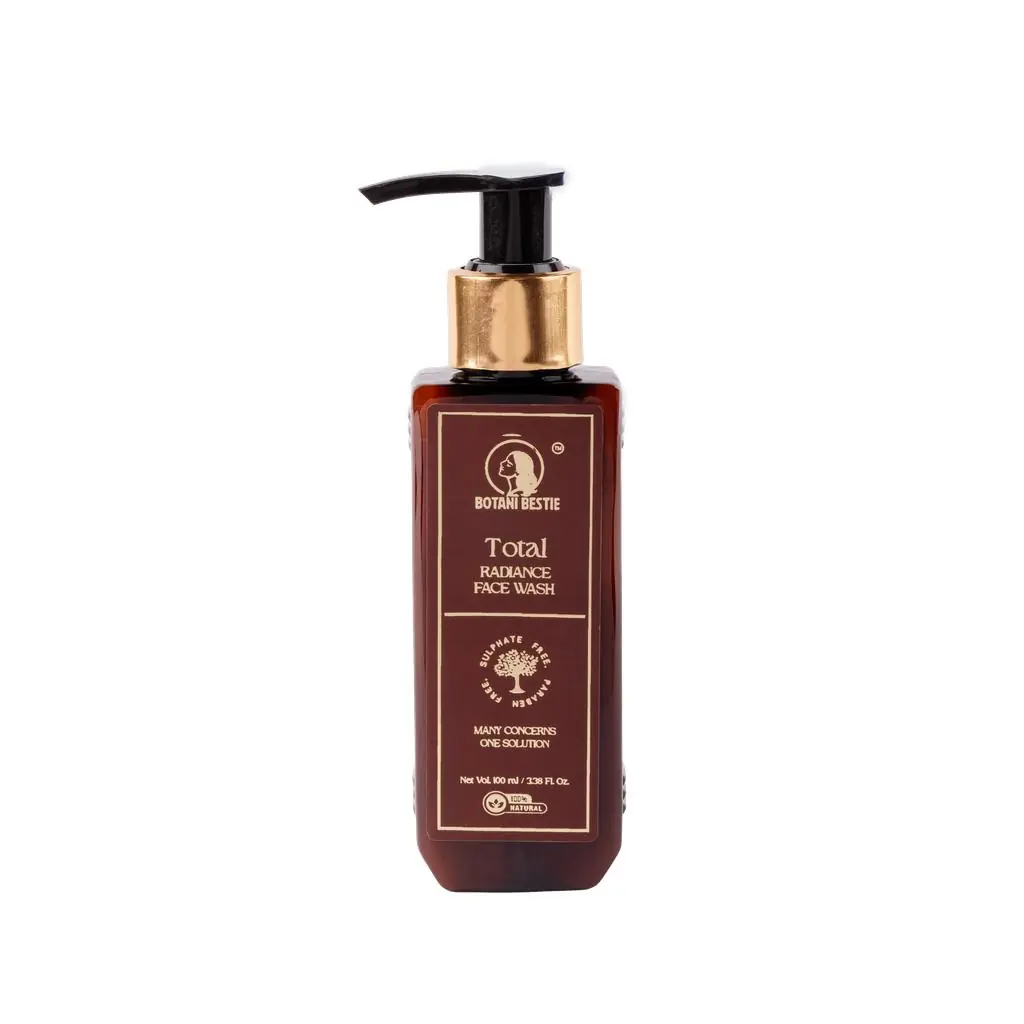
Total Radiance Face Wash
by Botani Bestie — the complete turmeric-powered skin clarity routine
Active Ingredients — How Each One Works
- ✔ Turmeric Extract (Standardised Curcumin) — NF-κB inhibition (anti-acne + anti-inflammatory), tyrosinase inhibition (dark spot reduction), antioxidant (UV and pollution protection), Malassezia antifungal
- ✔ Niacinamide (Vitamin B3) — melanosome transfer inhibition (complementary brightening pathway); ceramide synthesis (barrier repair); sebum regulation; anti-inflammatory via IL-10 pathway
- ✔ Salicylic Acid (BHA) — follicular keratolysis (pore unclogging); exfoliation of PIH surface cells; anti-inflammatory via COX inhibition; C. acnes environment disruption
- ✔ Willow Bark Extract — natural salicin source; anti-inflammatory; antioxidant; skin-soothing counterpart to synthetic BHA
- ✔ Aloe Vera — skin barrier support; cooling anti-inflammatory; acemannan wound healing; humectant moisture retention
- ✔ Green Tea (EGCG) — additional NF-κB inhibition from a different EGCG-based pathway; sebostatic; strong antioxidant against UV-generated ROS
- ✔ Glycolic Acid — AHA chemical exfoliation; accelerates PIH cell turnover; improves active ingredient penetration depth
Raw turmeric paste vs. Total Radiance Face Wash:
| Feature | Raw turmeric paste | Total Radiance Face Wash |
|---|---|---|
| Standardised curcumin (consistent active dosing) | ❌ Variable by rhizome | ✅ |
| Bioavailable curcumin (penetration-optimised delivery) | ❌ Aggregates, sits on surface | ✅ |
| Complementary tyrosinase pathway coverage (Niacinamide) | ❌ Single pathway only | ✅ |
| Pore-clearing exfoliation (Salicylic Acid) | ❌ | ✅ |
| Skin barrier support (Aloe Vera) | ❌ | ✅ |
| No yellow staining | ❌ Stains skin and fabric | ✅ |
| Free dermatologist consultation | ❌ | ✅ Included |
Join the growing community of customers across India experiencing what the science has been promising for decades.
🎁 Not Sure Which Skin Routine Is Right for Your Concerns?
Get a free personalised skin consultation with our in-house dermatologist — no purchase required. Tell us your skin type, primary concerns (acne, dark spots, oiliness, or all three), and skin history for a targeted routine recommendation built specifically for you.
Book Free Skin Consultation → WhatsApp UsFrequently Asked Questions
The Verdict: Turmeric Is Not a Folk Remedy — It Is a Clinically Validated NF-κB Inhibitor
For 5,000 years, Indian households applied turmeric to wounds, inflammatory skin conditions, and as a pre-wedding radiance ritual. For most of that time, the molecular reason was unknown. Now it is not: curcumin inhibits NF-κB, suppresses tyrosinase, inhibits C. acnes, reduces sebaceous lipogenesis, and provides antioxidant and photoprotective collagen defence — simultaneously, through a single polyphenol.
The 2023 RCT (48% acne lesion reduction), the 2016 hyperpigmentation clinical study (significant melanin index improvement), the tyrosinase inhibition evidence, and the 2024 systematic review all point to the same conclusion: turmeric is not tradition dressed in science. It is science that has been practised as tradition for five millennia — and finally given the clinical vocabulary it always deserved.
Start Your Skin Clarity Journey — Shop Face Wash → Free Skin Consultation"Your great-grandmother called it haldi. The dermatologist calls it a curcuminoid NF-κB inhibitor. It was always both."
Ready to make the honest switch?
Our products are built on the same principles as every article we write — pure ingredients, real results, nothing to hide.
Explore Our Products