Copper Peptides for Hair & Skin — The Biotech Ingredient Your Routine Is Missing
You have heard of Redensyl, Minoxidil, Retinol. But copper peptides — specifically GHK-Cu — have three decades of clinical research behind them and work through a mechanism none of those actives can replicate: directly signalling follicle stem cells to grow, protecting the natural pigment inside each strand, and rebuilding collagen from the inside. Here is the complete, honest guide to what copper peptides actually do.
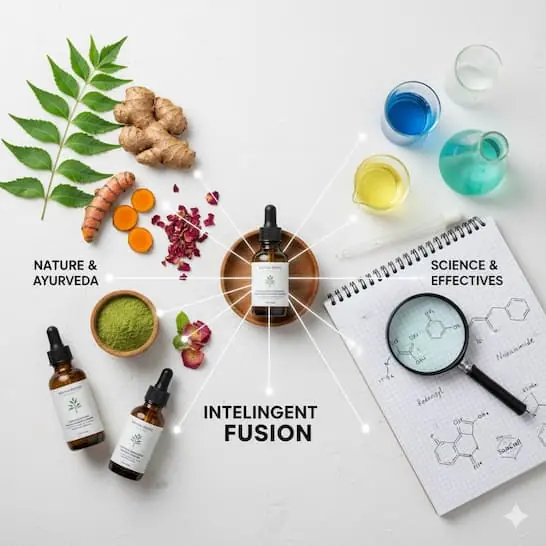
Copper peptides are not a new discovery. GHK-Cu (glycyl-L-histidyl-L-lysine copper complex) was first identified in human plasma in 1973 by Dr. Loren Pickart and has since accumulated one of the most robust evidence bases of any cosmetic active — with over 50 published studies covering wound healing, collagen synthesis, follicle stimulation, and melanogenesis.
Yet they remain significantly under-used in Indian hair and skin care routines, where the conversation is dominated by either Ayurvedic herbs or synthetic pharmaceutical actives, with little room for the biotech middle ground where copper peptides live.
What makes GHK-Cu remarkable is that it does not work on a single pathway. It acts as a master biological signal — activating stem cells in hair follicles, stimulating fibroblasts to produce collagen and elastin, protecting melanocytes from oxidative damage, and improving the microcirculation that supplies all of these cells with the nutrients they need to function.
This guide explains each of those mechanisms in plain language, reviews the clinical evidence honestly, and tells you exactly what to look for — and what to expect — when using copper peptides in your routine.
Is This You? — Signs Copper Peptides Should Be in Your Routine
If two or more of these apply, the GHK-Cu mechanisms below are directly relevant to what your hair and skin need. Copper peptides work at the biological root of each of these conditions — not just on the surface.
What Are Copper Peptides? The Science Without the Jargon
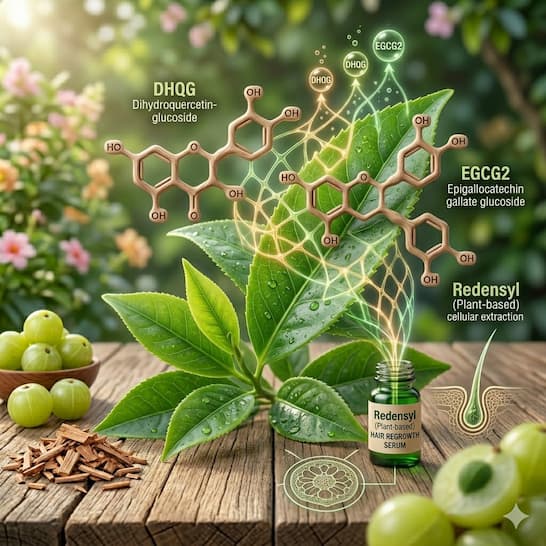
A peptide is simply a short chain of amino acids — smaller than a protein, large enough to carry a biological signal. GHK-Cu is a tripeptide: three amino acids (glycine, histidine, lysine) that naturally occur in your bloodstream and bind to copper ions (Cu²⁺).
GHK-Cu levels in human plasma are highest in early life (~200 ng/mL at age 20) and decline significantly with age (~80 ng/mL by age 60) — correlating directly with the decline in wound healing speed, collagen density, and hair density that characterises ageing. This decline is not coincidental. It is causal: GHK-Cu is the signal that tells your body to repair, regenerate, and maintain.
How Copper Peptides Work for Hair — 4 Distinct Mechanisms
GHK-Cu does not work through a single hair-growth pathway. It acts simultaneously at four different levels of the follicle biology — which is why its clinical evidence is broader than most single-mechanism hair actives.
The dermal papilla is the cluster of specialised cells at the base of each hair follicle. These cells are the master regulators of the hair growth cycle — they send the molecular signals that determine whether a follicle is in anagen (active growth), catagen (transition), or telogen (resting/shedding).
GHK-Cu has been shown to directly stimulate dermal papilla cell proliferation and upregulate the expression of growth factors — particularly Vascular Endothelial Growth Factor (VEGF) and keratinocyte growth factor (KGF) — that are required to maintain active hair shaft production. This extends the anagen phase and shifts the ratio of actively growing to resting follicles in favour of growth.
A 2007 randomised split-scalp study found GHK-Cu topically applied produced hair regrowth comparable to 2% minoxidil — with measurable improvement in both hair count and hair thickness — without minoxidil's associated scalp irritation or systemic absorption.
Practical implication: Hairs that were previously in a short telogen phase re-enter anagen faster. Follicles that were miniaturising (producing progressively thinner, shorter strands) begin producing thicker shafts over successive growth cycles.
Hair follicles are among the most metabolically active structures in the human body. Each follicle cell requires a continuous supply of oxygen, amino acids, iron, zinc, and vitamins to produce the keratin that forms the hair shaft. This supply comes entirely from the dermal capillaries that surround the follicle bulb.
GHK-Cu upregulates VEGF (Vascular Endothelial Growth Factor) production in follicle-surrounding tissue — stimulating the formation of new capillaries (angiogenesis) and improving the density of the microvascular network around the follicle. This is particularly relevant in Indian conditions, where hard water mineral deposits, chronic scalp inflammation from pollution, and DHT-driven vasoconstriction all reduce capillary blood flow to follicles.
Improved microcirculation produces a measurable benefit that extends beyond GHK-Cu's direct effects: it enhances the efficacy of every other nutrient and active delivered to the scalp — including Redensyl, Procapil, vitamins, and dietary amino acids.
Practical implication: Scalp that feels warm, looks more vascularised, and responds to massage is receiving better follicle nutrition. Copper peptides are one of the most evidence-backed actives for improving this baseline microcirculation — alongside caffeine, which acts via a different (phosphodiesterase inhibition) mechanism.
Each hair follicle contains melanocytes — specialised cells responsible for producing the melanin that gives hair its colour. These melanocytes produce melanin using tyrosinase, an enzyme that requires copper (Cu²⁺) as a mandatory cofactor. Without sufficient copper, tyrosinase cannot function, melanin production declines, and the hair shaft emerges without pigment — appearing grey or white.
Greying in Indian skin tones is accelerating. The average age of onset has dropped by an estimated 5–7 years over the last two decades — driven by oxidative stress (pollution, UV), nutritional deficiency (copper, B12, folate), and chronic cortisol elevation. GHK-Cu addresses this through two concurrent mechanisms:
- Copper replenishment: Delivers bioavailable Cu²⁺ directly to follicle melanocytes, restoring tyrosinase cofactor availability — the immediate upstream bottleneck for melanin synthesis.
- Hydrogen peroxide neutralisation: GHK-Cu's antioxidant activity (via superoxide dismutase upregulation) reduces the hydrogen peroxide accumulation inside follicles that chemically bleaches melanin. H₂O₂ buildup — from UV, pollution, and metabolic by-products — is one of the primary drivers of age-related and stress-related greying.
Important caveat: Copper peptides cannot restore colour to follicles where melanocytes have been permanently lost. Their anti-greying effect is protective and decelerating — most relevant for early or premature greying, less effective for advanced depigmentation.
Chronic low-grade scalp inflammation is a significant and under-recognised driver of hair fall and follicle miniaturisation — particularly in urban Indian conditions where the combination of hard water mineral deposits, air pollution, DHT accumulation, and product residue creates a persistently inflamed scalp environment.
GHK-Cu suppresses pro-inflammatory cytokines (TNF-α, IL-1β, IL-6) — the same signalling molecules that promote follicle miniaturisation in androgenetic alopecia and telogen effluvium. It does this through NF-κB pathway modulation, reducing inflammatory gene expression at the transcription level rather than simply blocking a single receptor.
This anti-inflammatory activity protects dermal papilla cells from the cytokine-driven apoptosis (cell death) that progressively shrinks follicles in androgenetic alopecia. It also reduces the scalp sensitivity, flaking, and reactivity that makes many people hesitant to use other actives consistently.
Practical implication: A calmer scalp responds better to every other active — Redensyl, Procapil, Caffeine — in a multi-active serum. GHK-Cu's anti-inflammatory action creates the biological environment in which other follicle stimulators can work most effectively.
💡 Copper Peptides + Redensyl + Procapil + Capixyl + Baicapil + Anagain — all in one lightweight, non-sticky hair serum.
See Total Revival Hair Serum →Copper Peptides for Skin — The Collagen Rebuild Mechanism
GHK-Cu's skin benefits are, if anything, more extensively studied than its hair benefits. The skin science dates to the original 1973 discovery — wound healing research showed that GHK-Cu dramatically accelerated tissue repair. Subsequent decades of research have mapped exactly how and why.
GHK-Cu activates fibroblasts — the skin cells responsible for producing collagen (types I, III, and IV) and elastin. It upregulates the genes encoding these structural proteins while simultaneously inhibiting matrix metalloproteinases (MMPs) — the enzymes that break existing collagen down.
The net effect: more collagen produced, less collagen degraded. Skin becomes measurably firmer and more elastic. Studies in photoaged skin show statistically significant improvement in skin density and reduction in wrinkle depth at 12 weeks of consistent topical GHK-Cu application.
GHK-Cu stimulates the synthesis of glycosaminoglycans (GAGs) — including hyaluronic acid and dermatan sulphate — which are the water-binding molecules that give skin its plumpness and cushioning. GAG levels decline rapidly with UV exposure and age.
GHK-Cu restores GAG production from the fibroblast level — providing a different and deeper mechanism of hydration compared to topical hyaluronic acid applied to the surface. The result is improved skin volume and a reduction in the sunken, hollow appearance of photoaged or stressed skin.
GHK-Cu strongly upregulates superoxide dismutase (SOD) — one of the body's primary antioxidant enzymes — and reduces the expression of oxidative stress genes. This is particularly relevant for Indian skin exposed to high UV index, air pollution (PM2.5 penetrates the skin barrier), and internal oxidative stress from chronic cortisol elevation.
Unlike topically applied antioxidants (vitamin C, vitamin E), GHK-Cu upregulates the skin's own antioxidant production — a more sustained and self-renewing protective mechanism rather than a one-time antioxidant donation.
GHK-Cu's original discovery context was wound healing — and it remains one of the most evidence-backed actives for skin repair. It promotes keratinocyte migration to close wounds, stimulates nerve regeneration in healing tissue, and reduces scar formation (by modulating TGF-β1, the primary scar-promoting growth factor).
For daily skincare, this translates to faster recovery from breakouts, sunburn, and barrier disruption — with less post-inflammatory hyperpigmentation and a stronger, more resilient barrier over time.
The Clinical Evidence — What the Studies Actually Show
Copper peptides have been studied since 1973. Here is an honest summary of the evidence across the key claims:
| Claim | Key Evidence | Verdict | Mechanism |
|---|---|---|---|
| Hair regrowth | 2007 split-scalp RCT: GHK-Cu comparable to 2% minoxidil for hair count and thickness at 6 months. Multiple in vitro studies confirm dermal papilla cell proliferation. | Strong — human RCT + mechanistic confirmation | Dermal papilla stimulation, VEGF upregulation |
| Anti-greying | Mechanistic studies confirm Cu²⁺ as essential tyrosinase cofactor; H₂O₂ accumulation studies show GHK-Cu reduces oxidative melanocyte damage. Human hair colour RCTs limited but mechanistic evidence strong. | Moderate clinical — strong mechanistic | Tyrosinase cofactor supply, H₂O₂ neutralisation |
| Collagen synthesis | Multiple RCTs on photoaged skin confirm increased collagen density, reduced wrinkle depth, and improved skin firmness at 8–12 weeks. Fibroblast activation extensively documented. | Strong — multiple photoaging RCTs | Fibroblast activation, MMP inhibition |
| Wound healing | Original 1973 research confirmed in subsequent studies. Clinical use in post-surgical skin repair is well-established. Scar-reduction effect via TGF-β1 modulation documented. | Strong — 50+ years of evidence | Keratinocyte migration, TGF-β1 modulation |
| Scalp microcirculation | VEGF upregulation confirmed in vitro and in follicle tissue studies. Angiogenic effect well-characterised. Direct scalp blood flow human RCTs limited. | Moderate — VEGF mechanistic strong; scalp-specific human data emerging | VEGF upregulation, angiogenesis |
| Anti-inflammation | GHK-Cu suppression of TNF-α, IL-1β, and IL-6 confirmed in multiple cell studies. NF-κB pathway modulation documented across wound healing and skin research. | Strong in vitro; consistent with skin outcomes | NF-κB pathway, cytokine suppression |
Copper Peptides vs Other Hair Growth Actives — How They Fit Together
Copper peptides are not a replacement for other evidence-backed hair actives — they are a complementary mechanism. Here is how GHK-Cu compares and combines with the most common hair growth actives:
| Active | Primary Mechanism | How It Combines with Copper Peptides | Evidence Level |
|---|---|---|---|
| Copper Peptides (GHK-Cu) | Dermal papilla stimulation, VEGF, melanocyte protection, anti-inflammation | — | Strong — human RCT |
| Redensyl | Activates ORSM stem cells in follicle outer root sheath via Wnt/β-catenin | Redensyl activates follicle stem cells upstream; GHK-Cu maintains the anagen phase those stem cells initiate. Synergistic at the follicle cycle level. | Strong — proprietary RCTs |
| Procapil | DHT inhibition (apigenin) + microcirculation (oleanolic acid) + vitaminised keratin anchoring | Procapil blocks DHT-driven miniaturisation; GHK-Cu restores the follicle environment DHT damaged. Combined: blocks the driver + repairs the target. | Strong — clinical trials vs placebo |
| Capixyl | Acetyl tetrapeptide-3 — biomimic of ECM proteins; anchors follicle in dermis; reduces inflammatory hair loss | Capixyl anchors follicle physically; GHK-Cu provides the copper signalling and microcirculation that makes the anchored follicle productive. Complementary, not overlapping. | Moderate — proprietary + mechanistic |
| Minoxidil | Potassium channel opening → vasodilation → non-specific blood flow increase | GHK-Cu provides a more targeted angiogenic mechanism (VEGF-driven) without minoxidil's scalp irritation, systemic absorption, or rebound shed on cessation. | Strong — but shedding rebound concern |
| Caffeine | Phosphodiesterase inhibition → extends anagen; mild vasodilation | Caffeine's vasodilation + GHK-Cu's VEGF angiogenesis = improved microcirculation through two independent pathways. Additive effect on nutrient delivery to follicle bulb. | Strong — multiple in vitro + clinical |
Total Revival Hair Serum — Copper Peptides in a Multi-Active Formula
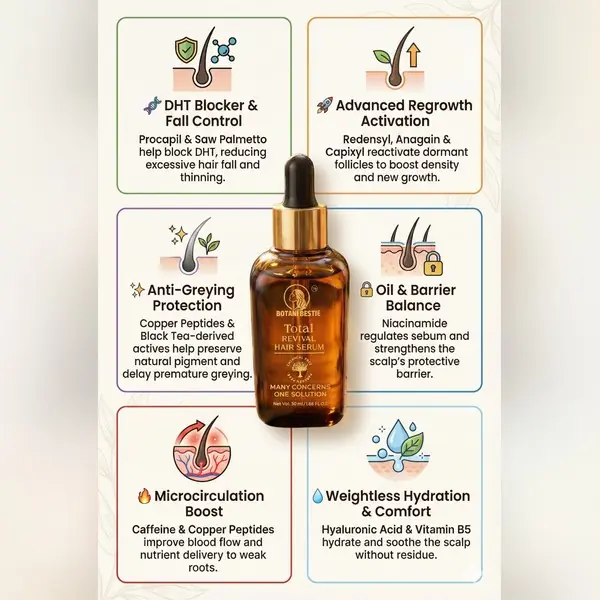
The most effective way to use copper peptides for hair is in a multi-active serum where GHK-Cu works alongside other clinically validated actives targeting different mechanisms of the same problem. Total Revival Hair Serum is built on exactly this principle.
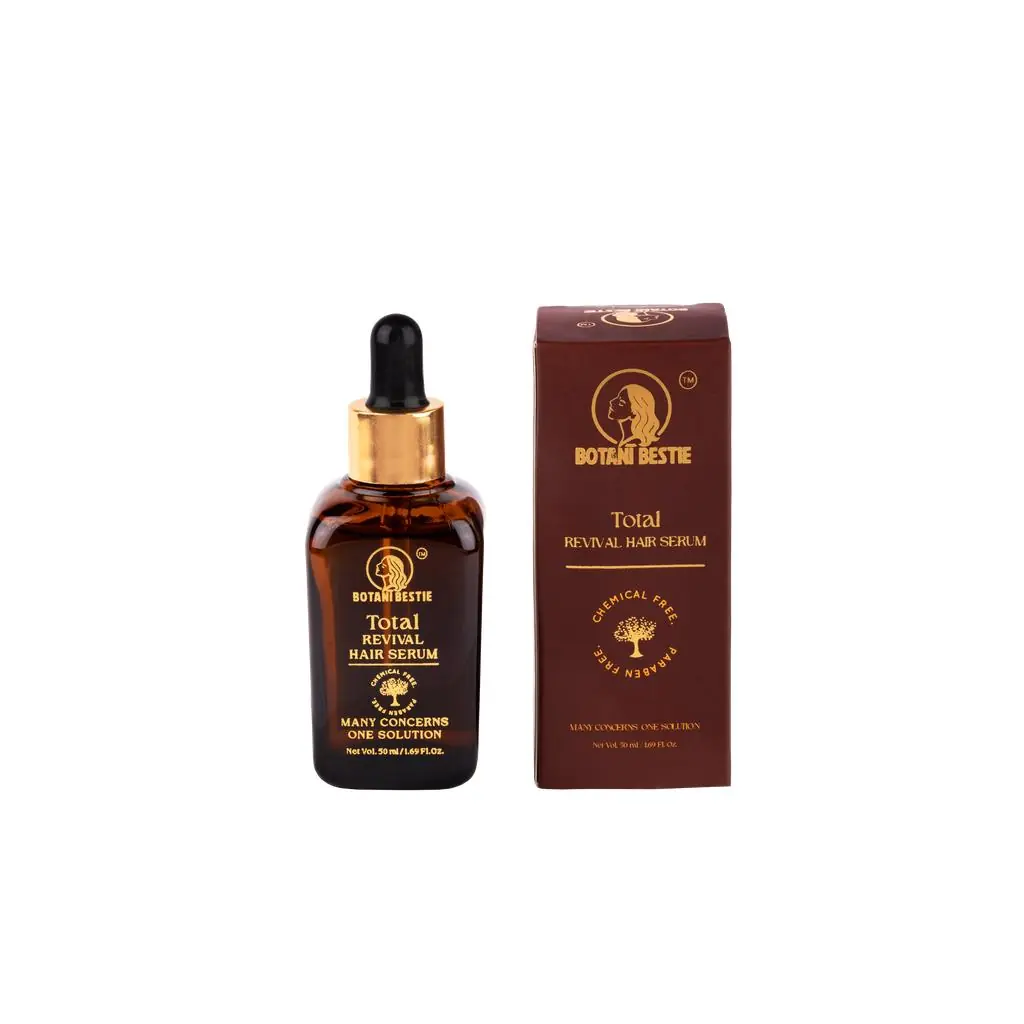
Total Revival Hair Serum
by Botani Bestie — multi-active hair regrowth and anti-greying serum
Follicle Stimulation + Growth Cycle
- ✔ Copper Peptides (GHK-Cu) — dermal papilla stimulation; extends anagen phase; VEGF-driven microcirculation; anti-inflammatory follicle environment
- ✔ Redensyl — reactivates ORSM stem cells via Wnt/β-catenin; shown to outperform minoxidil in proprietary RCTs for new hair growth
- ✔ Anagain — pea sprout extract; shifts anagen-to-telogen ratio in favour of active growth; clinically shown to reduce hair fall by 37% in 3 months
- ✔ Baicapil — Scutellaria + wheat protein complex; extends growth phase and increases fibre thickness; proprietary RCT shows 49% increase in hair density
DHT Blocking + Scalp Microcirculation
- ✔ Procapil — apigenin blocks DHT (primary miniaturisation hormone) + oleanolic acid improves dermal microcirculation; shown to reduce hair fall by 58% in clinical trial
- ✔ Capixyl — acetyl tetrapeptide-3 anchors follicle in dermal matrix; reduces DHT-driven inflammatory hair loss
- ✔ Saw Palmetto — plant-based 5-alpha-reductase inhibitor; reduces DHT conversion without the systemic side effects of pharmaceutical 5-AR inhibitors
- ✔ Caffeine — phosphodiesterase inhibition extends anagen; vasodilation improves nutrient delivery — complementary to GHK-Cu's VEGF mechanism
Anti-Greying + Antioxidant + Scalp Nutrition
- ✔ Black Tea — polyphenols protect melanocytes from oxidative damage; theaflavins support natural pigment retention alongside GHK-Cu
- ✔ Green Tea (EGCG) — reduces ROS accumulation in follicle; anti-androgenic synergy with Saw Palmetto and Procapil
- ✔ Licorice Root — anti-inflammatory; scalp-soothing glabridin protects follicle microenvironment
- ✔ Niacinamide + Panthenol — scalp barrier support; reduces compensatory sebum that clogs follicle openings
- ✔ Sodium Hyaluronate — scalp hydration; prevents the scalp dehydration that elevates inflammatory cytokine production
How Total Revival Hair Serum compares to a typical hair serum:
| Feature | Typical Pharmacy Hair Serum | Total Revival Hair Serum |
|---|---|---|
| Copper Peptides (GHK-Cu) | ❌ Rarely included — expensive ingredient | ✅ |
| Redensyl (stem cell activator) | ❌ | ✅ |
| Procapil (DHT blocker + microcirculation) | ❌ | ✅ |
| Anagain (growth phase extension) | ❌ | ✅ |
| Anti-greying actives | ❌ Or only cosmetic colour cover | ✅ GHK-Cu + Black Tea |
| Botanical anti-inflammatories | ❌ | ✅ Green Tea, Licorice, Saw Palmetto |
| Free dermatologist consultation | ❌ | ✅ Included |
📅 Realistic Timeline — What to Expect Month by Month
Copper peptides work by shifting the follicle biological environment over multiple growth cycles. Manage expectations accordingly — early changes are real but subtle; significant visible changes take 2–3 months.
| Timeframe | What You May Notice | What's Happening Biologically |
|---|---|---|
| Week 1–3 | Scalp feels less irritated and more comfortable. Some users notice increased scalp sensitivity initially as microcirculation improves. No visible hair change yet. | GHK-Cu is beginning to modulate inflammatory cytokine expression. Scalp capillary density is starting to improve. Follicle cells are beginning to receive the VEGF and growth factor signals. |
| Week 4–6 | Reduced hair fall noticed on the comb and in the shower. New fine hairs may appear at the hairline or parting. Scalp feels healthier and less flaky. | Follicles that were in telogen are re-entering anagen. Redensyl's stem cell activation and GHK-Cu's dermal papilla stimulation are extending the growth phase of active follicles. Procapil's DHT reduction is reducing follicle miniaturisation. |
| Week 6–10 | Visibly fuller hair at the parting and crown. New growth strands are thickening. Existing hair feels stronger and less prone to breakage. | Multiple follicles that re-entered anagen in weeks 4–6 are now producing measurable hair shaft length. GHK-Cu's collagen-stimulating effect is improving the dermal matrix that anchors follicles, reducing mechanical breakage at the root. |
| Month 3–4 | Significant improvement in overall hair density and thickness. For premature greying users, slowing of new grey strand appearance. Hair texture improved — less dull and brittle. | Two or three full follicle cycles have occurred under the GHK-Cu + Redensyl + Procapil regime. The anagen-to-telogen ratio has shifted measurably. Melanocyte copper availability is improving — new strands emerging from previously grey follicles may show partial pigmentation return. |
| Month 4–6+ | Best results visible. Hair that was thinning is noticeably denser. Grey progression slowed (though existing grey strands will not reverse colour). Scalp health maintained. | Sustained anagen extension, improved microvascular density, and maintained anti-inflammatory scalp environment. At this stage, reducing frequency to maintenance use (every other day) while continuing to protect the biological gains made. |
Myth vs. Truth — What Most People Believe About Copper Peptides
| What you hear | What the science says |
|---|---|
| "Copper peptides can reverse white hair back to its original colour" | No — GHK-Cu can protect and support melanocytes that are still active, slowing further greying. It cannot restore colour to follicles where melanocytes have been permanently lost. Early and premature greying responds best; advanced depigmentation does not reverse. |
| "Copper peptides are too strong for daily use" | GHK-Cu at normal cosmetic concentrations (0.1–2%) is extremely well-tolerated and designed for daily use. Unlike retinoids or high-concentration acids, it does not require a sensitisation phase and does not cause photosensitivity. It has an excellent safety record across 50+ years of research. |
| "You can get the same results from a copper supplement" | Oral copper supplementation increases systemic copper but does not reliably deliver it to follicle melanocytes and dermal papilla cells in the bioavailable form GHK-Cu provides. The peptide complex is specifically designed for localised topical delivery and cellular uptake — which oral copper cannot replicate. |
| "Copper peptides shouldn't be used with vitamin C" | Partially true — very high-concentration vitamin C at low pH can disrupt the copper complex. But this applies only to simultaneous application of strongly acidic vitamin C formulations. Used in normal cosmetic pH ranges (5–6), or applied at different times of day, copper peptides and vitamin C are fully compatible and synergistic in collagen support. |
| "Copper peptides show results within a week" | Not for hair — the hair growth cycle means meaningful improvements in density and thickness require 8–12 weeks of consistent use. Scalp comfort may improve earlier. Managing this expectation is the single most important factor in successful copper peptide use, since most people stop at exactly the point where results are beginning. |
| "Only expensive imported serums have real copper peptides" | GHK-Cu is a commercially manufactured ingredient available to formulators globally. What matters is the concentration included (look for at least 0.1%), the stability of the formulation (appropriate pH, absence of ingredients that degrade the complex), and the other actives it is paired with — not the country of origin or the price point. |
Not Sure Which Hair Concern to Address First?
Get a free personalised hair consultation with our in-house trichologist. Tell us your hair fall pattern, greying timeline, scalp type, and current routine — and receive a targeted recommendation built specifically for your hair biology.
Book Free Hair Consultation → WhatsApp UsFrequently Asked Questions
The Verdict on Copper Peptides
GHK-Cu is one of the most comprehensively studied bioactive ingredients in cosmetic science — with 50+ years of evidence across wound healing, collagen synthesis, follicle stimulation, and melanocyte protection. It is not a trend. It is a well-characterised molecule that addresses hair and skin ageing at the biological root.
The key distinction from most hair and skin actives is that copper peptides are a biological signal — not a surface treatment. They do not coat the hair shaft or fill in wrinkles cosmetically. They change what the cells inside the follicle and dermis are doing — which is why the results, when they come, are genuine improvements in hair density, shaft thickness, and skin structure rather than temporary cosmetic effects.
Paired with other mechanism-specific actives — Redensyl for stem cell activation, Procapil for DHT and microcirculation, Caffeine for anagen extension, Black Tea for melanocyte protection — GHK-Cu is the connective tissue of a science-backed hair serum: the active that creates the biological environment in which everything else works better.
Shop Total Revival Hair Serum →"The best hair and skin care is not about what you put on the surface — it is about what signals you send to the cells underneath."
Ready to make the honest switch?
Our products are built on the same principles as every article we write — pure ingredients, real results, nothing to hide.
Explore Our Products