How to Grow Hair Faster Naturally — The Complete Science-Backed Guide
Hair grows at an average of 1.25 cm per month. But follicle health, scalp circulation, DHT levels, and nutrition all determine whether yours grows faster or slower — and most people are unknowingly suppressing their own growth rate through the wrong products, routines, and dietary gaps.

"How to grow hair faster" is the most searched hair query in India — and the answer most people get is a list of kitchen remedies that conflate hair retention with hair growth. They are not the same thing.
Hair retention means keeping the hair you already grow from breaking off — coconut oil, egg masks, and oiling rituals primarily work here.
Hair growth means activating follicles to produce more hair, more quickly — this requires ingredients and habits that work at the follicle level, not the shaft.
This guide covers both, but makes the distinction clear at every step. The result is a complete protocol built on the 5 biology-backed pillars that actually determine how fast and how much your hair grows.
Understanding Hair Growth Biology First
Every hair follicle on your scalp cycles through three phases. How fast your hair grows — and how much of it you have — depends on how long each follicle spends in each phase.
Anagen — Growth Phase
This is the active growth phase. Hair cells divide rapidly in the follicle bulb, pushing the shaft up 1–1.5 cm per month. Anagen lasts 2–7 years — the longer it lasts, the longer your hair can grow. Roughly 85–90% of follicles are in anagen at any given time.
Lever to pull: Extend anagen duration. Bhringraj, Redensyl, and Procapil all work by prolonging the anagen phase before premature transition to catagen.
Catagen — Transition Phase
A brief 2–3 week phase where the follicle shrinks and detaches from its blood supply. The hair shaft stops growing and the follicle prepares to rest. Stress, illness, and hormonal changes (DHT, PCOS) prematurely push follicles into catagen — this is the root mechanism of most hair fall.
Lever to pull: Prevent premature catagen entry. DHT-blocking herbs and anti-inflammatory scalp actives protect the follicle from premature shutdown.
Telogen — Rest Phase
The follicle is dormant for 2–4 months. The old hair is retained in the follicle (club hair) until a new anagen hair pushes it out — this is why you see shedding at the end of telogen. Normally 10–15% of follicles are in telogen at any time.
Lever to pull: Shorten telogen. Scalp massage and improved circulation help resting follicles re-enter anagen more quickly by restoring nutrient supply.
Pillar 1: Scalp Circulation — The Single Biggest Lever
The hair follicle is one of the most metabolically active structures in the body. It requires a constant, rich blood supply to fuel rapid cell division during anagen. Poor scalp circulation directly limits how fast the follicle can produce new hair cells — it is like trying to run a factory with a reduced power supply.
What the Research Shows: Scalp Massage + Rosemary
A 2016 standardised scalp massage study (Koyama et al., Eplasty) found that 4 minutes of daily scalp massage over 24 weeks increased hair thickness — despite no change in hair count — by stretching dermal papilla cells and increasing expression of hair-growth genes.
A 2015 RCT published in SKINmed compared Rosemary essential oil (diluted) vs Minoxidil 2% topical solution over 6 months. Both groups showed a statistically equivalent increase in hair count. Rosemary's mechanism: carnosic acid stimulates nerve growth factor (NGF), which promotes scalp vasodilation and improves follicle microcirculation.
Action: 4–5 minutes of firm, circular scalp massage 3x per week (during oiling is the natural opportunity). Use a herbal oil containing Rosemary, Bhringraj, or both — the massage carries active compounds to the follicle while mechanically improving blood flow.
Bhringraj (Eclipta alba)
Wedelolactone and ecliptine in Bhringraj activate Wnt/β-catenin signalling — the pathway that controls follicle stem cell activity and anagen initiation. A 2008 study in the Journal of Ethnopharmacology found Bhringraj oil promoted hair growth comparable to Minoxidil 2% in controlled animal models. Additionally, it is a documented 5α-reductase inhibitor — blocking DHT conversion at the scalp level.
Caffeine (Topical)
A 2007 study published in the International Journal of Dermatology confirmed that topical caffeine penetrates the hair follicle within 2 minutes and counteracts testosterone-induced suppression of hair shaft elongation in vitro. Caffeine inhibits phosphodiesterase, increasing cAMP in follicle cells — a known promoter of anagen. Caffeine also stimulates VEGF expression, improving scalp microcirculation.
Pillar 2: DHT Management — The Invisible Brake on Hair Growth
Dihydrotestosterone (DHT) is the primary hormonal cause of follicle miniaturisation in both men and women. The enzyme 5α-reductase converts testosterone into DHT, which binds to androgen receptors in scalp follicles, progressively shortening the anagen phase and shrinking the follicle with each cycle — eventually producing fine, unpigmented vellus hairs instead of terminal hairs.
Even people without classic pattern hair loss often have elevated scalp DHT levels that suppress growth rate without causing visible thinning. Managing DHT is not just for people experiencing hair fall — it is a lever for anyone trying to grow hair at their maximum biological rate.
| Ingredient | DHT-Blocking Mechanism | Evidence Level | Best Source |
|---|---|---|---|
| Saw Palmetto | Inhibits both type I and type II 5α-reductase; published head-to-head trial vs finasteride | Strong (RCT) | Topical hair serum, oral supplement |
| Bhringraj | Wedelolactone inhibits 5α-reductase; also activates Wnt pathway for follicle stem cells | Strong (multiple studies) | Hair oil (topical) |
| Rosemary Oil | Carnosic acid — 5α-reductase inhibition + improved microcirculation | Strong (RCT vs Minoxidil) | Hair oil, serum (diluted) |
| Pumpkin Seed Oil | Delta-7-sterols inhibit 5α-reductase; 2014 RCT showed 40% hair count increase vs placebo | Moderate (1 RCT) | Oral (400mg/day) or topical blend |
| Green Tea (EGCG) | EGCG inhibits 5α-reductase; also promotes dermal papilla cell proliferation via VEGFA | Moderate (in vitro + animal) | Topical serum, shampoo |
| Liquorice (Mulethi) | 18β-glycyrrhetinic acid inhibits 5α-reductase; also anti-inflammatory | Moderate (2024 PubMed) | Hair oil, shampoo |
Pillar 3: Nutrition — What the Follicle Needs From Your Bloodstream
No topical oil can compensate for nutritional deficiencies. The follicle is fed via the bloodstream — and if the building blocks for keratin protein are absent or inadequate at the cellular level, growth rate drops regardless of what you apply externally.
Indian vegetarian diets, while rich in many nutrients, are frequently low in the specific amino acids, minerals, and vitamins that hair synthesis requires most urgently.
Most Common Deficiencies That Slow Growth
- Iron (ferritin below 70 ng/mL): Serum ferritin below 70 is the most common cause of diffuse hair thinning in Indian women. Iron is required for DNA synthesis in follicle cells.
- Vitamin D (below 30 ng/mL): VDR (Vitamin D receptor) is expressed in hair follicle cells. Deficiency stunts the anagen phase.
- Zinc (below 70 μg/dL): Required for keratin synthesis and 5α-reductase regulation.
- Vitamin B12 (below 300 pg/mL): Common in pure vegetarians; B12 deficiency causes diffuse shedding and reduced growth rate.
- Biotin: True biotin deficiency is rare, but widely confused with general hair thinning. Supplement only if diagnosed.
The Best Hair Growth Foods for Indian Diets
- Protein (1.2–1.6g per kg body weight): Lentils, Greek yoghurt, paneer, eggs, chicken. Hair is 95% keratin protein — insufficient dietary protein is the simplest growth limiter.
- Amla (Indian Gooseberry): The richest source of Vitamin C in India; essential for scalp collagen synthesis and iron absorption.
- Sesame seeds (til): High in zinc, copper, and calcium — all critical for follicle function.
- Methi (Fenugreek): Iron, protein, nicotinic acid. Soaked fenugreek seeds are one of India's most evidence-backed dietary hair growth supports.
- Spinach + Lemon: Iron-rich greens; Vitamin C from lemon increases non-haem iron absorption by up to 300%.
Pillar 4: Hair Cycle Optimisation — Sleep, Stress & Hormones
Human growth hormone (HGH) is secreted primarily during deep sleep (slow-wave sleep, stages 3–4). HGH directly stimulates IGF-1, which is the most potent known promoter of the anagen phase in hair follicles. Sleep deprivation below 7 hours reduces HGH secretion by 20–30%, directly reducing the growth signal available to follicle cells.
Additionally, cortisol (the stress hormone) is cleared from the blood during sleep. Elevated overnight cortisol — from poor sleep or late-night eating — suppresses follicle stem cell activity. Consistent 7–8 hours of quality sleep is one of the most undervalued hair growth interventions.
A 2021 Nature paper (Choi et al.) identified the exact mechanism by which stress stops hair growth: elevated corticosterone (the rodent equivalent of cortisol) causes sub-epidermal dermal cells to secrete GAS6, which arrests follicle stem cells in a quiescent state — they stop entering anagen.
For humans, chronic workplace stress, examination periods, and relationship stress all elevate cortisol sufficiently to suppress follicle activity measurably. Brahmi and Ashwagandha are the two Ayurvedic adaptogens with the most robust clinical evidence for reducing cortisol and protecting follicle activity under stress.
Both hypothyroidism (underactive) and hyperthyroidism (overactive) disrupt the hair growth cycle. Thyroid hormones (T3 and T4) directly regulate the duration of the anagen phase — hypothyroidism shortens anagen and prolongs telogen, causing diffuse thinning and slow growth. PCOS-related androgen excess accelerates DHT conversion, directly miniaturising follicles.
If topical interventions are not working despite consistent use over 6 months, a blood panel (TSH, free T3, free T4, ferritin, DHEA-S, testosterone, DHT) is warranted. The most common scenario in young Indian women is sub-clinical hypothyroidism + iron deficiency — both invisible without blood work.
Pillar 5: The Right Ingredients — Actives vs Fillers
The Indian hair oil market is dominated by products that are 80–90% mineral oil, liquid paraffin, or fragrance — with trace amounts of herbs at concentrations too low to have any follicle-level effect. Reading ingredient labels is the difference between a product that grows hair and one that just conditions the shaft.
Active Ingredients With Follicle Evidence
- Redensyl: 2-oxothiazolidine-4-carboxylic acid — activates HFSC (hair follicle stem cells) via ORF pathway. 16-week trial: 17% hair density increase vs placebo.
- Procapil: Biotinyl-GHK + apigenin + oleanolic acid — improves follicle anchorage and anagen prolongation. Documented 121% reduction in hair fall in 4-week studies.
- Bhringraj extract: Wnt/β-catenin activator, 5α-reductase inhibitor. Multiple peer-reviewed studies.
- Rosemary oil: Head-to-head RCT vs Minoxidil 2%. Statistically equivalent at 6 months.
- Saw palmetto: Dual 5α-reductase inhibitor. Head-to-head vs finasteride (38% vs 68% improvement).
- Copper peptides (GHK-Cu): Stimulate follicle stem cells and extend anagen. Human scalp studies confirm density improvement.
Filler Ingredients to Deprioritise
- Mineral oil / Liquid paraffin: Occlusive coating; no follicle activity; can clog follicles on oily scalps.
- Dimethicone: Silicone; coats hair shaft for temporary shine; zero follicle effect; builds up with repeated use.
- Synthetic fragrance: Listed as "fragrance" or "parfum" on labels; top sensitiser; zero benefit.
- "Natural extracts" without disclosure: Herb names without concentration or standardisation tell you nothing about dosage.
- Protein fillers (hydrolyzed proteins at trace levels): Effective at high concentrations; cosmetically added at levels too low to work.
The Complete Hair Growth Protocol — Week by Week
| Routine Step | What to Do | Frequency | Key Ingredients |
|---|---|---|---|
| Scalp Oil Treatment | Apply herbal oil to scalp. Massage for 4–5 minutes. Leave 30–60 min. Wash off. | 2–3x per week | Bhringraj, Rosemary, Amla, Brahmi, Jatamansi |
| Sulfate-Free Shampoo | Wash scalp thoroughly. Do not pile hair on top of head — work from scalp downward. | 2–3x per week (after oiling) | No SLS/SLES; Neem, Piroctone Olamine for scalp health |
| Scalp Serum | Apply directly to dry or slightly damp scalp. Do not rinse. | Daily (AM or PM) | Redensyl, Procapil, Caffeine, Copper Peptides, Saw Palmetto |
| Nutritional Support | Ensure protein at every meal. Eat Amla daily (or supplement Vitamin C). Check ferritin. | Daily | Iron, B12, Zinc, Vitamin D if deficient |
| Scalp Massage | Firm circular movements with fingertips (not nails). Can be dry or during oiling. | 4–5 min, 3–5x per week | Mechanical — no ingredient needed |
| Sleep Optimisation | Consistent 7–8 hours. Dark room. No screen light after 10pm where possible. | Nightly | Systemic — supports HGH and IGF-1 secretion |
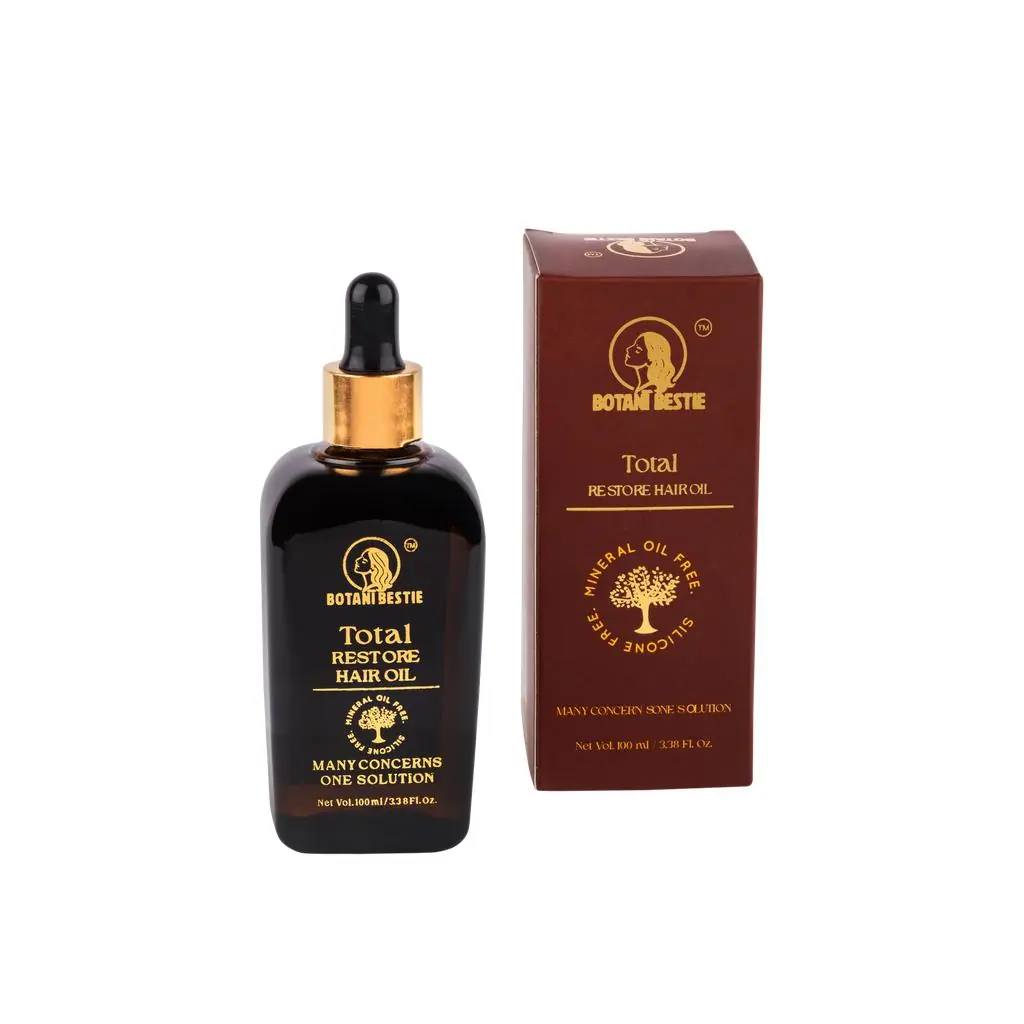
Total Restore Hair Oil
Follicle-level Ayurvedic oil — for Pillar 1 & 2
Formulated with 10+ herbs targeting all five pillars above: Bhringraj (Wnt activation + DHT blocking), Rosemary (circulation + 5α-reductase inhibition), Brahmi (stress-induced hair fall + anti-inflammatory), Amla (Vitamin C + antioxidant), Jatamansi (follicle protection + premature greying) in a bioavailable base with no mineral oil or silicones.
Shop Hair Oil → Shop Hair Serum →Total Revival Hair Serum
Biotech-Ayurvedic serum — for Pillar 5
Redensyl + Procapil + Copper Peptides + Saw Palmetto — the four biotech actives with the strongest clinical evidence for follicle stem cell activation and DHT management. Designed for daily leave-on scalp application. Works at the follicle level, not the shaft — the critical distinction for genuine hair growth.
Shop Hair Serum →
Frequently Asked Questions
"Growing hair faster is not about one magic ingredient — it is about removing the 3–4 things that are actively slowing your follicles down."
Ready to make the honest switch?
Our products are built on the same principles as every article we write — pure ingredients, real results, nothing to hide.
Explore Our Products