How to Repair Damaged Hair — The Complete Recovery Guide for Heat, Chemical, and Hard Water Damage in India (2025)
Hair damage is not a single condition — it is a spectrum of structural changes to the hair shaft, each requiring a different repair strategy. Heat damage lifts and permanently fuses cuticle scales. Chemical damage depletes cortex proteins. Hard water deposits calcium and magnesium minerals that stiffen and dull the fibre. Mechanical damage creates micro-fractures in the cortex. Each type needs targeted intervention, not generic "deep conditioning." This is the honest guide to identifying your damage type and actually repairing it.
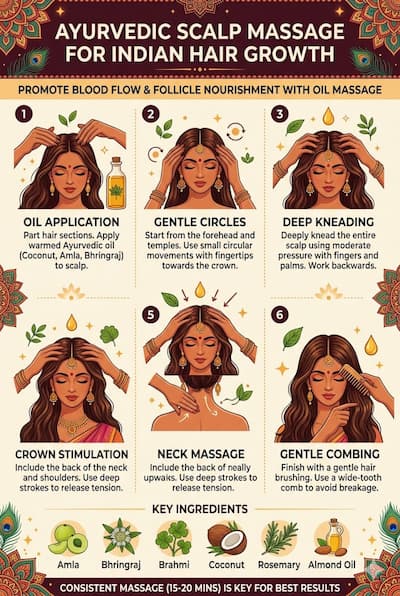
Indian hair faces a combination of damage sources that is relatively unique: chronic hard water exposure (68% of Indian households use water with TDS above 500 ppm, leaving mineral deposits), high humidity and heat that cause repeated hygral fatigue (the swelling-contracting cycle from humidity changes), pollution particulate accumulation on the cuticle, and the rising use of heat styling tools that the Indian climate — with its humidity — makes counterproductive and more damaging than in dryer climates.
Layered on this are chemical damage from chemical straightening, bleaching, and hair colour (all increasingly common), and mechanical damage from the Indian habit of aggressive hair brushing and the use of tight hairstyles that cause traction damage at the follicle.
The key concept in hair repair is the difference between cortex repair (replacing lost protein in the structural core of the hair fibre), cuticle sealing (closing the lifted scales that cause frizz and allow moisture loss), and deposit removal (clearing the mineral and silicone buildup that prevents treatments from reaching the hair itself). Most "repair" products only do the third — they make hair feel better by coating it — without addressing the first two.
This guide identifies each damage type, gives you the repair protocol for each, and shows which ingredients provide actual structural repair vs. cosmetic masking.
Identify Your Damage Type
| Damage Type | Signs | Stretch Test Result | Primary Cause |
|---|---|---|---|
| Heat Damage | Permanently frizzy even in low humidity; crispy texture; hair doesn't hold curls/waves like it used to; split ends throughout not just at tips | Snaps with minimal stretch (brittle), OR stretches and doesn't recover (cortex protein loss) | Flat irons, hair dryers, curling wands above 180°C — especially on Indian hair that is naturally finer in diameter and more vulnerable to high heat |
| Chemical Damage | Very high porosity (absorbs water instantly); extreme frizz; colour fades unusually fast; hair feels like straw when dry; excessive breakage mid-shaft | Stretches excessively (over 50%) without snapping — severely protein-depleted cortex | Bleaching, permanent hair colour, chemical straightening (keratin treatments with formaldehyde, sodium hydroxide relaxers), perm treatments |
| Hard Water Damage | Dull, grey appearance even after washing; hair feels rough and stiff; buildup visible as white residue; treatments and oils seem ineffective; colour turns brassy | Less elastic than expected; stretch test results may be misleadingly poor due to mineral stiffening | Repeated washing with calcium/magnesium-rich hard water deposits minerals on the cuticle that stiffen the fibre and block treatment absorption. Extremely common in Delhi, Mumbai, Bangalore, Chennai, and most North Indian cities. Hard water hair guide → |
| Mechanical Damage | Breakage where you brush or tie hair; short broken hairs around the hairline (traction); frizz along the length; hair thinner in bands corresponding to tight elastic use | Normal elasticity but with visible breakage points; micro-splits visible along the shaft rather than only at tips | Aggressive brushing when wet, tight hairstyles (buns, braids), cotton pillowcases creating friction, rough towel drying |
| Hygral Fatigue | Hair is fragile when wet; increased breakage during washing and wet detangling; worse in monsoon; hair looks healthy when completely dry but breaks badly in water | Low wet strength; breaks easily during wet stretch test | Repeated swelling from water absorption and contracting when dry — the cuticle scales lift and crack from the mechanical stress of repeated swelling cycles. More severe in high-porosity hair and in Indian monsoon climate. |
The Repair Protocol by Damage Type
Heat Damage Repair Protocol
Heat above 150°C causes irreversible changes to the hydrogen bonds and disulfide bonds in the hair cortex — the protein cross-links that give hair its strength and flexibility. Hair that has lost these cross-links cannot fully recover its original structure. The repair goal is: fill the cortex voids with protein to reduce porosity, seal the cuticle to prevent further moisture loss, and remove the damaged ends progressively.
Immediate Actions
- Stop all heat styling — even a 2-week heat break produces measurable improvement in moisture retention
- Trim at least 2–3 cm to remove the most severely damaged ends
- Switch to cool water rinse (seals cuticle mechanically)
- Stop brushing wet hair entirely
Weekly Treatment Protocol
- Pre-wash: Coconut oil treatment (30 min minimum) to penetrate the cortex and reduce wash-day hygral fatigue
- Weekly protein mask: Egg yolk + castor oil (20 min) to fill cortex protein voids
- Post-wash: Leave-in serum with hydrolysed keratin + copper peptides to seal cuticle and rebuild cross-links
Chemical Damage Repair Protocol
Chemical processes (bleach, colour, relaxers) break the disulfide bonds in the cortex — the same bonds that keratin straightening treatments break and reform. When these bonds break and are not correctly reformed (which is what bleach does — it breaks them permanently), the cortex loses internal structure, creating very high porosity hair that feels mushy when wet and straw-like when dry. Repair requires protein filling of the cortex voids and gradual rebuilding of disulfide bond structure.
Phase 1 (Weeks 1–4): Protein Loading
- Weekly protein treatment (egg + castor oil mask)
- Daily leave-in conditioner with hydrolysed protein to temporarily fill cuticle gaps and reduce porosity
- Pre-wash coconut oil to reduce wash-day swelling of the very high-porosity shaft
- Avoid heat completely
Phase 2 (Weeks 5–12): Moisture Balance Restoration
- Alternate protein mask (week 1) and moisture mask (aloe + coconut, week 2)
- Daily serum with amino acid complex (fills micro-gaps from cuticle to cortex)
- Acidic rinse (diluted apple cider vinegar 1:10 with water) to lower pH and temporarily close cuticle scales
- Progressive trim: 1 cm every 6–8 weeks to remove most damaged ends
Hard Water Damage Repair Protocol
Hard water mineral deposits (primarily calcium carbonate and magnesium deposits) accumulate on the hair cuticle with every wash, forming a stiff mineral coating that makes hair dull, rough, and resistant to conditioning. This coating physically blocks every treatment — oils, masks, and serums — from penetrating the hair shaft. Repair requires chelation first (dissolving and removing the mineral deposits), followed by the standard damage repair protocol. Skipping the chelation step means all your other repair treatments sit on top of the mineral layer and accomplish almost nothing.
Step 1: Chelation (Monthly)
Apply diluted citric acid solution (1 tablespoon citric acid powder in 1 litre warm water) to hair after shampooing. Leave 5 minutes. Rinse thoroughly. Citric acid chelates calcium and magnesium ions, dissolving the mineral deposits. This single step transforms hair feel immediately — what felt stiff and dull becomes soft and shiny after the first chelation. Do monthly, or whenever you notice the stiffness returning.
Step 2: Clarifying Shampoo
Once monthly use of a clarifying shampoo removes silicone buildup, excess sebum, and product residue that traps the mineral deposits. Standard shampoos build up over time — a monthly clarifying wash resets the scalp and hair surface so subsequent treatments can actually penetrate.
Step 3: Prevention
Install a shower filter with calcium chelating media (available on Amazon India for ₹1,500–3,000) — this reduces mineral load in every wash. Apply coconut oil as a pre-wash treatment to coat the cuticle before hard water contact. Final rinse with slightly acidic water (a few drops of ACV in the final rinse bucket) temporarily closes the cuticle before hard water mineral deposition.
Repair Ingredients: What Actually Works vs. What Coats
| Ingredient | Mechanism | Repair or Coat? | Best Use |
|---|---|---|---|
| Hydrolysed Keratin | Small keratin protein fragments (below 1000 dalton molecular weight) penetrate the cuticle gaps and cortex voids, temporarily filling the damage sites and cross-linking with existing keratin | Structural Repair | Post-wash leave-in serum; the most effective single ingredient for damaged hair fibre restoration |
| Copper Peptides (GHK-Cu) | Stimulate cross-linking enzymes (lysyl oxidase) that rebuild disulfide bonds in the cortex; anti-inflammatory at the follicle; improve hair fibre diameter | Structural Repair | Leave-in serum; particularly effective for chemically damaged hair where cross-links were broken |
| Coconut Oil (virgin, cold-pressed) | Lauric acid penetrates the hair shaft cortex (only vegetable oil proven to do this); reduces hygral fatigue by pre-filling the cortex before water can enter during washing | Structural Protection/Repair | Pre-wash treatment; 30 min minimum application before every shampoo on damaged hair |
| Amino Acids (cystine, methionine) | Sulphur-containing amino acids are the building blocks of keratin; topically applied, they can penetrate to the cortex and provide substrate for internal cross-linking | Structural Repair | Leave-in treatments; most effective combined with copper peptides that catalyse the cross-linking |
| Silicones (dimethicone, cyclomethicone) | Form a polymer coating over the cuticle that fills gaps with a smooth, reflective layer — produces immediate silky feel and shine improvement | Cosmetic Coating Only | Provides instant improvement but builds up with repeated use, blocking actual repair ingredients from penetrating. Requires monthly clarifying wash to remove buildup. Not a repair agent. |
| Argan Oil (pure) | Rich in oleic acid, linoleic acid, and Vitamin E; coats the cuticle surface and provides antioxidant protection; does not penetrate the cortex like coconut oil | Surface Conditioning | Post-wash serum or finishing product; effective for frizz reduction and shine; best after deeper repair treatments, not instead of them |
| Egg Yolk Proteins | Livetins and phosvitin in egg yolk provide sulphur-containing protein substrate; cysteine and methionine content supports internal cortex repair | Structural Repair | Weekly hair mask — the DIY protein treatment with the strongest evidence for hair fibre structural improvement |
| Aloe Vera Gel | Mucopolysaccharides form a protective film on the cuticle; proteolytic enzymes gently remove dead cells from scalp; anti-inflammatory; adds moisture without weight | Moisture + Surface Conditioning | Leave-in moisturiser between protein treatments; scalp treatment; the right choice after protein treatments to restore moisture balance |
The Complete Damaged Hair Recovery Routine
Wash Day (2–3x per week)
- Pre-wash coconut oil — apply to dry hair 30 min before washing (fills cortex, reduces hygral fatigue)
- Detangle gently — wide-tooth comb, starting at tips, working up; never brush wet hair
- Shampoo with sulphate-free formula — harsh SLS shampoos strip protein and moisture from already-depleted hair. Total Rebalance Shampoo →
- Cool water rinse — closes cuticle scales mechanically after washing
- Serum on damp hair — apply repair serum while hair is still damp (hair shaft is slightly swollen, allowing better penetration). Total Revival Hair Serum →
- Air dry where possible — if heat drying, use lowest heat setting only on roots; air dry the lengths
Weekly Treatment Day
- Week 1: Protein mask — egg yolk + castor oil (30 min). Fills cortex protein voids.
- Week 2: Moisture mask — aloe vera gel + coconut oil (30–45 min). Restores moisture balance after protein treatment.
- Week 3: Chelation (if hard water city) — citric acid solution (5 min) before shampoo.
- Alternate protein/moisture — never two protein masks in a row; always follow protein with moisture in the next session.
- Monthly clarifying shampoo — removes silicone and mineral buildup so treatments can penetrate.
Frequently Asked Questions
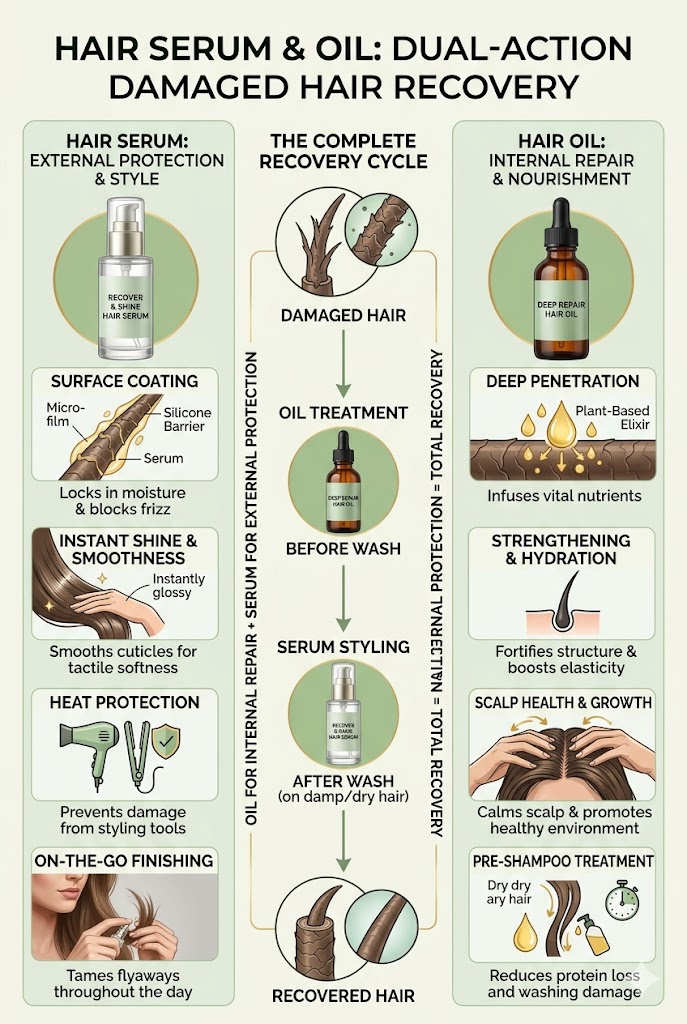
The Right Products for Repair
Damaged hair needs a sulphate-free shampoo that cleanses without further stripping already-depleted protein and moisture from the cortex. Our Total Rebalance Shampoo is pH-balanced (slightly acidic, to close the cuticle) and sulphate-free, with coconut-derived gentle cleansers that remove buildup without the harsh SLS/SLES surfactants that worsen cortex protein depletion.
Post-wash, the Total Revival Hair Serum's Redensyl + AnaGain + Copper Peptide + amino acid complex provides both the structural repair actives (copper-catalysed cross-linking, amino acid substrate for keratin) and the follicle growth signal that ensures the new hair growing in at the root is healthy from the start.
"Most 'repair' products coat the damage. Very few actually fill it. Know the difference before you spend."
Ready to make the honest switch?
Our products are built on the same principles as every article we write — pure ingredients, real results, nothing to hide.
Explore Our Products