Minoxidil Side Effects — The Complete Honest Guide + What to Do When You Want to Stop
Millions of people use Minoxidil. Very few are told the full picture: that it creates a dependency, that stopping causes rapid shedding often worse than before, and that several natural ingredients now have clinical head-to-head trials against it. This guide covers everything the prescription pad doesn't.

Minoxidil was discovered accidentally — it was developed as an oral antihypertensive drug in the 1970s, and hair growth was a noted side effect. By 1988, a topical version received FDA approval for androgenetic alopecia. It has been the dominant hair loss treatment ever since.
It works. That is not in dispute. Minoxidil increases scalp blood flow by opening ATP-sensitive potassium channels (KATP channels) in vascular smooth muscle, causing vasodilation. This delivers more oxygen, nutrients, and growth factors (particularly VEGF — vascular endothelial growth factor) to the follicle, extending the anagen (growth) phase and increasing follicle size in miniaturising hairs.
What is less clearly communicated: Minoxidil does not address the underlying cause of androgenetic alopecia — DHT-driven follicle miniaturisation. It compensates for it. When the compensation stops, the miniaturisation process — which continued throughout Minoxidil use — reasserts itself rapidly, often causing a shedding event more severe than what prompted Minoxidil use in the first place.
This is the dependency trap. Understanding it — along with every other documented side effect — is the foundation of making an informed decision about whether to start, continue, or transition away from Minoxidil.
⚡ Minoxidil — Quick Reference
| Drug class | Topical vasodilator (KATP channel opener) |
| FDA approval | 1988 (topical 2% for women); 1991 (5% for men) |
| Approved indication | Androgenetic alopecia (pattern hair loss) |
| Mechanism | Opens KATP channels → vasodilation → increased VEGF delivery to follicle → extended anagen phase |
| Does NOT address | DHT — the root cause of follicle miniaturisation in androgenetic alopecia |
| Forms | Topical solution (2%, 5%), topical foam (5%), oral (off-label) |
| Critical limitation | Creates physical dependency — stopping causes rebound shedding in 3–6 months |
The 7 Documented Side Effects of Minoxidil
These are not rare or theoretical — they are the side effects documented in clinical trials, case reports, and the Minoxidil prescribing information itself. Most users experience at least one; the dependency effect affects virtually all long-term users.
Affects: 10–30% of users in the first 2–8 weeks of use.
Mechanism: Minoxidil forces resting (telogen) follicles into a new anagen (growth) cycle prematurely. To begin a new anagen phase, the resting telogen hair must shed first — this is normal follicle biology. Minoxidil accelerates this shedding event, causing a temporary increase in hair fall before new growth begins.
Duration: 2–6 weeks. Resolves as new anagen hairs emerge.
What to do: Continue use. Stopping during initial shedding is the most common reason Minoxidil "doesn't work" — users quit during the biological transition phase before the benefit becomes visible. If shedding is severe or persists beyond 8 weeks, consult a dermatologist to rule out other causes.
Affects: Virtually all long-term users who stop Minoxidil.
Mechanism: Minoxidil does not cure or reverse androgenetic alopecia — it compensates for DHT-driven miniaturisation by supplying vasodilatory growth support to follicles. During years of Minoxidil use, these follicles continue to miniaturise from DHT — but are kept in an extended anagen phase by the drug. When Minoxidil is stopped, the vasodilatory support disappears. All follicles that were maintained by Minoxidil but continuing to miniaturise lose that support simultaneously, causing a rapid, widespread shedding event 3–6 months after stopping.
Severity: Often more dramatic than the original hair loss because many follicles enter telogen at the same time, having been in a prolonged Minoxidil-extended anagen phase.
What to do: This is the most important side effect to plan for. If you intend to stop Minoxidil, bridge the transition with DHT-blocking and growth-stimulating alternatives before reducing frequency — not after. See the tapering section below.
Affects: Up to 7% of users, more common with solution (propylene glycol carrier) than foam.
Mechanism: The topical solution formulation uses propylene glycol as a penetration enhancer. Propylene glycol is a documented contact allergen and scalp irritant. Symptoms include redness, itching, scaling, and burning at application sites.
Distinguishing from initial shedding: Contact dermatitis presents with visible redness and significant itch at the application site — not just increased hair fall. Initial shedding has no visible scalp inflammation.
What to do: Switch from solution to foam formulation (foam uses a different carrier without propylene glycol). Patch test before full application. If irritation persists, discontinue and consult a dermatologist before restarting.
Affects: 3–5% of women using topical Minoxidil; less common in men. More frequent with 5% concentration than 2%.
Mechanism: Minoxidil's KATP channel-opening mechanism is not scalp-selective. When absorbed systemically (even from topical application), or when Minoxidil migrates via skin contact, it can stimulate hair follicles on the face — particularly along the hairline, cheeks, and forehead in women. This manifests as increased facial hair, thickening of fine vellus hairs into darker terminal hairs.
In women specifically: Hypertrichosis is the primary reason women are prescribed the lower 2% concentration rather than 5%. Applying to a clean, dry scalp (rather than letting it drip onto the face) and washing hands immediately after application reduces this risk.
Reversibility: Hypertrichosis typically reverses within 1–6 months of stopping Minoxidil, but may require multiple months for full resolution.
Affects: More significant with oral Minoxidil (off-label use); can occur with topical at higher concentrations or compromised scalp barrier.
Symptoms: Dizziness, low blood pressure (orthostatic hypotension), headaches, heart palpitations, fluid retention (oedema), particularly in the legs. Oral Minoxidil also requires concurrent diuretic therapy in many protocols precisely because of fluid retention.
Risk factors for topical: Applying to an inflamed or broken scalp dramatically increases systemic absorption. Using topical Minoxidil on a scalp with dermatitis, psoriasis, or open wounds should be avoided.
Who should not use Minoxidil: Individuals with cardiovascular disease, history of hypotension, or kidney/liver conditions should consult a cardiologist before using any form of Minoxidil — topical or oral.
Mechanism: Propylene glycol (in solution formulations) is humectant at low concentrations but desiccating and barrier-disrupting at the concentrations used in Minoxidil solutions. It extracts water from the stratum corneum when present in high concentrations on the scalp. The result is scalp dryness, flaking that resembles dandruff, and increased scalp sensitivity.
Compounding effect: A disrupted scalp barrier increases Minoxidil absorption (including systemic absorption) and increases susceptibility to Malassezia overgrowth — potentially triggering dandruff or worsening seborrheic dermatitis alongside Minoxidil use.
Management: Foam formulations largely avoid this issue. For solution users, a post-Minoxidil scalp moisturising step (jojoba oil, aloe vera gel applied 30 minutes after Minoxidil has dried) can help maintain barrier function without interfering with Minoxidil absorption.
Relevance: Sexual side effects are associated primarily with oral Minoxidil (low-dose 2.5–5mg), which is increasingly prescribed off-label for hair loss in India and globally. Topical Minoxidil has minimal documented sexual side effects.
Documented effects (oral): Decreased libido, erectile dysfunction (men), and menstrual irregularities (women) have been reported in case series and post-marketing surveillance. The mechanism is unclear — possibly related to systemic vasodilation effects or hormonal cross-talk.
Contrast with finasteride: This is why some patients prefer oral Minoxidil over finasteride — finasteride has a well-documented sexual side effect profile (post-finasteride syndrome in a subset of users). However, oral Minoxidil's sexual effects, while less documented, are not zero.
The Dependency Problem — Why Stopping Causes Worse Hair Loss Than Before
The dependency mechanism is the most important and least discussed aspect of long-term Minoxidil use. Understanding it prevents the single most common and devastating Minoxidil experience: stopping, losing dramatically more hair, and not knowing why.
🔬 Why Minoxidil Creates Dependency
Minoxidil maintains hair growth by providing ongoing vasodilatory support — it is not correcting the underlying biology. While Minoxidil is active, DHT continues to miniaturise follicles. Follicles are being sustained artificially in an extended anagen phase. When Minoxidil stops, all follicles that were in this extended phase rapidly enter telogen simultaneously. The result is a shedding event that is both more widespread (many follicles affected at once) and more visible than the original gradual hair loss pattern.
📉 The Timeline of Rebound Shedding
Rebound shedding does not begin immediately on stopping — it follows the 3-month telogen lag. Follicles that lose Minoxidil support in Month 1 enter telogen, but telogen hairs shed 2–3 months later. So users often feel fine for 1–2 months after stopping, then experience alarming hair fall in months 3–5. This delay causes many users to attribute the shedding to an unrelated cause — a new product, stress, diet — rather than the Minoxidil cessation that caused it.
⚠️ The Miniaturisation Continues During Use
This is critical: Minoxidil does not stop follicle miniaturisation. DHT continues to shrink follicles during every year of Minoxidil use. After 5 years of Minoxidil use, the underlying hair loss condition is 5 years more advanced than when treatment began. Stopping after long-term use therefore results in shedding that reflects years of accumulated miniaturisation — which is why rebound after 5–10 years of use can appear to leave users with significantly less hair than they had when they started.
✅ The Right Exit Strategy
The safest way to stop Minoxidil is to build up alternative growth-maintaining actives before reducing Minoxidil frequency — not after. DHT-blocking ingredients (Saw Palmetto, Bhringraj, Rosemary) and growth-stimulating actives (Redensyl, Procapil) take 3–6 months to show measurable effect. Starting them 3–4 months before beginning Minoxidil tapering provides a meaningful bridge, significantly reducing the severity of rebound shedding.
How to Taper Off Minoxidil Safely — A Clinically Sensible Protocol
There is no universally agreed tapering protocol in published literature, but dermatologists experienced in hair loss management generally recommend a step-down approach combined with bridge therapy:
| Phase | Timing | Action | Why |
|---|---|---|---|
| Phase 1: Bridge Start | Months 1–4 (while still on full Minoxidil) | Add DHT-blocking + growth actives: Saw Palmetto supplement, Rosemary oil or serum, Redensyl-containing serum daily | Allow natural actives to establish measurable follicle support before Minoxidil is reduced |
| Phase 2: Frequency Reduction | Month 4–8 | Reduce Minoxidil from twice-daily to once-daily; maintain bridge actives | Gradual reduction is less shocking to the follicle cycle than abrupt cessation |
| Phase 3: Every Other Day | Month 8–12 | Reduce to every other day application; increase bridge active frequency and consistency | Further step-down; allows assessment of how follicles respond to reduced support |
| Phase 4: Full Stop | Month 12+ | Discontinue Minoxidil; continue bridge actives long-term | Bridge actives by this point have had 8–12 months to establish; rebound shed is significantly reduced but not always eliminated |
| Important: Monitor hair density monthly with photos throughout. If significant shedding occurs during Phase 2–3, slow the step-down pace. Some individuals cannot taper off Minoxidil successfully without parallel medical DHT-blocking (finasteride/dutasteride) — consult a dermatologist if shedding is severe during tapering. | |||
Natural Alternatives with Clinical Evidence Against Hair Loss
These are not "natural options" in the sense of unverified anecdote. Each has published clinical data — including one with a direct head-to-head trial against Minoxidil itself:
| Ingredient | Mechanism | Clinical Evidence | Vs Minoxidil |
|---|---|---|---|
| Rosemary oil (Rosmarinus officinalis) |
Inhibits 5α-reductase (reduces DHT); increases scalp microcirculation via carnosic acid | 6-month randomised controlled trial (Skinmed, 2015): both groups showed equivalent hair count improvement from baseline | Head-to-head RCT vs Minoxidil 2% — equivalent outcome; less scalp irritation |
| Saw Palmetto (Serenoa repens) |
5α-reductase inhibitor — blocks DHT conversion, directly addressing the cause rather than compensating for it | Published trial vs finasteride: 38% improvement in hair count (Saw Palmetto) vs 68% (finasteride); zero sexual side effects with Saw Palmetto | No direct head-to-head with Minoxidil; addresses DHT that Minoxidil does not |
| Redensyl (DHQG + EGCG complex) |
Targets ORSm hair follicle stem cells; promotes stem cell division and re-entry into anagen phase | 17% hair density increase in 84 days in controlled clinical testing; outperformed Minoxidil 2% in one company-sponsored trial | Company-sponsored trial showed Redensyl superior to Minoxidil 2%; independent RCT needed |
| Bhringraj (Eclipta prostrata) |
Promotes hair follicle cell proliferation; anti-inflammatory (reduces perifollicluar cytokine load); mild 5α-reductase inhibition | Animal study vs Minoxidil 2%: Bhringraj extract showed equivalent follicle stimulation; human clinical data emerging | Pre-clinical evidence promising; human RCT vs Minoxidil pending |
| Amla (Phyllanthus emblica) |
Antioxidant (emblicanins A & B); 2024 triple-blind RCT confirmed significant increase in anagen:telogen ratio in women with androgenetic alopecia | 2024 triple-blind RCT (Indian Journal of Dermatology); increases anagen phase duration | No direct head-to-head; complementary mechanism to Minoxidil |
💡 Considering stopping Minoxidil or looking for a transition plan? Our dermatologist can build a personalised protocol for your hair loss pattern.
Book Free Consultation →The Natural Transition Protocol — Products Built for the Bridge
Both products below are formulated around the clinical actives with the strongest evidence for supporting hair growth while addressing the underlying causes Minoxidil ignores:
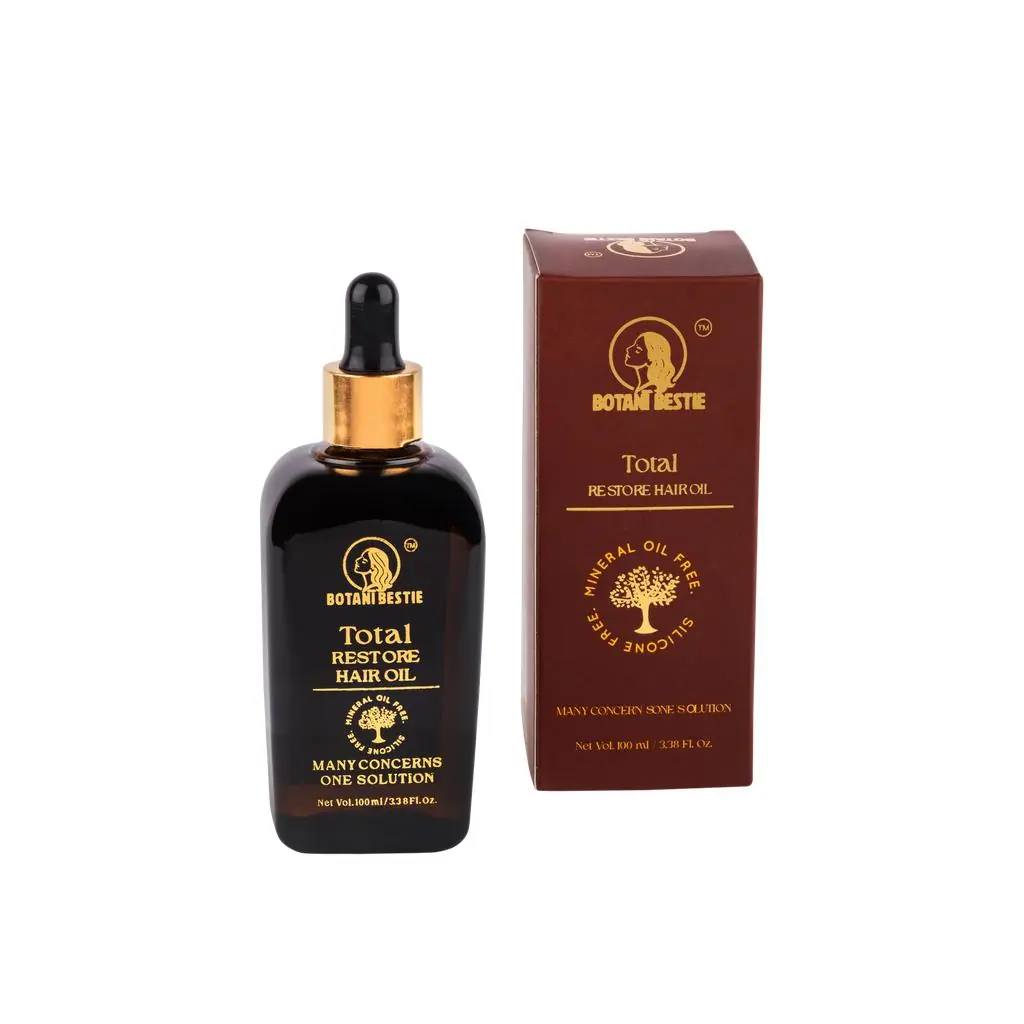
Total Restore Hair Oil
Pre-Wash Treatment — 2–3× per week
Contains Bhringraj (5α-reductase inhibition), Rosemary (microcirculation + DHT), Amla (anagen phase extension), Castor oil (scalp barrier + ricinoleic acid), Neem (antifungal scalp balance), Brahmi, Green Tea EGCG, and Jatamansi. No mineral oil. No fragrance. Addresses DHT and scalp inflammation simultaneously — the two causes Minoxidil leaves untouched.
Shop Total Restore Hair Oil →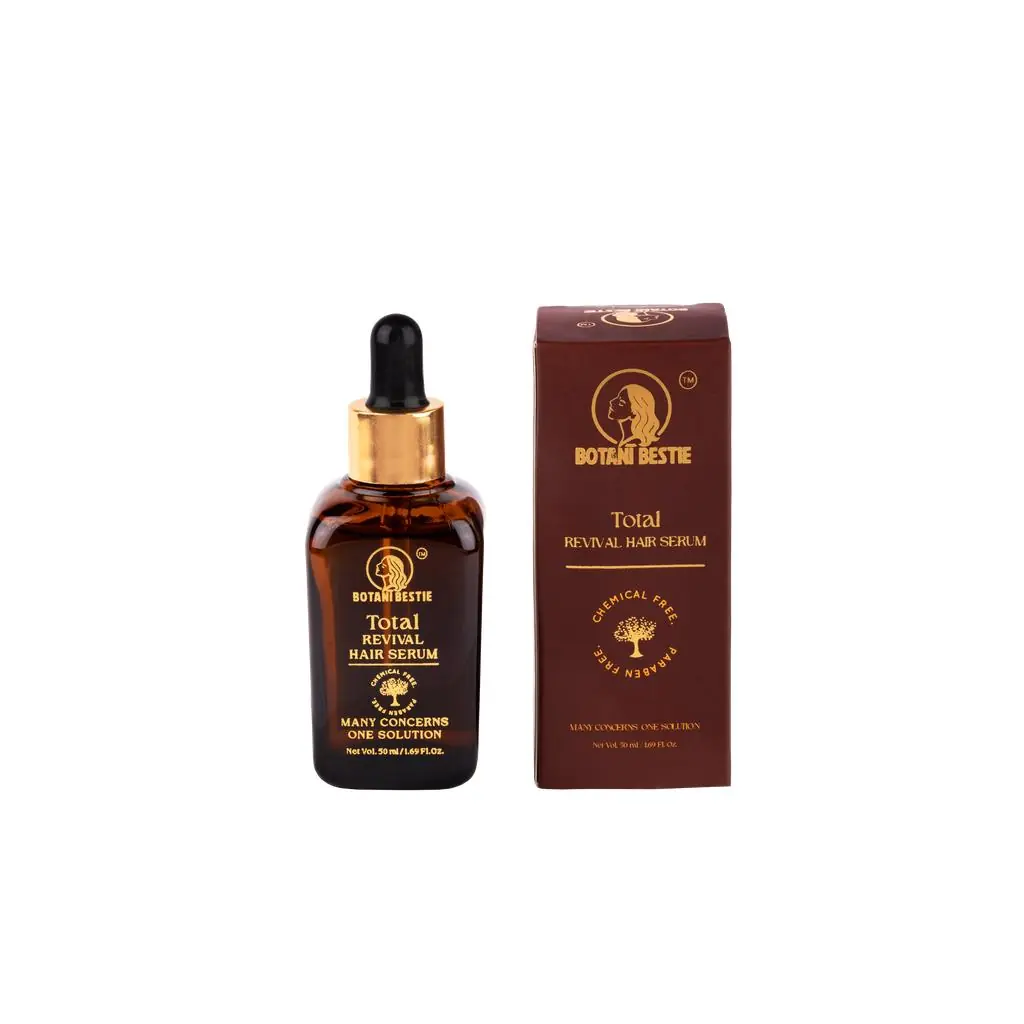
Total Revival Hair Serum
Leave-In Scalp Serum — daily or every 2 days
Contains Redensyl (hair stem cell reactivation), Procapil (tri-mechanism miniaturisation block), Anagain (anagen:telogen ratio improvement), and Copper Peptides GHK-Cu (dermal papilla stimulation). The biotech-Ayurvedic active stack that forms the core of the Minoxidil bridge protocol — addressing growth at the stem cell level rather than the vascular level.
Shop Total Revival Hair Serum →Ready to Build Your Minoxidil Exit Strategy?
Book a free consultation with our in-house dermatologist. Share your current Minoxidil usage, duration, and hair loss pattern — and receive a personalised transition plan that reduces rebound shedding while building sustainable, dependency-free hair growth support.
Book Free Consultation → WhatsApp UsFrequently Asked Questions

The Bottom Line: Minoxidil Works — But It's Not the Whole Story
Minoxidil is a legitimate, clinically proven treatment for androgenetic alopecia. The honest assessment: it compensates for DHT-driven hair loss without addressing DHT itself, creates a physical dependency that makes stopping difficult, and comes with a set of documented side effects that are underreported in the patient-facing information most users receive.
Understanding these limitations is not an argument against Minoxidil — it is an argument for going into it informed. Combining Minoxidil with DHT-blocking approaches (natural or medical), planning the exit strategy from the start, and knowing that the initial shedding phase is expected — these things change outcomes dramatically.
For those who want to transition away from Minoxidil dependency, the clinical evidence for Rosemary, Redensyl, Saw Palmetto, and Bhringraj provides a credible bridge — not a miracle, but a meaningful one that addresses causes rather than symptoms.
Shop Total Revival Hair Serum → Free Consultation"Minoxidil buys time. Addressing DHT is how you use that time wisely."
Ready to make the honest switch?
Our products are built on the same principles as every article we write — pure ingredients, real results, nothing to hide.
Explore Our Products