Shikakai for Hair — Ayurveda's Original Shampoo, Validated by Modern Science
Before commercial shampoo existed, Indian women used Shikakai to clean their hair — and their hair was, by every historical account, thicker and stronger than most modern users achieve. This is not nostalgia. The science of Shikakai's saponins, its natural pH, and its antifungal compounds explains exactly why it worked then and why it still outperforms most commercial alternatives today.
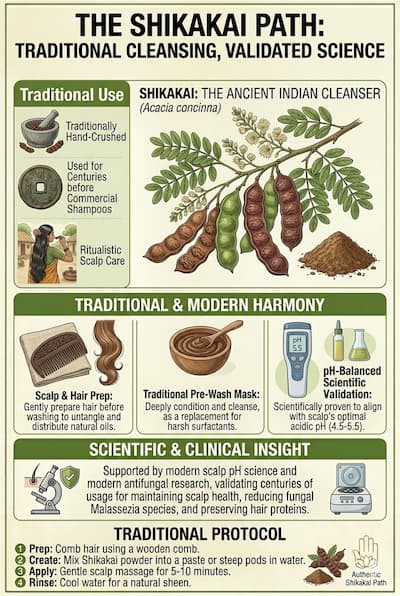
Shikakai (Acacia concinna) is one of Ayurveda's oldest hair care ingredients — referenced in texts dating back over 1,000 years as a scalp cleanser, hair conditioner, and antimicrobial treatment. The name literally means "fruit for hair" in Sanskrit. It was the primary hair cleanser across most of India until the mid-20th century, when mass-market shampoos displaced it.
The displacement was not based on Shikakai being inferior. It was based on the economics of industrial manufacturing and the cultural power of modern cosmetic marketing. In terms of scalp health outcomes — particularly for hair fall, dandruff, and long-term hair density — Shikakai's profile holds up remarkably well against modern dermatological standards.
This guide explains exactly what Shikakai does at the biological level, why its mechanisms are relevant to Indian hair conditions, and how to use it — both as a traditional preparation and as an ingredient to look for in modern formulations.
What is Shikakai? The Botanical Profile
| Botanical name | Acacia concinna (DC.) DC. |
| Family | Fabaceae (legume family) |
| Common names | Shikakai (Hindi/Sanskrit), Seetha (Tamil), Sheekaya (Telugu), Shikekekai (Kannada) |
| Used part | Fruit pods (dried and powdered, or extracted) |
| Active compounds | Saponins (lupeol, spinasterol, acacic acid), tannins, flavonoids, Vitamin C, alkaloids |
| Natural pH | ~4.5–5.5 (matches scalp acid mantle exactly) |
| Primary mechanism | Gentle saponin cleansing without barrier stripping; scalp pH preservation; antifungal and anti-inflammatory activity |
| INCI name | Acacia Concinna Fruit Extract / Acacia Concinna Fruit Powder |
The pH Science: Why Shikakai's Natural Acidity Is Its Most Important Feature
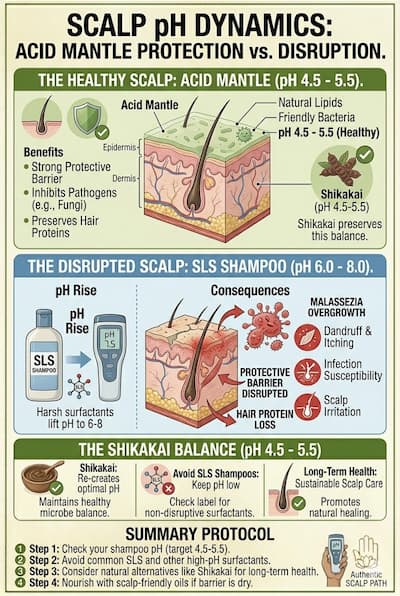
The scalp's surface has a natural pH of 4.5–5.5 — the "acid mantle." This mildly acidic environment is not incidental. It serves three critical functions:
- Antimicrobial protection: Most pathogenic scalp microorganisms — including Malassezia globosa (the primary driver of dandruff) and Staphylococcus aureus — cannot survive or proliferate efficiently below pH 5.5. The acid mantle is your scalp's first line of defence.
- Hair cuticle integrity: The hair cuticle — the outermost protective layer of the hair shaft — closes and lies flat at acidic pH. Alkaline pH (above 6.0) forces the cuticle to lift, increasing porosity, friction, frizz, mechanical breakage, and protein loss.
- Enzyme activity: The scalp microbiome's beneficial bacteria and the skin's protective enzymes operate optimally at acidic pH. Alkaline disruption suppresses beneficial microorganism populations, enabling opportunistic overgrowth of Malassezia.
Most commercial SLS/SLES shampoos have a pH of 6–8. Every wash with a high-pH shampoo temporarily disrupts the acid mantle — requiring 1–4 hours for the scalp to restore normal pH through sebum secretion. For people who wash daily or every other day, the acid mantle is perpetually disrupted. This is directly correlated with the "my scalp gets oily so fast after washing" complaint — which is the scalp producing excess sebum to re-establish its protective barrier after alkaline disruption.
Shikakai's saponins produce a wash solution with a natural pH of approximately 4.5–5.5 — matching the scalp's acid mantle exactly. This means Shikakai cleanses without disrupting the acid mantle, without forcing the cuticle open, and without suppressing the beneficial scalp microbiome. This is what made it effective as a daily hair cleanser for generations of Indian women — not magic, but correct pH chemistry.
5 Evidence-Supported Benefits of Shikakai for Hair and Scalp
1. Gentle Cleansing Without Stripping
Shikakai's saponins are natural surfactants — they have both hydrophilic (water-loving) and lipophilic (oil-loving) ends, allowing them to emulsify scalp oils and product residue for rinsing. But unlike SLS (sodium lauryl sulfate), which is an aggressive ionic surfactant that penetrates the scalp barrier, Shikakai saponins are large molecular weight compounds that clean at the surface level without stripping the intercellular lipid matrix of the stratum corneum.
Result: Scalp feels clean but not "squeaky" or tight after washing — a sign that the natural lipid barrier remains intact.
2. Antifungal Activity Against Malassezia
Shikakai contains tannins, alkaloids, and flavonoids with documented in vitro antifungal activity. Published studies (Phytomedicine, International Journal of Pharmacognosy) have demonstrated Acacia concinna extracts' antifungal effects against Malassezia species — the yeast responsible for dandruff and seborrheic dermatitis — as well as against Aspergillus and Candida species.
This makes Shikakai a functional anti-dandruff ingredient, not just a cleanser — addressing both the mechanical removal of flakes and the underlying fungal cause simultaneously.
3. Natural Conditioner for Hair Shaft
The same saponins that clean the scalp deposit a thin conditioning film on the hair shaft during washing — similar in principle to a leave-in conditioner, but much lighter. This reduces inter-fibre friction during rinsing, making detangling significantly easier and reducing mechanical breakage during wet combing. Users transitioning from SLS shampoos often notice their hair feels "softer" immediately after the first Shikakai wash — a direct result of the combination of correct pH (closed cuticle) and saponin conditioning film.
4. Vitamin C and Antioxidant Content
Acacia concinna pods contain ascorbic acid (Vitamin C) at meaningful concentrations. Vitamin C is essential for collagen biosynthesis in the hair follicle's dermal sheath — the structural support structure surrounding each follicle. Collagen depletion in the follicle sheath is associated with follicle miniaturisation and weakened hair anchoring. Topically applied Vitamin C also provides antioxidant protection to the scalp — reducing the oxidative stress from UV radiation and pollution that accelerates follicle ageing and premature greying.
5. Scalp Microbiome Preservation
The scalp microbiome — a complex ecosystem of bacteria and fungi — is increasingly understood as a key determinant of scalp health and hair fall. Staphylococcus epidermidis, the primary beneficial bacterium of the scalp, produces fatty acids that maintain the acid mantle and inhibit Malassezia. Repeated alkaline pH disruption from SLS shampoos preferentially kills S. epidermidis (which thrives at acidic pH) while allowing Malassezia (which tolerates higher pH) to expand. Shikakai cleansing, by maintaining scalp pH, preserves S. epidermidis populations and the overall microbiome balance — a mechanism that modern scalp microbiome research has identified as central to dandruff prevention and hair fall control.
How to Use Shikakai — Three Methods
Ingredients: 2–3 tbsp Shikakai powder + 1–2 tbsp Reetha (soapnut) powder (optional, adds lather) + warm water
- Mix powders in a bowl. Add warm water gradually, stirring until a thin paste forms (runny yoghurt consistency).
- Wet hair thoroughly under warm water.
- Apply the paste in sections, starting at the scalp. Work in with fingertip circular motions for 2–3 minutes. Note: lather will be minimal — this is normal and does not indicate poor cleansing.
- Rinse thoroughly until all paste is removed — this takes more time than conventional shampoo. Use cool or lukewarm water for the final rinse.
- Optional: follow with an Apple Cider Vinegar rinse (1 tbsp ACV in 1 cup cool water) to further enhance shine and seal the cuticle.
The traditional method for a smoother application without the powder texture:
- Soak 4–5 dried Shikakai pods (whole) in 2 cups of water overnight.
- In the morning, boil gently for 15 minutes. Cool completely.
- Strain and use the liquid as a hair wash — pour directly onto wet scalp sections and massage in before rinsing.
- Can be stored in the refrigerator for up to 3 days.
This method produces a more liquid consistency that rinses out more easily than the powder paste, while delivering the same active compounds.
For people who want the benefits of Shikakai without the preparation time, a well-formulated herbal shampoo that includes Shikakai extract alongside other Ayurvedic actives is the practical alternative. What to look for:
- Shikakai extract in the first half of the ingredient list — if it appears after preservatives (Phenoxyethanol, Potassium Sorbate), the concentration is likely below 1%
- Sulfate-free surfactant system — Sodium Cocoyl Isethionate, Cocamidopropyl Betaine, or similar mild surfactants
- pH 4.5–5.5 — the shampoo must be pH-adjusted to preserve the acid mantle; a "Shikakai shampoo" with SLS at pH 7 negates the primary benefit
- No added fragrance — fragrance in a scalp-applied product can cause sensitisation and worsen the inflammatory scalp conditions Shikakai is meant to address
Shikakai vs Commercial Shampoo — What the Science Compares
| Parameter | Shikakai (traditional preparation) | SLS/SLES Commercial Shampoo | Sulfate-Free Herbal Shampoo |
|---|---|---|---|
| pH | 4.5–5.5 (matches acid mantle) | 6–8 (disrupts acid mantle) | 4.5–5.5 (if properly pH-adjusted) |
| Surfactant type | Natural saponins (gentle, high MW) | Synthetic ionic surfactants (aggressive, barrier-penetrating) | Mild synthetic surfactants (Cocoyl Isethionate, etc.) |
| Antifungal activity | Yes — tannins, alkaloids, low pH | Usually none (unless ketoconazole/ZPT added) | Depends on herbal actives included |
| Scalp microbiome impact | Preserving — maintains beneficial bacteria | Disrupting — kills beneficial flora, allows Malassezia expansion | Preserving to neutral (depends on formula) |
| Lather | Low (psychological drawback, not functional) | High (psychological benefit, no functional advantage) | Low to moderate |
| Ease of use | Requires preparation; powder can be messy | Ready to use | Ready to use |
| Colour-treated hair safety | Safe — low pH preserves colour molecules | Unsafe — high pH and ionic surfactants accelerate colour fade | Safe (with correct pH) |
💡 If you want the full benefits of Shikakai's gentle, low-pH cleansing combined with Bhringraj, Amla, ACV, and 10+ more actives in a ready-to-use formula — no preparation needed.
See Total Rebalance Shampoo →Common Shikakai Mistakes That Reduce Effectiveness
Mistake 1: Not Rinsing Thoroughly
Shikakai powder can leave residue if not rinsed thoroughly, especially for people with fine or straight hair. Take extra time on the rinse step — the water running off should feel completely smooth, not slightly silky or soapy. Residue build-up causes limpness and attracts dust faster.
Mistake 2: Expecting SLS-Level Lather
The absence of foam is the entire point. Lather is not a cleanliness indicator — it is a cosmetic feature added by SLS and SLES. Shikakai cleans effectively without foam. Expecting lather and adding more paste to generate it over-concentrates the saponins and makes rinsing harder.
Mistake 3: Transition Period Not Managed
Scalps accustomed to SLS shampoos produce excess sebum to compensate for the stripping. Switching to Shikakai immediately reveals this excess production — the scalp feels oilier for the first 2–4 weeks as it recalibrates. This is not Shikakai not working; it is the scalp normalising. The oiliness resolves once sebaceous glands stop over-producing in response to barrier disruption signals.
Mistake 4: Boiling or Over-Heating the Preparation
Vitamin C and many of Shikakai's heat-sensitive flavonoids degrade above 60°C. Boiling Shikakai powder for a long time to extract more compound reduces its antioxidant and Vitamin C content significantly. The soak method (overnight cold or warm soak) or a brief gentle simmer (not boil) preserves more of the active compounds.
The Modern Alternative: Shikakai in a Complete Herbal Formula
For those who want Shikakai's benefits without the preparation and inconsistency of the powder method, the key is finding a formulation where Shikakai extract is genuinely included at a meaningful concentration — alongside other scalp-active herbs — and the overall formula is pH-adjusted to 4.5–5.5.
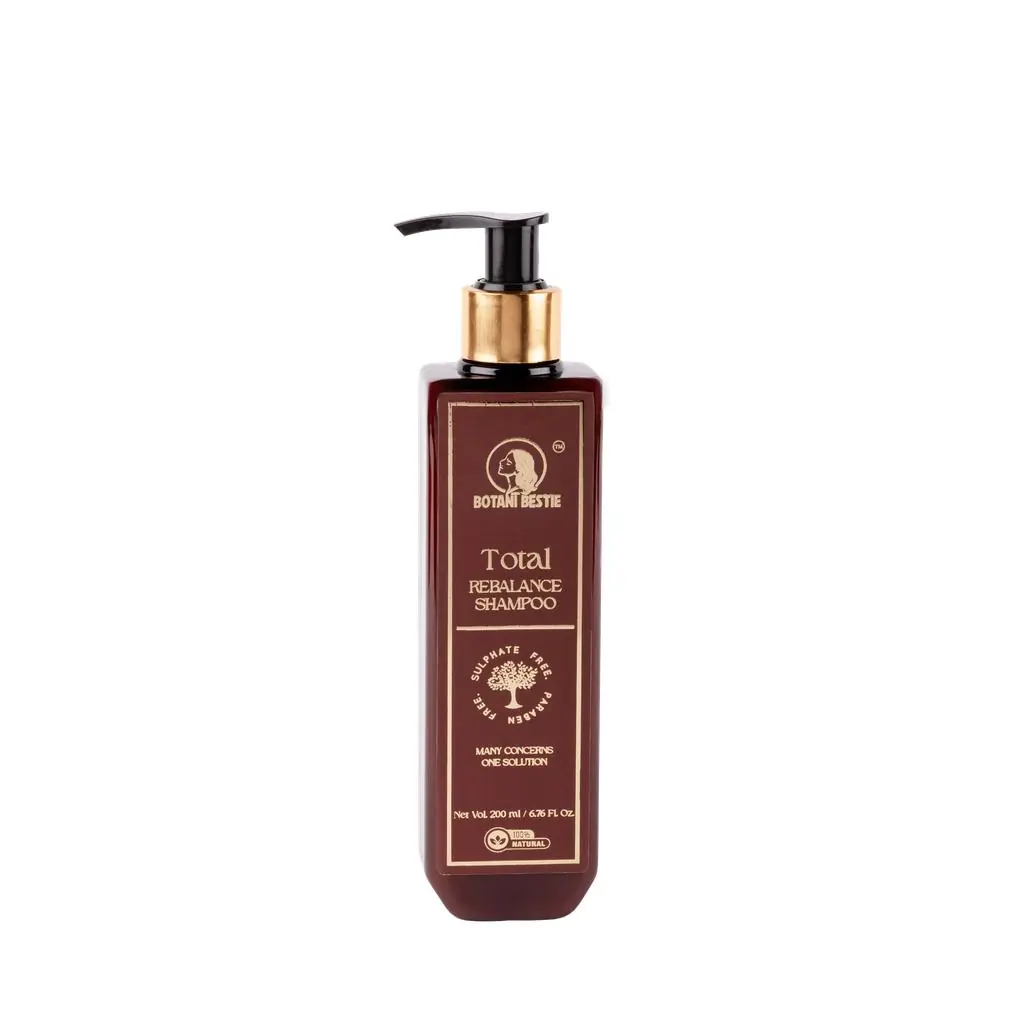
Total Rebalance Shampoo
by Botani Bestie — Ayurvedic Scalp-Balancing Shampoo
Combines the cleansing and scalp-balancing benefits of Shikakai with a comprehensive Ayurvedic active stack — including Bhringraj (follicle stimulation + DHT blocking), Amla (antioxidant + anagen support), Apple Cider Vinegar (pH restoration), Fermented Rice Water (inositol + amino acids), Neem (antifungal), and Brahmi (anti-inflammatory) — in a sulfate-free, fragrance-free, pH 5.0 formula.
- Sulfate-free — no SLS, SLES, or DMDM Hydantoin
- 13+ Ayurvedic herbs including Shikakai, Bhringraj, Amla, and Neem
- pH-balanced to match the scalp's acid mantle
- No synthetic fragrance — safe for sensitive, inflamed scalps
Frequently Asked Questions
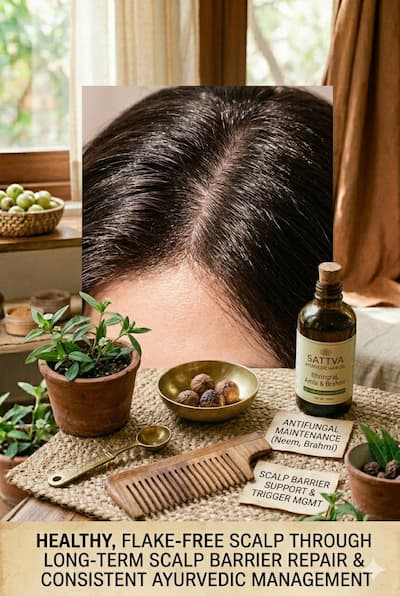
The Verdict: Ayurveda Got the Chemistry Right
Shikakai's 1,000-year track record in Indian hair care is not folk medicine coincidence — it is correct pH chemistry, antifungal activity, and barrier-preserving cleansing that modern dermatological science has now validated from the other direction.
The core insight is simple: the scalp has a pH of 4.5–5.5, and cleansers that respect that pH produce healthier scalps and stronger hair than those that don't. Shikakai is the most traditional embodiment of this principle. Modern sulfate-free, pH-balanced formulas achieve the same result with consistent active concentrations and convenient application.
Either approach — traditional Shikakai preparation or a quality herbal shampoo built on the same principles — is a significant upgrade from SLS-based commercial shampoos for anyone concerned about scalp health, dandruff, or hair fall.
Shop Total Rebalance Shampoo → Free Hair Consultation"The pH of your cleanser determines the pH of your scalp. And the pH of your scalp determines what grows — and what doesn't."
Ready to make the honest switch?
Our products are built on the same principles as every article we write — pure ingredients, real results, nothing to hide.
Explore Our Products